Related News
- 00
0000-00
How to Evaluate Terminal Efficiency Solution Suppliers for High-Throughput Operations - 00
0000-00
What to Consider When Buying Electric Port Machinery for Container Terminals - 00
0000-00
How to Select Container Handling Equipment for Middle East Ports and Terminals - 00
0000-00
How to Evaluate a Port Machinery Exporter for Large-Scale Terminal Projects - 00
0000-00
Evaluating a Dredging Equipment Manufacturer for Mining Plant Supply
What to check before investing in port equipment automation
Before committing capital to port equipment automation, business leaders need a clear view of operational fit, integration complexity, safety, scalability, and long-term ROI. In a sector where terminal throughput, labor efficiency, and digital control increasingly define competitiveness, the right investment depends on more than technology alone. This article outlines the critical factors decision-makers should evaluate to reduce risk and build smarter, future-ready port operations.
For terminal operators, investors, and infrastructure planners, port equipment automation is no longer a niche upgrade. It is increasingly tied to berth productivity, yard density, energy management, and resilience under volatile trade flows. Yet many automation programs underperform because the buying decision starts with equipment features instead of operational requirements, systems architecture, and lifecycle economics.
A sound investment review should examine at least 7 dimensions: process fit, asset condition, software integration, communications reliability, safety governance, maintenance readiness, and financial return over a 10- to 15-year horizon. When these checks are carried out early, the business case for port equipment automation becomes more practical and far less vulnerable to hidden implementation costs.
Start with the Operating Model, Not the Equipment List
The first question is not whether automated cranes, AGVs, ASC blocks, or remote-control systems are available. The real question is whether automation fits the terminal’s cargo mix, berth window pattern, labor structure, and yard logic. Port equipment automation delivers value only when the process design supports repeatable, high-volume execution.
For example, a gateway container terminal handling 800,000 to 2 million TEU annually may justify deeper automation sooner than a multipurpose terminal with irregular vessel calls and mixed cargo. Likewise, a yard with chronic truck congestion, low slot visibility, or high rehandle ratios often gains more from control system upgrades than from immediately replacing every machine on site.
Key questions about operational fit
- Is the terminal flow dominated by containers, bulk cargo, or mixed operations?
- What are the peak-hour moves per crane, truck turn times, and yard dwell patterns?
- Does the site run 24/7, 16/7, or on variable shift cycles?
- Are bottlenecks located at the quay, transfer zone, stack, or gate?
- Can standardized processes cover at least 70% to 80% of move patterns?
Decision-makers should map the current move cycle in detail. In many ports, 3 to 5 process bottlenecks account for most performance losses. If those bottlenecks are caused by poor dispatching logic, fragmented data, or unbalanced yard planning, then phased port equipment automation may create faster returns than a full greenfield-style transformation.
Brownfield and greenfield projects require different logic
A brownfield terminal usually faces tougher constraints: legacy equipment, uneven pavement tolerances, older substations, and partial software visibility. In such cases, automation rollout often works best in 2 or 3 stages over 12 to 36 months. Greenfield sites have more design freedom, but they also require tighter upfront validation because mistakes in control architecture can scale across the whole terminal.
The comparison below helps leadership teams decide whether the site conditions support limited, phased, or full-scope port equipment automation.
If a terminal falls mostly into the lower-readiness column, leaders should not reject automation. They should sequence it more carefully. In many cases, the best first investment is software orchestration, remote operations, or automated safety layers rather than a complete mechanical replacement program.
Check Integration Risk Across Control Systems, Software, and Communications
Integration is where many port equipment automation projects become expensive. A modern port may combine terminal operating systems, PLC layers, remote-control stations, OCR portals, yard management software, power monitoring, and cybersecurity tools from multiple vendors. If interfaces are weak, even high-quality machines can operate below target.
Executives should require a full interface map before approving procurement. This map should show data handoffs, command hierarchies, latency tolerances, fallback modes, and manual override logic. For remote-controlled cranes and automated guided vehicles, delays measured in milliseconds can affect move accuracy, traffic coordination, and safe stopping distances.
Minimum integration checks before purchase
- Confirm compatibility with the existing TOS and equipment control system.
- Review data formats, API availability, and event messaging logic.
- Test network coverage in quay, yard, workshop, and gate zones.
- Define degraded-mode operations for outages lasting 5 minutes, 30 minutes, and 2 hours.
- Verify cybersecurity responsibilities across OEM, integrator, and terminal IT teams.
Latency, coverage, and resilience matter more than brochure features
Low-latency communication is essential for remote control and coordinated fleet movement. In practical terms, operators should examine whether the network can maintain stable performance in all-weather conditions, under crane shadow zones, and during peak radio traffic. A design that works in a lab may struggle in a live terminal with steel structures, moving containers, and high electromagnetic interference.
Ask suppliers to document fail-safe behavior, sensor redundancy, and manual takeover procedures. A robust port equipment automation project should define exactly what happens when vision sensors lose visibility, a vehicle misses its route confirmation, or a crane trolley receives conflicting movement signals.
The table below outlines integration factors that often determine whether the project remains scalable after commissioning.
The strongest proposal is not always the one with the most features. It is often the one with the clearest interface responsibilities, tested failure modes, and a realistic commissioning plan spanning factory tests, site integration tests, and live operational validation over several weeks.
Evaluate Safety, Compliance, and Human Factors Early
Safety cannot be treated as a final checklist item. In port equipment automation, safety design affects lane layout, geofencing rules, maintenance access, emergency response, and workforce acceptance. A system may be technically advanced but still create operational friction if alarms are excessive, handover logic is confusing, or maintenance isolation zones are poorly planned.
Business leaders should ask for a hazard review covering at least 4 layers: machine safety, traffic interaction, human-machine interface, and emergency recovery. This is particularly important in mixed environments where automated vehicles, manually driven trucks, reach stackers, and pedestrians share transfer corridors.
Practical safety checkpoints
- Emergency stop response logic for equipment, lane, and zone level.
- Clear rule sets for manual override and operator authorization.
- Maintenance lockout procedures and physical access control.
- Redundant obstacle detection in low-visibility or night conditions.
- Training hours for operators, dispatchers, technicians, and supervisors.
In real deployments, training is often underestimated. Control room operators may need 40 to 80 hours of simulation and live familiarization before stable productivity is reached. Maintenance teams may need separate instruction on drives, sensors, software diagnostics, and network troubleshooting. Without this preparation, performance dips during the first 3 to 6 months can erase expected gains.
Do not overlook workforce transition risk
Automation changes roles, not just machinery. A terminal that once relied mainly on field operators may need more dispatch analysts, control room supervisors, automation technicians, and data-oriented planners. Leaders should define job redesign, reskilling pathways, and labor communication plans before procurement contracts are finalized.
This matters financially as well. If the project budget covers equipment and software but ignores training, spare parts, and transitional staffing for 6 to 12 months, the true cost of port equipment automation will be understated from the beginning.
Test the Financial Case with Lifecycle Metrics, Not Only Capex
A common mistake is to assess port equipment automation through initial purchase price alone. Decision-makers should compare lifecycle cost, productivity upside, energy savings, maintenance intervals, software support fees, and the cost of downtime. In many terminals, the value of one avoided operational bottleneck can exceed a modest reduction in purchase price.
A disciplined investment model usually covers a 5-, 10-, and 15-year view. It should test at least three scenarios: base case, conservative case, and disruption case. Variables may include move growth of 3% to 6% annually, labor cost escalation, spare parts lead times, and expected availability targets such as 95% to 99% depending on asset class and redundancy design.
Financial indicators that matter
- Cost per move before and after automation.
- Net change in berth productivity and truck turnaround time.
- Unplanned downtime hours per month.
- Energy consumption per operating cycle or per container move.
- Annual software, licensing, and support obligations.
- Residual value and upgrade path after year 7 or year 10.
The table below can be used during board review or supplier comparison to keep the financial discussion grounded in measurable operating outcomes.
This approach is especially useful for enterprise decision-makers balancing procurement, operations, and investor scrutiny. A realistic ROI model for port equipment automation should reward productivity and resilience, not just lower payroll assumptions.
Plan for Scalability, Serviceability, and Long-Term Control
Automation should not create a rigid terminal that becomes hard to expand, modify, or support. Before investing, buyers should examine how easily the solution can scale from 6 vehicles to 20, from one automated block to several, or from remote crane operation to broader yard orchestration. The next 5 years of terminal demand may not resemble the last 5.
Scalability also includes spare parts strategy, software ownership, and engineering documentation. If every modification depends on a single external vendor, response times may slow and operating costs may rise. Buyers should seek clarity on source-code access limits, data ownership, alarm history visibility, and local maintenance capability.
Questions that reduce future lock-in
- Can the system add equipment types or expand zones without redesigning the full architecture?
- What spare parts are critical, and what are the lead times: 2 weeks, 8 weeks, or longer?
- Are software updates bundled, subscription-based, or charged case by case?
- Which maintenance tasks can local teams perform after 3 to 6 months of training?
- Is performance reporting granular enough for continuous optimization?
Service readiness is part of the investment decision
Even the best port equipment automation platform will require calibration, updates, wear-part replacement, and troubleshooting. Decision-makers should review preventive maintenance intervals, remote diagnostic capability, and the expected mean time to repair for high-impact failure points. Support arrangements should be defined before go-live, not after the first outage.
For ports pursuing lower emissions, service planning should also include energy performance monitoring. Electrified and automated assets can improve consistency, but only when charging logic, peak demand management, and equipment utilization are coordinated through the control layer.
A Practical Due Diligence Path for Enterprise Buyers
To keep procurement disciplined, enterprise buyers can use a 5-step review path. First, define the operating problem in measurable terms. Second, audit asset and infrastructure readiness. Third, validate software and network integration. Fourth, model financial return under multiple scenarios. Fifth, confirm service and workforce transition plans before contract award.
This sequence keeps port equipment automation tied to business outcomes rather than vendor narratives. It also helps management teams compare competing proposals on consistent terms, especially when one supplier emphasizes machinery, another software, and a third integrated delivery.
Common mistakes to avoid
- Automating exceptions instead of stabilizing core flows first.
- Underestimating brownfield retrofit complexity.
- Ignoring degraded-mode and fallback operations.
- Assuming labor savings will appear immediately after launch.
- Buying closed systems without reviewing long-term support exposure.
When these mistakes are avoided, port equipment automation becomes a strategic enabler rather than a risky capital experiment. It supports throughput growth, more predictable performance, safer operating environments, and better control of complex marine logistics assets.
For business leaders evaluating port modernization, the best investment case balances operational fit, integration resilience, safety, workforce readiness, and lifecycle economics. Port equipment automation works best when it is treated as an end-to-end operating system decision, not just an equipment purchase. If you are assessing automated container handling, remote-control architecture, or phased terminal upgrades, PS-Nexus can help you understand the technical and commercial variables behind smarter port investment. Contact us to discuss your project, request a tailored evaluation framework, or explore more solutions for future-ready terminal operations.
Related News
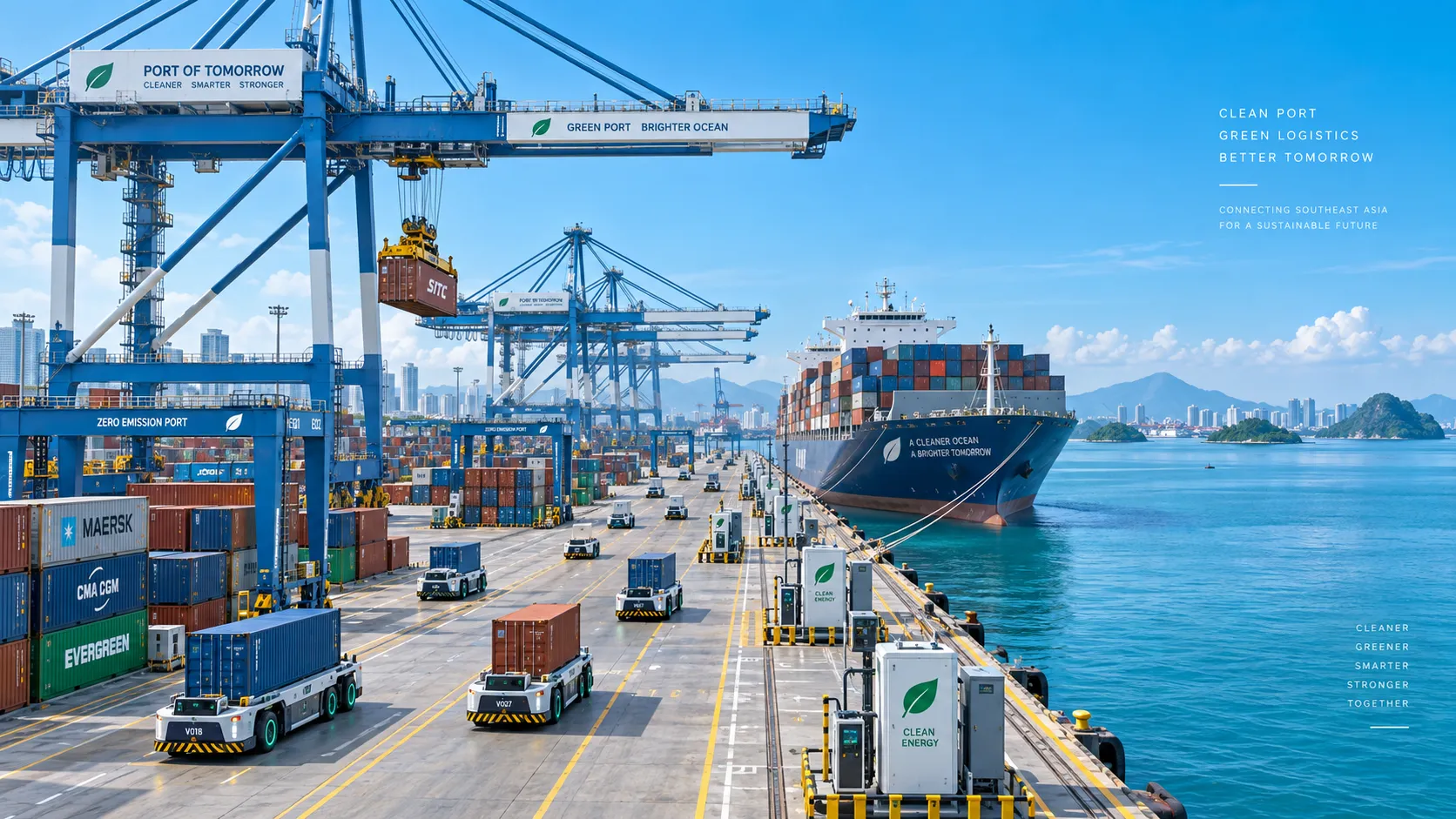
Smart Port Systems in Southeast Asia: Investment Priorities and Adoption Barriers
Smart port systems Southeast Asia: discover investment priorities, adoption barriers, and practical steps to build resilient, connected, high-performing terminals.
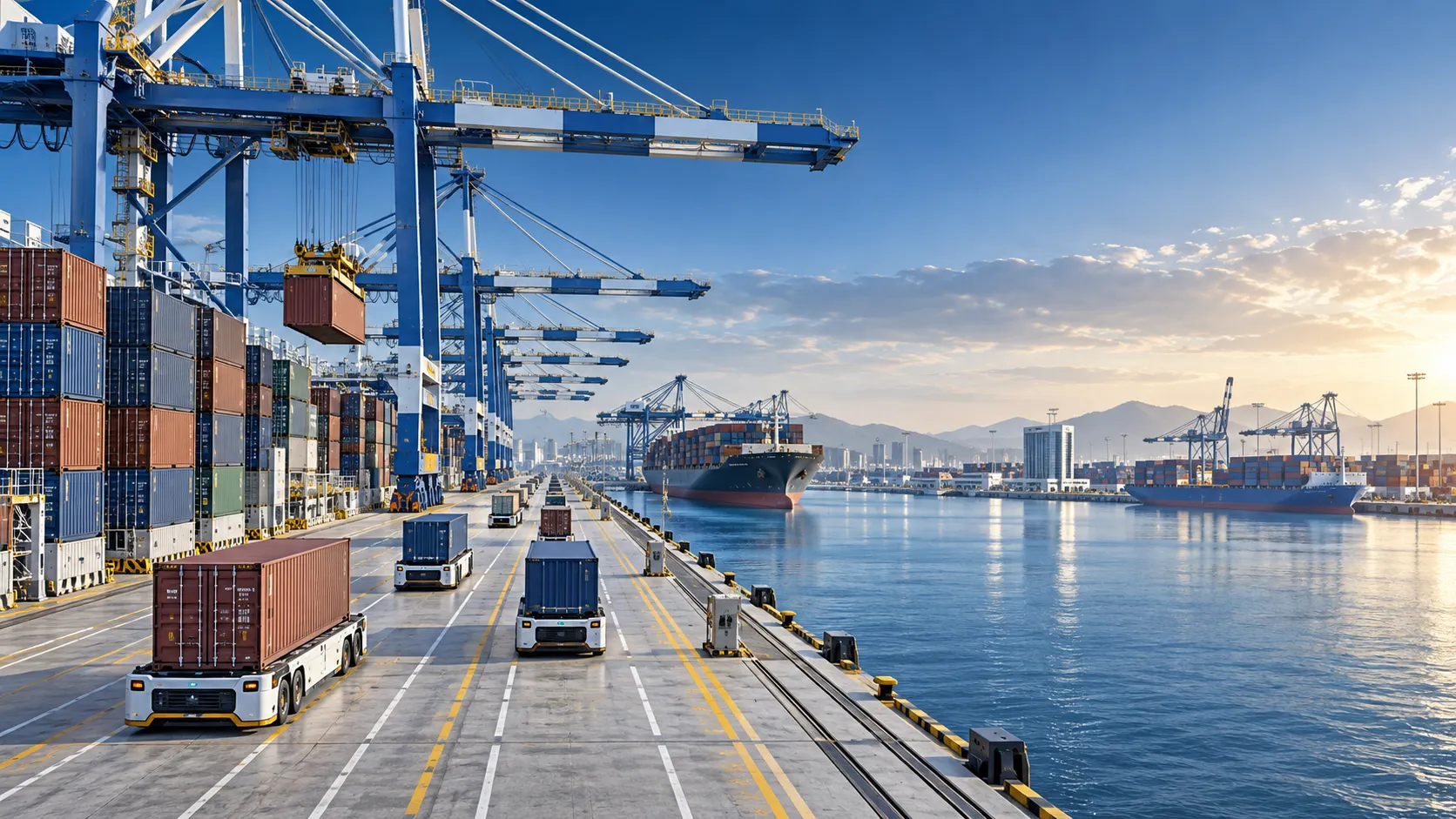
How to Evaluate Terminal Efficiency Solution Suppliers for High-Throughput Operations
Choose a terminal efficiency solutions supplier with confidence. Explore proven criteria for throughput, integration, lifecycle cost, safety, and reliable delivery.
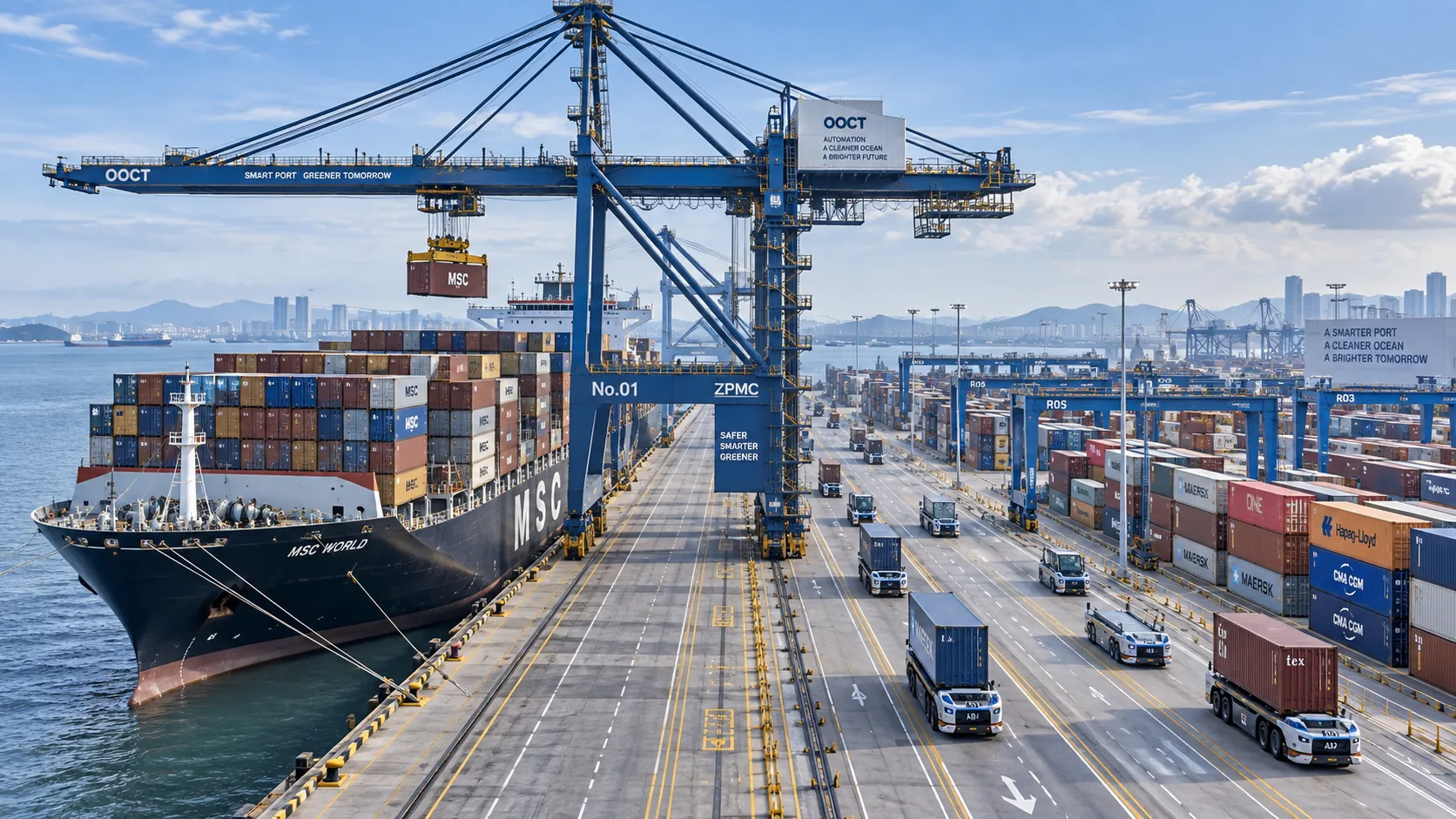
How to Specify a Quay Crane for Container Terminals by Vessel Size and Throughput?
Quay crane for container terminals: learn how to match outreach, lift height, capacity, automation, and cycle performance to vessel size and throughput goals.
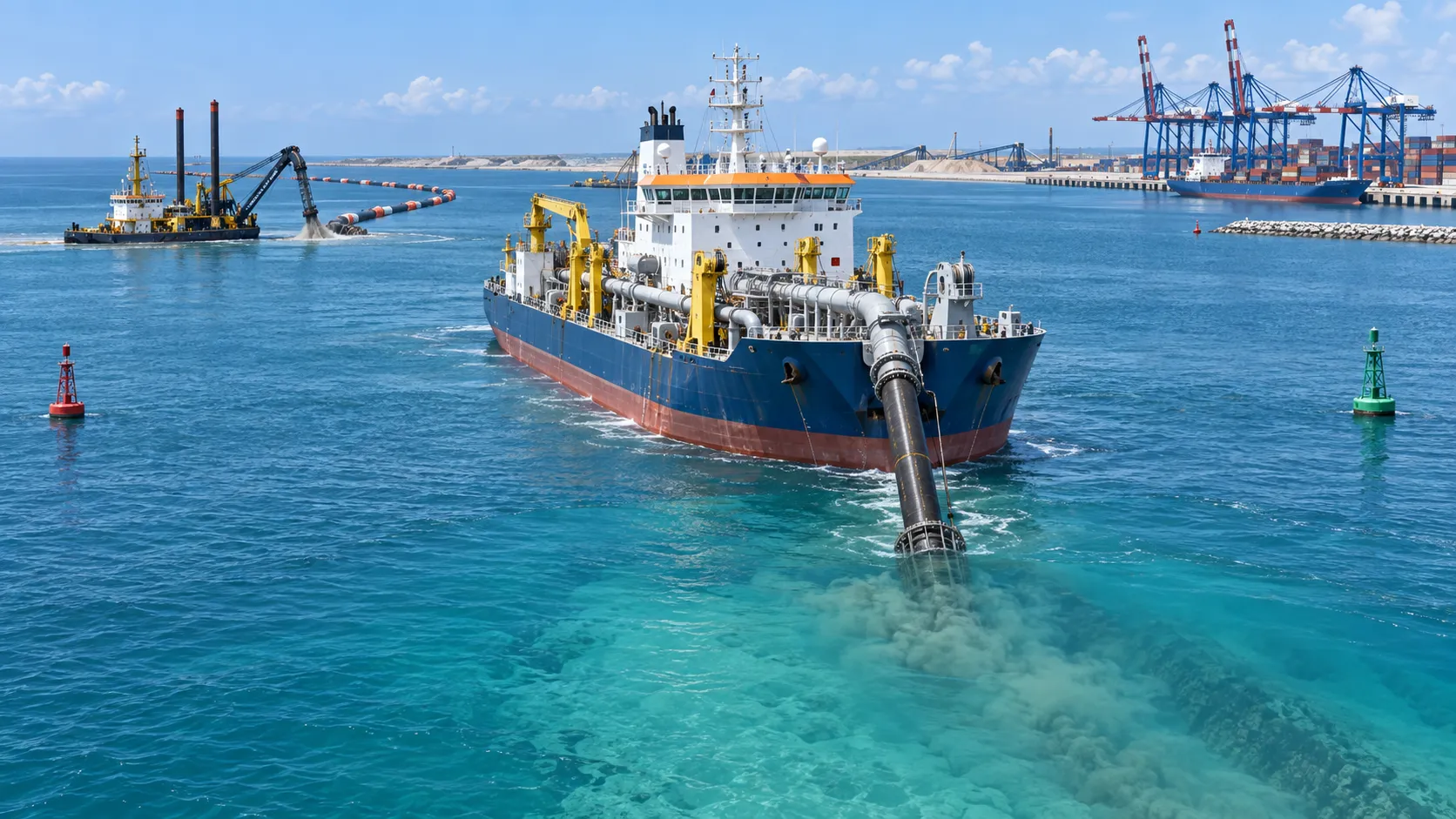
What Dredging Equipment Is Needed for Channel Deepening?
What dredging equipment is needed for channel deepening? Explore dredgers, pipelines, survey tools, and planning strategies for safer, more efficient port access.
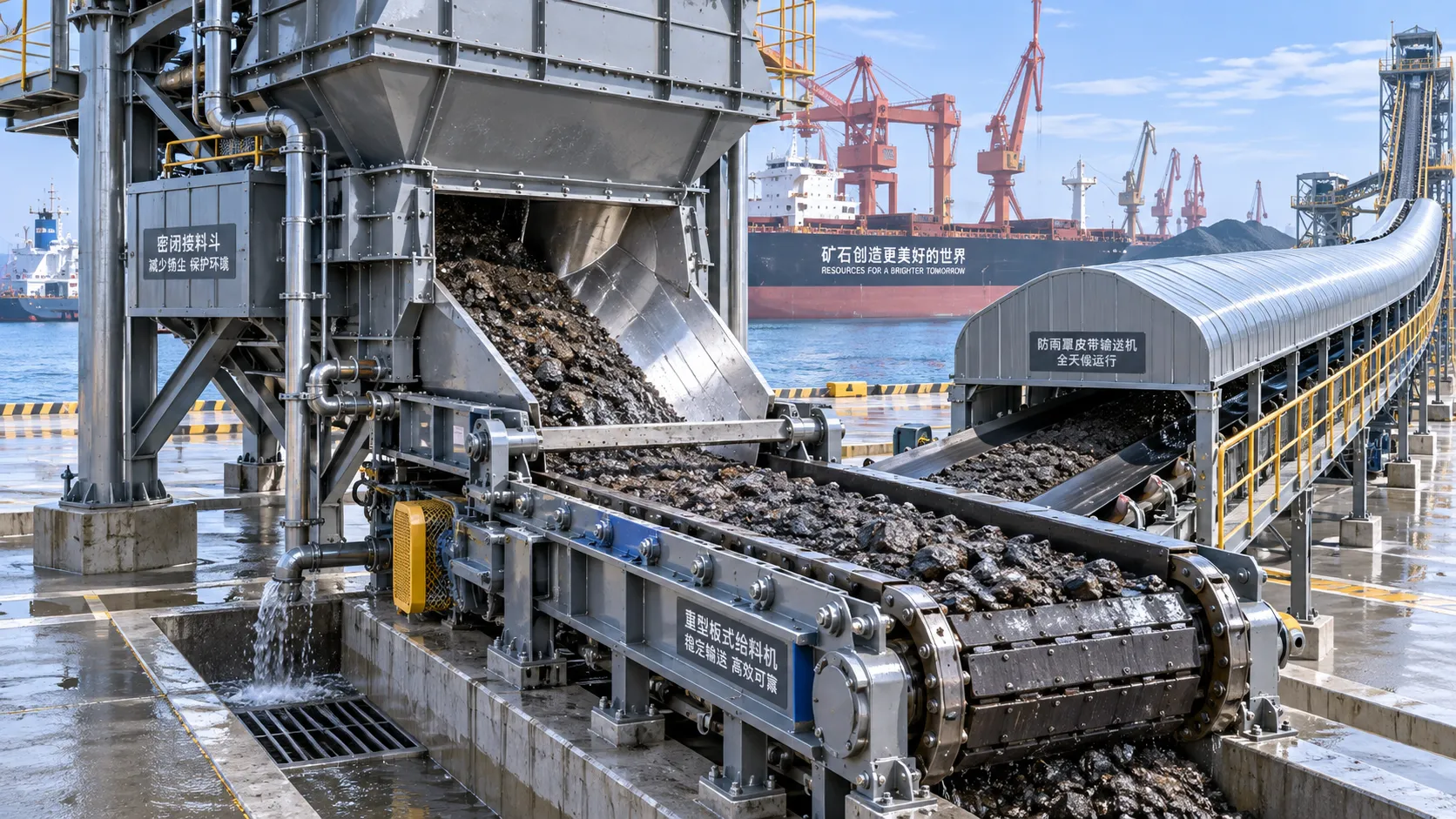
Which Bulk Handling Equipment Suits High-Moisture Cargo?
Which bulk handling equipment suits high-moisture cargo? Compare belt, apron, screw, drag, and slurry systems for reliable flow, less carryback, and higher terminal uptime.
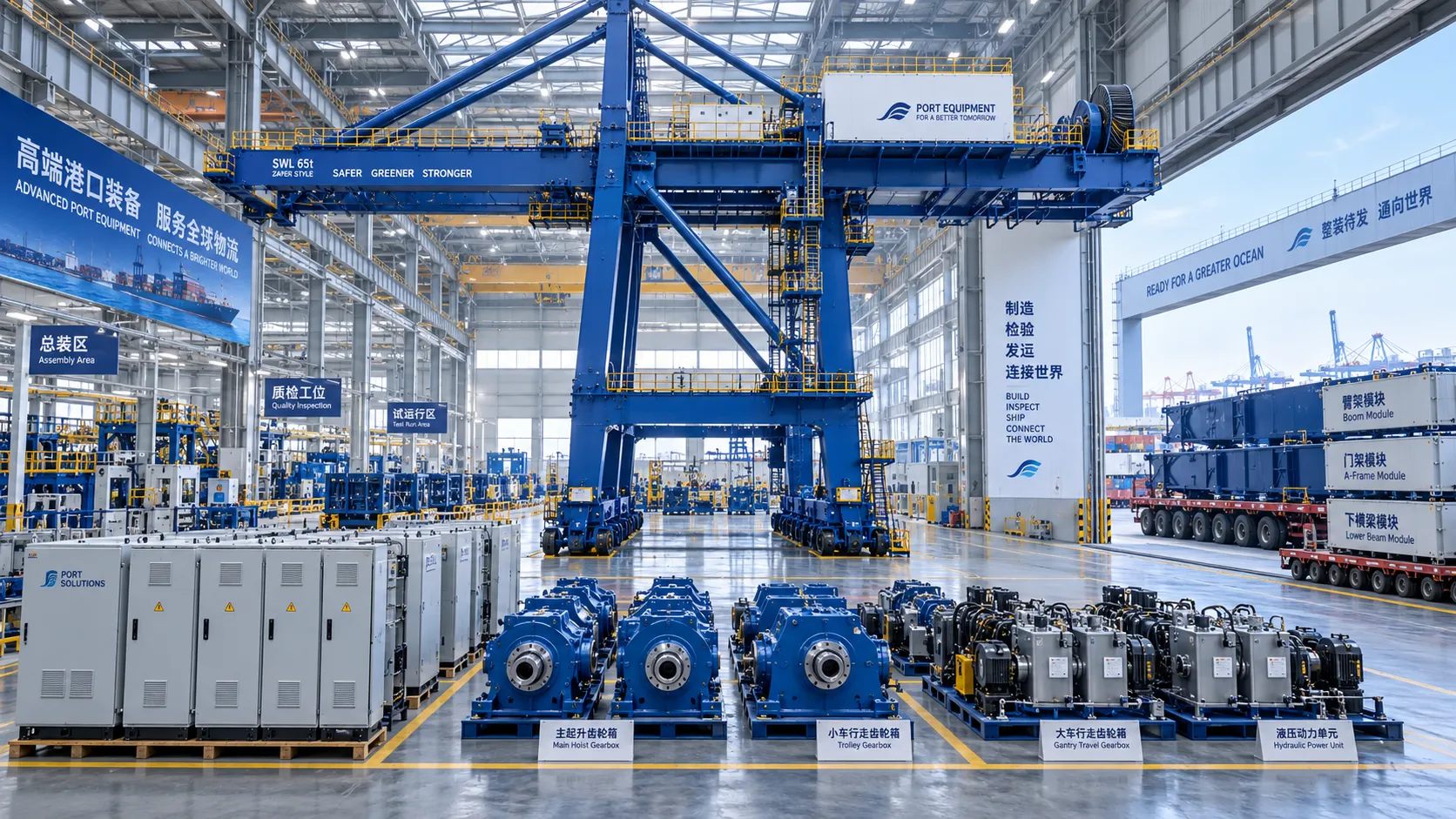
How Can Port Equipment Lead-Time Risk Be Managed?
How can port equipment lead-time risk be managed? Explore practical strategies to control critical paths, suppliers, transport, site readiness, and commissioning delays.
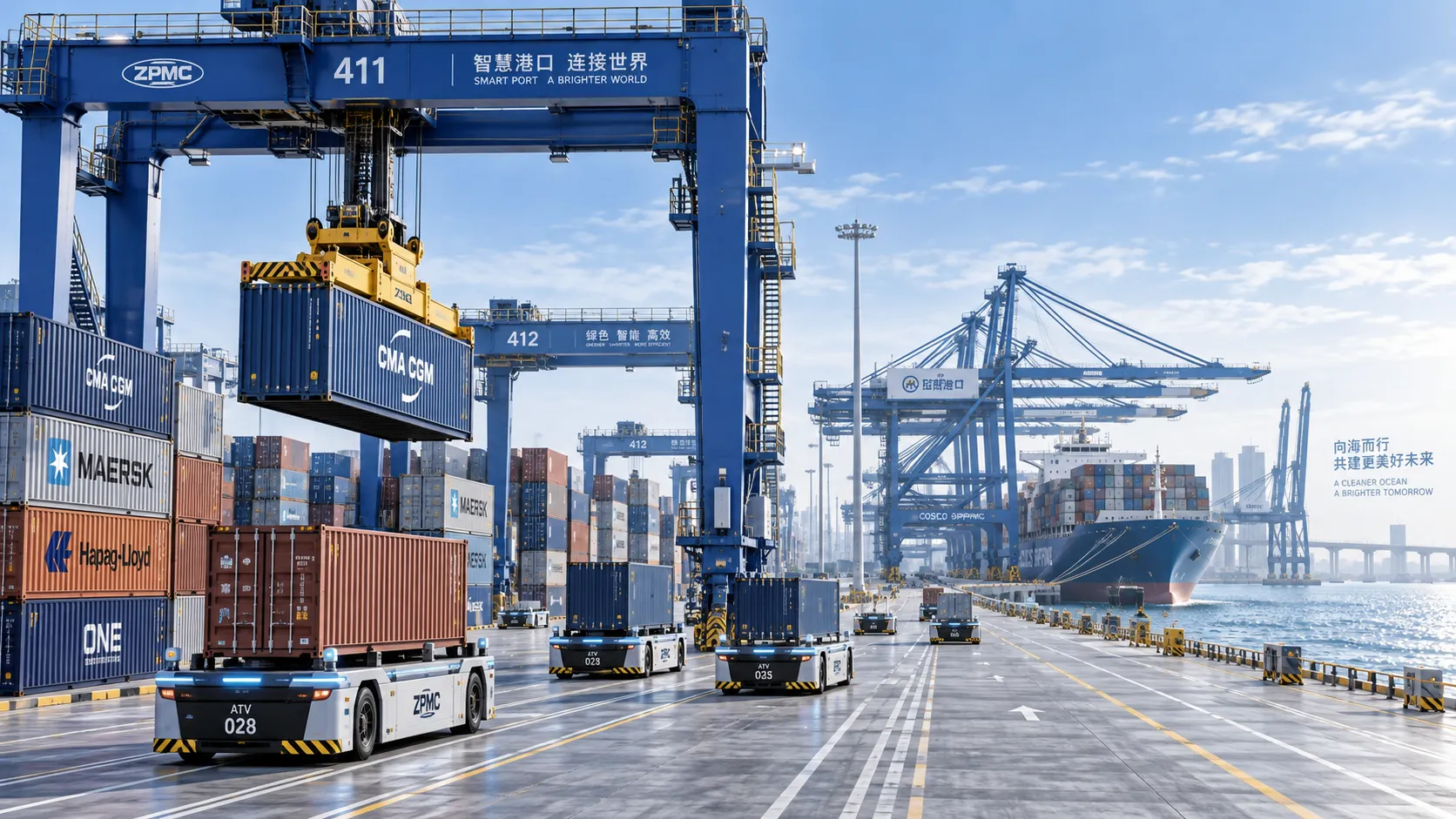
Terminal Automation Technologies That Raise Container Throughput Without Yard Disruption
Terminal automation technology that increases container throughput without disrupting yard flow. Explore smarter integration, resilient workflows, and phased deployment strategies.
Middle East Port Automation: Key Market Drivers, Projects, and Investment Risks
Port automation systems Middle East: explore market drivers, flagship projects, integration challenges, and investment risks shaping smarter, resilient terminals.
Planning Offshore Dredging Operations: Key Risks, Methods, and Project Controls
Offshore dredging operations demand smart planning. Explore key risks, proven methods, environmental controls, and project strategies for reliable delivery.