
Related News
- 00
0000-00
Smart Port Systems in Southeast Asia: Investment Priorities and Adoption Barriers - 00
0000-00
Middle East Port Automation: Key Market Drivers, Projects, and Investment Risks - 00
0000-00
How Coastal Cities Can Prioritize Blue Economy Projects for Jobs and Ecosystem Gains - 00
0000-00
How Harbor Construction Solutions Address Wave Loads, Scour, and Vessel Berthing - 00
0000-00
What Is Driving Maritime Infrastructure Growth in Southeast Asia?
Bulk Cargo Terminal Expansion Trends: Where Throughput Growth Is Driving Investment
Bulk terminal expansion is no longer a simple capacity story
Bulk cargo terminals are entering a new investment cycle, but the logic behind it has changed.
Volume growth still matters, yet capital is moving toward assets that can deliver more reliable throughput under tighter operational constraints.
That is why high throughput bulk cargo handling has become a practical benchmark for expansion decisions across coal, ore, grains, fertilizers, and construction minerals.
The pressure comes from several directions at once.
Trade routes are shifting, vessel sizes remain uneven, cargo seasonality is more volatile, and inland distribution networks are expected to absorb faster discharge cycles.
In this environment, terminal expansion is being judged less by headline berth length and more by how quickly the whole system can move material.
This broader view is central to the intelligence approach associated with PS-Nexus.
Its focus on heavy terminal gear, automation logic, and dredging engineering reflects a market reality: throughput gains now depend on synchronized infrastructure, not isolated equipment purchases.
Where the new throughput signals are becoming visible
Recent project activity shows that terminal owners are targeting bottlenecks with unusually high precision.
Expansion plans increasingly begin with throughput diagnostics rather than land availability alone.
More noticeable signals are appearing in three areas.
- Brownfield upgrades are outpacing greenfield announcements in many mature trade corridors.
- Shiploader, stacker-reclaimer, conveyor, and wagon unloading systems are being specified as integrated throughput packages.
- Dredging-linked expansion is returning where berth deepening can unlock larger parcel economics.
That pattern matters because it shows investors are looking for faster payback from measurable flow improvements.
In practice, high throughput bulk cargo handling is being treated as a commercial resilience tool, not just an operational upgrade.
A terminal that turns vessels quicker and reduces queue volatility can protect margins even when freight cycles become unstable.
Why capital is following throughput rather than sheer size
The main driver is not only cargo growth.
It is the growing cost of delay across the supply chain.
Demurrage exposure, stockyard congestion, rail coordination failures, and weather interruptions all raise the value of stable throughput performance.
Another reason is that commodity trade is becoming less predictable in timing.
Even when annual tonnage remains strong, the monthly profile is often more compressed.
That forces terminals to process sharper peaks without expanding every part of the site equally.
The result is targeted investment in assets that improve cycle speed, handoff visibility, and recovery after disruption.
These signals explain why high throughput bulk cargo handling now attracts funding even when total site expansion looks moderate on paper.
Equipment upgrades are being judged as systems, not line items
One of the clearest shifts is how equipment selection is evaluated.
A faster shiploader has limited value if reclaim capacity, dust control, power stability, or berth access cannot support the same flow rate.
That is pushing the market toward linked engineering decisions.
From recent procurement behavior, throughput gains are most convincing when they combine mechanical power with control visibility.
PS-Nexus tracks this closely through its coverage of mega terminal gear and port automation systems.
The connection is straightforward: higher mechanical capacity creates value only when scheduling logic prevents idle transitions and conflict between assets.
This is especially relevant for mixed cargo terminals.
Facilities handling ore, aggregates, petcoke, and seasonal agri-bulk often need flexible flow paths more than single-asset speed.
So high throughput bulk cargo handling increasingly depends on modular conveyor architecture, rapid switching capability, and maintenance planning based on actual utilization data.
Automation is moving from showcase projects into bulk economics
Container terminals introduced much of the early automation narrative, but bulk terminals are now translating it into their own operating model.
The change is less theatrical than fully unmanned yards.
It is more about practical control over flow consistency.
Low-latency crane communication, equipment health monitoring, path optimization for mobile units, and real-time stockpile positioning are becoming commercially relevant.
That fits the PS-Nexus view of automation as the central nervous system of modern terminals.
For expansion projects, automation now influences bankability in two ways.
- It improves confidence that designed capacity can be achieved in daily operations.
- It reduces the performance gap between nominal equipment ratings and realized site throughput.
That gap is often where bulk terminal business cases weaken.
When high throughput bulk cargo handling is supported by control systems, predictive maintenance, and coordinated dispatch, projected returns become easier to defend.
Dredging is back in the discussion because water depth shapes throughput economics
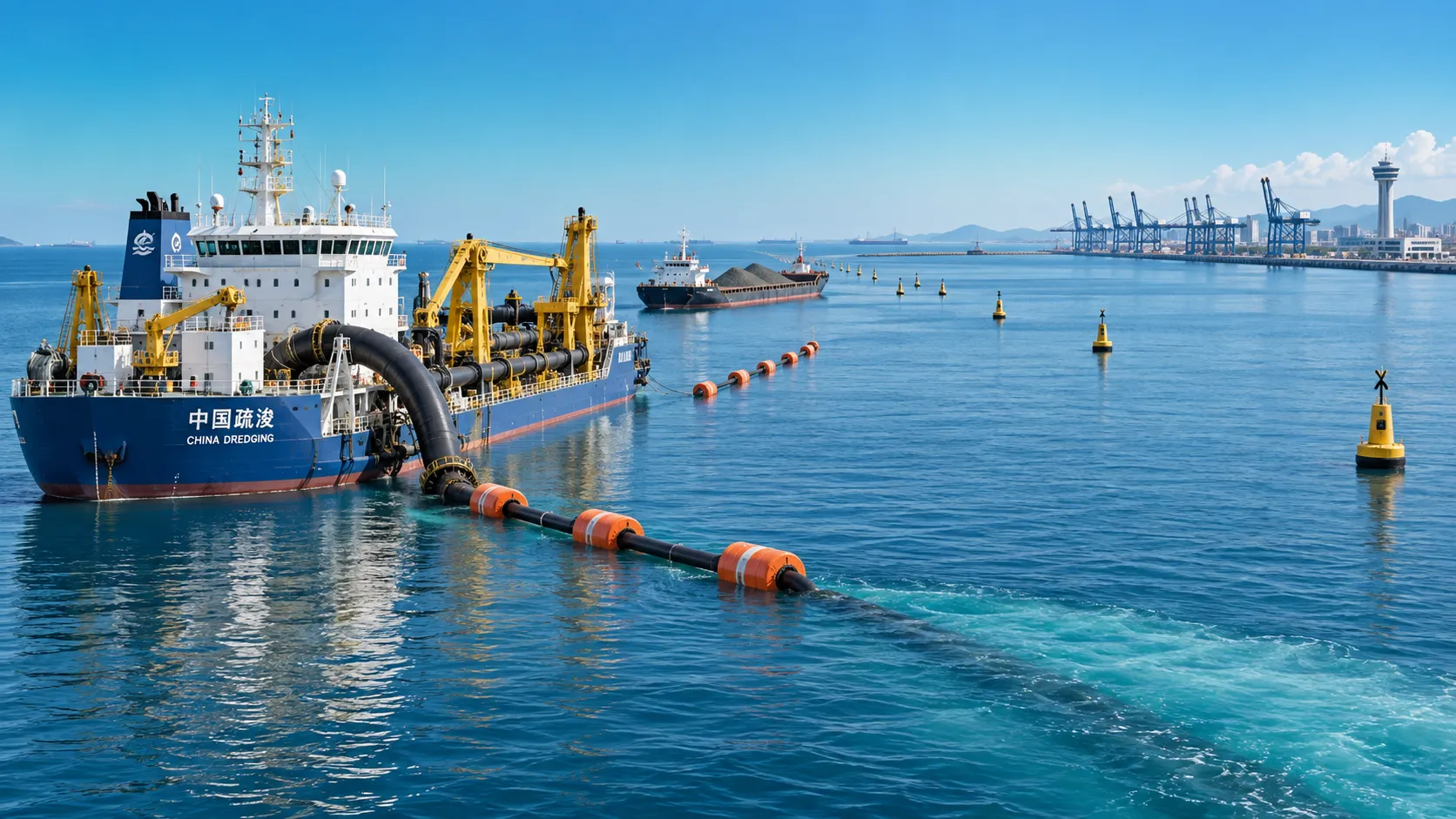
One underappreciated factor in terminal expansion is the return of dredging to the center of capacity planning.
It is not only a civil works issue.
It directly affects the commercial logic of high throughput bulk cargo handling.
If a terminal can increase berth productivity but still limits vessel draft, part of the value remains trapped.
Larger parcel sizes, fewer calls, and stronger route competitiveness often depend on channel and berth depth being upgraded alongside handling systems.
This is where marine geotechnics and dredging intelligence matter.
Projects are being tested more carefully for sediment behavior, maintenance dredging burden, and long-run depth stability.
A terminal that expands throughput without securing navigational reliability can expose itself to hidden operating penalties later.
The impact is spreading beyond the berth line
Throughput-led investment changes more than marine operations.
It reshapes inland coordination, energy use, emissions pathways, and even land value inside industrial corridors.
A faster terminal can pressure rail operators to improve dispatch discipline.
It can also make nearby processing or storage assets more attractive because cargo uncertainty declines.
There is also a sustainability angle.
Higher throughput is increasingly being linked with lower energy waste per ton, electrified handling systems, and reduced anchorage emissions from waiting vessels.
That aligns with the net-zero direction emphasized by PS-Nexus.
The important point is that high throughput bulk cargo handling is no longer judged in isolation from environmental and network performance.
What deserves closer attention before the next investment wave
The next phase of expansion will likely reward disciplined comparison rather than broad optimism.
Several questions now matter more than simple tonnage forecasts.
- Is the bottleneck marine access, yard flow, or landside evacuation?
- Can projected throughput be maintained during maintenance windows and weather disruption?
- Will automation reduce variability, or merely add system complexity?
- Does dredging create durable access gains or recurring cost exposure?
- Can the expansion improve carbon performance as well as cargo velocity?
These are not abstract checks.
They determine whether high throughput bulk cargo handling becomes a defensible long-term advantage or only a short-lived capacity spike.
A practical next step is to compare equipment plans, automation architecture, and dredging assumptions within one throughput model.
That makes expansion choices easier to rank by resilience, not just by design speed.
As commodity flows keep shifting, the most persuasive projects will be those that connect mechanical strength, operational intelligence, and navigational capacity into one coherent system.
Related News
Smart Port Systems in Southeast Asia: Investment Priorities and Adoption Barriers
Smart port systems Southeast Asia: discover investment priorities, adoption barriers, and practical steps to build resilient, connected, high-performing terminals.
How to Evaluate Terminal Efficiency Solution Suppliers for High-Throughput Operations
Choose a terminal efficiency solutions supplier with confidence. Explore proven criteria for throughput, integration, lifecycle cost, safety, and reliable delivery.
How to Specify a Quay Crane for Container Terminals by Vessel Size and Throughput?
Quay crane for container terminals: learn how to match outreach, lift height, capacity, automation, and cycle performance to vessel size and throughput goals.
What Dredging Equipment Is Needed for Channel Deepening?
What dredging equipment is needed for channel deepening? Explore dredgers, pipelines, survey tools, and planning strategies for safer, more efficient port access.
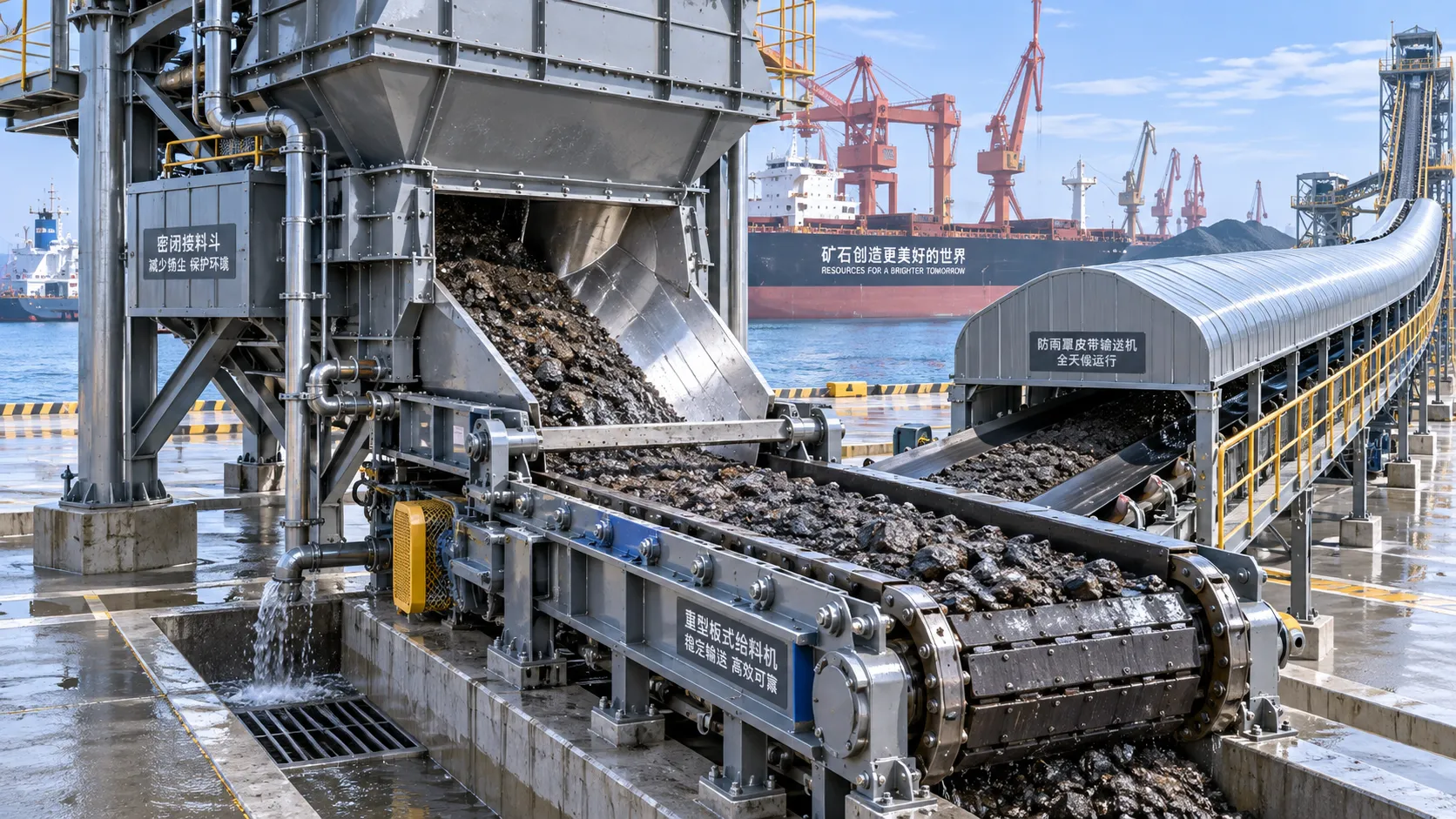
Which Bulk Handling Equipment Suits High-Moisture Cargo?
Which bulk handling equipment suits high-moisture cargo? Compare belt, apron, screw, drag, and slurry systems for reliable flow, less carryback, and higher terminal uptime.
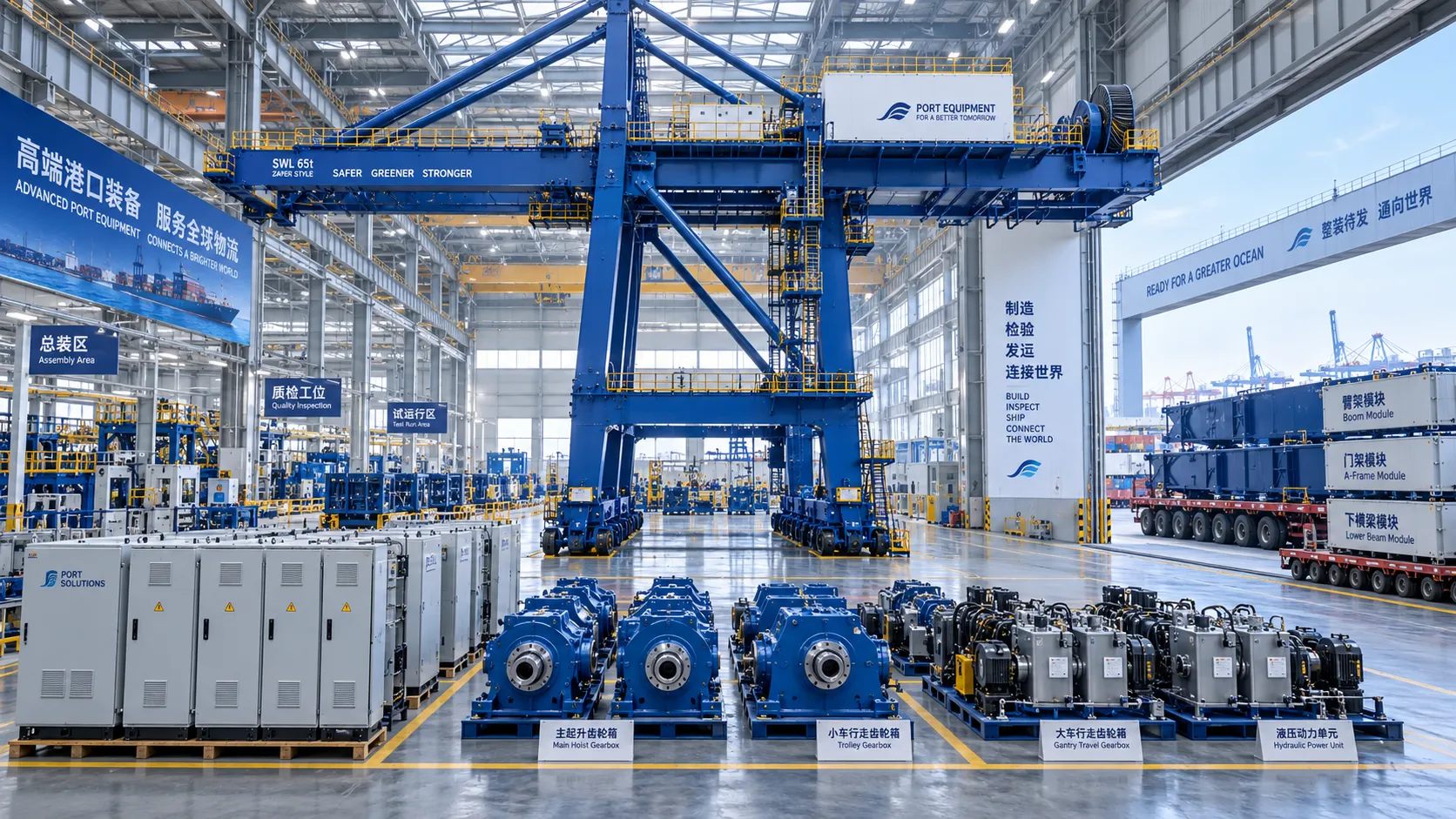
How Can Port Equipment Lead-Time Risk Be Managed?
How can port equipment lead-time risk be managed? Explore practical strategies to control critical paths, suppliers, transport, site readiness, and commissioning delays.
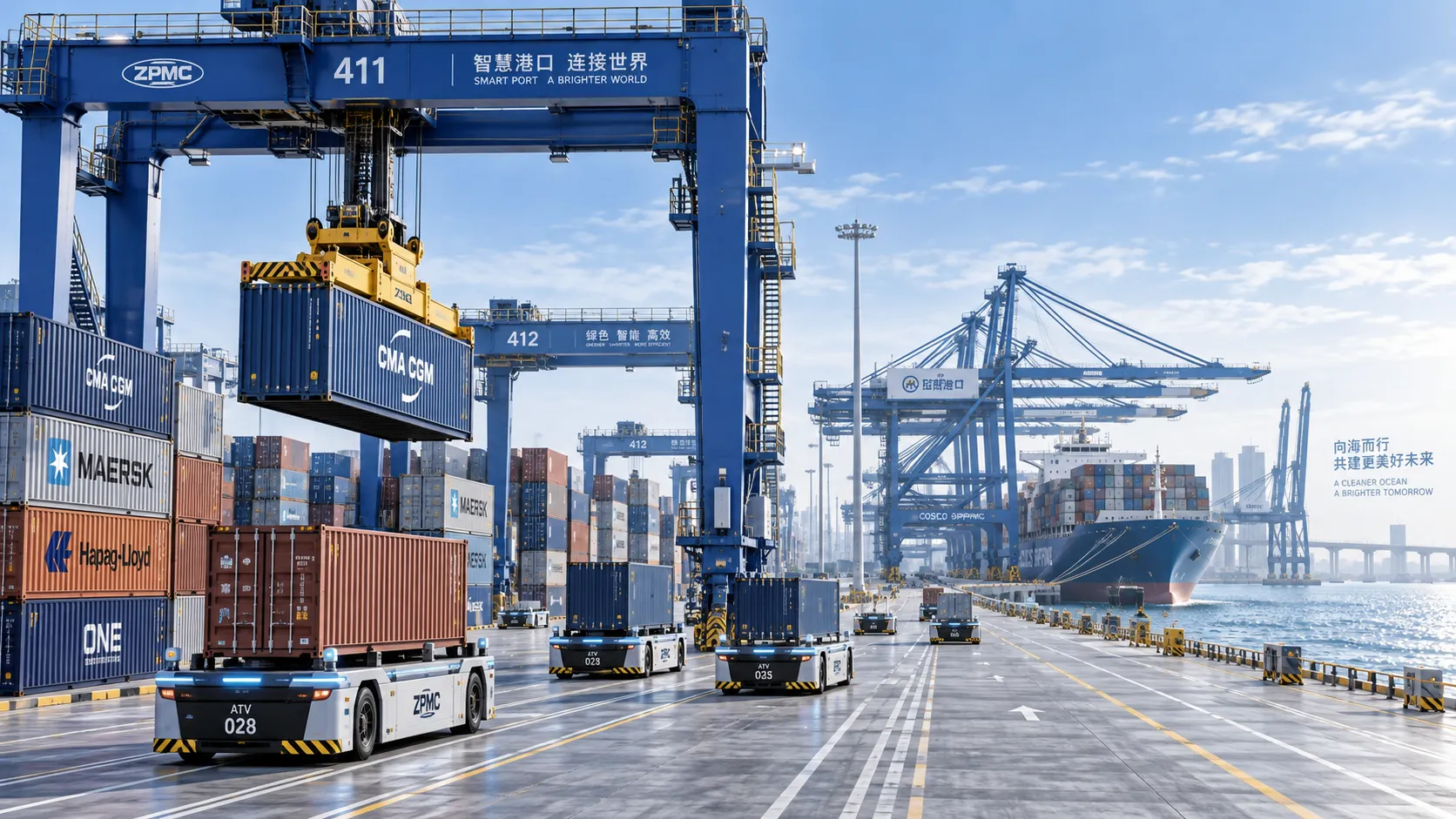
Terminal Automation Technologies That Raise Container Throughput Without Yard Disruption
Terminal automation technology that increases container throughput without disrupting yard flow. Explore smarter integration, resilient workflows, and phased deployment strategies.
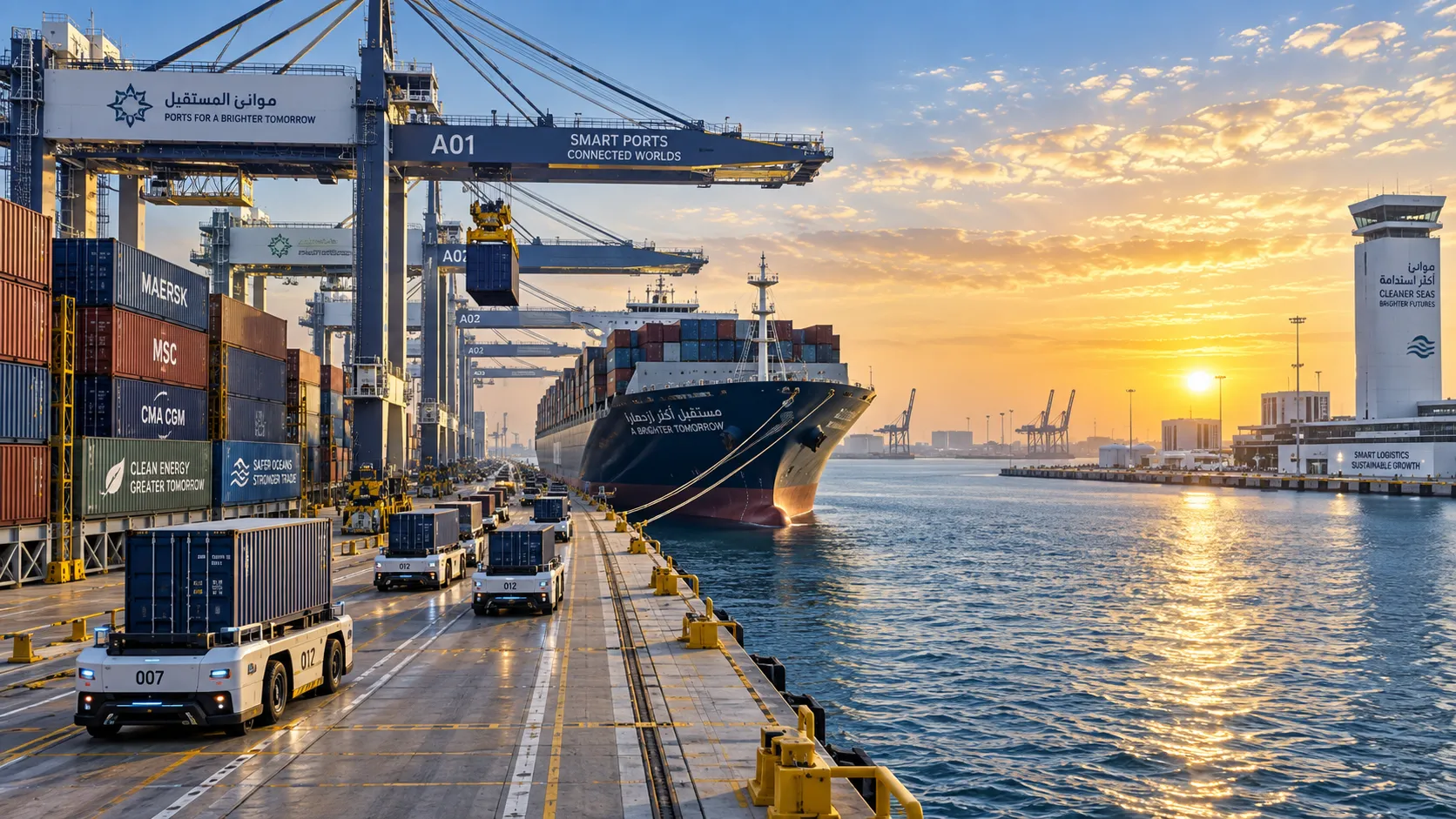
Middle East Port Automation: Key Market Drivers, Projects, and Investment Risks
Port automation systems Middle East: explore market drivers, flagship projects, integration challenges, and investment risks shaping smarter, resilient terminals.
Planning Offshore Dredging Operations: Key Risks, Methods, and Project Controls
Offshore dredging operations demand smart planning. Explore key risks, proven methods, environmental controls, and project strategies for reliable delivery.