Related News
- 00
0000-00
How to Specify a Quay Crane for Container Terminals by Vessel Size and Throughput? - 00
0000-00
Which Bulk Handling Equipment Suits High-Moisture Cargo? - 00
0000-00
Terminal Automation Technologies That Raise Container Throughput Without Yard Disruption - 00
0000-00
Planning Offshore Dredging Operations: Key Risks, Methods, and Project Controls - 00
0000-00
Where Do Automated Guided Vehicles Deliver the Fastest Warehouse Gains in the Middle East?
What to check before adopting terminal automation technology
Before investing in terminal automation technology, technical evaluators need a clear view of operational fit, system interoperability, safety logic, data reliability, and long-term scalability. In complex port environments, the right decision is not just about automation potential, but about whether the technology can support throughput, reduce downtime, and align with future control strategies. This article outlines the key checkpoints that matter before adoption.
For ports, inland terminals, and bulk logistics hubs, adoption decisions are rarely about one machine or one software layer. They involve cranes, AGVs, terminal operating systems, power supply, communication latency, yard logic, maintenance teams, and the operational discipline needed to run 24/7 assets without creating new bottlenecks.
Technical evaluators therefore need a structured framework. The most useful review starts with five questions: does the site have the right operating profile, can the new system connect with existing assets, will the control logic stay safe under abnormal events, is the data trustworthy enough for automated decision-making, and can the architecture still perform after 3 to 5 future expansion phases?
1. Verify Whether the Terminal Operation Is Truly Ready for Automation
Not every terminal gains equal value from terminal automation technology. A high-volume container yard with repetitive moves and stable process windows may benefit quickly, while a mixed-cargo terminal with frequent exceptions may face longer payback and greater integration complexity.
Start with the operational baseline. Evaluators should measure at least 6 to 12 months of move data, peak hour utilization, truck turn time, crane waiting time, and exception frequency. If exceptions affect more than 10% to 15% of total moves, full automation may need phased deployment rather than immediate end-to-end conversion.
Key fit indicators at the site level
- Annual throughput stability across 4 quarters
- Ratio of standard versus non-standard handling tasks
- Yard density and stacking strategy
- Average dwell time by container type
- Availability of structured digital process data
- Current labor and maintenance response model
Throughput profile matters more than headline volume
A terminal handling 1 million TEU is not automatically a better automation candidate than a terminal handling 500,000 TEU. What matters is process predictability. If gate arrivals are clustered into narrow 2-hour windows, or if vessel exchanges repeatedly create yard surges above 85% occupancy, the automation strategy must be designed for congestion resilience, not just nominal capacity.
Evaluate the exception load before evaluating the software
Terminal automation technology performs best when the percentage of unusual cargo, damaged units, manual inspections, and ad hoc truck instructions is clearly mapped. A system that looks efficient in standard flow can fail in practical use if exception handling requires too many operator overrides per shift.
The table below helps technical evaluators compare operational readiness conditions before supplier selection or pilot design.
A terminal that scores well in these four areas is usually a stronger candidate for phased deployment. If two or more areas remain weak, the first investment may be in data structure, power reliability, or process redesign rather than advanced autonomous control.
2. Check Interoperability Across Equipment, TOS, and Control Layers
The biggest technical risk in terminal automation technology is often not the crane or the vehicle. It is the interface layer between the terminal operating system, equipment control system, sensor packages, yard logic, and third-party devices. Weak integration can create delays of 2 to 5 seconds per move, which becomes a major throughput penalty over thousands of moves per day.
Technical evaluators should request a full interface matrix early. This should map protocol type, data ownership, command priority, time synchronization, alarm hierarchy, fallback logic, and cybersecurity boundaries. If the supplier cannot clearly define interface responsibility, implementation risk rises quickly.
Interoperability questions that should be answered before contract stage
- Can the system exchange commands and status data with the existing TOS in real time?
- What is the expected communication latency under normal and peak load conditions?
- How are sensor conflicts resolved when location, load, or obstacle data disagree?
- Which party owns interface maintenance after go-live: OEM, software integrator, or terminal IT?
- What happens if one subsystem runs on a different release version 12 months later?
Do not accept “open interface” as a sufficient answer
Many vendors describe their system as open, but technical evaluators should ask for supported protocol lists, message structures, polling cycles, event buffering rules, and a sample failure-recovery sequence. A practical integration review is more valuable than a generic claim of compatibility.
Version management is a long-term risk point
Ports rarely freeze technology for long. Within 24 to 36 months, one subsystem may receive a software update, a new sensor suite, or a modified routing engine. Terminal automation technology should therefore be assessed for version governance, regression testing windows, and rollback procedures, not only initial commissioning.
For market observers using intelligence platforms such as PS-Nexus, technical validation often benefits from comparing control architecture trends and interface practices across remote crane systems, AGV scheduling stacks, and digital equipment monitoring frameworks, including references like 无 when documenting supplier touchpoints.
3. Review Safety Logic, Redundancy, and Failure Modes in Detail
Safety is not only about emergency stop buttons or fenced lanes. In terminal automation technology, safety is embedded in route permission logic, anti-collision strategy, remote intervention workflow, degraded mode behavior, and the ability to recover from incomplete or contradictory sensor input.
Evaluators should test at least 3 categories of failure mode: communication loss, position uncertainty, and equipment state mismatch. For example, if an AGV reports movement but the yard control system does not confirm a valid path, what is the stop sequence and how many milliseconds are allowed before lockout? These details matter far more than brochure language.
Minimum safety review checklist
- Primary and secondary communication channels
- Safe braking distance at loaded and unloaded states
- Obstacle detection zones and response hierarchy
- Remote operator takeover time
- Manual recovery procedure for blocked lanes or spreader faults
- Alarm prioritization during multi-event incidents
The table below can be used during FAT, SAT, or pre-adoption technical workshops to structure a realistic safety and resilience review.
The practical lesson is simple: terminal automation technology is only as safe as its weakest abnormal-state response. A strong pre-adoption review focuses on edge cases, because those are the moments when productivity losses, asset damage, and operational disruption become most expensive.
4. Validate Data Quality, Visibility, and Decision Logic
Automation decisions depend on data that is complete, time-synchronized, and operationally meaningful. If container position data is off by even 0.5 to 1 bay equivalent, or if event timestamps drift by several seconds between systems, dispatch logic may produce inefficient task sequences or unsafe assumptions.
Technical evaluators should ask where each critical data point originates, how often it refreshes, who can edit it, and how exceptions are labeled. Terminal automation technology often fails to deliver expected value when the system automates flawed assumptions rather than reliable field reality.
Data checkpoints before adoption
Master data governance
Verify asset IDs, lane maps, block definitions, equipment boundaries, and work instruction types. If naming rules differ between TOS, maintenance software, and control systems, automated reconciliation becomes difficult and incident tracing slows down.
Real-time event reliability
Check sensor refresh intervals, packet loss thresholds, and data buffering behavior. For remote or semi-automated crane operations, low-latency communications are especially important. A few hundred milliseconds may be acceptable for monitoring dashboards, but not for fine-motion control or collision prevention logic.
Decision transparency
If the scheduler reorders jobs, route priorities, or stack assignments, the evaluator should be able to trace why. Black-box automation creates support risk. In practice, operation teams need clear rules for at least the top 10 recurring dispatch scenarios and a readable audit trail for overrides.
This is also where sector intelligence becomes commercially useful. Platforms focused on maritime logistics and port control evolution often help teams compare path-planning logic, latency-sensitive crane communications, and digital monitoring practices before locking into one architecture, while references such as 无 can be logged during technical benchmarking without overstating product specificity.
5. Assess Scalability, Maintenance Burden, and Total Lifecycle Practicality
The most successful terminal automation technology is not simply the one that works on day 1. It is the one that still works after yard expansion, equipment replacement, software updates, and staffing changes. Evaluators should therefore examine 5-year practicality, not only commissioning performance.
A phased roadmap is usually safer than a full-site leap. Common deployment patterns include pilot block automation in phase 1, integration extension in phase 2, and optimization of decision engines in phase 3. Each phase may run 6 to 18 months depending on civil work, power upgrades, software readiness, and operator training maturity.
Lifecycle questions that affect long-term return
- How many internal technicians are needed per shift after go-live?
- What spare parts are site-critical, and what is the replenishment lead time?
- Can new equipment brands be added later without rewriting the whole control layer?
- How often are software patches expected, and who validates them?
- What KPI set will be used during the first 90, 180, and 365 days?
Maintenance capability can become the hidden bottleneck
Even a strong automation design can underperform if the terminal lacks skilled diagnostics support for drives, sensors, network switches, and software incidents. If the site depends on external specialists for every fault, mean time to recovery may stretch from 30 minutes to several hours, reducing the value of automation gains.
Scalability should be tested in architecture, not promised in sales language
Ask the supplier to demonstrate how the system behaves if equipment count grows by 20%, 50%, or more, or if the terminal adds a new block, gate lane, or energy management layer. Terminal automation technology should have a documented scaling path for compute load, network traffic, database performance, and control permissions.
A disciplined evaluation process usually leaves fewer surprises after purchase. It also helps procurement, operations, IT, and engineering work from the same assumptions rather than approving a concept that each department interprets differently.
6. A Practical Adoption Framework for Technical Evaluators
If the review needs to move from broad discussion to execution, technical evaluators can use a 4-step framework: baseline diagnosis, interface and safety validation, pilot design, and phased performance acceptance. This keeps terminal automation technology tied to measurable outcomes instead of abstract innovation goals.
Recommended 4-step path
- Collect 6 to 12 months of operational and maintenance data.
- Run simulation and interface mapping with clear failure scenarios.
- Launch a contained pilot with defined shift, block, or asset scope.
- Approve wider rollout only after KPI, safety, and support targets are met.
What should be measured during the pilot
Measure move stability, operator intervention frequency, communication latency, route conflict count, recovery time after stop events, and maintenance response intervals. A pilot without quantified acceptance criteria often creates political momentum but not technical confidence.
Before adopting terminal automation technology, evaluators should confirm operational fit, integration depth, safety under abnormal conditions, data credibility, and the site’s ability to maintain and scale the solution over time. In high-value port environments, these checkpoints protect throughput, reduce avoidable downtime, and improve the quality of long-term capital decisions.
For organizations planning a new automation roadmap or reviewing an upgrade path for cranes, AGVs, yard systems, or marine logistics control layers, a structured assessment can shorten decision cycles and reduce implementation risk. Contact PS-Nexus to discuss your evaluation priorities, obtain a tailored review framework, or explore more intelligence-led solutions for smart terminal development.
Related News
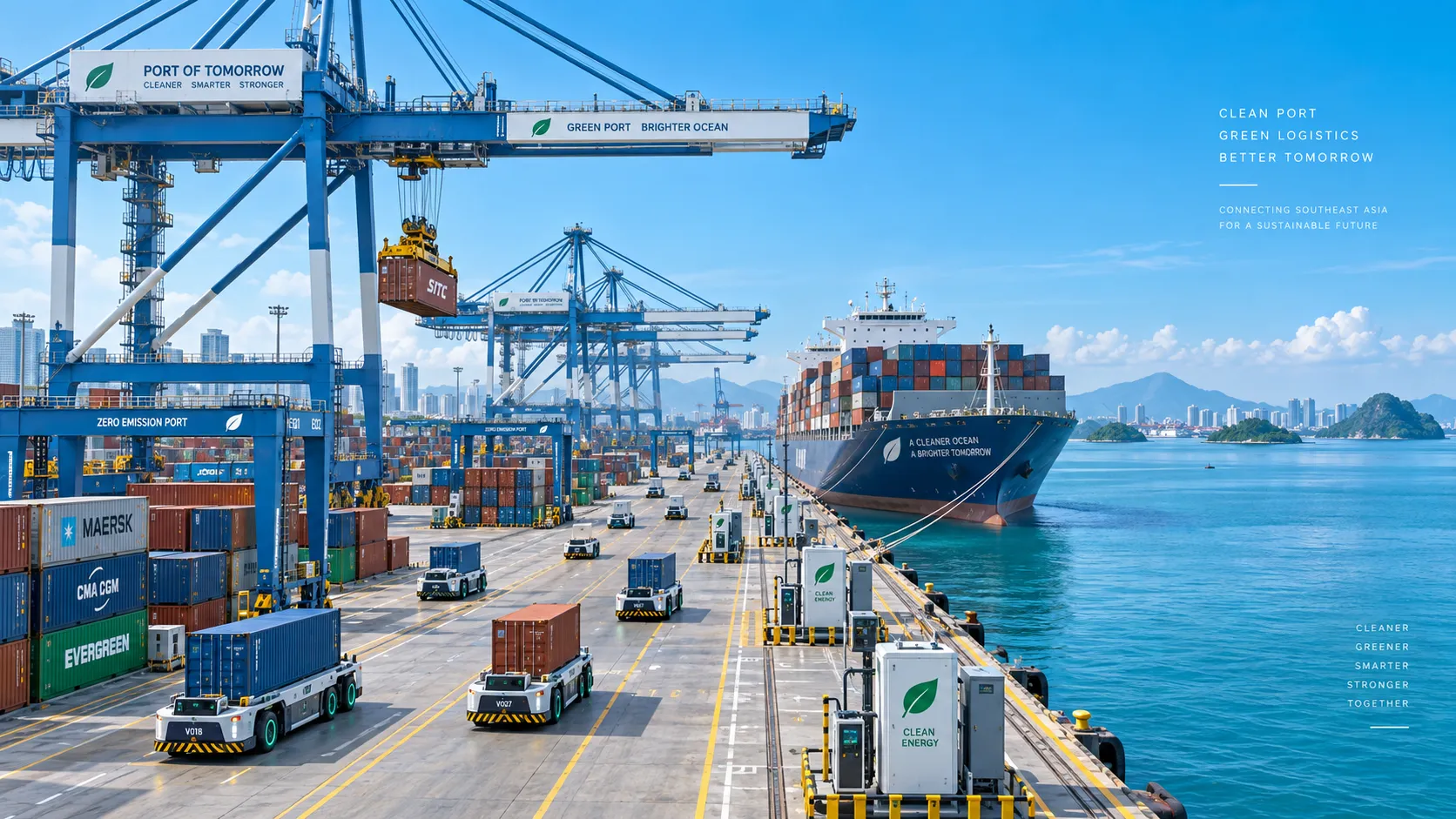
Smart Port Systems in Southeast Asia: Investment Priorities and Adoption Barriers
Smart port systems Southeast Asia: discover investment priorities, adoption barriers, and practical steps to build resilient, connected, high-performing terminals.

How to Evaluate Terminal Efficiency Solution Suppliers for High-Throughput Operations
Choose a terminal efficiency solutions supplier with confidence. Explore proven criteria for throughput, integration, lifecycle cost, safety, and reliable delivery.
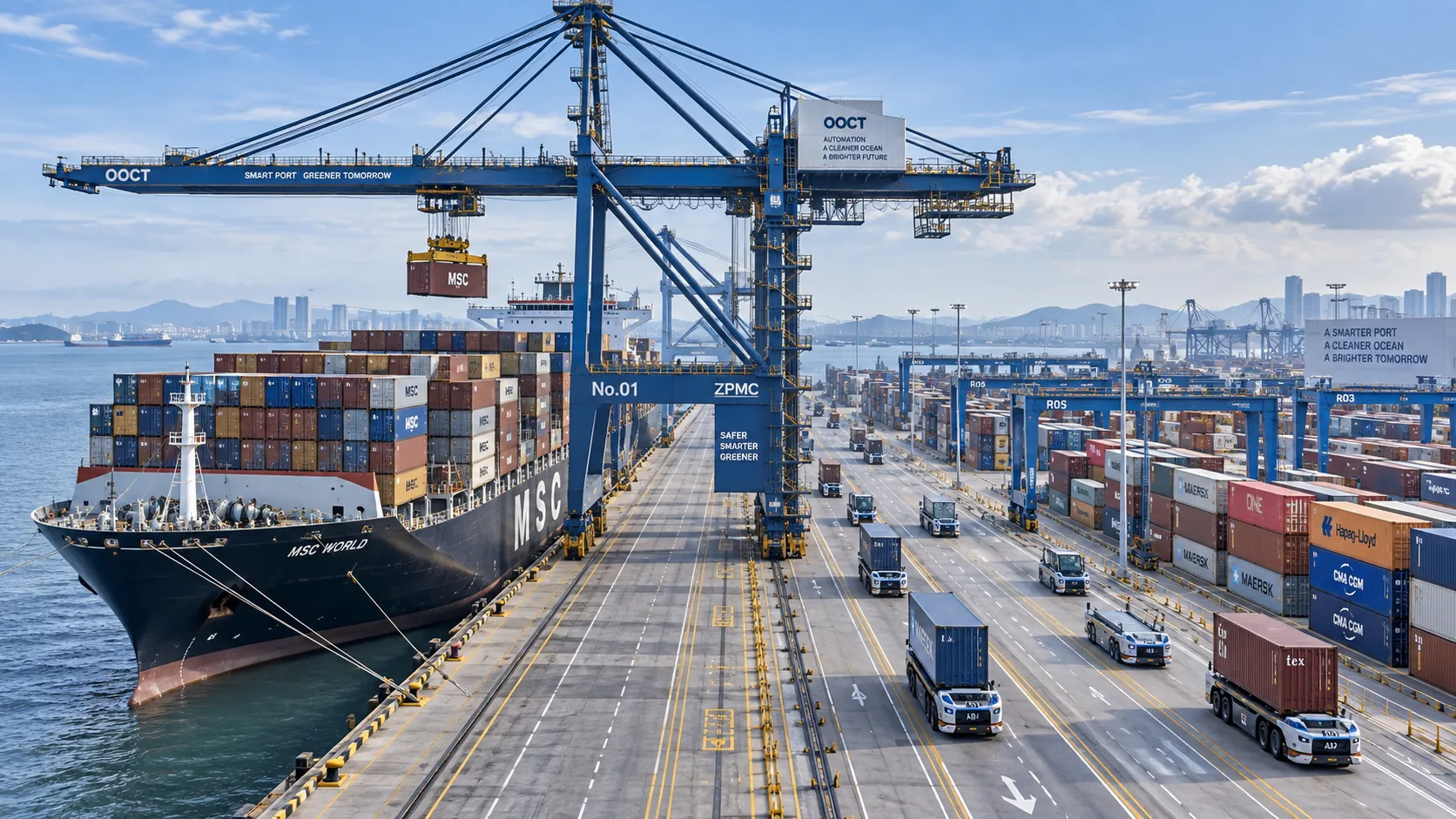
How to Specify a Quay Crane for Container Terminals by Vessel Size and Throughput?
Quay crane for container terminals: learn how to match outreach, lift height, capacity, automation, and cycle performance to vessel size and throughput goals.
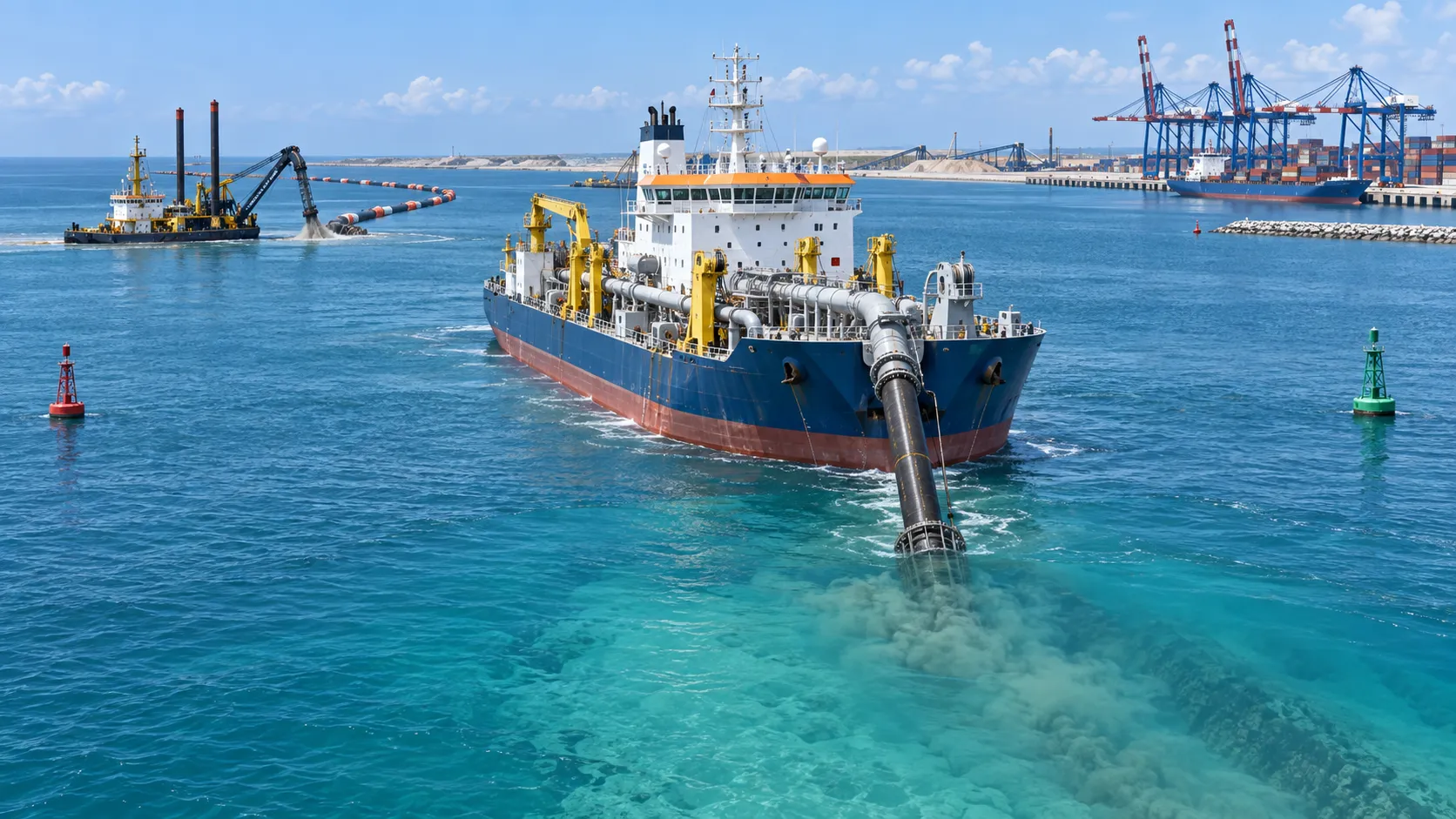
What Dredging Equipment Is Needed for Channel Deepening?
What dredging equipment is needed for channel deepening? Explore dredgers, pipelines, survey tools, and planning strategies for safer, more efficient port access.
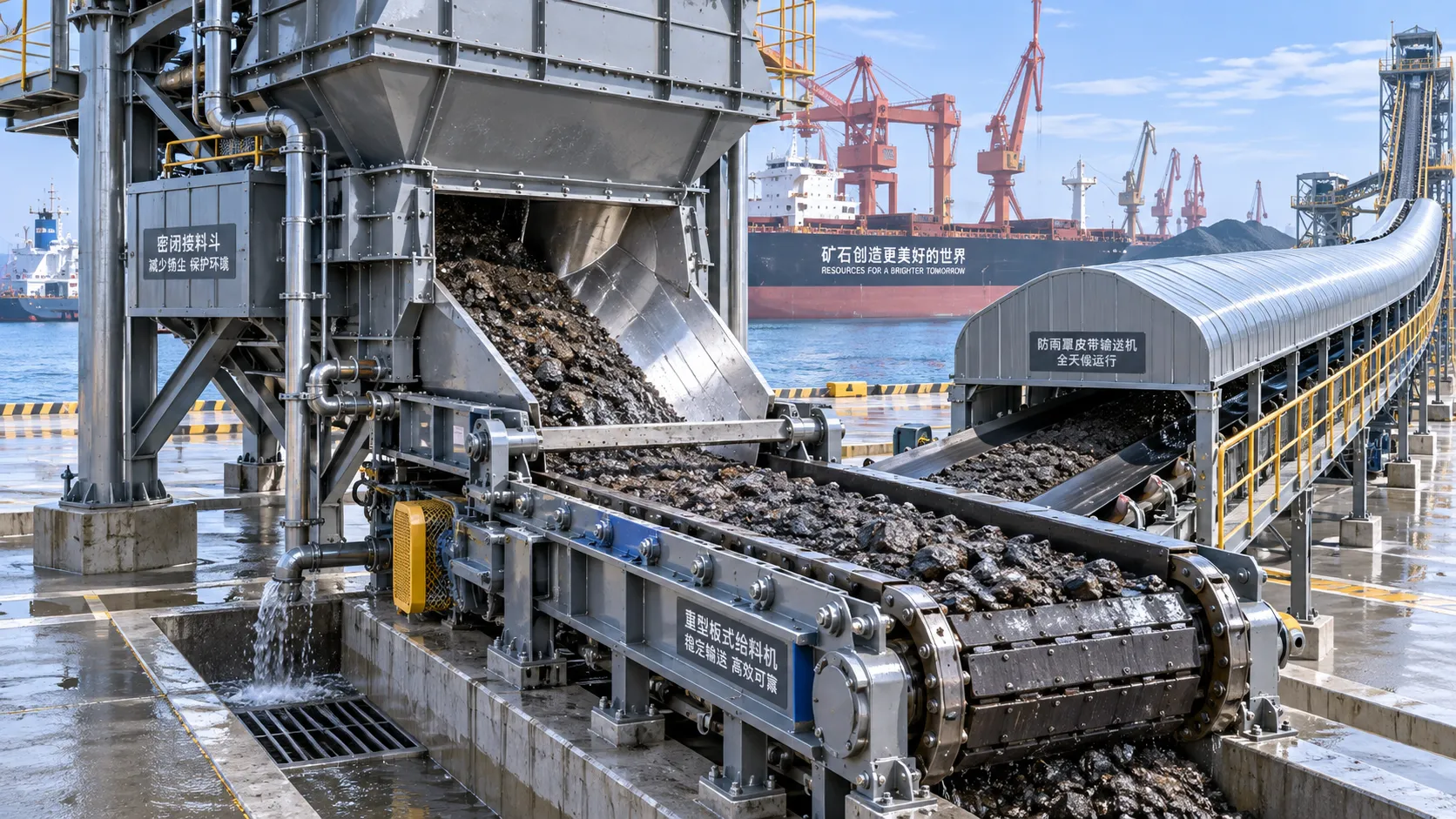
Which Bulk Handling Equipment Suits High-Moisture Cargo?
Which bulk handling equipment suits high-moisture cargo? Compare belt, apron, screw, drag, and slurry systems for reliable flow, less carryback, and higher terminal uptime.
How Can Port Equipment Lead-Time Risk Be Managed?
How can port equipment lead-time risk be managed? Explore practical strategies to control critical paths, suppliers, transport, site readiness, and commissioning delays.
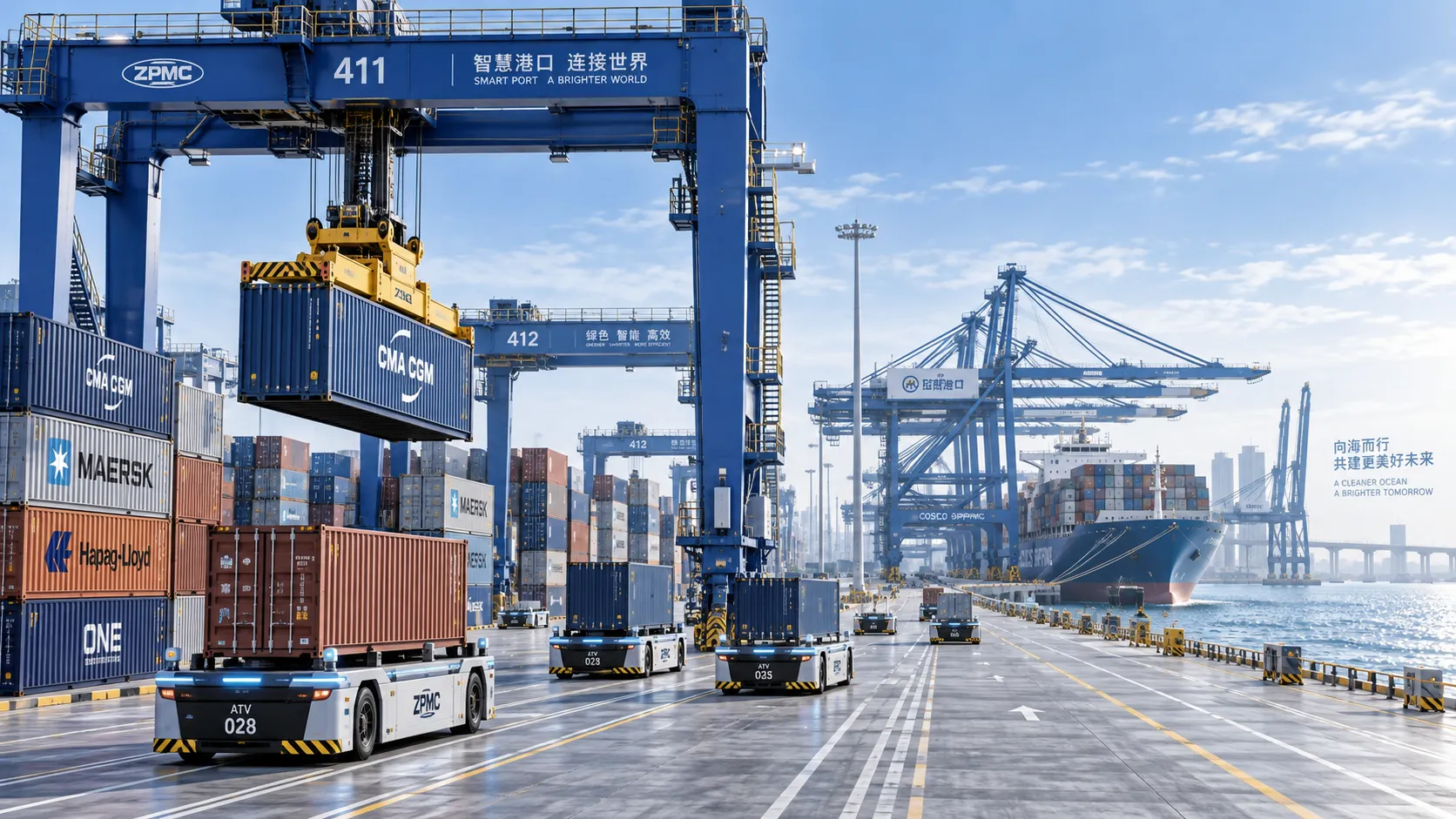
Terminal Automation Technologies That Raise Container Throughput Without Yard Disruption
Terminal automation technology that increases container throughput without disrupting yard flow. Explore smarter integration, resilient workflows, and phased deployment strategies.

Middle East Port Automation: Key Market Drivers, Projects, and Investment Risks
Port automation systems Middle East: explore market drivers, flagship projects, integration challenges, and investment risks shaping smarter, resilient terminals.
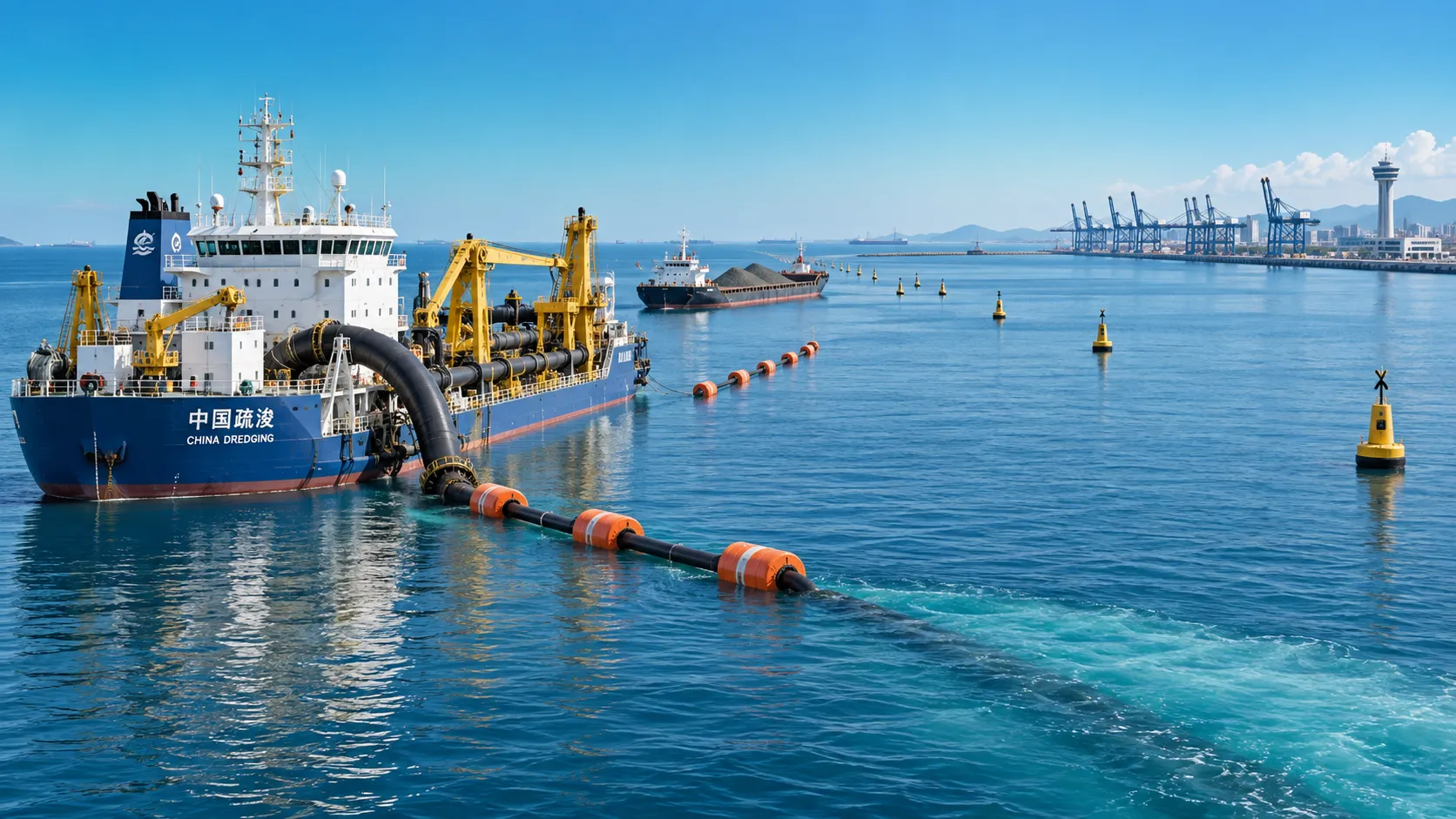
Planning Offshore Dredging Operations: Key Risks, Methods, and Project Controls
Offshore dredging operations demand smart planning. Explore key risks, proven methods, environmental controls, and project strategies for reliable delivery.