
Related News
- 00
0000-00
Work Vessel Procurement Risks: Verifying Build Scope and Delivery Terms - 00
0000-00
How Can Port Equipment Lead-Time Risk Be Managed? - 00
0000-00
Maritime Logistics Operations: How Ports Can Reduce Container Dwell Time - 00
0000-00
What Does Logistics Node Monitoring Cost Across Warehouses and Transport Hubs? - 00
0000-00
How Can IoT Smart Port Solutions Improve Container Tracking and Yard Efficiency?
Work Vessel Procurement Risks: Verifying Build Scope and Delivery Terms
A vessel quote can look complete while leaving the buyer exposed to major cost and schedule changes. The risk usually does not begin with the hull price. It begins when the stated scope is broad—“deck equipment included,” “class compliant,” or “ready for operation”—but the contract does not define what those terms require in drawings, tests, documentation, interfaces, and delivery condition.
For procurement teams, a vessel purchase is a controlled transfer of technical and commercial risk. A boat intended for dredging support, crew transfer, towing, survey work, maintenance, or cargo handling may share a similar general arrangement with another boat while requiring very different structure, machinery, outfitting, and certification. Buyers need to establish what is actually being built before they compare prices or delivery dates.
Start with the operating duty, not the general vessel description
Terms such as “utility boat,” “service craft,” or “workboat” are useful at an early inquiry stage, but they are not sufficiently precise for procurement. A vessel that supports dredging pipelines in sheltered water may need a shallow draft, open working deck, towing points, and durable fendering. A boat assigned to offshore maintenance may need greater endurance, crew accommodation, navigation redundancy, and more demanding stability criteria. A harbor support craft may prioritize maneuverability and frequent berthing protection over range.
The buyer’s first task is to convert the intended duty into measurable operating requirements. This should happen before a request for quotation is issued. Key questions include:
- What payload, deck load, towing load, passenger count, or equipment load must the vessel carry?
- Will it operate in protected inland water, a harbor, river currents, coastal conditions, or open sea?
- What minimum range, fuel endurance, speed, bollard pull, and maneuvering performance are required?
- Will cranes, pumps, winches, survey systems, diving equipment, lifting frames, or pipeline handling gear be installed?
- Which flag-state, port, owner, insurer, class, or local authority requirements apply?
- What maintenance capability will be available after handover?
These questions affect more than vessel size. They influence hull scantlings, engine selection, tank arrangement, electrical load balance, wheelhouse visibility, deck reinforcement, firefighting systems, accommodation arrangements, and the documents needed for acceptance.
A purchaser reviewing a suitable work vessel configuration should treat the published arrangement as a starting point for defining duty-specific requirements, rather than assuming that every visible feature is included in a particular build offer. Optional equipment, propulsion variants, and certification scope can change both price and lead time.
Where build scope becomes unclear
Scope gaps are rarely hidden in one dramatic omission. More often, they appear at the boundaries between systems. A supplier may include the main engines but exclude commissioning consumables. The vessel may be described as equipped with a winch, while the wire rope, control station, load monitoring, foundation reinforcement, or certification of the lifting arrangement remains unspecified. A buyer may assume shore power capability, while the builder has only supplied a basic battery charger.
A reliable procurement package separates the scope into defined layers: hull and structure, propulsion, auxiliaries, electrical systems, navigation and communication equipment, outfitting, safety equipment, deck machinery, accommodation, documentation, testing, preservation, and delivery. Each layer should identify whether an item is included, excluded, owner-supplied, or provisioned for future installation.
Hull, structure, and deck capacity
Hull dimensions alone do not confirm operational suitability. Buyers should verify the design draft at relevant loading conditions, freeboard, tank capacities, deadweight, deck loading limits, and stability assumptions. If a vessel will carry removable machinery or project cargo, the deck loading requirement should state both distributed load and concentrated loads. A deck that supports a stated average load may still require local reinforcement beneath a crane pedestal, container corner, pump skid, or cable reel.
Material choices also require attention. Steel, aluminum, and composite construction each involve different corrosion, repair, weight, fire safety, and operational considerations. Within a steel vessel, the specification should address coating systems, corrosion allowance where applicable, sacrificial anodes, weld quality requirements, and treatment of inaccessible spaces. “Marine-grade coating” is not a sufficient acceptance description without a defined surface preparation level, paint system, dry-film thickness requirements, repair method, and inspection records.
Machinery packages and real operating capability
Main engine power is often compared too quickly. The more useful question is whether the complete propulsion package will achieve the required duty at the intended displacement and environmental conditions. Gearbox ratio, propeller diameter, nozzle arrangement, shaft line design, cooling configuration, fuel quality tolerance, and auxiliary electrical demand all affect real-world performance.
For vessels used in shallow or debris-prone waters, buyers may need protection for propellers, rudders, cooling inlets, and sea chests. A craft operating for long periods at low speed may have different cooling and generator-loading needs from one making regular high-speed transits. Where the project depends on towing or pushing, the contract should specify the required performance test conditions rather than relying solely on installed engine ratings.
Spare parts need similar discipline. A vague reference to “standard spare parts” can produce an inventory that is poorly matched to the owner’s maintenance plan. The list should identify quantities, part numbers where available, storage requirements, special tools, recommended consumables, and the point at which ownership transfers.
Translate commercial language into verifiable deliverables
Delivery terms are often negotiated as commercial clauses, yet they depend heavily on technical definitions. “Delivery in 10 months” has little practical value unless the parties agree on the start date, design approval process, owner-furnished information, progress milestones, test sequence, rectification period, and conditions for delivery acceptance.
Buyers should avoid relying on phrases such as “delivery upon completion” or “ready for shipment.” Completion can mean the vessel has left the construction berth, passed a builder’s internal inspection, obtained required certificates, completed sea trials, or been loaded for transport. Those are materially different stages.
Payment schedules should align with evidence of progress, not simply calendar dates. Typical evidence may include approved design documents, material certificates, hull completion records, machinery installation milestones, test reports, and delivery documentation. The appropriate structure depends on contract value and project risk, but the underlying principle is consistent: payment triggers should correspond to work that can be independently confirmed.
Control changes before they become disputes
Vessel construction involves design development. Some changes are reasonable, especially when an authority, equipment supplier, or operating requirement introduces a necessary revision. The risk lies in allowing changes to move through informal emails, meeting notes, or verbal site discussions without a clear record of cost, schedule, and technical consequences.
A change-control process should require a written variation proposal stating the reason for change, drawing references, affected systems, price effect, delivery effect, and any impact on approvals or warranty. The buyer should also define who has authority to approve a variation. Site personnel may need to clarify an installation detail, but they should not accidentally commit the company to additional cost or altered delivery obligations.
Interface items deserve particular scrutiny. If the owner supplies radar, communications equipment, survey sensors, dredging controls, or specialized deck equipment, the contract should identify who is responsible for foundations, cabling, power supply, cooling, software integration, installation, testing, and failure diagnosis. “Installation by others” does not settle those responsibilities.
Inspect documents as carefully as the physical vessel
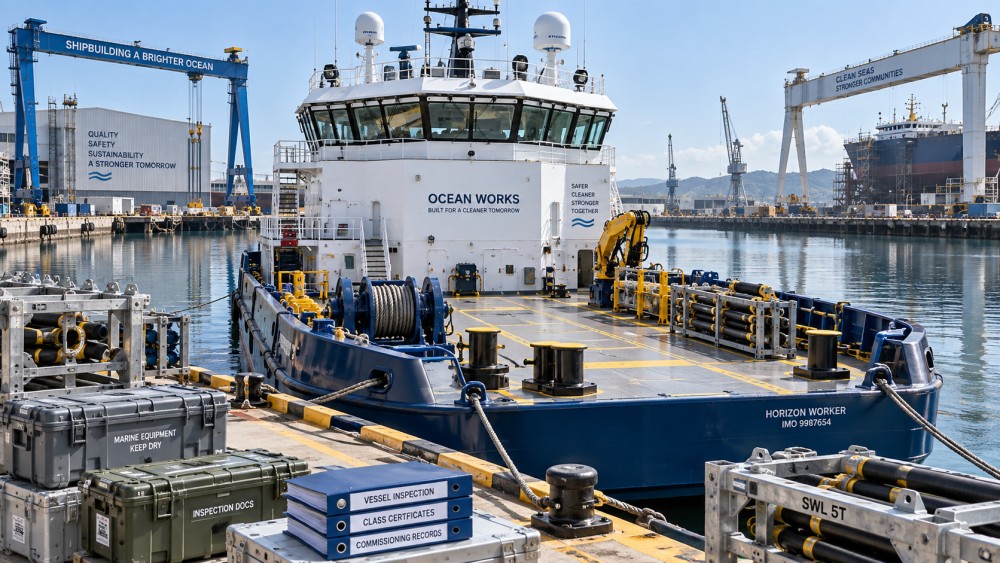
A visually complete boat can still be commercially incomplete if the documentation package is missing or inconsistent. Certificates, approved drawings, manuals, test records, material traceability documents, equipment warranties, and spare-parts lists may be necessary for registration, insurance, maintenance planning, or future resale.
Document requirements should be included in the build specification and linked to final acceptance. Depending on the vessel and applicable rules, the buyer may need general arrangement drawings, machinery schematics, electrical single-line diagrams, tank plans, stability information, operating manuals, maintenance manuals, certificates for key equipment, welding records, coating reports, and test documentation. If documents must be supplied in a particular language or electronic format, that should be stated early.
Procurement teams should also check consistency between documents. A common problem is a discrepancy between the equipment list, drawings, invoice description, and installed equipment nameplate. Small inconsistencies can delay registration or complicate warranty claims. A document register with revision status, expected submission date, reviewer, and approval record provides a practical control point.
Acceptance should reflect operational readiness
Acceptance is more than a ceremonial handover. It determines when final payment, risk transfer, warranty commencement, and responsibility for deficiencies move from builder to buyer. For that reason, acceptance criteria should be measurable and tied to the intended duty.
Harbor acceptance may cover machinery operation, alarms, electrical systems, pumps, steering, navigation lights, watertight closures, deck machinery, and safety equipment. Sea trials may confirm speed, turning behavior, vibration observations, propulsion response, and other agreed performance items. Where a vessel will support a specific industrial task, a functional trial may be more meaningful than a general transit test. For example, a boat expected to handle hoses, floating pipelines, or towing lines should have its relevant deck arrangements and controls checked under safe test conditions.
Buyers should distinguish between defects that prevent acceptance and minor punch-list items that can be corrected after delivery. The punch-list process needs deadlines, responsibility for travel or repair access, retention arrangements where appropriate, and a method for confirming closure. Without that structure, minor items can remain unresolved once the vessel is remote from the yard.
Procurement discipline protects the whole operating period
The lowest initial quote may omit equipment, tests, documents, transport preparation, or warranty obligations that another quotation includes. A fair comparison requires a compliance matrix that marks every requirement as included, excluded, optional, or subject to clarification. Procurement should challenge unexplained deviations rather than assuming they are minor.
A well-defined work vessel purchase does not eliminate construction risk, but it makes risk visible early enough to allocate and manage it. Clear duty requirements, controlled design changes, evidence-based milestones, documented test procedures, and unambiguous delivery conditions give buyers a stronger basis for comparing offers and accepting a vessel that is ready for its intended service.
Related News

Selecting Automated Cargo Handling Systems for Terminal Throughput and Yard Limits
Automated cargo handling systems for maritime terminals: learn how to balance berth throughput, yard limits, automation software, and lifecycle costs for smarter terminal decisions.

Smart Port Solutions for Berth Planning: Reducing Vessel Wait Times and Conflicts
Smart port solutions for berth planning reduce vessel wait times, prevent conflicts, and optimize quay, crane, and yard resources for faster turnarounds.

How AI Scheduling Improves Berth, Yard, and Gate Coordination at Terminals
Terminal automation systems with AI scheduling align berth, yard, and gate operations to reduce congestion, improve throughput, and strengthen terminal resilience.

How to Evaluate a Port Logistics Solutions Supplier for Terminal Uptime and Scalability
Choose a port logistics solutions supplier with confidence. Learn how to assess uptime, scalability, service strength, integration, and lifecycle risk for resilient terminal growth.
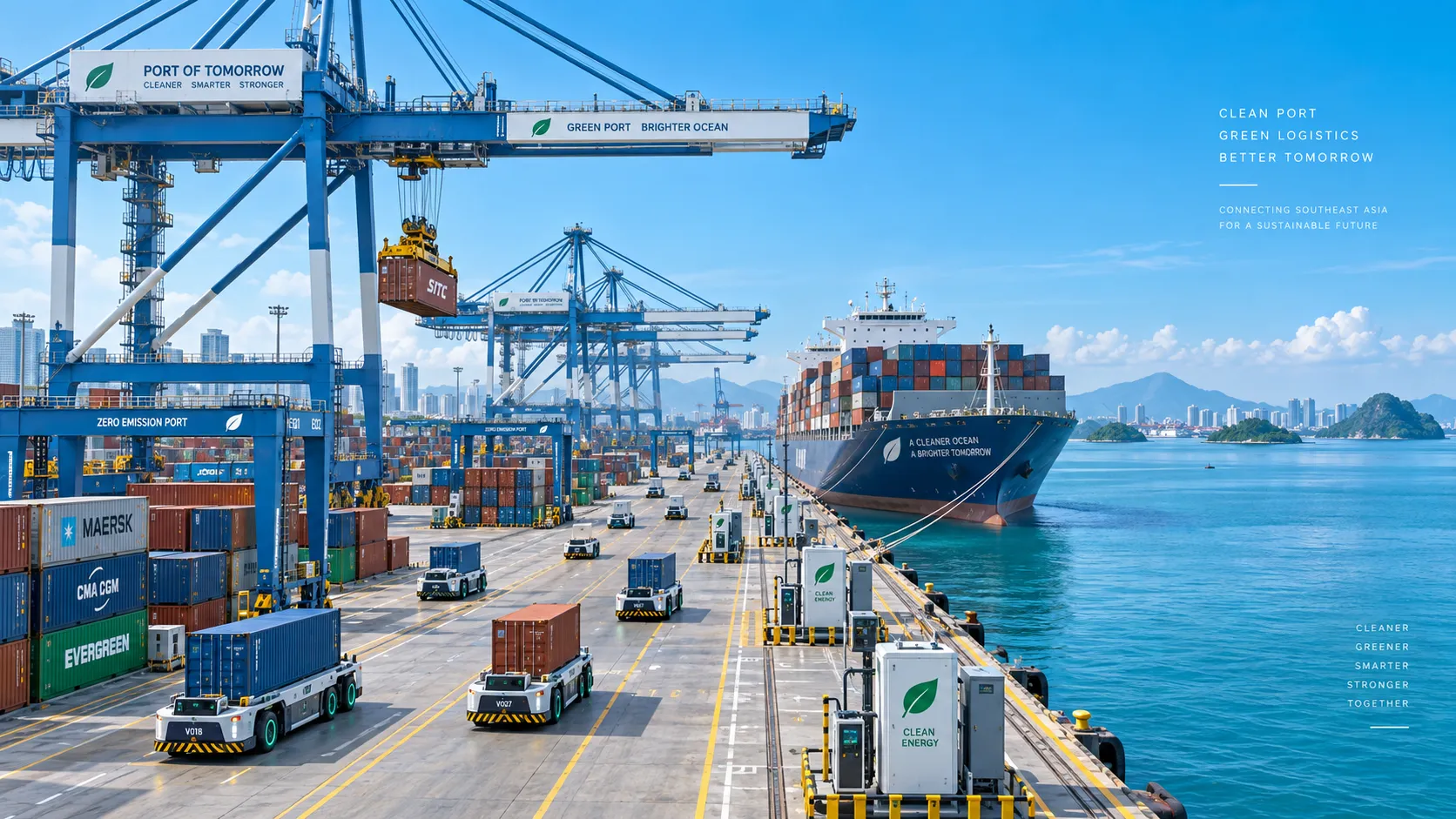
Smart Port Systems in Southeast Asia: Investment Priorities and Adoption Barriers
Smart port systems Southeast Asia: discover investment priorities, adoption barriers, and practical steps to build resilient, connected, high-performing terminals.

How to Evaluate Terminal Efficiency Solution Suppliers for High-Throughput Operations
Choose a terminal efficiency solutions supplier with confidence. Explore proven criteria for throughput, integration, lifecycle cost, safety, and reliable delivery.
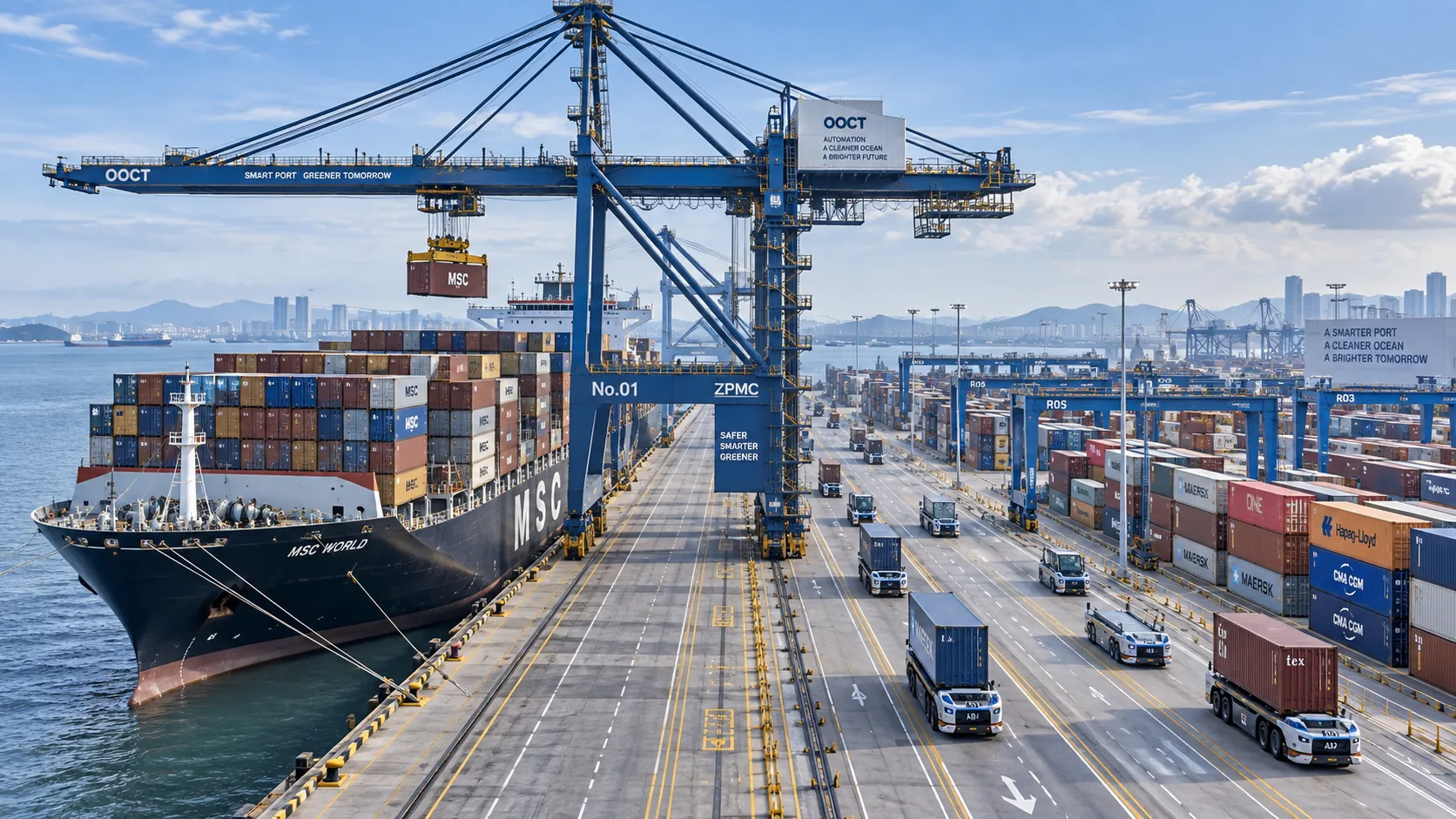
How to Specify a Quay Crane for Container Terminals by Vessel Size and Throughput?
Quay crane for container terminals: learn how to match outreach, lift height, capacity, automation, and cycle performance to vessel size and throughput goals.
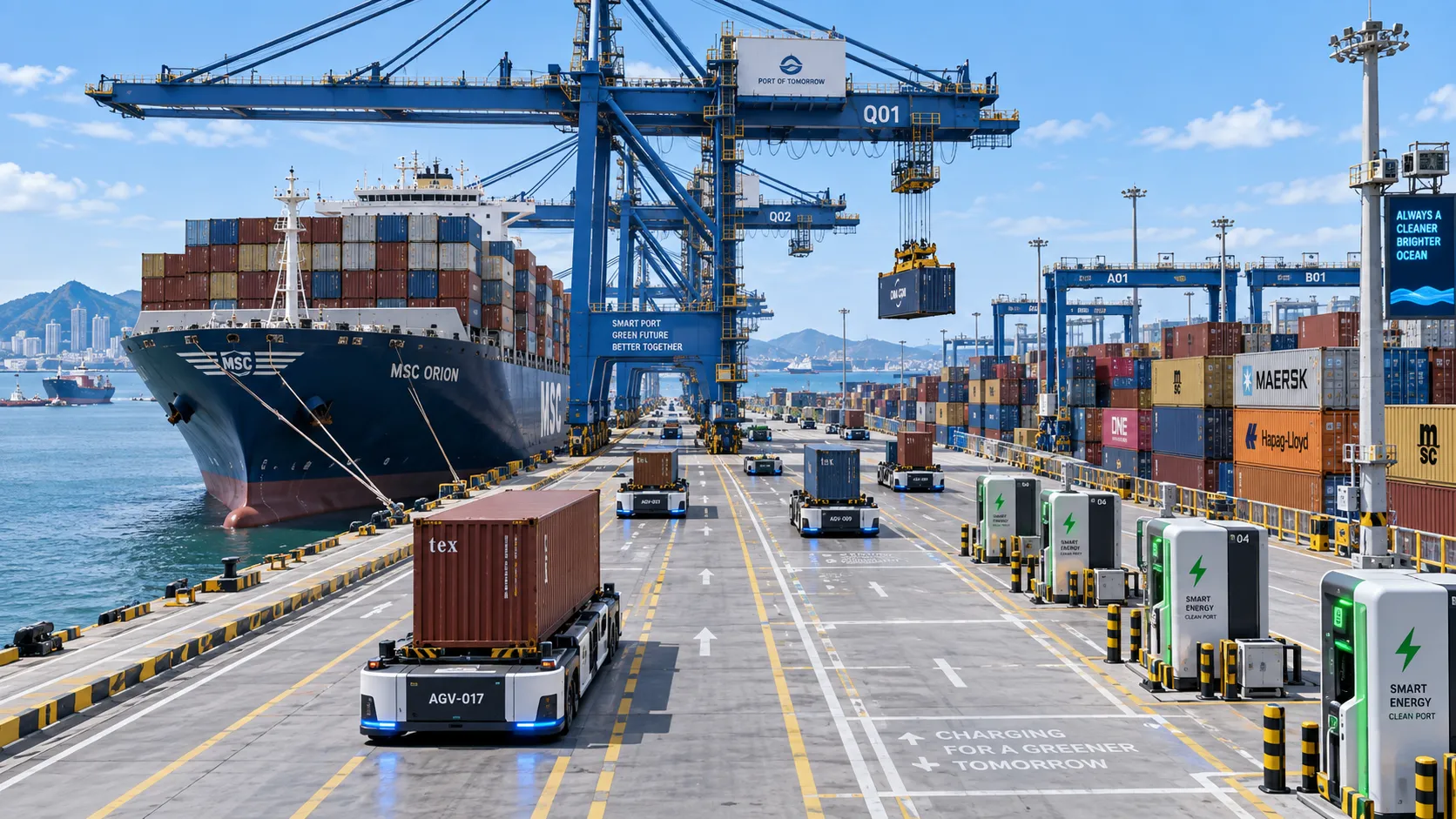
What Data Is Required for a Smart Port Control Architecture?
What data is needed for a smart port control architecture? Discover the operational, safety, equipment, and environmental data that enables smarter port decisions.
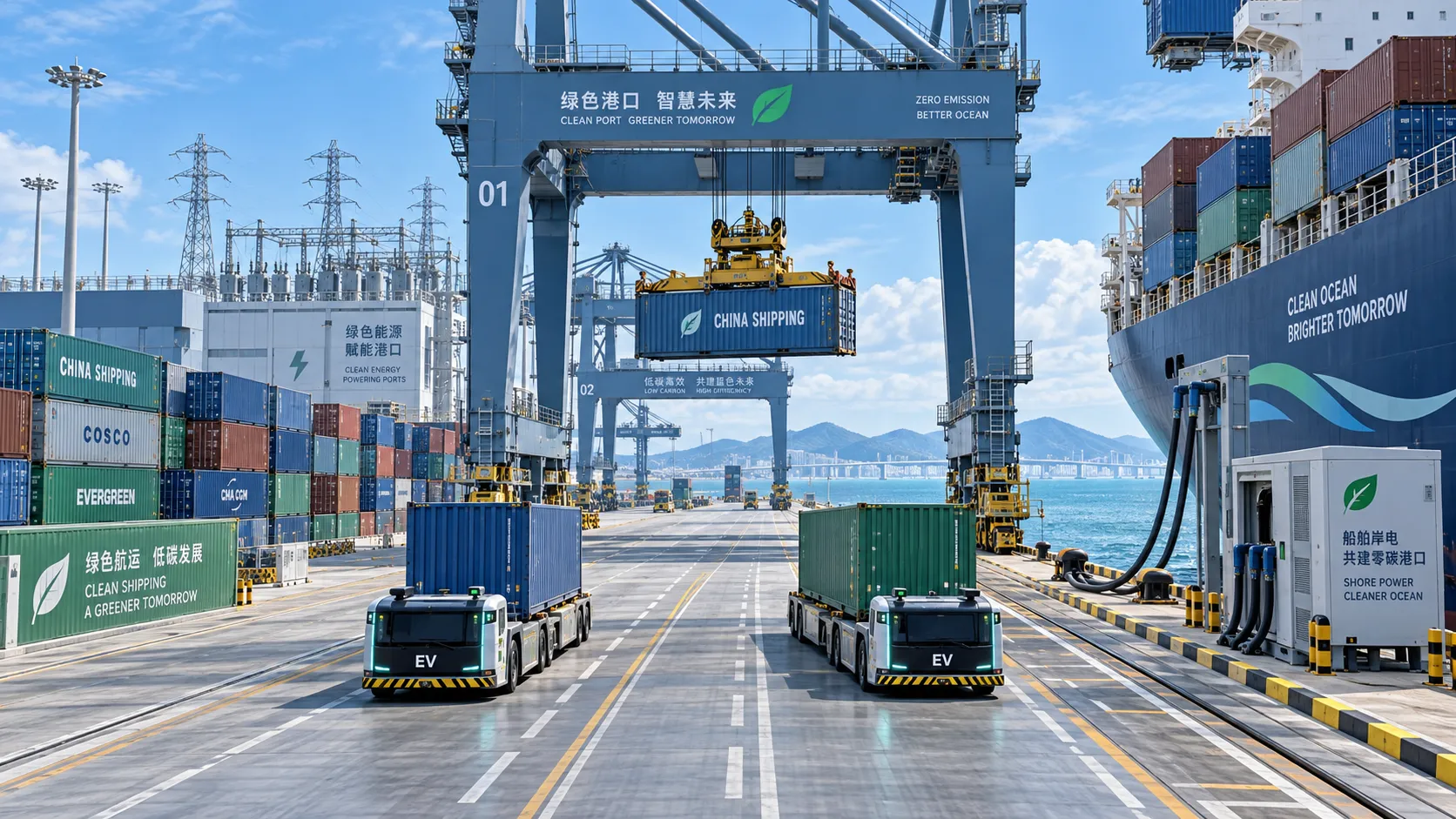
Can Electric Port Machines Help Meet Net-Zero Targets?
Do electric port machines help meet net-zero targets? Explore how smart electrification, clean power, charging, and automation can cut port emissions.