Related News
- 00
0000-00
Smart Port Systems in Southeast Asia: Investment Priorities and Adoption Barriers - 00
0000-00
Can Electric Port Machines Help Meet Net-Zero Targets? - 00
0000-00
Middle East Port Automation: Key Market Drivers, Projects, and Investment Risks - 00
0000-00
How Coastal Cities Can Prioritize Blue Economy Projects for Jobs and Ecosystem Gains - 00
0000-00
How Harbor Construction Solutions Address Wave Loads, Scour, and Vessel Berthing
Can Electric Port Machines Help Meet Net-Zero Targets?
Yes, electric port machines can help meet net-zero targets, but electrification is not a standalone solution. Replacing diesel-powered equipment with electric cranes, battery vehicles, or shore-connected systems can reduce direct emissions at the terminal. Yet the actual climate result depends on how the equipment is powered, how work is scheduled, whether the grid can support peak demand, and how long the machines remain productive in daily operation.
For a port operator, the practical question is not simply “Should we electrify?” It is: Which machines should be electrified first, what infrastructure is needed, and will the change reduce emissions without disrupting vessel turnaround, yard flow, or bulk-handling capacity? A sound answer requires looking at the full operating system: equipment duty cycles, electrical supply, charging windows, maintenance practices, automation controls, and lifecycle replacement plans.
What electric port machinery changes in practice
Ports use energy in concentrated, demanding ways. Quay cranes lift containers continuously during a vessel call. Rubber-tyred gantry cranes travel within yard blocks. Terminal tractors move containers between quay and stack. Bulk handlers run conveyors, ship unloaders, reclaimers, and loaders. Dredging support equipment may operate near marine worksites where electrical access is less predictable.
Electric port machines reduce or remove fuel combustion at the point of use. That brings an immediate operational benefit in enclosed or high-activity areas: less exhaust, less engine idling, and less local noise. Electric drives can also offer more precise speed and torque control, which matters when lifting loads, positioning containers, or regulating conveyor movement.
However, “electric” covers several different approaches. A rail-mounted quay crane may draw power directly from the grid. A yard crane may use a cable reel, conductor rail, battery pack, hybrid arrangement, or charging connection at designated points. A terminal tractor may use batteries and fast charging, battery swapping, or a carefully managed opportunity-charging plan. Their emissions profile and operational risk are not the same.
The table illustrates why a port-wide equipment purchase program can fail when it treats every asset alike. Fixed equipment with predictable operating locations is usually easier to connect to electricity than highly mobile equipment with irregular routes and little idle time.
Net-zero progress depends on the electricity behind the machine
An electric machine eliminates diesel combustion from its own operation, but it does not automatically eliminate greenhouse gas emissions. The source of electricity still matters. A terminal supplied by a lower-carbon grid, onsite renewable generation, contracted clean power, or a mix of these can achieve a stronger emissions reduction than a terminal reliant on carbon-intensive electricity.
That does not mean electrification should wait until the grid is fully decarbonized. Electrified equipment can still improve local air quality, reduce fuel handling, and prepare the terminal for cleaner electricity as power systems evolve. The important discipline is to measure the change honestly. Separate direct terminal emissions from emissions associated with purchased electricity, and avoid presenting a fuel switch as a complete net-zero outcome.
Electricity demand also has a time dimension. A port may have sufficient annual electricity capacity on paper but still face problems when several cranes, chargers, reefer blocks, workshops, and shore-power connections draw heavily at the same time. Peak demand can shape the cost, reliability, and scale of the infrastructure project.
Before committing to equipment, map when loads occur, not just how much energy is used over a month. A terminal with tightly scheduled vessel calls may need load management, energy storage, or staged charging to avoid coincident peaks. A terminal with variable throughput may benefit more from flexible chargers and dispatch rules than from installing maximum capacity everywhere.
Start with machines that have predictable work patterns
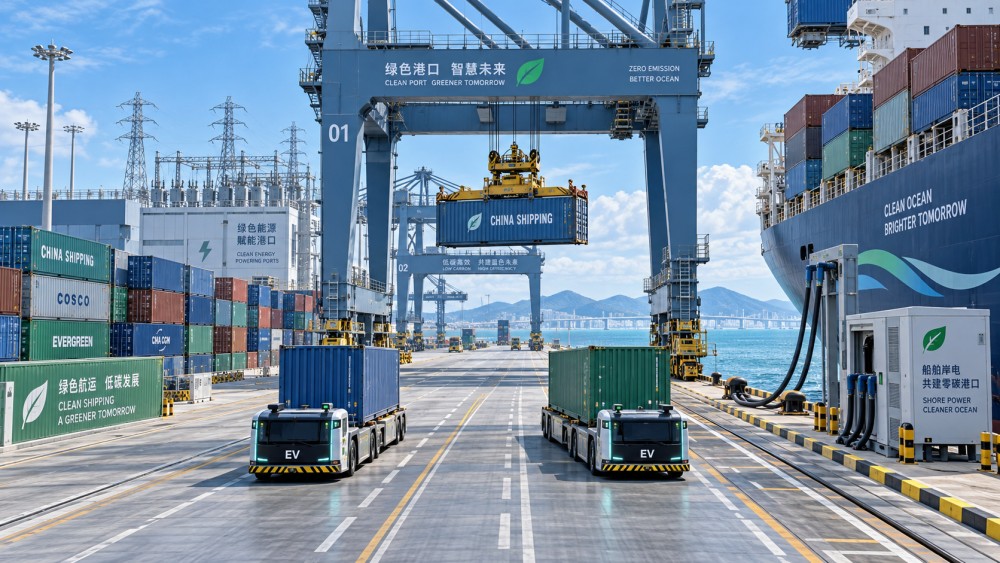
The most effective electrification programs usually begin with equipment that has a clear route, repeatable duty cycle, or fixed location. This reduces uncertainty around charging, cable management, and operator behavior.
Quay cranes and many fixed bulk-handling systems are often logical early candidates because they work in defined zones and can be connected to terminal electrical infrastructure. Electrifying a crane, however, is more than changing its drive system. The project may involve substation capacity, cable routing, redundancy design, harmonic management, controls integration, and a maintenance plan for electrical components.
Yard equipment requires a more careful choice. A cable-fed yard crane can avoid battery charging downtime, but its travel pattern and yard layout must support the cable system. A battery-powered crane can be more flexible, but battery sizing, charging access, and usable shift length must be matched to real container moves rather than an idealized operating day.
Terminal tractors are often attractive because diesel tractors create significant local exhaust and idle frequently. They are also easy to misjudge. A battery-electric tractor may work well when trips are short, routes are controlled, and charging can happen during natural pauses. It becomes difficult when dispatch is highly variable, tractors queue for chargers, or the terminal needs continuous heavy towing over long distances.
A useful first-pass rule is simple: electrify the equipment whose location and work rhythm you can describe accurately. Do not start with the asset that is merely easiest to advertise as electric.
How to assess an electrification project before buying equipment
Equipment specifications are necessary, but they are not the starting point. The starting point is an operating profile. A procurement team should build the project around actual movements, load conditions, idle periods, seasonal peaks, and maintenance constraints.
- Measure the current duty cycle. Record travel distance, lifting hours, idle time, load variation, shift changes, and periods of congestion. Average utilization alone can hide the demanding conditions that determine battery and charger requirements.
- Identify the emissions-intensive operating segments. Some machines consume most of their fuel while waiting, accelerating, climbing, or working under repeated heavy loads. Prioritize the use case where electrification addresses a meaningful part of the energy demand.
- Assess electrical infrastructure early. Review available connection capacity, distribution routes, transformer locations, backup arrangements, and the time required to expand the system. Infrastructure constraints often affect project timing more than the machine order itself.
- Design charging around throughput. Charging should fit the terminal’s production rhythm. A charger that is technically fast but located outside the working flow can create unnecessary deadhead travel and reduce asset availability.
- Test dispatch and maintenance assumptions. Electric fleets need different routines for state-of-charge monitoring, charger access, fault response, high-voltage safety, and spare-parts planning. These should be tested in operating scenarios, not left to be solved after delivery.
- Set emissions and productivity baselines. Track fuel use, electricity use, machine hours, moves, delays, and maintenance events before the conversion. This makes it possible to judge whether the project improves both emissions performance and terminal operations.
This process may reveal that the best initial project is not a complete fleet replacement. It may be a pilot fleet on a stable route, the electrification of a fixed crane group, or an upgrade to electrical control systems that prepares the terminal for later equipment changes.
Automation can make electric equipment more effective
Electrification and automation solve different problems, but they work well together. Electric equipment reduces dependence on onboard combustion. Automation and control systems reduce unnecessary movements, idling, conflicting dispatches, and avoidable peaks in energy demand.
For example, an automated yard system can assign vehicles based on charge state, route length, task urgency, and charger availability. A crane control system can manage regenerative energy where the equipment design supports it. Energy monitoring can identify whether a high-demand period is caused by productive work, poor sequencing, or equipment waiting in the wrong place.
Automation is not required before electrifying equipment. A manually operated terminal can still make a strong electrification case. But an unmanaged electric fleet can create its own inefficiencies: vehicles may arrive at chargers at the same time, operators may protect battery range by changing work habits, and dispatchers may lack visibility into available energy. The more complex the terminal, the more valuable integrated operational data becomes.
This is also where sector intelligence has practical value. Platforms such as PS-Nexus, which cover terminal gear, container-handling systems, automation controls, and dredging engineering, can help decision-makers connect equipment choices with infrastructure and workflow questions. A machine should not be evaluated in isolation from the quay, yard, power network, and scheduling logic around it.
Common mistakes that weaken the business and climate case
Buying batteries before understanding the duty cycle. Battery capacity alone does not guarantee availability. Repeated heavy pulls, high ambient temperatures, long travel distances, and limited charging opportunities can produce a very different result from a supplier demonstration cycle.
Treating charging as a facilities detail. Charger placement influences traffic flow, staffing, safety procedures, and dispatch performance. It belongs in terminal design and operations planning, not only in an electrical contractor’s scope.
Ignoring resilience. Diesel equipment can be refueled in many locations. Electric equipment depends on a functioning power and charging system. Critical assets need a response plan for charger faults, grid disruptions, restricted power availability, and maintenance outages.
Using fuel savings as the only decision metric. Electricity cost matters, but so do equipment uptime, infrastructure investment, battery replacement planning, maintenance changes, carbon accounting, local air-quality goals, and the cost of delays during vessel operations.
Assuming every diesel asset should become battery-electric. Some specialized equipment may be better served initially by direct electric supply, hybrid operation, alternative power arrangements, or delayed replacement until infrastructure and technology fit the work. Net-zero roadmaps are stronger when they prioritize feasible reductions instead of forcing a single technology across every task.
Where electric port machines are most likely to fit
Electric machinery is especially compelling in terminals with repeatable container flows, fixed crane operations, reliable electrical access, and a clear plan for managing peak load. It can also suit bulk terminals where conveyors and fixed handling systems already rely heavily on electric motors and where further electrification can focus on mobile support assets and control optimization.
It is more challenging in remote marine works, temporary dredging sites, highly dispersed terminals, and operations where mobile machines face unpredictable duty cycles with little time to recharge. In these situations, the right question may be how to reduce diesel use in stages: electrify auxiliaries, connect equipment to shore power when available, improve digital monitoring, and replace the most suitable mobile assets first.
Port operators should also distinguish between a demonstration project and a scalable operating model. A small group of electric machines can succeed with manual coordination. A fleet-scale conversion requires formal rules for charging priority, task assignment, operator training, spare equipment, power capacity, and performance reporting.
A practical way to move toward net-zero
Electric port machines help meet net-zero targets when they are deployed as part of a coordinated energy and operations program. Begin with a verified equipment baseline. Select predictable, high-use assets. Confirm that grid and charging infrastructure can support real operating peaks. Build charging and maintenance procedures into daily dispatch. Then expand based on measured availability, energy use, throughput, and emissions performance.
The strongest projects do not frame electrification as a replacement of one engine with another. They treat it as a redesign of how energy moves through the terminal. That perspective allows cranes, yard vehicles, bulk systems, automation platforms, and marine support assets to contribute to a lower-carbon port without sacrificing the reliability global trade depends on.
Related News
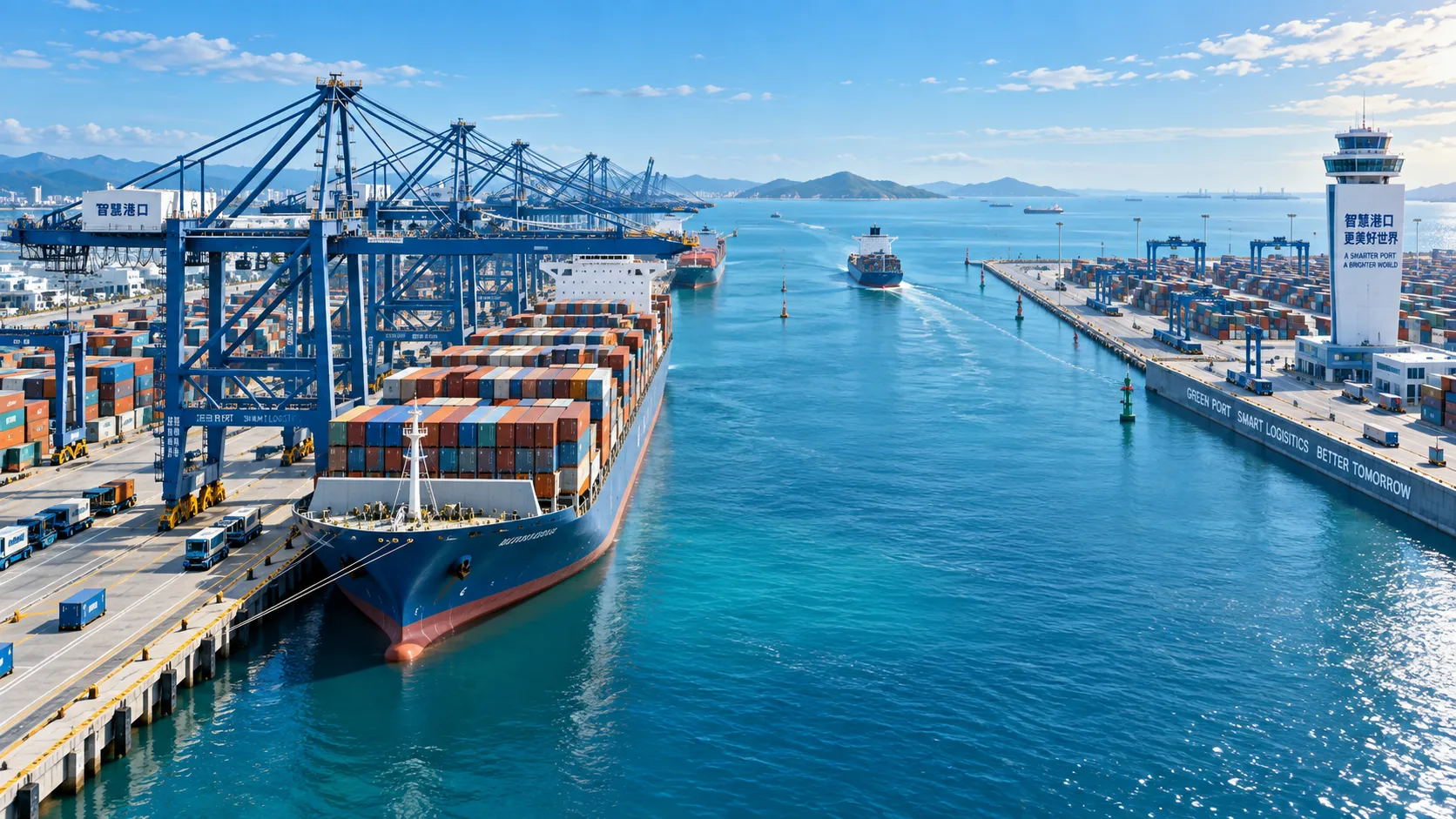
Smart Port Solutions for Berth Planning: Reducing Vessel Wait Times and Conflicts
Smart port solutions for berth planning reduce vessel wait times, prevent conflicts, and optimize quay, crane, and yard resources for faster turnarounds.
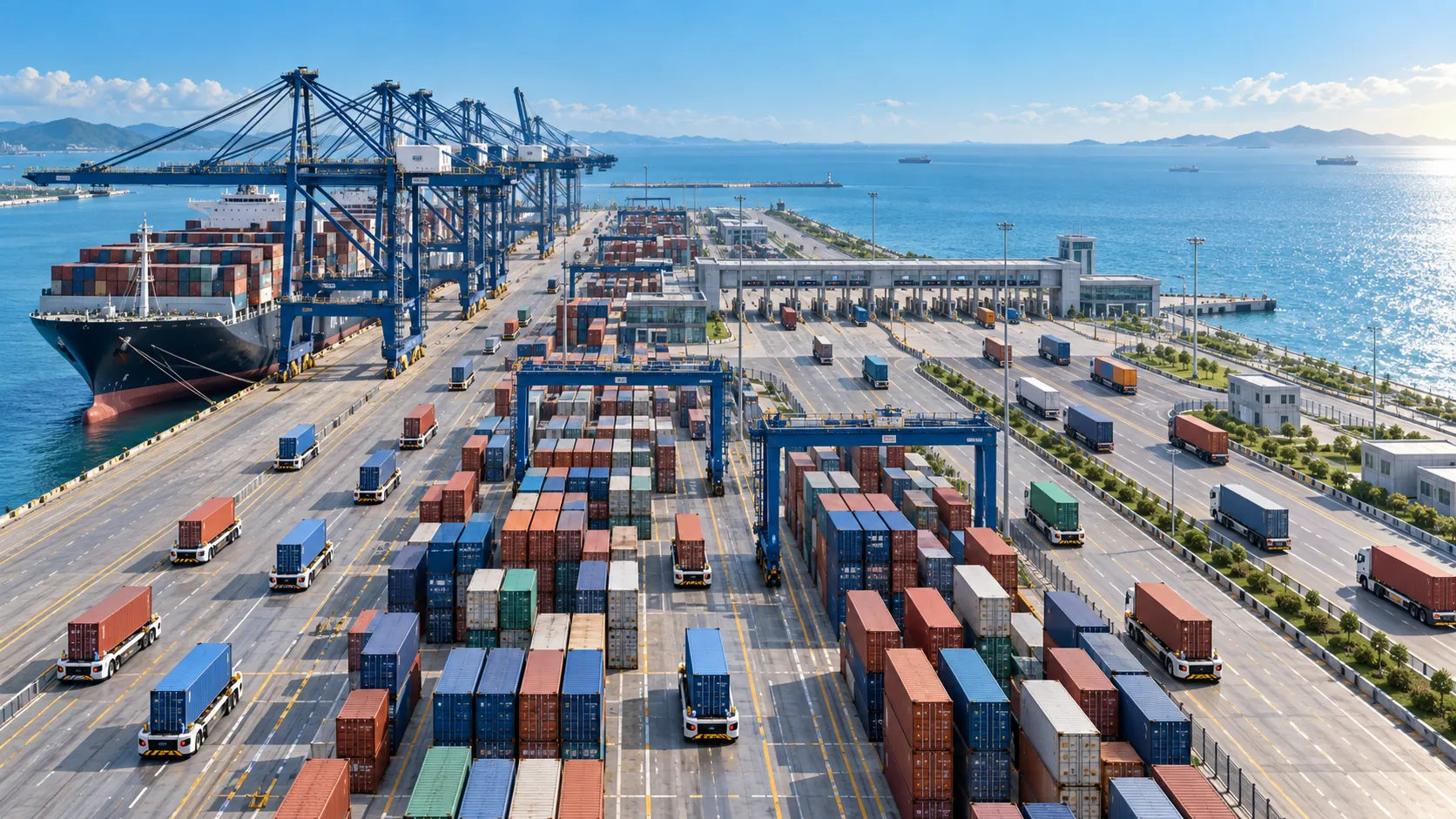
How AI Scheduling Improves Berth, Yard, and Gate Coordination at Terminals
Terminal automation systems with AI scheduling align berth, yard, and gate operations to reduce congestion, improve throughput, and strengthen terminal resilience.
How to Evaluate a Port Logistics Solutions Supplier for Terminal Uptime and Scalability
Choose a port logistics solutions supplier with confidence. Learn how to assess uptime, scalability, service strength, integration, and lifecycle risk for resilient terminal growth.
Smart Port Systems in Southeast Asia: Investment Priorities and Adoption Barriers
Smart port systems Southeast Asia: discover investment priorities, adoption barriers, and practical steps to build resilient, connected, high-performing terminals.
How to Evaluate Terminal Efficiency Solution Suppliers for High-Throughput Operations
Choose a terminal efficiency solutions supplier with confidence. Explore proven criteria for throughput, integration, lifecycle cost, safety, and reliable delivery.
How to Specify a Quay Crane for Container Terminals by Vessel Size and Throughput?
Quay crane for container terminals: learn how to match outreach, lift height, capacity, automation, and cycle performance to vessel size and throughput goals.
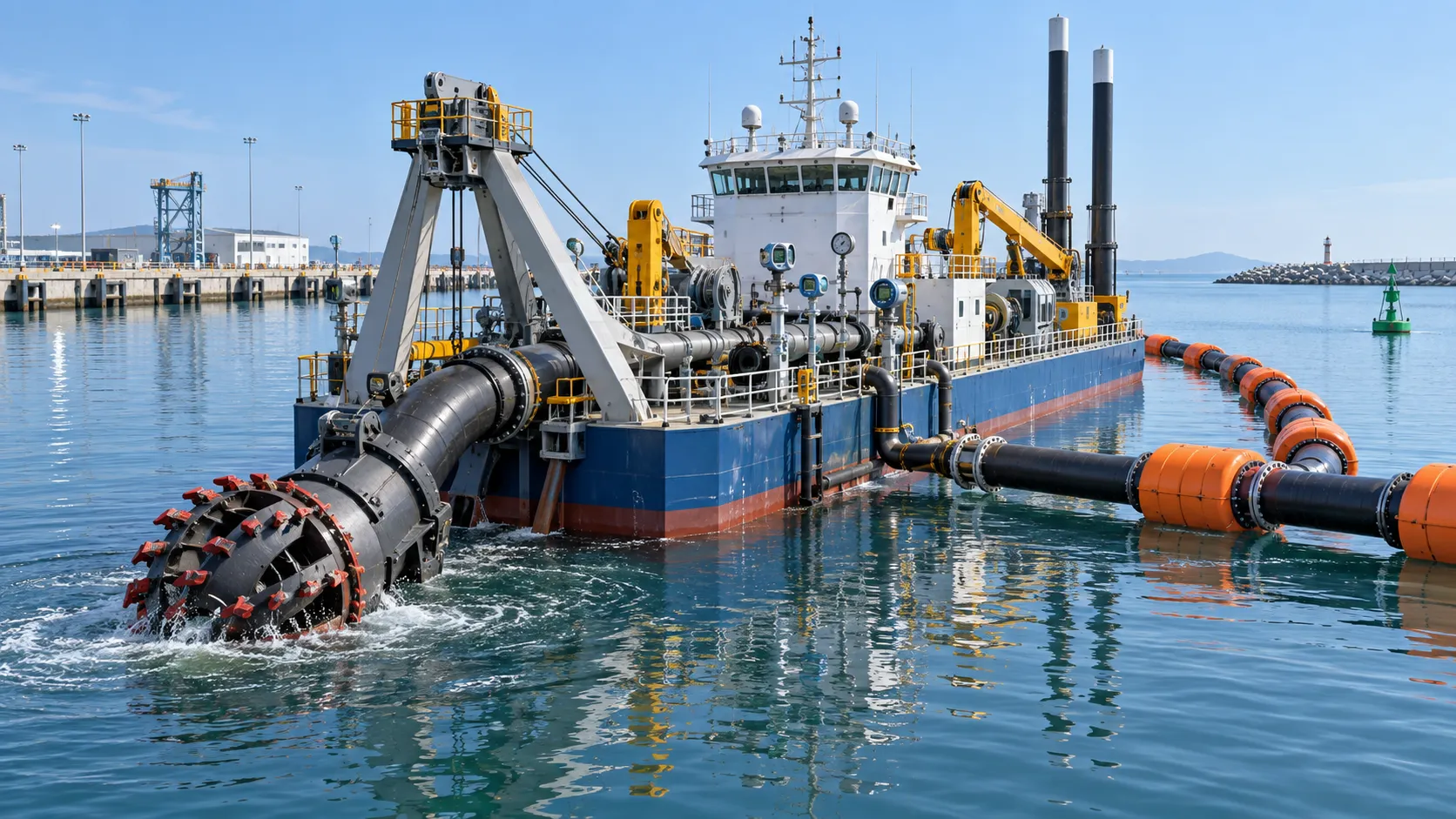
How Should Dredging Equipment Performance Be Verified Before Acceptance?
How do I verify dredging equipment performance before acceptance? Explore proven tests for production, pumps, safety, compliance, and reliable handover.
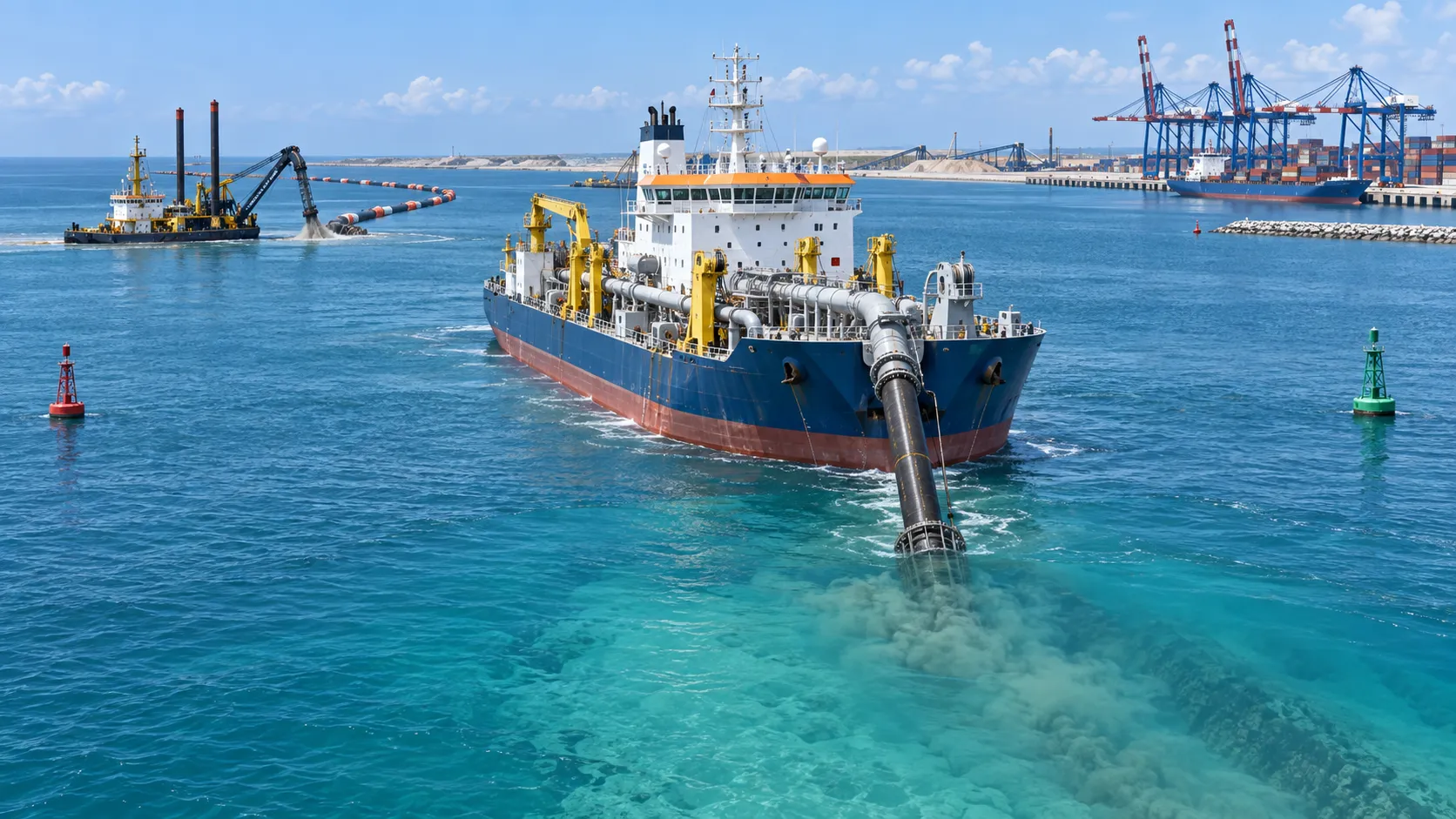
What Dredging Equipment Is Needed for Channel Deepening?
What dredging equipment is needed for channel deepening? Explore dredgers, pipelines, survey tools, and planning strategies for safer, more efficient port access.
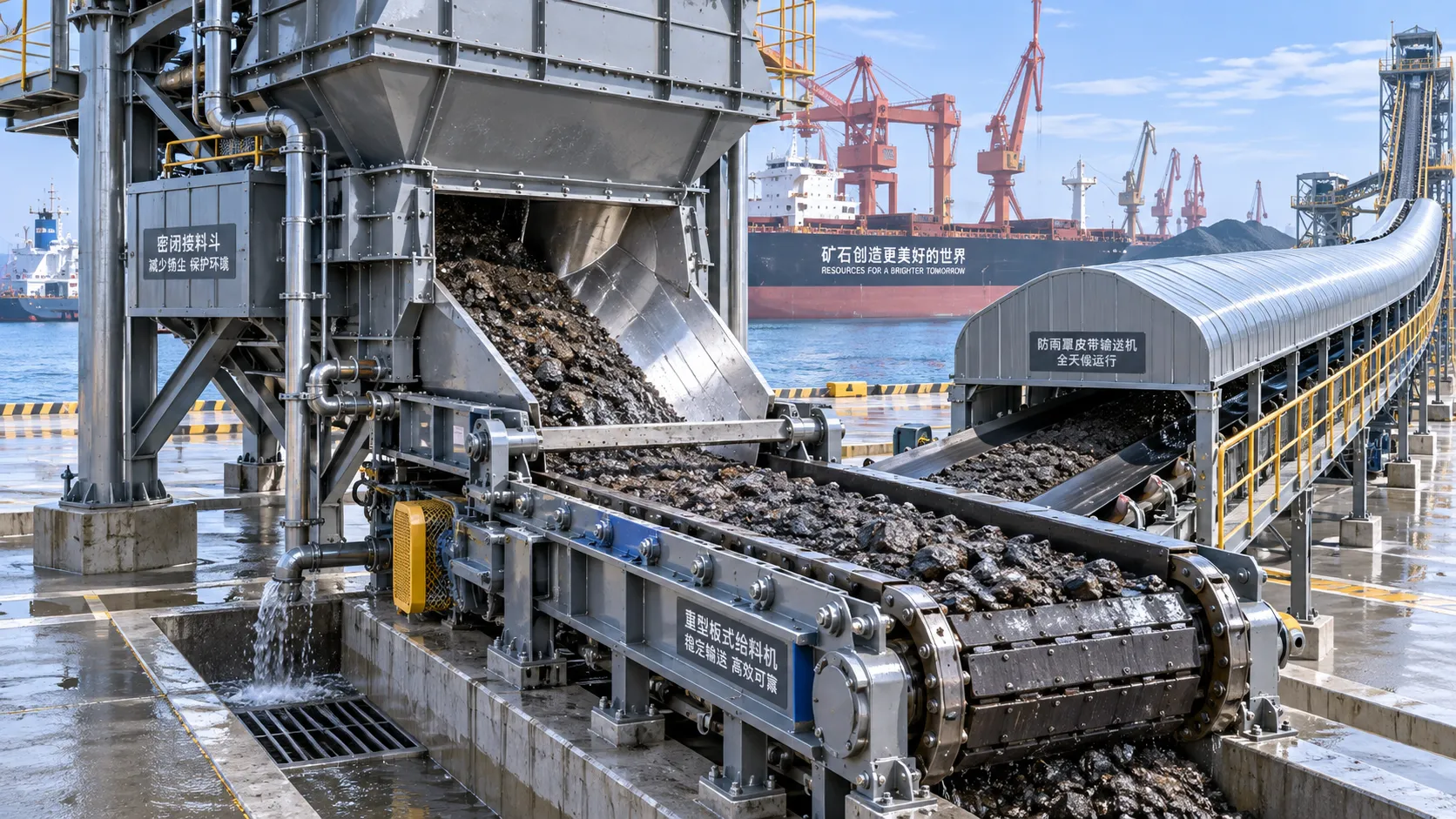
Which Bulk Handling Equipment Suits High-Moisture Cargo?
Which bulk handling equipment suits high-moisture cargo? Compare belt, apron, screw, drag, and slurry systems for reliable flow, less carryback, and higher terminal uptime.