Introduction: Before a dredger enters service, its output, reliability, and compliance must be proven under defined operating conditions, not assumed from factory ratings or sales documentation.
How do I verify dredging equipment performance before acceptance? The practical answer is to use a documented acceptance plan combining inspections, controlled trials, measurement records, and contract-based pass or fail criteria.
For port owners, contractors, and project managers, acceptance testing is the final opportunity to identify performance gaps before operational responsibility, warranty risk, and costly downtime transfer to the buyer.
Start With Contractual Acceptance Criteria, Not General Expectations
Acceptance should begin by translating the purchase contract into a measurable verification matrix. Every promised capability needs a test method, responsible party, instrument, operating condition, and acceptance threshold.
Typical contractual items include production capacity, maximum dredging depth, pump discharge pressure, installed power, fuel consumption, automation availability, emission compliance, noise limits, and safety system performance.
A dredger may perform well in one condition while failing another. Therefore, acceptance criteria should specify soil type, water depth, tidal conditions, discharge distance, and required production calculation methods.
Project teams should distinguish guaranteed performance from indicative performance. Guaranteed values create contractual obligations, while indicative figures may only describe expected output under favorable operating assumptions.
Before trials begin, confirm whether production is measured as in-situ volume, loose volume, dry solids, or total slurry volume. Confusing these definitions can create serious commercial disputes.
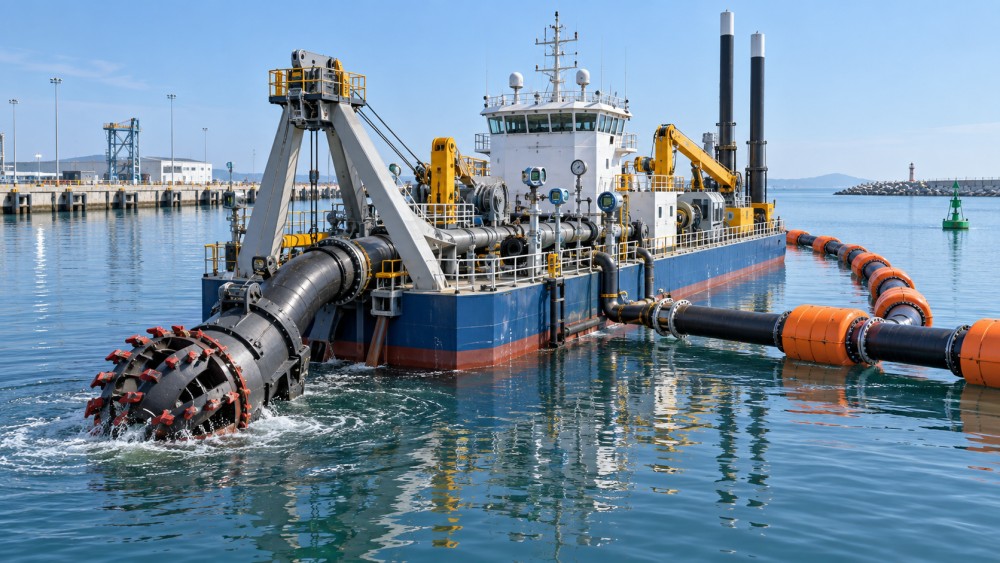
For cutter suction dredgers, acceptance documents should identify cutter power, ladder depth, swing speed, pipeline diameter, pump configuration, and allowable discharge pressure at stated production levels.
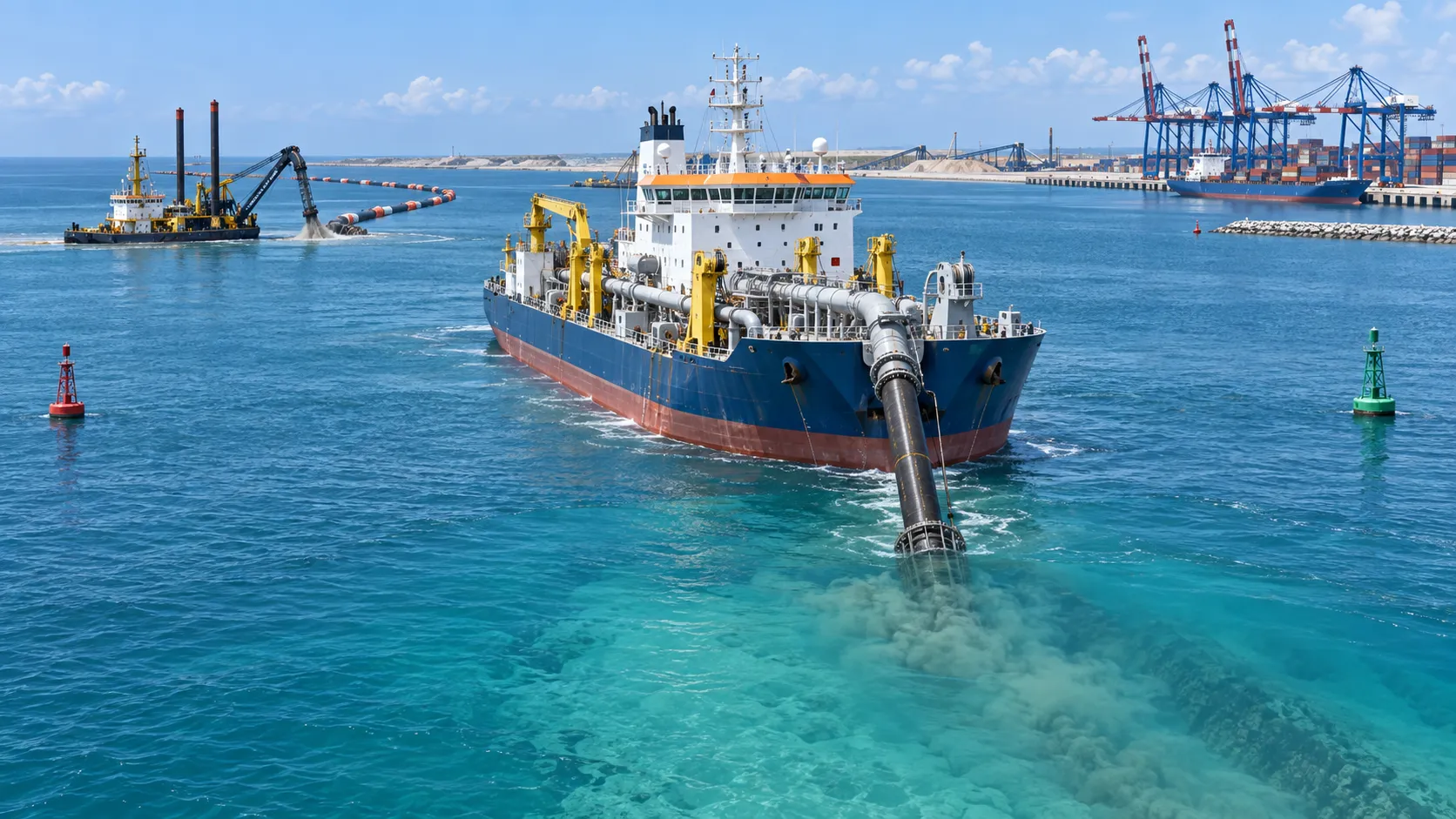
For trailing suction hopper dredgers, the verification scope should additionally cover draghead performance, suction pipe operation, hopper filling, overflow behavior, pumping ashore, and discharge door reliability.
The buyer should also establish tolerances for temporary deviations. A short interruption caused by external conditions differs from repeated equipment faults that reduce real operational availability.
Verify Dredging Production Under Representative Working Conditions
Production capacity is usually the most commercially important acceptance measure because it directly affects project duration, fuel cost, crew planning, and the profitability of dredging operations.
However, production trials should never rely only on the dredger’s onboard production display. Independent measurement methods are needed to validate instrument accuracy and calculation logic.
A useful trial plan defines the test area, survey baseline, test duration, expected soil conditions, disposal location, weather limits, and survey method before excavation starts.
Hydrographic surveys conducted before and after the trial provide the most credible estimate of removed material. Multibeam or single-beam survey methods must match the required survey accuracy.
Where possible, compare bathymetric survey results with dredger production logs, slurry density data, flowmeter readings, hopper volume records, and shore discharge measurements.
Large discrepancies between these sources should be investigated rather than averaged away. They may indicate calibration errors, leakage, inaccurate density assumptions, or unsuitable production software settings.
Test duration matters because short demonstrations can hide overheating, clogging, vibration, wear, or control instability. A sustained trial better represents the dredger’s operational capability.
For difficult materials, the contractor should record particle size, soil classification, clay content, density, and presence of debris. Equipment output cannot be fairly assessed without site conditions.
Acceptance teams should also record nonproductive time during the trial. Positioning delays, suction blockages, cutter changes, and operator intervention all affect the machine’s usable productivity.
Confirm Pump, Pipeline, and Hydraulic System Performance
Dredge pumps are central to production performance, making hydraulic verification essential. The acceptance test should demonstrate that pumps operate within the required flow, head, pressure, and efficiency range.
Measure slurry flow with calibrated flowmeters and verify discharge pressure at key locations, including pump outlets, pipeline connections, booster stations, and shore discharge points where applicable.
Pressure readings alone are insufficient because excessive pressure may result from blockage or poor pipeline conditions. Flow, density, speed, and power consumption must be analyzed together.
Inspect pump impellers, liners, seals, bearings, gearboxes, and lubrication systems before and after trials. Early wear patterns can reveal misalignment, cavitation, inadequate material selection, or poor assembly.
Cavitation requires particular attention because it can damage pump components rapidly while reducing efficiency. Noise, vibration, fluctuating pressure, and abnormal power demand are common warning indicators.
Pipeline verification should include hose connections, floating pipeline buoyancy, weld quality, leakage checks, flange integrity, emergency shutoff arrangements, and the stability of supported pipeline sections.
Where booster pumps are included, test their coordination with the main dredge pump. Control logic should prevent surge pressure, reverse flow, overload, and unsafe starting sequences.
Hydraulic cylinder performance should be checked on ladders, spud systems, winches, dragarms, doors, and other working equipment. Slow response or drift can compromise productivity and safety.
Test Dredging Depth, Positioning Accuracy, and Working Range
A dredger can achieve high flow rates yet still fail its intended purpose if it cannot excavate accurately to the specified depth, slope, alignment, and tolerance.
Acceptance testing should verify the relationship between depth sensors, tide correction, draft readings, positioning equipment, and the final hydrographic survey result across the designated test area.
For cutter suction dredgers, assess ladder movement, cutterhead depth control, spud carriage travel, anchor positioning, swing wire response, and the repeatability of programmed excavation patterns.
For hopper dredgers, test draghead depth control, trailing pipe positioning, suction tube articulation, overflow control, and the operator’s ability to maintain the planned dredging track.
GNSS positioning, motion sensors, gyrocompasses, and dredging software must operate as an integrated system. A highly accurate sensor cannot compensate for faulty data integration or incorrect offsets.
Verify that the system can record actual dredging tracks and compare them with design surfaces. This creates evidence that the equipment can meet contractual tolerance requirements.
Port projects often require work near berth structures, breakwaters, pipelines, or navigation channels. Acceptance trials should include safe operating clearances and geofencing alarms where relevant.
Check whether alarms are visible, audible, logged, and configurable by authorized personnel. A warning function has limited value if operators cannot identify its cause or response requirement.
Assess Automation, Sensors, and Operational Data Quality
Modern dredging equipment increasingly depends on digital control systems for production monitoring, maintenance planning, remote diagnostics, and environmental reporting. Acceptance must include these operational data functions.
Confirm that all critical sensors provide stable readings, including flow, density, pressure, pump speed, engine load, fuel use, vibration, temperature, draft, position, and dredging depth.
Each sensor should have calibration evidence, a defined accuracy range, and a documented maintenance requirement. Uncalibrated monitoring systems can produce misleading production and compliance reports.
Test the human-machine interface during normal operation, alarm scenarios, and system recovery. Operators need clear information without excessive alarm noise or difficult screen navigation.
Verify data retention periods, export formats, user access rights, cybersecurity controls, and ownership of generated operating data. These matters affect long-term fleet management and dispute resolution.
Where remote support is supplied, test communication reliability and approval procedures for remote access. Ports should know exactly who can connect, what changes they can make, and how access is logged.
Automation functions should also be tested in degraded conditions. A loss of one sensor, communication interruption, or software restart should trigger a controlled response rather than unsafe behavior.
For organizations building digital maintenance programs, acceptance data should become the baseline condition record. It supports later comparisons involving wear, fuel performance, pump efficiency, and availability.
Measure Fuel Efficiency, Emissions, and Environmental Controls
Fuel performance affects lifecycle cost as much as nominal production capacity. Acceptance trials should therefore measure fuel consumption against delivered production under clearly documented operating conditions.
Record fuel use by engine, generator, and auxiliary system where possible. Separating these loads helps identify inefficient pump operation, unnecessary idling, or oversized auxiliary equipment.
Useful performance indicators include liters per cubic meter, kilowatt-hours per cubic meter, and fuel consumed per operating hour. No single measure is sufficient in every dredging application.
Environmental compliance checks may include engine certificates, emissions monitoring, bilge arrangements, oily water separation, waste storage, noise control, spill response equipment, and sediment containment features.
Where turbidity limits apply, test monitoring equipment and reporting workflows. The buyer should confirm that alarms, sample records, and corrective actions meet local permit requirements.
For projects involving contaminated sediment, verify the sealing, storage, transport, and discharge arrangements required to prevent uncontrolled release during excavation, pumping, or hopper handling.
Acceptance should also confirm that the dredger carries current class, flag, statutory, and environmental certificates. Missing documentation can delay mobilization even when machinery is technically ready.
Prove Safety, Reliability, and Maintainability Before Handover
Safety acceptance should examine both installed equipment and operational behavior. Emergency systems must work reliably under realistic conditions, not merely show a healthy indicator on a control panel.
Test emergency stops, fire detection, firefighting systems, bilge alarms, navigation lights, communications, lifesaving equipment, emergency generators, and backup steering or control arrangements as applicable.
Inspect guarding around rotating machinery, access platforms, ladders, handrails, non-slip surfaces, lifting points, electrical cabinets, and lockout provisions used during maintenance activities.
Reliability should be assessed through extended operation and fault reporting. Repeated minor alarms, overheating events, loose fittings, or control resets often indicate larger problems after handover.
Require the supplier to provide a punch-list process with owners, deadlines, corrective actions, retest requirements, and closure evidence. Unresolved defects should be visible to all acceptance parties.
Maintainability deserves equal attention because dredging equipment operates in abrasive, corrosive environments. Confirm access to wear parts, filters, lubrication points, valves, pumps, and electrical components.
Review the recommended spare-parts package against expected operating hours and local supply conditions. A low-cost package may create expensive downtime when critical wear components are unavailable.
Operator and maintenance training should be tested through practical demonstrations. Personnel should be able to start, stop, troubleshoot, inspect, and safely isolate the equipment without supplier dependence.
Build an Acceptance File That Protects Future Operations
A final acceptance decision should be supported by a complete evidence file rather than a single certificate. This file becomes valuable during warranty claims, insurance events, maintenance reviews, and resale.
The file should include signed test procedures, survey reports, calibration certificates, production logs, fuel records, alarm histories, defect lists, certificates, drawings, manuals, and training attendance records.
It should also capture the exact test conditions, including weather, water level, soil conditions, discharge distance, crew composition, and software versions used during the acceptance period.
Where results fall slightly below guarantees, the parties should document the cause and commercial remedy. Options may include corrective work, extended warranty, liquidated damages, retesting, or conditional acceptance.
Conditional acceptance should never become an informal substitute for unresolved performance failure. The remaining obligations, deadlines, payment holds, and operational limitations must be clearly stated.
Port operators should involve operations, engineering, maintenance, safety, finance, and legal representatives in the final review. Each team sees different risks that may not appear in trial data.
An independent marine surveyor or dredging consultant can be valuable for high-capital purchases. Independent oversight improves measurement credibility and reduces disagreement over supplier-generated performance evidence.
Conclusion: Acceptance Is a Performance Decision, Not a Delivery Event
Verifying dredging equipment performance before acceptance means proving that the machine can deliver contractual production, accuracy, reliability, safety, and compliance in conditions close to real operations.
The strongest approach combines representative production trials, independent survey evidence, hydraulic measurements, digital-system validation, fuel analysis, safety testing, and a disciplined defect-closure process.
For port authorities and dredging contractors, this effort protects project schedules, operating margins, environmental obligations, and long-term asset value before ownership risks become harder to manage.
A well-structured acceptance process does more than determine whether a dredger is ready today. It establishes the technical baseline needed to manage performance throughout its operating life.