
Related News
- 00
0000-00
How to Specify a Quay Crane for Container Terminals by Vessel Size and Throughput? - 00
0000-00
Which Bulk Handling Equipment Suits High-Moisture Cargo? - 00
0000-00
Terminal Automation Technologies That Raise Container Throughput Without Yard Disruption - 00
0000-00
Planning Offshore Dredging Operations: Key Risks, Methods, and Project Controls - 00
0000-00
Where Do Automated Guided Vehicles Deliver the Fastest Warehouse Gains in the Middle East?
How to Specify a Quay Crane for Container Terminals by Vessel Size and Throughput?
Selecting a quay crane for container terminals is a high-stakes decision that directly affects berth productivity, vessel turnaround time, and long-term capital efficiency. For project managers and engineering leaders, the right specification must align crane outreach, lifting capacity, air draft, and automation readiness with target vessel classes and forecast throughput. A crane that appears adequate on a general datasheet can still become a bottleneck if its waterside geometry, landside interface, duty cycle, or control architecture does not fit the terminal’s operating model.
The starting point is not the crane itself. It is the vessel mix the terminal must serve, the volume it must move during each call, and the operational conditions under which that work must be completed. A practical specification turns those requirements into a coherent set of mechanical, civil, electrical, digital, and maintainability decisions.
Begin with the vessel envelope, not the maximum ship on a brochure
The most visible criterion for a quay crane for container terminals is outreach. It determines how many container rows can be reached across the vessel beam. Yet outreach should not be selected from nominal vessel class alone. Project teams need to review the actual calling fleet, likely future services, berthing arrangement, fender geometry, vessel list, and the terminal’s preferred operating clearance.
A crane designed only around today’s regular callers may constrain the terminal when shipping lines redeploy larger vessels. Conversely, specifying for the largest conceivable ultra-large container vessel can create avoidable structural cost, rail-load consequences, and electrical demand if the berth will not realistically receive such ships. The useful question is: what is the largest vessel the berth is physically, commercially, and nautically intended to handle within the asset’s planning horizon?
That answer should be documented as a vessel design envelope rather than a simple label such as feeder, Panamax, or post-Panamax. Vessel labels are convenient, but they do not capture all relevant differences. The crane designer needs, at minimum, the expected container rows across deck, maximum deck height, hatch cover arrangement, air draft, beam, and operating tide range. If twin-lift, tandem-lift, or heavy-lift moves are expected, the anticipated container combinations and gross load assumptions also need to be defined early.
Waterside geometry: outreach, lift height, and boom clearance
Outreach must cover the farthest working container position with a margin appropriate to the terminal’s operational and safety rules. It is not simply the vessel beam divided into rows. The calculation must allow for vessel position at berth, fender deflection, crane rail location, boom hinge geometry, and the required clearance for safe spreader travel. A seemingly small mismatch can force slower moves at the outboard side of the ship, exactly where cycle times are already less forgiving.
Lift height above rail is equally important. It must accommodate the highest expected container stack aboard vessel, the spreader and headblock arrangement, operational clearance, and local tidal conditions. The specification should distinguish between the maximum physical lift and the lift height at which the crane is expected to sustain productive cycles. Excessive lift height can increase crane mass and power requirements; insufficient height can limit future vessel calls or create unsafe operating margins.
Air draft introduces a different constraint. The boom-up profile must respect local navigational requirements, adjacent structures, bridges, approach channels, and any operational limits imposed by port authorities. In some terminals, boom elevation and stowage position are as important as outreach because cranes must be parked or raised to clear passing vessels. These conditions should be reviewed with marine, civil, and navigation stakeholders before the crane’s main dimensions are frozen.
Translate annual throughput into berth-level crane demand
Annual throughput is often used as the headline planning number, but it does not specify a crane. Two terminals handling similar annual volumes can need very different crane fleets because vessel call patterns, berth occupancy targets, peak exchanges, gate operating windows, and yard capacity differ. The more useful planning chain runs from annual throughput to peak-day demand, then to vessel-call workload, berth window, required crane intensity, and finally the number and performance of ship-to-shore cranes.
For each representative vessel call, estimate the number of container moves, the available berth time, and the number of cranes that can work safely and efficiently on that vessel. This creates a required gross moves-per-hour range at ship level. From there, the terminal can derive an indicative crane productivity requirement, allowing for operational delays, hatch changes, crane travel, lashing activity, shift transitions, weather restrictions, and interaction with the yard transport system.
It is essential to separate gross crane rate from net vessel productivity. Gross crane rate reflects the moves performed by a crane during its working period. Net vessel productivity reflects the completed exchange over the vessel’s total time at berth. A terminal may procure fast hoists and trolleys yet fail to improve vessel turnaround if trucks, terminal tractors, AGVs, yard cranes, or container release processes cannot keep the quay crane continuously supplied.
A sensible procurement process tests several operating scenarios instead of using one average forecast. At minimum, compare a normal service week, a peak-period call sequence, a delayed-vessel recovery situation, and a future vessel-size scenario. This exposes whether the terminal needs higher individual crane capability, an additional crane position, more resilient yard support, or simply a different operating plan.
Specify capacity around the actual load spectrum
Rated lifting capacity is frequently misunderstood. A high nominal capacity does not automatically mean faster container handling. For standard single-container operations, the key issue is whether the crane can perform expected lifts within the required duty cycle, while maintaining the structural, fatigue, and control margins appropriate to the terminal’s design basis.
The load spectrum should include ordinary laden containers, empty containers, out-of-gauge units, reefer handling conditions where relevant, and any planned special lifts. If the terminal intends to use twin-lift spreaders, the crane, spreader, controls, and operating rules must all support that mode. If tandem lifting is considered, it should be treated as a complete operational concept rather than an optional capacity figure. Tandem operation affects spreader arrangement, load control, operator competency, vessel stow planning, maintenance strategy, and safety case development.
For project leaders, one of the most important distinctions is between occasional capability and routine productivity. A crane may be able to execute an exceptional heavy lift, but repetitive operation at a demanding load profile can influence component selection, fatigue assessment, maintenance intervals, and energy use. Tender documentation should state the intended operating modes and their expected frequency as clearly as possible.
Speed figures matter less than a balanced cycle
Hoist speed, trolley speed, gantry speed, and spreader positioning performance are often compared line by line in technical bids. That comparison is necessary, but it can be misleading when treated as the decision itself. The productive cycle depends on acceleration, deceleration, load sway control, container landing accuracy, operator behavior, communication latency, and the readiness of the transport vehicle below the crane.
A high trolley speed has limited value if the crane must repeatedly wait for terminal tractors. Likewise, a fast hoist may not translate into berth output when operators slow down to manage sway or when landside congestion prevents clean handoffs. The specification should therefore request a cycle-time assessment using representative move paths: vessel-to-vehicle, vehicle-to-vessel, hatch-to-hatch movement, and repositioning between bays. It should also define the assumptions behind the assessment, particularly load condition, travel distance, wind limits, and control mode.
This is where terminal simulation can be valuable. It does not replace engineering judgment, but it can reveal constraints that are invisible in an equipment-only review. Berth productivity is a system result. Crane performance, yard dispatch logic, traffic management, and vessel work sequencing must be assessed together.
Do not treat the quay and power system as downstream issues
The crane cannot be specified independently of its civil and electrical foundations. Wheel loads, rail gauge, rail tolerances, storm anchoring, seismic conditions where applicable, drainage, and berth structural capacity need early coordination. A change in outreach, lift height, or crane mass can alter the demands placed on the quay structure. Discovering that conflict after the civil design is advanced is expensive and disruptive.
Electrical planning deserves the same discipline. The terminal should establish its available supply capacity, voltage and frequency conditions, cable routing approach, cable reel or busbar concept, earthing requirements, and resilience expectations. Regenerative drives, energy storage, and energy-management functions may be relevant, but their practical value depends on the local grid, operating cycle, and wider terminal electrical architecture. The decision should be based on measured or modeled operating conditions rather than assumed savings.
Wind is another project-defining condition. Operating wind limits, out-of-service storm conditions, tie-down arrangements, rail clamps, storm pins, and forecasting procedures should be aligned with site meteorological data and local port requirements. These are not minor accessories. They influence availability, emergency response, and long-term structural integrity.
Automation readiness should be defined in operational terms
A new crane is often expected to remain in service for decades, which makes automation readiness a legitimate requirement even for terminals that will begin with conventional manned operation. However, “automation-ready” is too vague for a contract. It should be translated into explicit provisions: sensor locations, control-system interfaces, network architecture, remote-operation provisions, position measurement, anti-sway capability, diagnostic data access, cybersecurity responsibilities, and integration boundaries with the terminal operating system.
Remote or semi-automated quay crane operation also changes the importance of communication quality. Video coverage, network latency, redundancy, alarm prioritisation, and control-room ergonomics can affect both safety and productivity. The interface with automated horizontal transport requires particular care, because vehicle positioning and handover accuracy become part of the crane’s operating cycle.
PS-Nexus examines this connection between heavy terminal equipment and scheduling logic closely. The portal’s work across mega port terminal gear, specialized container handling, and port automation reflects a simple reality: a crane’s mechanical envelope is only one layer of terminal capacity. Low-latency control architecture, dispatch rules, asset status data, and equipment interoperability increasingly determine whether a theoretically capable crane performs reliably in daily operations.
Build maintainability and acceptance testing into the decision
The procurement team should ask how the crane will be inspected, repaired, and supported after commissioning. Access platforms, machinery-room layout, lubrication points, rope inspection provisions, spare-parts strategy, condition monitoring, fault diagnostics, and local technical support can have a larger effect on availability than small differences in nominal speed.
Acceptance criteria should be equally practical. Rather than relying only on no-load demonstrations, define how functional performance, safety interlocks, communication interfaces, positioning systems, and representative loaded cycles will be verified. The applicable design, safety, electrical, and local regulatory requirements need to be identified by the project team and confirmed against the project jurisdiction. Where a terminal has existing cranes, compatibility with maintenance practices, operator procedures, and spare holdings should be assessed rather than assumed.
A robust specification is not the longest document. It is the one that makes the critical operating assumptions visible, allocates interface responsibilities clearly, and leaves little room for contradictory interpretations between crane supplier, civil contractor, automation integrator, and terminal operator.
A disciplined route to the final specification
Before releasing a tender for a quay crane for container terminals, project managers should be able to answer several questions without ambiguity: Which vessels must be served now and later? What berth window and call profile define the throughput requirement? How many cranes can work one vessel effectively? What is the expected load spectrum? Can the quay, rails, and electrical system support the selected concept? Is automation a future option or an immediate operating requirement? And what yard-side process will keep the crane productive?
The best outcome is rarely the crane with the largest outreach or the highest advertised speed. It is the crane configuration that fits the intended vessel envelope, works within a credible terminal-wide productivity model, and can be maintained and upgraded without creating hidden constraints. For long-cycle port infrastructure decisions, that discipline is more valuable than selecting on headline specifications alone.
Related News
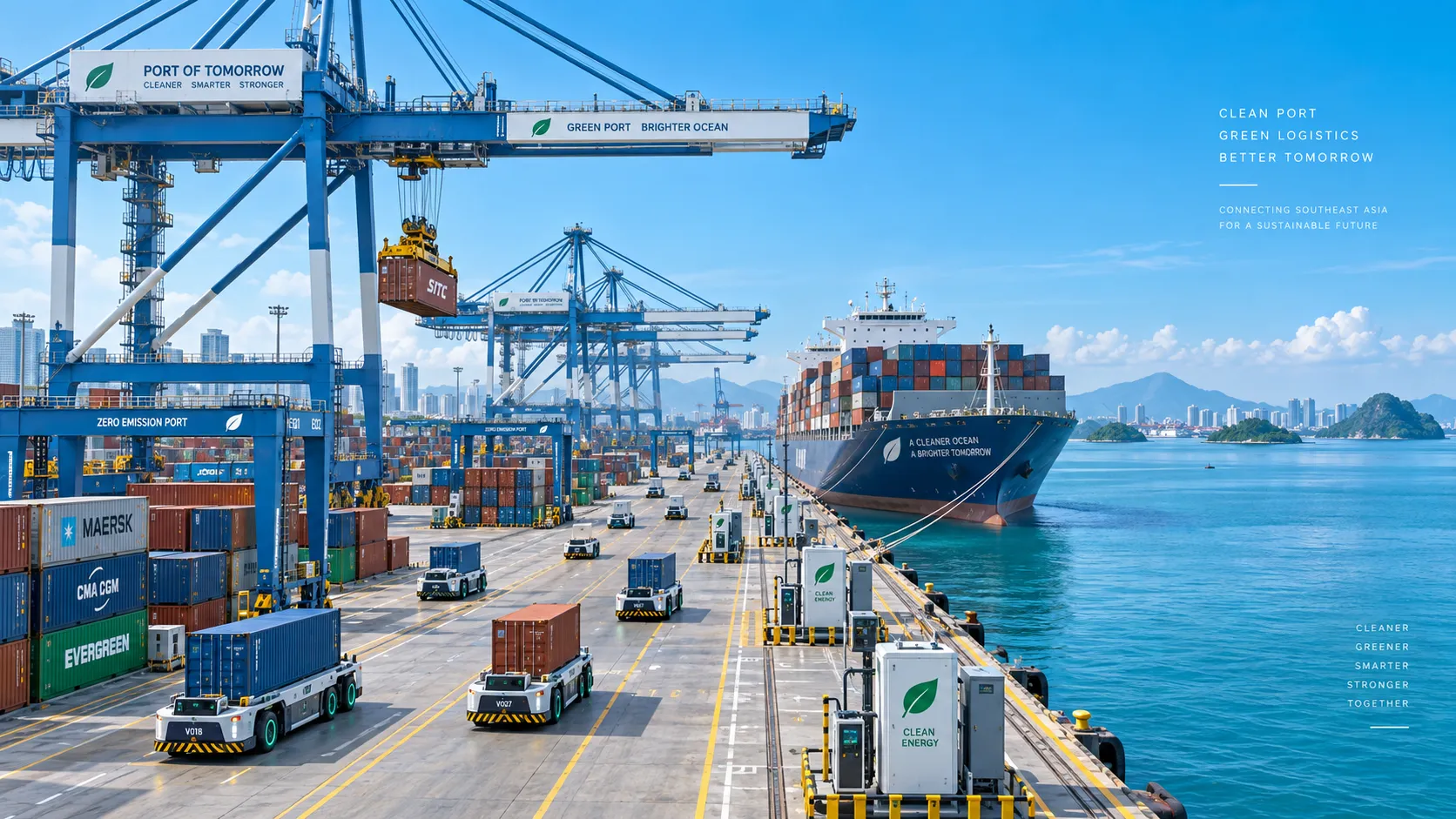
Smart Port Systems in Southeast Asia: Investment Priorities and Adoption Barriers
Smart port systems Southeast Asia: discover investment priorities, adoption barriers, and practical steps to build resilient, connected, high-performing terminals.

How to Evaluate Terminal Efficiency Solution Suppliers for High-Throughput Operations
Choose a terminal efficiency solutions supplier with confidence. Explore proven criteria for throughput, integration, lifecycle cost, safety, and reliable delivery.
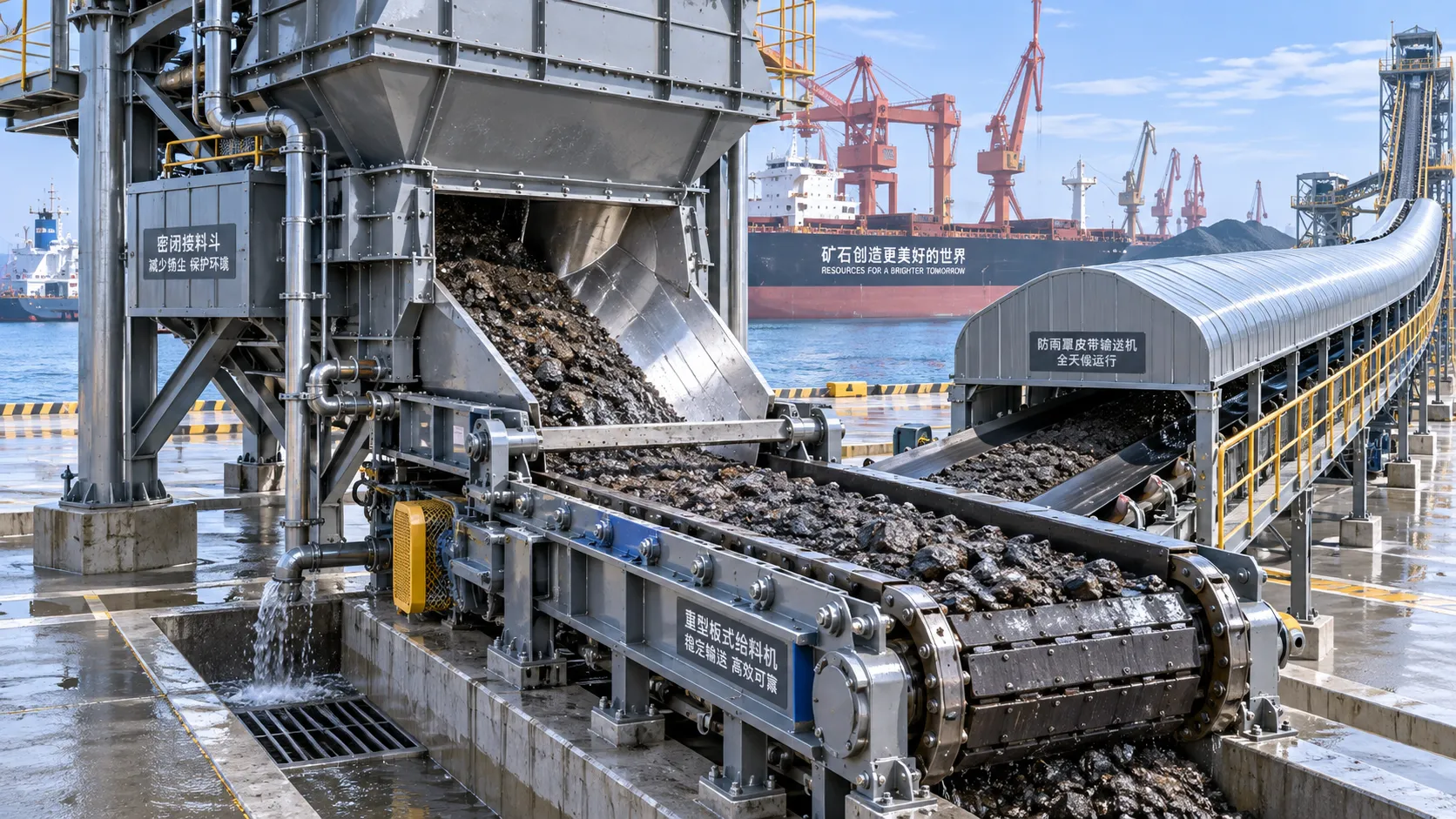
Which Bulk Handling Equipment Suits High-Moisture Cargo?
Which bulk handling equipment suits high-moisture cargo? Compare belt, apron, screw, drag, and slurry systems for reliable flow, less carryback, and higher terminal uptime.
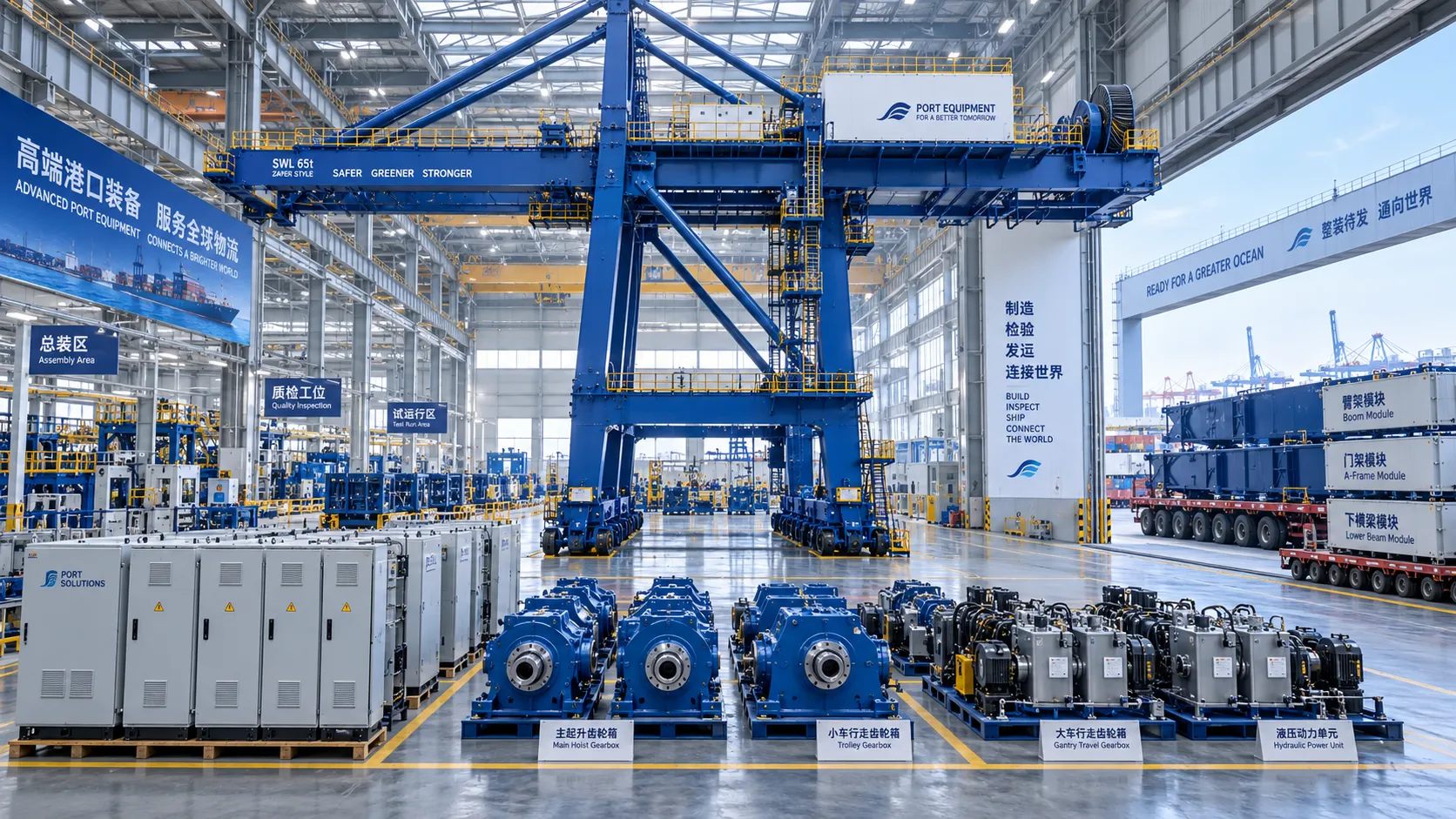
How Can Port Equipment Lead-Time Risk Be Managed?
How can port equipment lead-time risk be managed? Explore practical strategies to control critical paths, suppliers, transport, site readiness, and commissioning delays.
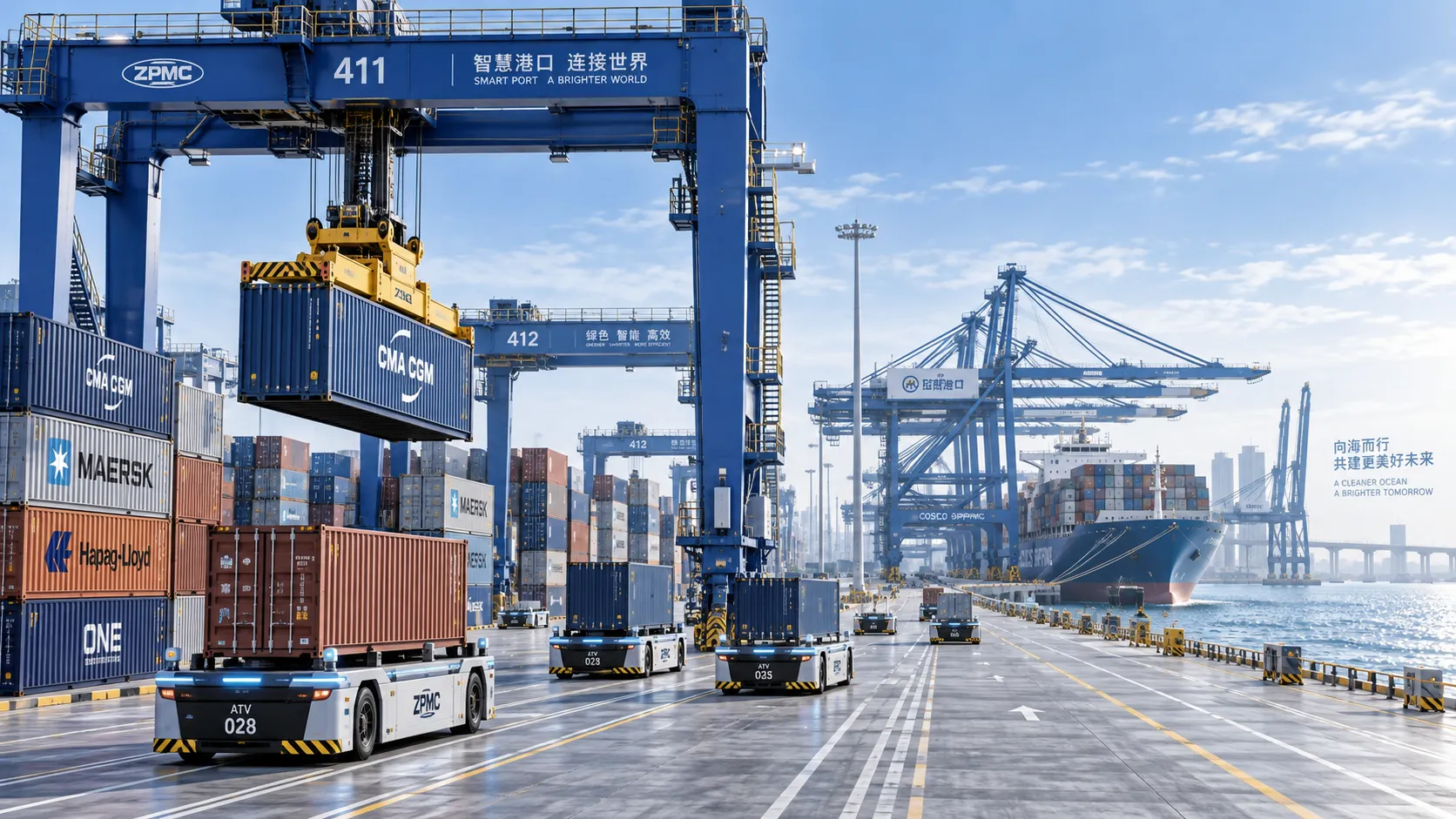
Terminal Automation Technologies That Raise Container Throughput Without Yard Disruption
Terminal automation technology that increases container throughput without disrupting yard flow. Explore smarter integration, resilient workflows, and phased deployment strategies.
Middle East Port Automation: Key Market Drivers, Projects, and Investment Risks
Port automation systems Middle East: explore market drivers, flagship projects, integration challenges, and investment risks shaping smarter, resilient terminals.
Planning Offshore Dredging Operations: Key Risks, Methods, and Project Controls
Offshore dredging operations demand smart planning. Explore key risks, proven methods, environmental controls, and project strategies for reliable delivery.
Where Do Automated Guided Vehicles Deliver the Fastest Warehouse Gains in the Middle East?
Automated guided vehicles Middle East: discover where AGVs deliver the fastest warehouse gains, from high-volume distribution centers to port logistics, manufacturing, and cold storage.

Smart Port Systems Pricing: How to Compare Lifecycle Costs and ROI by Terminal Scale
Smart port systems pricing explained: compare lifecycle costs, integration risks, and ROI by terminal scale to make smarter, resilient investment decisions.