Related News
- 00
0000-00
How to Specify a Quay Crane for Container Terminals by Vessel Size and Throughput? - 00
0000-00
Which Bulk Handling Equipment Suits High-Moisture Cargo? - 00
0000-00
Terminal Automation Technologies That Raise Container Throughput Without Yard Disruption - 00
0000-00
Planning Offshore Dredging Operations: Key Risks, Methods, and Project Controls - 00
0000-00
Where Do Automated Guided Vehicles Deliver the Fastest Warehouse Gains in the Middle East?
Terminal Automation Technologies That Raise Container Throughput Without Yard Disruption
Container throughput does not rise simply because a terminal adds autonomous vehicles or remote-operated cranes. It rises when the quay, transport fleet, yard blocks, gate, maintenance team, and control room can absorb a higher and more predictable flow of boxes at the same time.
That is the practical test for terminal automation technology: it must remove a constraint from the end-to-end container journey without moving the constraint somewhere less visible. A faster quay crane can overwhelm horizontal transport. More automated stacking capacity can create truck queues if handover points are poorly designed. A sophisticated control platform can still produce unstable operations when it receives late or conflicting data from legacy systems.
For project leaders, the right automation program is therefore rarely a single equipment decision. It is a flow-design and integration decision, delivered in stages that keep the live yard operating safely and predictably.
Start with the bottleneck, not the automation catalogue
A terminal may describe its problem as insufficient capacity, but the underlying cause can be quite different: uneven vessel work, long container travel distances, rehandles, unreliable equipment availability, poor truck appointment discipline, or an inability to recover after a disruption. Each cause points to a different solution.
Before selecting technology, map a container’s actual path from discharge or gate arrival to its planned storage position, onward retrieval, and final transfer. The map should include physical movement, system messages, operator decisions, exception handling, and waiting time. The purpose is not to produce a polished process diagram. It is to find where containers wait because the next resource is unavailable, uncertain, or operating to a different plan.
A useful distinction is between a capacity constraint and a coordination constraint. A capacity constraint may call for additional cranes, vehicles, charging capacity, or storage blocks. A coordination constraint is often better addressed through scheduling logic, work-zone rules, dispatching, equipment visibility, or cleaner integration between the terminal operating system and automation systems. Buying more machines for a coordination problem can increase congestion rather than throughput.
Choose technologies by the handoff they improve
Automation works best when it stabilizes a specific handoff between terminal functions. The table below compares common options through that operational lens.
Automated stacking cranes are often compelling where land is constrained and the operating model can support structured block operations. Their value is not just labor substitution. They make container positioning, retrieval sequencing, and buffer management more predictable. However, they can be a poor first move where the yard layout forces frequent non-standard moves, access roads cross active blocks, or landside truck behavior remains highly variable.
AGVs and autonomous terminal tractors are effective when quay cranes lose time waiting for transport or when vehicle dispatch depends too heavily on radio coordination and individual driver decisions. Their performance depends on the entire transport loop. A vehicle fleet cannot compensate for narrow transfer lanes, unclear right-of-way rules, slow interchange zones, or a yard crane that cannot accept containers at the required rhythm.
For terminals operating a mixed equipment base, the control layer may be the highest-value starting point. It can provide a common operational view while automation is introduced selectively. This approach is especially relevant when a terminal cannot close a large section of the yard for a full rebuild.
Protect the yard by designing for variability
Live terminals do not operate under ideal conditions. Vessel sequences change, late arrivals cluster, containers require inspection, equipment enters maintenance, and weather or labor constraints alter the plan. A project that automates only the standard cycle often produces a polished demonstration and a difficult operating environment.
The design needs explicit answers to practical questions: Where does an exception container go? How is a failed vehicle removed without stopping an active lane? Who can authorize an override? Can a manual truck enter a controlled zone? How does the system respond when a planned stack position is unavailable? What happens when the gate releases a surge of import pickups?
These are not edge cases. They determine whether the automated yard recovers quickly or turns a local problem into widespread delay.
Buffer capacity deserves particular attention. Buffers are sometimes treated as wasted space because they do not appear to add storage density. In practice, carefully located buffers protect quay productivity from yard variation and prevent a small delay from blocking multiple handoffs. The goal is not to maximize every square meter at every moment. It is to preserve enough operational flexibility to keep the container flow moving during normal disruption.
Do not automate a poor container strategy
Automation amplifies the rules it is given. If containers are assigned to blocks without regard to onward mode, dwell behavior, weight, reefer needs, customs status, or planned vessel connection, automated equipment will execute inefficient moves consistently. Rehandles may become less visible to supervisors, but they still consume crane time and block access.
Yard planning rules should be reviewed before equipment procurement is finalized. A practical plan separates stable, high-volume flows from volatile or exception-heavy flows. Predictable import or export streams may be well suited to automated blocks. Out-of-gauge cargo, damaged units, inspection holds, non-standard chassis moves, and irregular inter-terminal transfers may need dedicated handling areas or a hybrid operating model.
Integration is the project’s real critical path
Equipment delivery dates are visible. Interface design is often where schedules slip and operational risk accumulates. The terminal operating system, equipment control system, crane controls, fleet manager, gate platform, maintenance tools, safety systems, and communication network all influence the quality of automated decisions.
Project teams should define which system owns each decision before detailed configuration begins. For example, one system should be authoritative for container identity and status, another may optimize job sequencing, and local equipment controls should retain responsibility for machine protection. Ambiguous ownership creates duplicate commands, stale data, or operator workarounds that undermine automation.
Interface testing should use realistic operating scenarios rather than simple message confirmation. Test a container that changes status mid-move, a crane that becomes unavailable, a vehicle that cannot complete a route, a gate transaction that arrives out of sequence, and a planned vessel change that forces yard replanning. A message can be technically valid while the resulting operational decision is still wrong.
Communications architecture also belongs in the throughput discussion. Remote operation, fleet coordination, positioning, video feeds, and safety systems depend on reliable low-latency connectivity within active work areas. Network design should account for physical obstructions, coverage transitions, redundancy, cyber controls, and maintenance access. Treating the network as a late infrastructure package creates avoidable commissioning delays.
Phase the deployment around operational continuity
A full-yard conversion is appropriate only when construction windows, layout conditions, capital timing, and risk tolerance support it. Many terminals need a staged path: automate one block, one transport corridor, a subset of crane functions, or a planning layer while conventional operations continue elsewhere.
The first phase should be large enough to expose the real operating model, including peak-period behavior and exceptions. A pilot limited to low-complexity moves may prove that the equipment functions, but it does not prove that the terminal can operate through disruption. At the same time, the first phase should preserve an operational fallback that does not depend on improvised workarounds.
- Establish a baseline for container flow, equipment availability, rehandles, queue formation, recovery time, and exception volume.
- Select the constrained handoff and define the operational outcome required there, rather than beginning with a preferred machine type.
- Set interface ownership, safety-zone rules, manual intervention authority, and degraded-mode procedures before factory or site testing.
- Commission in controlled operating windows, then validate performance during representative live conditions.
- Use the lessons from the first operating area to refine dispatch rules, buffer policies, maintenance coverage, and training before expansion.
Training must extend beyond equipment operators. Planners, maintenance staff, marine coordinators, gate teams, supervisors, and IT support all interact with the automated workflow. The operational change is greatest for supervisors: their role shifts from directing individual moves to managing exceptions, priorities, and system health.
Measure flow quality, not only move counts
A terminal can report strong equipment move rates while vessels wait for the wrong containers, trucks queue at handover points, or yard reshuffles consume future capacity. Project governance should therefore track measures that reveal whether flow has improved across the system.
Useful measures include the consistency of quay supply, time spent waiting at transfer points, the proportion of unplanned rehandles, equipment availability during critical operating periods, job completion predictability, and the time required to restore normal operations after a failure. The specific metric set will vary, but it should connect automation performance to the terminal’s actual service commitments.
It is also important to separate early commissioning instability from structural design problems. Initial tuning is expected. Repeated manual overrides, persistent queueing at the same interface, or recurring data conflicts are signals that the process, layout, or system ownership needs correction. Treating those signals as operator resistance delays the real fix.
Make the next decision with a whole-terminal view
The strongest automation business case is usually built around a defined flow problem: protecting quay crane continuity, increasing usable yard capacity, reducing transport variability, improving recovery from disruption, or enabling a constrained expansion. It should state what remains manual, where buffers sit, how exceptions are handled, and which operational dependencies must be upgraded alongside the equipment.
PS-Nexus tracks the relationship between terminal machinery, automated container handling, control systems, and the wider logistics conditions that shape their value. For project teams, that perspective is useful because crane selection, vehicle autonomy, scheduling logic, and communications design should not be assessed as separate technology purchases. They are parts of one operating system.
Before committing to a technology package, confirm the terminal’s current bottleneck, the variability it must absorb, the readiness of its data and network infrastructure, and the fallback operating model. When those four points are clear, automation can increase throughput while keeping the yard stable enough to handle the next disruption.
Related News
Smart Port Systems in Southeast Asia: Investment Priorities and Adoption Barriers
Smart port systems Southeast Asia: discover investment priorities, adoption barriers, and practical steps to build resilient, connected, high-performing terminals.
How to Evaluate Terminal Efficiency Solution Suppliers for High-Throughput Operations
Choose a terminal efficiency solutions supplier with confidence. Explore proven criteria for throughput, integration, lifecycle cost, safety, and reliable delivery.
How to Specify a Quay Crane for Container Terminals by Vessel Size and Throughput?
Quay crane for container terminals: learn how to match outreach, lift height, capacity, automation, and cycle performance to vessel size and throughput goals.
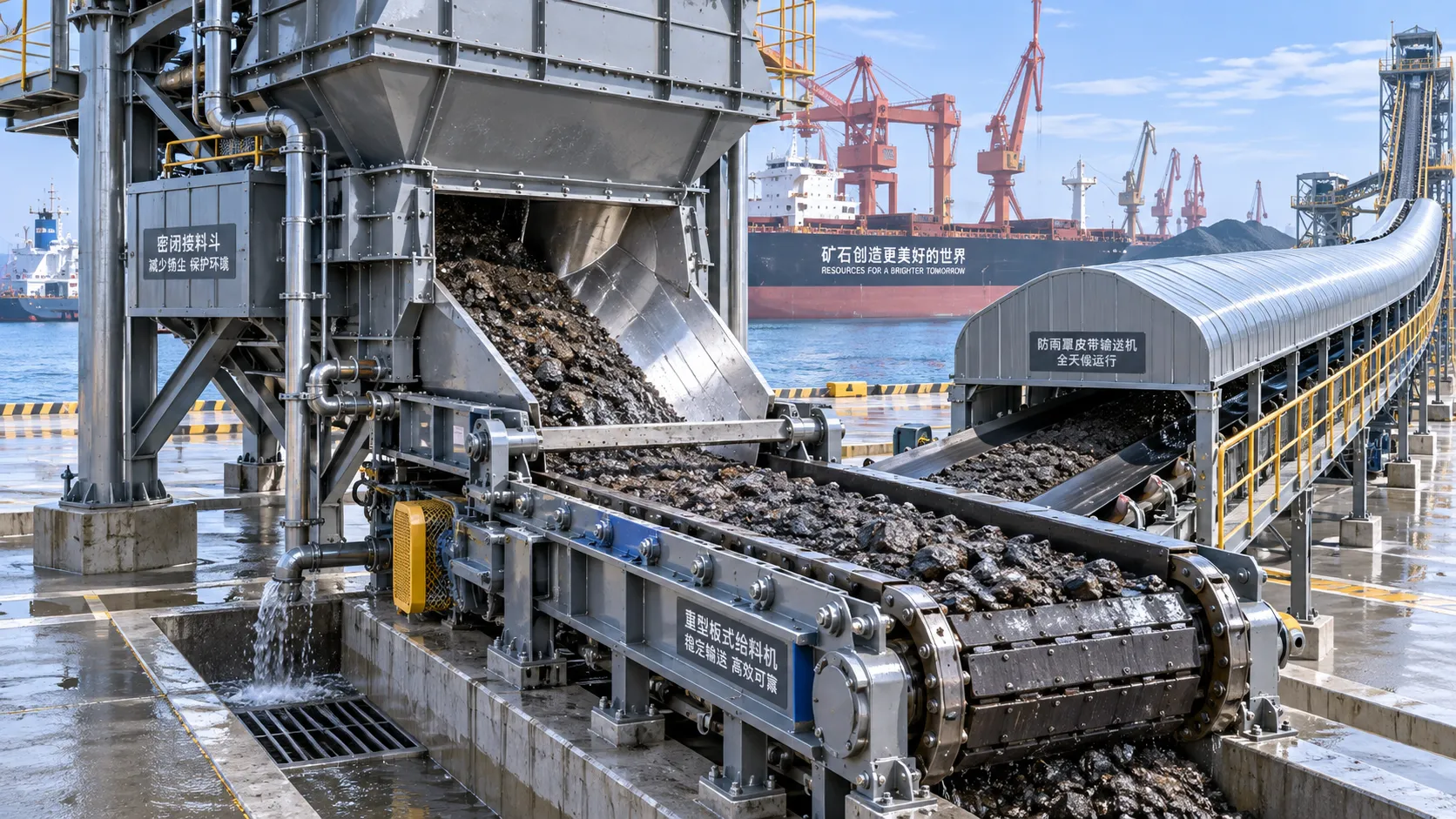
Which Bulk Handling Equipment Suits High-Moisture Cargo?
Which bulk handling equipment suits high-moisture cargo? Compare belt, apron, screw, drag, and slurry systems for reliable flow, less carryback, and higher terminal uptime.
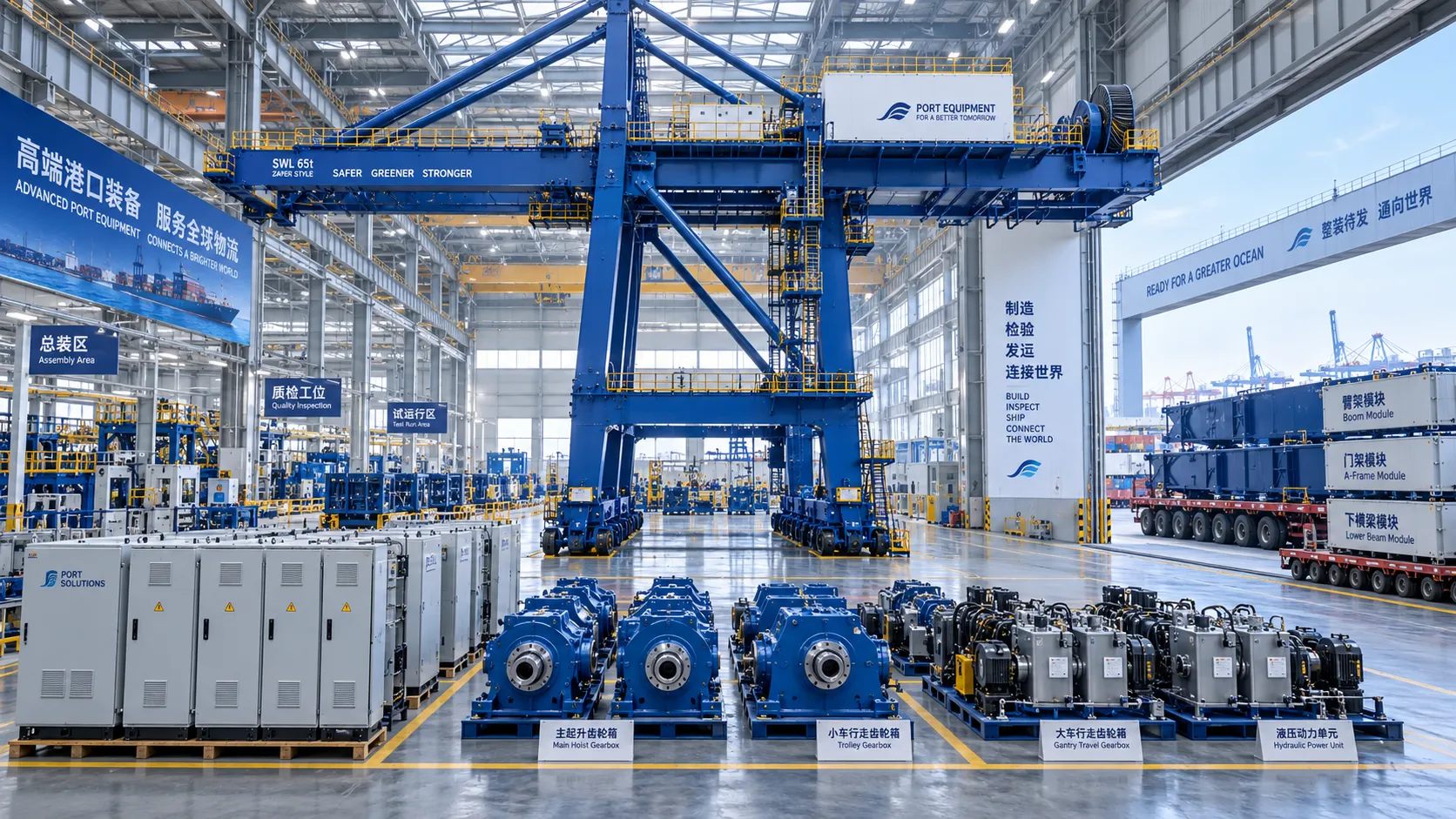
How Can Port Equipment Lead-Time Risk Be Managed?
How can port equipment lead-time risk be managed? Explore practical strategies to control critical paths, suppliers, transport, site readiness, and commissioning delays.
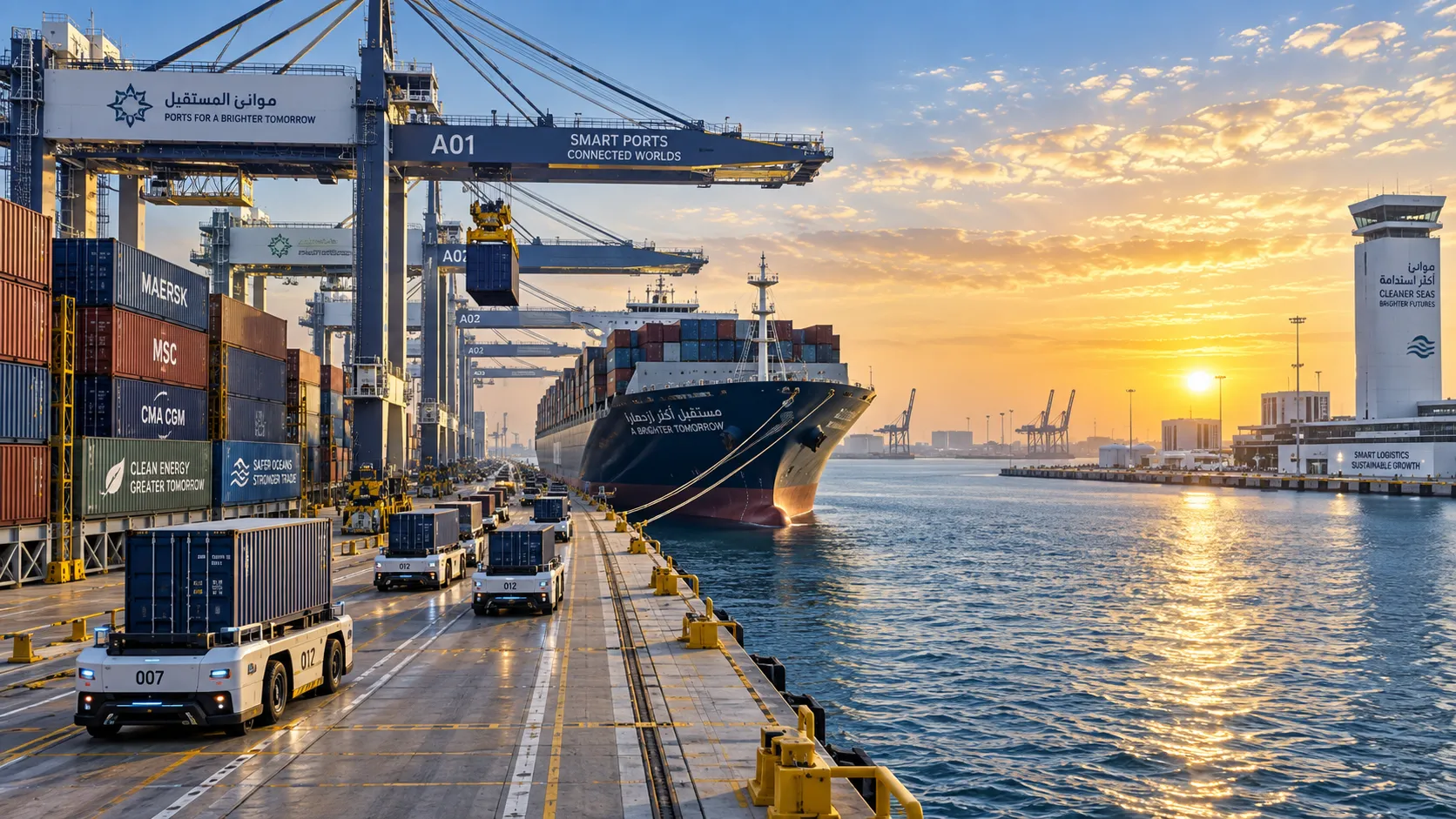
Middle East Port Automation: Key Market Drivers, Projects, and Investment Risks
Port automation systems Middle East: explore market drivers, flagship projects, integration challenges, and investment risks shaping smarter, resilient terminals.
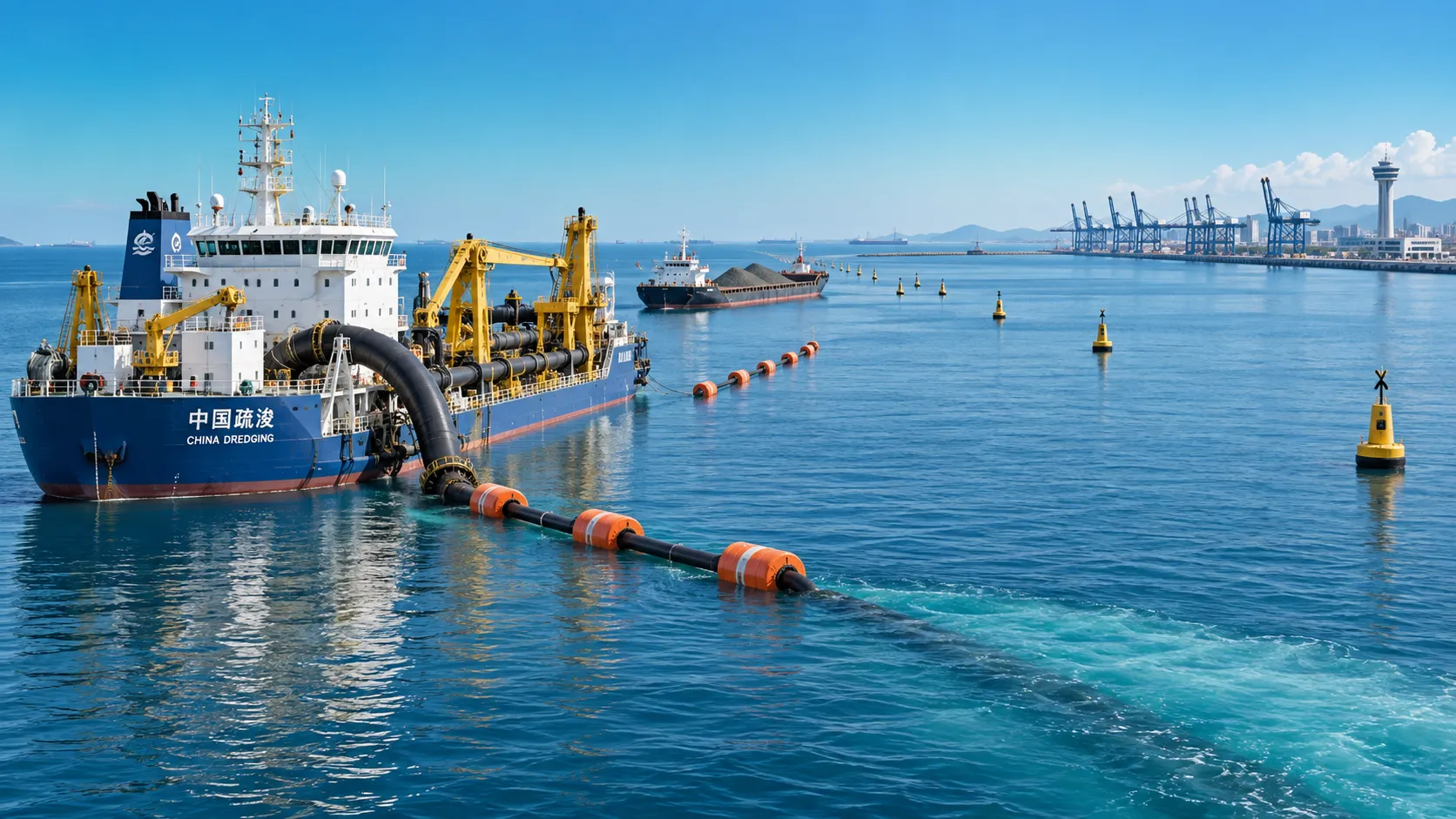
Planning Offshore Dredging Operations: Key Risks, Methods, and Project Controls
Offshore dredging operations demand smart planning. Explore key risks, proven methods, environmental controls, and project strategies for reliable delivery.
Where Do Automated Guided Vehicles Deliver the Fastest Warehouse Gains in the Middle East?
Automated guided vehicles Middle East: discover where AGVs deliver the fastest warehouse gains, from high-volume distribution centers to port logistics, manufacturing, and cold storage.
Smart Port Systems Pricing: How to Compare Lifecycle Costs and ROI by Terminal Scale
Smart port systems pricing explained: compare lifecycle costs, integration risks, and ROI by terminal scale to make smarter, resilient investment decisions.