Related News
- 00
0000-00
How Can Port Equipment Lead-Time Risk Be Managed? - 00
0000-00
Maritime Logistics Operations: How Ports Can Reduce Container Dwell Time - 00
0000-00
What Does Logistics Node Monitoring Cost Across Warehouses and Transport Hubs? - 00
0000-00
How Can IoT Smart Port Solutions Improve Container Tracking and Yard Efficiency? - 00
0000-00
How Real-Time Port Logistics Intelligence Improves Container Yard Efficiency
How Can Port Equipment Lead-Time Risk Be Managed?
Port equipment lead-time risk is managed by treating delivery as a controlled project path rather than a date written into a purchase order. The most reliable approach starts before supplier selection: define the equipment at the level needed for manufacture, identify components with separate supply chains, reserve production capacity early, and track engineering, fabrication, testing, transport, and site-readiness milestones independently.
A quay crane, ship unloader, automated stacking crane, conveyor line, dredge pump package, or terminal control system rarely has one lead time. Its delivery date is the result of many linked lead times. A delayed gear reducer, electrical drive, PLC cabinet, hydraulic cylinder, structural casting, steel plate, cable reel, or marine-rated sensor can hold the complete package even when most fabrication is complete. The first task is therefore to expose the critical path instead of relying on an overall promised delivery period.
Break the Equipment Package into Real Delivery Paths
Large port machinery combines long-cycle fabricated structures with bought-out components, software integration, inspection stages, and transport constraints. These paths do not move at the same speed. Structural steelwork may be progressing while electrical components remain unallocated; a dredging pump can be assembled while its wear liners or seal system await final material confirmation; an automated yard system can have mobile equipment ready while communications hardware and control software remain under test.
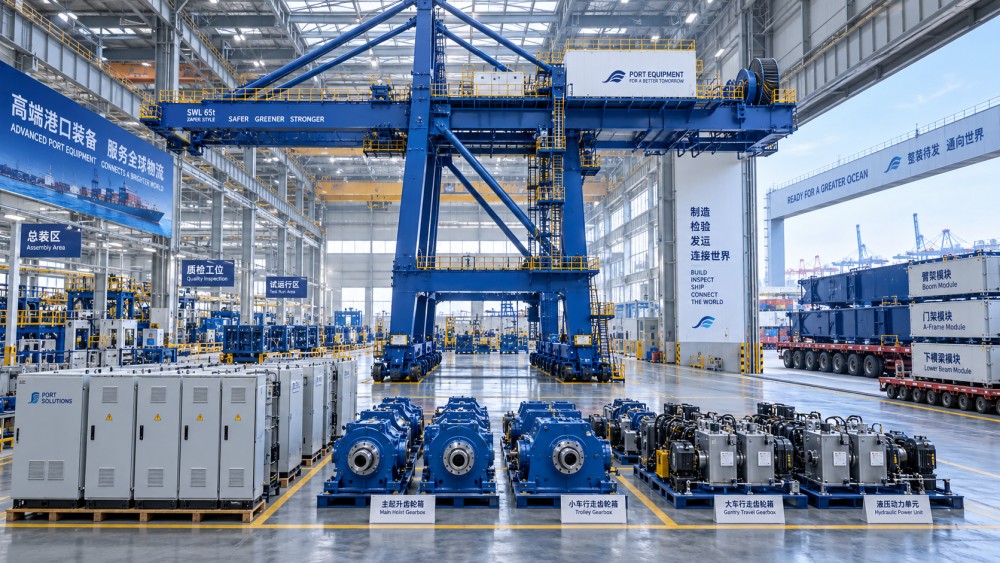
A practical delivery map separates at least five paths: design release, long-lead procurement, fabrication and assembly, factory acceptance, and site delivery. Each path needs a named completion condition. “Engineering complete,” for example, should not mean that a general arrangement drawing exists. It should mean that interfaces affecting purchased items, fabrication dimensions, cable routing, foundations, power supply, controls, and safety functions are sufficiently frozen to release production without predictable rework.
Long-lead items deserve a separate register because their status is often obscured inside supplier progress reports. The register should identify the exact part, approved manufacturer, required technical submittals, purchase-order release date, promised dispatch date, test requirement, shipping method, and dependency on the final equipment. It is especially useful to distinguish between an order placed with a supplier and a production slot confirmed by that supplier. The former does not necessarily protect the required delivery window.
Freeze the Specifications That Drive Rework
Many apparent supply delays begin as late technical decisions. Port equipment has numerous interfaces where a small change can restart procurement or force redesign. Rail gauge, wheel loads, lifting height, outreach, berth geometry, power frequency, cable management arrangement, wind design condition, corrosion protection system, vessel class, cargo abrasiveness, slurry density, and automation architecture can all affect the selected components.
For crane equipment, an increase in lifting duty or a change in spreader interface may affect rope selection, drum sizing, motor torque, gearbox capacity, electrical drives, and control logic. A revised wind condition may change structural calculations, tie-down arrangements, storm anchoring, and transport planning. On bulk-handling systems, a belt speed adjustment can alter pulley design, gearbox sizing, chute liners, dust control interfaces, and electrical loading. These are not clerical changes; they reach deep into the production path.
Specification control should focus on the items that have a high consequence if changed after release. A controlled interface schedule is often more useful than a large specification document because it shows where external civil works, electrical infrastructure, adjacent equipment, and operating assumptions touch the supplied package. It should record both the required value and the authority permitted to change it.
Do not freeze every minor detail prematurely. Early over-definition can create its own delay when selected suppliers must seek deviations for dimensions or materials that do not affect function. The useful boundary is clear: freeze the parameters that determine equipment architecture, critical purchased components, load paths, power and controls interfaces, transport envelope, and installation method. Leave non-critical finish details flexible until they can be confirmed without disturbing fabrication.
Choose Supply Resilience by Component, Not by Company Count
Adding suppliers does not automatically reduce exposure. Two apparently separate manufacturers may depend on the same drive supplier, control hardware family, foundry, specialist machining shop, export terminal, or heavy-lift vessel schedule. Resilience comes from identifying common points of failure and deciding which ones justify alternatives.
For standardized consumable parts, dual sourcing may be realistic. For highly engineered assemblies, such as crane main girders, custom dredge pumps, automated transfer vehicle control packages, or integrated energy-management systems, a second source can introduce design incompatibility, validation effort, and warranty gaps. The better protection may be a pre-approved substitute component, reserved manufacturing capacity, or a repairable spare held near the terminal.
Supplier assessment should therefore examine execution capacity for the specific package, not only general reputation or quoted lead time. Useful evidence includes the current manufacturing load, engineering bandwidth, control of critical subcontractors, access to materials, inspection capacity, and the number of similar projects already occupying the factory. A supplier with technically suitable machinery but a congested design office can still become the limiting factor.
Use Contract Milestones That Reveal Trouble Early
A single liquidated-delivery date offers weak operational visibility. It confirms failure after the schedule has already been damaged. Better contracts require measurable intermediate milestones and define what evidence supports each one. Engineering release, purchase of critical components, material receipt, completion of key fabrication stages, factory acceptance testing, packing readiness, dispatch, and shipment should be visible separately.
Milestones need carefully defined acceptance criteria. “Material procured” should specify whether this means ordered, received, inspected, or released to fabrication. “Factory acceptance test complete” should identify whether the test includes functional operation under agreed conditions, fault response, safety interlocks, software version control, punch-list classification, and closure requirements. Ambiguous language creates optimistic progress reporting and makes corrective action late.
Recovery obligations should be practical. Expediting is useful only when the constraint is known. Adding labor may accelerate structural assembly, yet it will not solve a delayed variable-frequency drive or a missing bearing set. A recovery plan should state the constrained item, the proposed action, its effect on downstream activities, added quality or safety exposure, and the evidence that the revised date is achievable. Moving dates in a spreadsheet is not a recovery plan.
Separate Manufacturing Completion from Operational Availability
Port projects often compress several different delivery concepts into one term. Equipment can be mechanically complete, electrically energized, commissioned, or ready for productive operation at very different times. Lead-time management becomes more accurate when these states are planned separately.
For example, a rail-mounted crane may leave the factory in major assemblies, arrive at the terminal, and still await erection, rail survey confirmation, power connection, anti-collision configuration, load testing, and interface testing with terminal systems. An automated container-handling unit may be mechanically ready but unable to enter service until wireless coverage, positioning references, traffic-management rules, battery charging arrangements, and exception-handling logic are validated together.
Define the required date according to the project need. If civil works are still underway, factory completion may be the relevant commitment. If berth expansion depends on handling capacity, the operative date is usually proven site performance after commissioning. Mixing these dates encourages poor decisions, such as accelerating transport while the installation area remains inaccessible or delaying factory tests until a site interface that could have been simulated is ready.
Build Visibility Around Exceptions, Not Routine Reports
Weekly progress reports can conceal risk when they list only completed percentages. A package reported as “90% complete” may be materially late if the remaining 10% contains the only unavailable drive, critical software function, high-pressure hose set, or certified lifting component. Progress should be tied to the remaining activities that govern the final date.
An exception-based review asks a narrower set of questions: Which item now has the smallest schedule float? Has any approved supplier changed its committed production or dispatch date? Are design comments preventing a purchase release? Does a shipping or heavy-lift constraint create a later delivery window? Has a site condition changed the installation sequence? These questions convert reporting into decision support.
Digital tracking is valuable when it joins engineering, procurement, fabrication, logistics, and site records around the same equipment breakdown structure. A dashboard alone has limited value if dates are manually copied from unverified emails. Each status should point to traceable evidence such as an approved drawing, material receiving record, inspection release, test record, packing list, vessel booking, or site acceptance record. Where data conflict, the critical-path owner should resolve the discrepancy rather than averaging the reports.
Protect Transport and Installation Windows
Heavy port equipment creates lead-time exposure after factory release. Oversized crane modules may require special road permits, route surveys, temporary access changes, port lifting studies, and coordinated berth availability. A large dredging component may need preservation controls during storage and shipment, particularly where machined surfaces, hydraulic systems, electrical enclosures, or elastomer seals face extended exposure to moisture and salt air.
Transport planning should begin while the equipment is still being designed. Module weight, center of gravity, lifting lugs, shipping supports, dimensions, and assembly sequence affect whether the chosen route is feasible. A late decision to divide a structure into smaller modules can add connection details, site welding, non-destructive testing, corrosion repair, and alignment work. Conversely, an oversized module may save site assembly time but introduce a transport bottleneck that consumes the same advantage.
Site readiness needs its own release gate before shipment. Confirm rail tolerances, foundation strength, embedded plates, power isolation arrangements, cable trenches, drainage, access for cranes, laydown space, temporary works, and weather protection for sensitive equipment. This is particularly important for automation cabinets, sensors, drives, and communication hardware that should not sit exposed while civil work continues around them.
Use Spares and Modularity Selectively
Strategic spares are most effective when tied to a known failure mode in the delivery path. Holding a spare generic fastener provides little schedule protection if the real constraint is a custom slewing bearing or a configured controller. The priority should be parts with long replenishment time, high commissioning dependency, difficult access, or a history of damage during transport and installation.
For electronic assemblies, a spare may require the same firmware, parameter set, cybersecurity approval, and communication compatibility as the installed unit. For mechanical parts, interchangeability must include material grade, machining tolerance, coating system, sealing arrangement, and lubrication specification. A spare that fits physically but cannot be commissioned or safely operated does not protect the project schedule.
Modular design can reduce lead-time exposure when modules have stable interfaces and can be tested independently. It is less effective when integration is deferred to the site without adequate simulation. The useful objective is to move uncertainty into controlled factory testing while preserving enough flexibility to accommodate confirmed site conditions.
Lead-time risk remains manageable when it is reviewed as a chain of evidence, interfaces, and constraints. Early intelligence matters, but the practical discipline is to keep the critical path visible, prevent avoidable specification churn, verify supplier commitments below the top-line date, and align transport with a genuinely ready installation window.
Related News
Smart Port Systems in Southeast Asia: Investment Priorities and Adoption Barriers
Smart port systems Southeast Asia: discover investment priorities, adoption barriers, and practical steps to build resilient, connected, high-performing terminals.

How to Evaluate Terminal Efficiency Solution Suppliers for High-Throughput Operations
Choose a terminal efficiency solutions supplier with confidence. Explore proven criteria for throughput, integration, lifecycle cost, safety, and reliable delivery.
How to Specify a Quay Crane for Container Terminals by Vessel Size and Throughput?
Quay crane for container terminals: learn how to match outreach, lift height, capacity, automation, and cycle performance to vessel size and throughput goals.
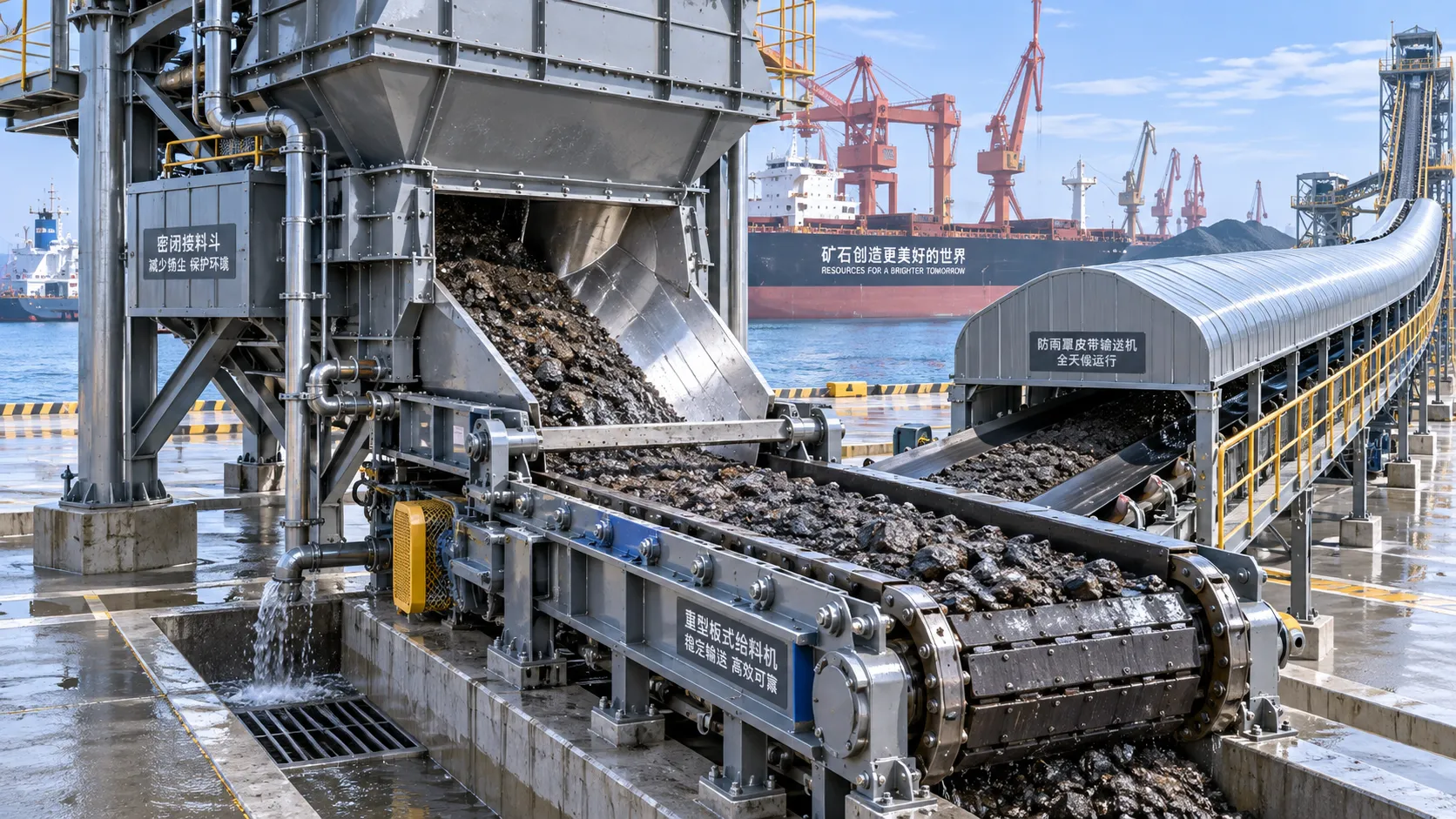
Which Bulk Handling Equipment Suits High-Moisture Cargo?
Which bulk handling equipment suits high-moisture cargo? Compare belt, apron, screw, drag, and slurry systems for reliable flow, less carryback, and higher terminal uptime.

Terminal Automation Technologies That Raise Container Throughput Without Yard Disruption
Terminal automation technology that increases container throughput without disrupting yard flow. Explore smarter integration, resilient workflows, and phased deployment strategies.

Middle East Port Automation: Key Market Drivers, Projects, and Investment Risks
Port automation systems Middle East: explore market drivers, flagship projects, integration challenges, and investment risks shaping smarter, resilient terminals.
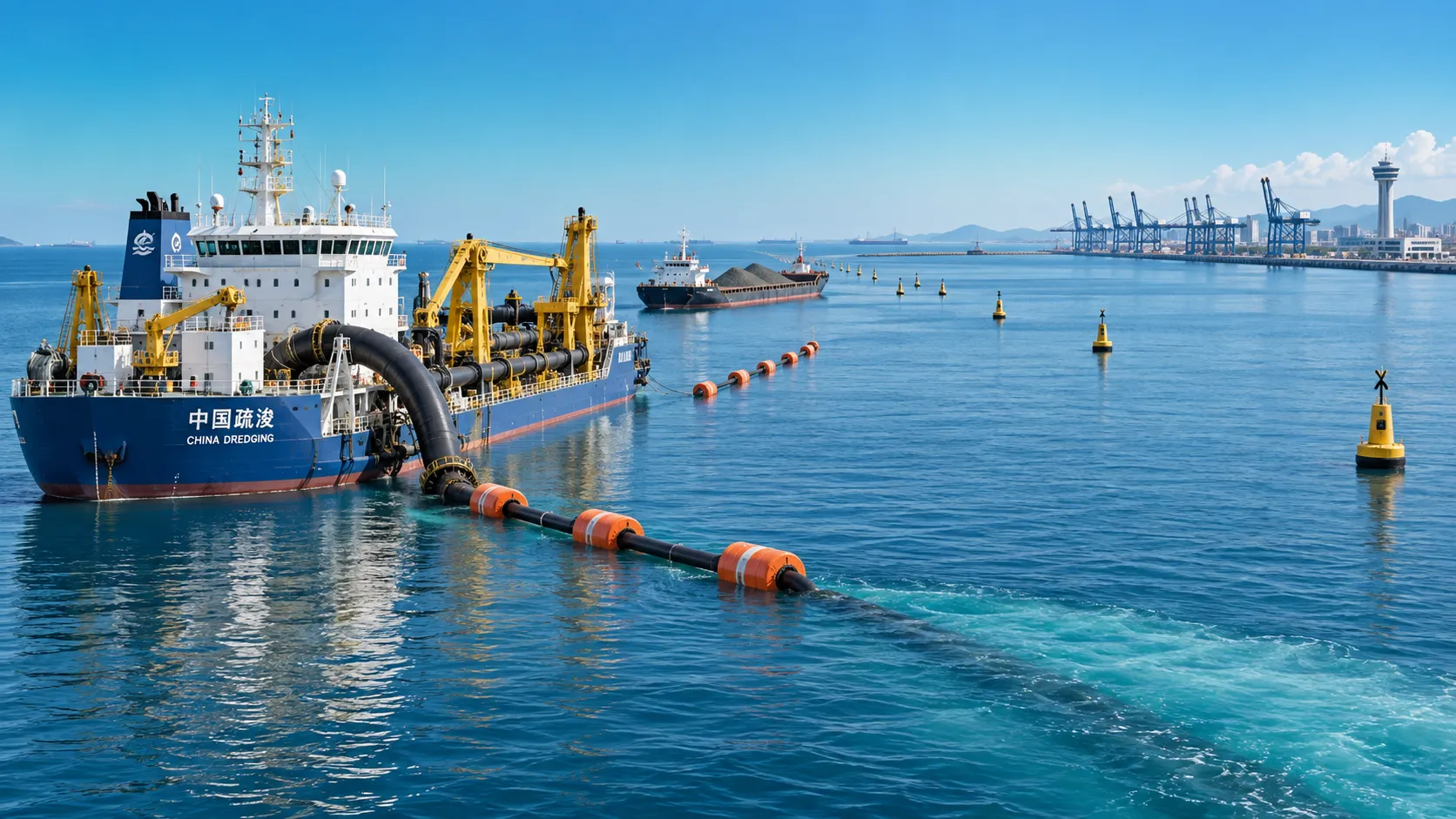
Planning Offshore Dredging Operations: Key Risks, Methods, and Project Controls
Offshore dredging operations demand smart planning. Explore key risks, proven methods, environmental controls, and project strategies for reliable delivery.

Where Do Automated Guided Vehicles Deliver the Fastest Warehouse Gains in the Middle East?
Automated guided vehicles Middle East: discover where AGVs deliver the fastest warehouse gains, from high-volume distribution centers to port logistics, manufacturing, and cold storage.

Smart Port Systems Pricing: How to Compare Lifecycle Costs and ROI by Terminal Scale
Smart port systems pricing explained: compare lifecycle costs, integration risks, and ROI by terminal scale to make smarter, resilient investment decisions.