Maritime logistics operations depend on how quickly containers move from vessel to gate. For project managers and engineering leaders, reducing dwell time requires synchronized terminal gear, automated yard workflows, real-time scheduling, and data-driven control systems.
The central judgment is straightforward: ports rarely solve dwell-time problems by purchasing one additional machine. Sustainable improvement comes from removing handoff delays across berth, yard, gate, customs, rail, and consignee workflows.
For capital projects, dwell time is both an operating metric and an investment test. It reveals whether terminal infrastructure, equipment capacity, software logic, and stakeholder processes are functioning as one coordinated system.
This guide explains where containers accumulate, how project leaders should diagnose root causes, and which operational investments can improve throughput without creating expensive, underused capacity.
Why Container Dwell Time Matters in Maritime Logistics Operations
Container dwell time measures how long cargo remains inside a terminal after discharge or before loading. It directly affects yard density, equipment productivity, vessel turnaround, gate congestion, and customer confidence.
A container may appear stationary, yet its delay can consume multiple resources. It occupies stack space, requires future reshuffles, blocks equipment routes, complicates planning, and increases the risk of missed delivery commitments.
For project managers, excessive dwell time is especially important because it can disguise the true cause of terminal congestion. A crowded yard does not automatically mean the port needs more land.
The underlying constraint may instead involve slow customs release, irregular truck appointments, poor stack allocation, unavailable rail slots, incorrect data, or weak coordination between terminal operators and cargo owners.
Reducing dwell time improves more than a single key performance indicator. It increases effective yard capacity, lowers unproductive container moves, protects crane productivity, and delays or avoids major civil expansion projects.
It also strengthens resilience during schedule disruptions. When vessels arrive late, weather interrupts work, or trade volumes surge, a terminal with lower baseline dwell time has more operational recovery room.
Project teams should therefore treat dwell time as a system-level outcome. The objective is not merely faster container removal, but predictable flow through every decision point after discharge.
That distinction matters when preparing business cases. Investments should be assessed by their ability to improve end-to-end flow, not simply by their contribution to a local equipment utilization figure.
Start With a Dwell-Time Diagnosis, Not an Equipment Purchase
Before selecting cranes, automated guided vehicles, optical character recognition systems, or additional yard blocks, establish a detailed dwell-time baseline segmented by container type, customer, and cargo process.
A single terminal-wide average is insufficient. Import, export, transshipment, reefer, dangerous goods, customs-hold, empty, and rail-bound containers follow different paths and require different operating interventions.
Project leaders should map the complete container journey from vessel discharge through release, stacking, appointment scheduling, gate processing, collection, and final handoff to inland transport providers.
At each stage, record queue duration, processing duration, exceptions, rework, data dependencies, ownership, and service-level targets. This process exposes whether delays arise from physical constraints or administrative decisions.
For example, a terminal may discharge containers efficiently but place them into distant stacks before customs clearance. Later retrieval then creates avoidable reshuffles, longer truck cycles, and unnecessary yard equipment demand.
Likewise, a modern automated gate cannot reduce dwell time when customers lack predictable pickup appointments, shipping documents arrive late, or external inspection agencies operate only during limited hours.
Use percentile measurements alongside averages. The median may look acceptable while the longest-staying containers occupy disproportionate yard space and generate most of the terminal's operational complexity.
Useful measures include dwell time by consignee, customs status, stack location, carrier, transport mode, and day of week. These views convert a broad congestion complaint into actionable engineering requirements.
Improve Yard Strategy Before Expanding Yard Capacity
Yard congestion is often a planning problem before it becomes a land problem. The most valuable yard strategy reduces rehandles while keeping containers accessible when customers are ready to collect them.
Static stacking rules can create unnecessary travel. Ports should use dynamic allocation based on expected pickup time, customs release probability, weight, destination, hazard classification, reefer needs, and transport mode.
Containers likely to leave soon should be placed in accessible positions near the relevant gate or rail interface. Long-dwell or restricted containers require controlled areas that protect productive stacks.
Separate import, export, transshipment, and exception flows where practical. Mixed stacks can improve apparent space utilization but frequently increase searching, rehandling, and planning uncertainty during peak operating windows.
Stack height should be evaluated carefully. Higher density can create capacity, yet it may also increase reshuffle rates and retrieval time if departure patterns are uncertain or equipment availability is limited.
Terminal operating systems should continuously recalculate stack plans as vessel schedules, release data, truck bookings, and rail plans change. Manual updates cannot reliably keep pace with volatile maritime logistics operations.
Engineering teams should also review physical circulation routes. Poorly located interchange zones, narrow lanes, conflicting equipment paths, and insufficient buffer areas can undermine otherwise well-designed stack allocation logic.
The practical target is usable capacity rather than theoretical capacity. A yard holding more containers is not necessarily more productive if those containers cannot be retrieved without extensive unplanned moves.
Synchronize Terminal Equipment With the Actual Flow Pattern
Heavy terminal equipment creates value only when its operating cycles match cargo flow. Adding machines without coordinated dispatching can shift bottlenecks from the quay to transfer zones, stacks, or gates.
Quay cranes, shuttle carriers, straddle carriers, rail-mounted gantry cranes, rubber-tired gantry cranes, and automated guided vehicles require a common view of workload and changing priorities.
When vessel discharge peaks overwhelm yard transfer capacity, containers accumulate at the apron. When yard cranes cannot support retrieval demand, trucks queue despite sufficient gate lanes and appointment slots.
Project managers should model equipment interactions rather than evaluating assets independently. The key question is whether every handoff can sustain the required volume during peak, disruption, and recovery periods.
Cycle-time analysis should include travel, lifting, waiting, battery charging, maintenance, safety separation, operator changes, and exception handling. Nominal manufacturer capacity rarely reflects real terminal conditions.
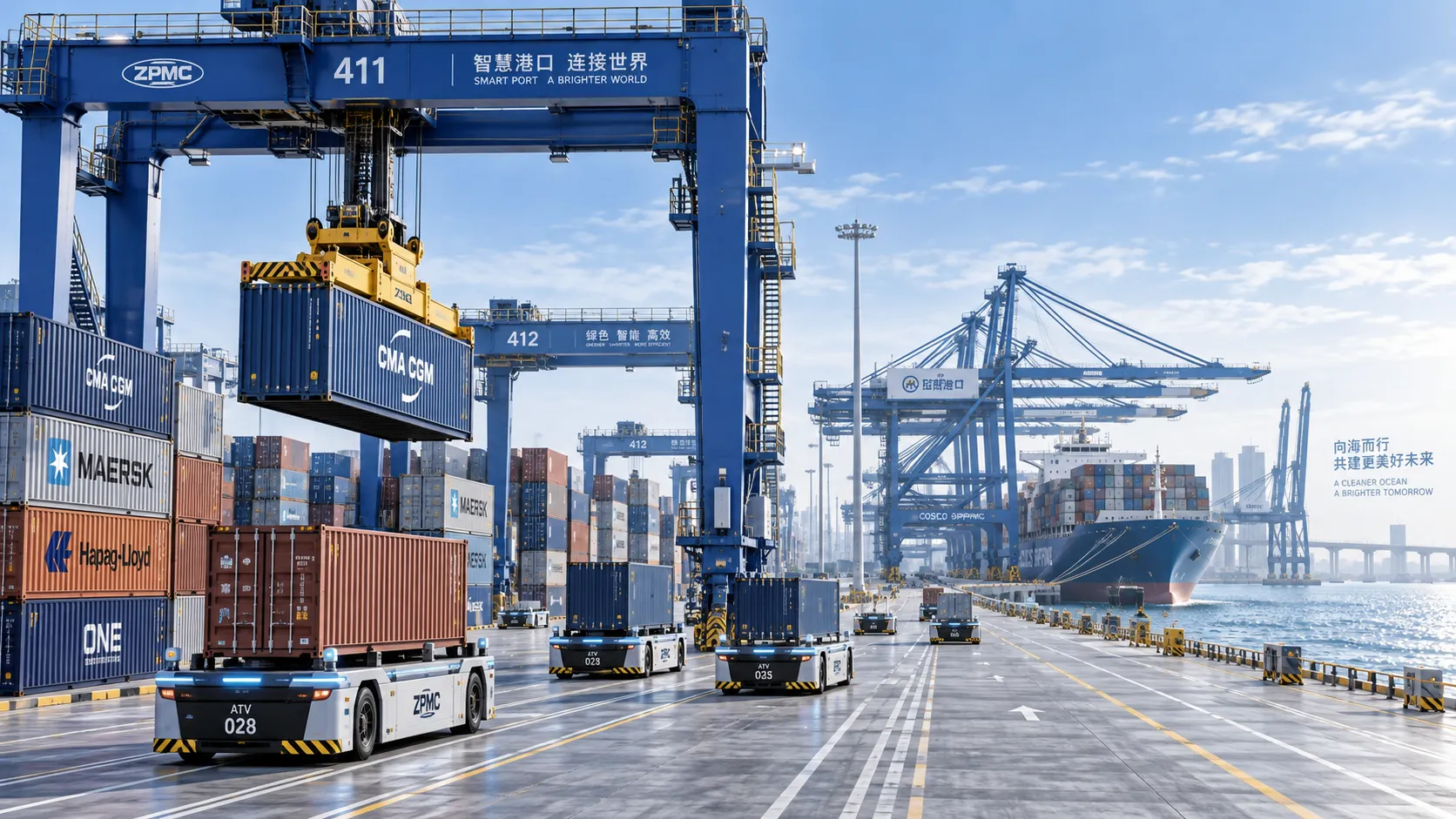
Automation can reduce variability when the operating environment is standardized. However, automated systems need reliable positioning, communication coverage, lane discipline, exception processes, and maintenance support to deliver expected benefits.
Remote-controlled cranes and automated transport systems can improve consistency, particularly in repetitive yard operations. Their value increases when integrated with a terminal operating system that prioritizes urgent retrievals intelligently.
Investment decisions should compare alternatives such as equipment upgrades, control-system optimization, layout changes, and additional operating shifts. The best option is the one that removes the binding constraint economically.
Use Gate Appointments to Turn Truck Demand Into a Manageable Schedule
Truck arrivals are a major source of unpredictable dwell time. Without appointment discipline, terminals face concentrated demand peaks, gate queues, missed collections, and rapid deterioration of yard operating conditions.
An effective truck appointment system allocates capacity according to real-time yard readiness, gate staffing, equipment availability, road conditions, and the priority of containers approaching service commitments.
Appointments should not be treated as a simple reservation calendar. They need rules for late arrivals, early arrivals, no-shows, document failures, chassis availability, dual transactions, and urgent cargo exceptions.
Project leaders should involve trucking companies early. A system that improves terminal efficiency but ignores carrier dispatch realities may create resistance, off-terminal queuing, or noncompliance with booking windows.
Gate automation can support the process through license plate recognition, container identification, damage imaging, document verification, weighbridge integration, and automated lane assignment for approved transactions.
Yet digital gates do not eliminate operational ownership. Exception lanes, trained gate staff, clear escalation protocols, and rapid terminal operating system updates remain essential for maintaining flow during disruptions.
Track truck turn time separately from container dwell time. The two metrics are connected, but one can improve while the other worsens if the terminal prioritizes quick gate transactions over collection readiness.
The strongest programs share appointment performance data with stakeholders. Visibility into missed slots, queue patterns, and processing delays helps carriers adjust behavior and supports joint capacity planning.
Integrate Customs, Shipping Lines, and Inland Transport Into the Control Model
Many dwell-time reductions depend on organizations outside the terminal. A container cannot leave efficiently when cargo release, payment confirmation, inspection clearance, or inland transport booking remains unresolved.
Ports should establish shared digital workflows with customs agencies, shipping lines, freight forwarders, rail operators, depots, and major beneficial cargo owners. Data fragmentation creates avoidable waiting time.
Advance information is particularly valuable. When release status, inspection requirements, dangerous goods documentation, and pickup authority are known before discharge, the terminal can plan storage more intelligently.
Customs-hold containers should be visible as a distinct operational category. They need appropriate locations, inspection access, and clear status ownership so they do not disrupt general import retrieval patterns.
Shipping lines can assist by communicating accurate discharge lists, empty return policies, storage rules, and customer release status. Inconsistent data often causes containers to be planned incorrectly from arrival.
Rail and barge connections require equally rigorous coordination. Missed inland departures can rapidly consume yard space, especially where terminals use rail as a primary evacuation channel for import containers.
For engineering projects, interface governance deserves funding and leadership attention. Integration work may appear less tangible than a new crane, but it can unlock more capacity at lower capital cost.
A port community system can provide the common operating picture, provided data quality, security, access rights, and accountability are defined clearly. Technology cannot compensate for unclear process ownership.
Build Real-Time Control Around Exceptions and Recovery
Normal operations rarely determine terminal performance. Dwell time often increases during delayed vessels, weather events, customs inspections, equipment outages, labor constraints, road closures, and sudden volume surges.
Real-time control systems should identify emerging dwell risks before the yard becomes congested. Alerts must connect operational data with practical decisions, rather than creating another dashboard without authority.
Useful triggers include growing stacks of released imports, declining truck appointment utilization, rising reshuffle rates, delayed rail departures, reefer power capacity pressure, and sustained equipment queue times.
Every trigger should have a defined owner and response. For example, an accumulation of released containers may prompt priority retrieval planning, extra gate capacity, customer notifications, or temporary storage adjustments.
Digital twins and simulation models can help project teams test recovery strategies. They are most useful when fed with reliable operating data and calibrated against actual equipment cycle times.
Scenario planning should test realistic disruptions, not only steady-state throughput. Examine vessel bunching, crane outages, labor shortages, severe weather, customs-system failures, and prolonged inland transport interruptions.
Resilient maritime logistics operations maintain buffers deliberately. The right buffer may be time, yard slots, equipment redundancy, energy capacity, spare parts, trained personnel, or alternate inland routing options.
Control rooms should bring together operations, maintenance, planning, gate management, and customer service. Faster cross-functional decisions prevent localized problems from becoming terminal-wide dwell-time events.
Choose Projects Using Throughput, Risk, and Return-on-Investment Evidence
Project managers need a disciplined method for choosing among automation, equipment, civil works, software, and process redesign. The preferred project should improve flow while controlling implementation and operational risk.
Begin with the constraint identified through data. Estimate how much dwell time, usable yard capacity, labor demand, equipment travel, and service reliability will change after the intervention.
Then test whether upstream and downstream processes can absorb the gain. Faster discharge has limited value when gate capacity, customs release, or rail evacuation remains constrained during the same period.
Financial evaluation should include avoided expansion, lower rehandling, reduced fuel or energy use, improved labor productivity, fewer demurrage disputes, and revenue protection from stronger customer service levels.
Risk assessment must consider technology maturity, integration complexity, cyber resilience, procurement lead times, training requirements, maintenance capability, and operational disruption during commissioning or construction.
Phased implementation often reduces risk. A pilot in one yard block, gate lane, or container category can validate assumptions before the port commits to fleet-wide automation or major layout changes.
Define benefits with operating owners before approval. If the terminal, customs authority, trucking community, and shipping lines measure success differently, expected dwell-time improvements may never materialize.
A credible investment case includes baseline data, target metrics, accountable owners, implementation milestones, contingency plans, and post-project review periods. This turns an ambition into an executable operating program.
Measure the Right Indicators After Implementation
After a project goes live, do not declare success based on a short-term average dwell-time improvement. Seasonal demand, vessel schedules, and temporary operating changes can distort results.
Monitor dwell time by cargo segment and compare it with stack occupancy, rehandle ratio, truck turn time, crane productivity, gate appointment adherence, rail utilization, and release-processing performance.
Use both leading and lagging indicators. Yard occupancy and released-container aging identify pressure early, while overall dwell time confirms whether customers and terminal operations experienced lasting improvement.
Review exceptions weekly during stabilization. Repeated manual overrides, inaccurate status messages, route conflicts, and failed appointments reveal process weaknesses that aggregated reporting can hide.
Maintenance data should be part of the review. Automated and remote-controlled equipment may improve productivity, but recurring downtime or slow recovery can reduce actual capacity below design expectations.
Share results with external stakeholders where appropriate. Transparent performance reporting supports better truck scheduling, cargo release behavior, rail planning, and confidence in future operational changes.
Most importantly, keep refining the operating rules. Container flows, shipping alliances, cargo mixes, regulations, and inland network conditions change, so dwell-time management must remain an active discipline.
Ports that combine disciplined measurement with operational learning can gain capacity repeatedly, often without relying on continuous land expansion or isolated investments in additional terminal equipment.
Conclusion: Reduce Dwell Time by Managing the Whole Port System
Reducing container dwell time is one of the most practical ways to improve maritime logistics operations. It releases capacity, strengthens service reliability, lowers avoidable handling, and improves resilience during disruption.
For project managers and engineering leaders, the priority is to locate the real constraint before committing capital. The answer may involve yard logic, gate appointments, data integration, equipment control, or stakeholder governance.
The most successful ports synchronize physical assets with digital decision-making and external cargo processes. They treat cranes, automated vehicles, schedules, customs data, and inland transport as connected operating elements.
PS-Nexus tracks the equipment, automation systems, and operational intelligence shaping this transition. Better dwell-time performance begins with a clear flow model, disciplined implementation, and decisions based on measurable terminal realities.