Related News
What Dredging Equipment Is Needed for Channel Deepening?
When a channel no longer provides the depth required by modern vessels, the consequences spread well beyond a charted navigation line. Draft restrictions can force carriers to reduce loads, wait for favorable tides, or bypass a port altogether. For harbor authorities, terminal operators, and coastal engineers, the question is therefore practical and urgent: what dredging equipment is needed for channel deepening?
The answer is rarely a single dredger. Channel deepening is a coordinated marine engineering operation involving excavation, pumping, transport, placement or disposal, hydrographic verification, and environmental control. The right equipment mix depends on soil conditions, channel length and width, target depth, wave climate, disposal distance, traffic constraints, and the rules governing sediment management.
A sheltered estuarine approach channel with soft silt calls for a very different spread from a rocky harbor entrance exposed to swell. The most successful projects begin by matching the equipment to the material and logistics—not by selecting the largest machine available.
Start with the material beneath the water
Before choosing dredging plant, engineers need a reliable ground model. Bathymetric surveys define the existing bed levels, while geotechnical borings, cone penetration tests, and sediment sampling reveal what must actually be removed. A channel may contain loose sand in one reach, cohesive clay in another, and isolated rock or debris near an older berth basin.
This distinction determines whether the work is primarily hydraulic, mechanical, or a combination of both. Fine sand and soft mud can often be removed efficiently by suction dredging. Stiff clay may require a cutter head with higher cutting force. Boulders, weathered rock, or man-made obstructions can introduce breaking, drilling, grab dredging, or even controlled blasting into the scope.
It is also important to distinguish between capital dredging and maintenance dredging. Capital dredging creates a new depth or channel geometry. It typically encounters undisturbed, denser material and demands more robust excavation capability. Maintenance dredging removes recurring sedimentation and may favor mobile, high-production equipment optimized for loose deposits. A fleet that is ideal for one is not automatically economical for the other.
The main dredgers used for channel deepening
Trailing suction hopper dredgers for mobile, loose sediments
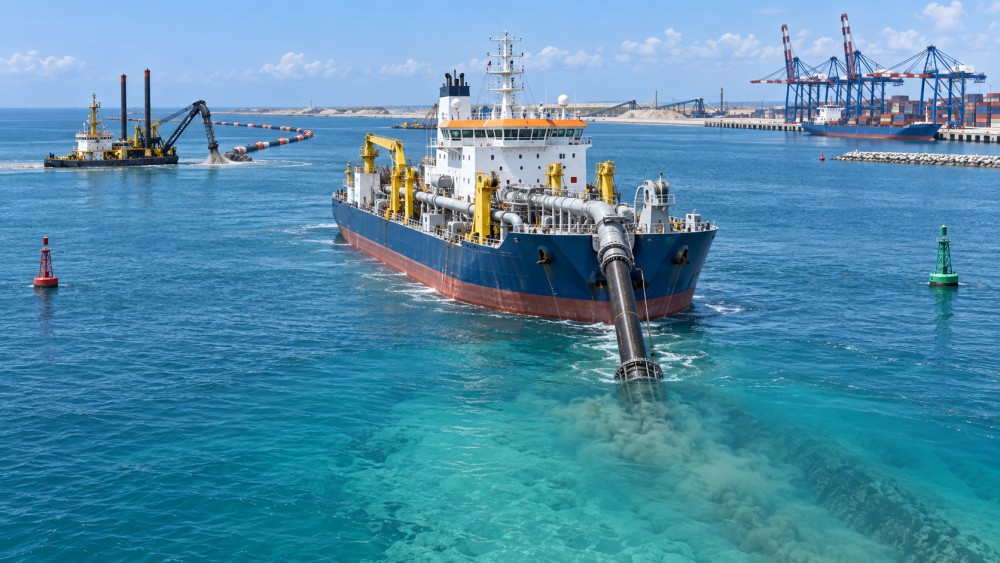
A trailing suction hopper dredger (TSHD) is often the preferred workhorse for long navigation channels containing sand, silt, mud, or other relatively loose material. While sailing slowly along the channel, it lowers one or two drag arms to the seabed. Drag heads collect sediment through suction pipes, and the material is stored in an onboard hopper.
Its strength lies in mobility. The vessel can work along a live shipping route, move to an offshore placement site, and return without depending on a long floating pipeline. For projects with distant disposal grounds, beneficial-use placement areas, or uninterrupted channel reaches, that autonomy is valuable. TSHDs can also use bottom doors, rainbowing, or pump-out arrangements to discharge material according to the approved sediment strategy.
However, hopper dredgers are not universal solutions. Dense clay, compacted material, and rock can sharply reduce production. Their operating window may also be affected by strong currents, vessel traffic, weather, and limited maneuvering room in narrow channels.
Cutter suction dredgers for controlled excavation and pumping
A cutter suction dredger (CSD) combines a rotating cutter head, suction intake, powerful dredge pumps, and a discharge pipeline. Anchored by spuds and maneuvered with side anchors or a walking system, it excavates material at a relatively fixed working location and sends the slurry through floating and shore pipelines.
For channel deepening in compact sand, clay, mixed soils, or material requiring accurate removal near slopes and structures, a CSD offers excellent control. It is particularly useful where dredged material can be pumped directly to a reclamation area, confined disposal facility, sediment treatment zone, or nearshore placement site. Rather than repeatedly sailing to disposal, the operation maintains a continuous hydraulic transport chain.
The trade-off is that the pipeline system becomes central to the project. It must cross or avoid navigation routes, tolerate waves and currents, and be moved as the dredger advances. In busy ports, pipeline crossings and anchor wires require careful marine traffic management.
Backhoe and grab dredgers for localized or difficult areas
Mechanical dredgers have an important place in the channel-deepening toolkit. A backhoe dredger, usually mounted on a stable pontoon, uses an excavator boom and bucket to remove compact material, debris, stiff clay, or isolated high spots. A grab dredger uses a clamshell bucket and is often selected for deep, confined, or berth-adjacent work.
Neither option usually matches a hopper dredger’s production across a long, soft-sediment channel. Yet their precision can be decisive around quay walls, bridge foundations, turning basins, submerged utilities, or areas where over-dredging must be tightly controlled. Material is commonly loaded into barges for transport, so barge availability and unloading arrangements must be considered from the outset.
Specialized rock-removal equipment
Where the design depth reaches bedrock or very hard strata, conventional dredging alone may not be enough. Depending on local regulations and geology, the project may require a rock cutter dredger, rock breaker, drilling rig, chisel equipment, or carefully engineered blasting. The broken material then has to be removed by a grab, backhoe, or suction system capable of handling the fragment size.
Rock work is not simply “harder dredging.” It adds vibration monitoring, exclusion zones, fragment control, subsea inspection, and a more rigorous verification process. Early geotechnical certainty is especially valuable here, because an unexpected rock horizon can alter the schedule, equipment selection, and budget logic of the entire project.
The equipment around the dredger matters just as much
A dredger cannot deepen a channel efficiently in isolation. The supporting spread often determines whether excavation proceeds smoothly or stalls.
- Booster pumps: These intermediate pumping stations extend the practical discharge distance of a cutter suction dredger. They maintain slurry velocity and help prevent sediment from settling inside the line. Their required number and power depend on pipeline length, elevation changes, material characteristics, and target production.
- Floating and shore pipelines: Floating pipe sections carry slurry from the dredger, while land pipelines transfer it to reclamation, containment, or treatment areas. Couplings, floats, bends, wear liners, and emergency isolation arrangements all affect reliability.
- Barges, tugs, and workboats: Mechanical dredging requires transport barges; hopper operations may still need tugs, crew boats, survey launches, and supply vessels. These assets support logistics, safe access, mooring, and emergency response.
- Anchors, spuds, and mooring systems: A CSD’s effective production depends on stable positioning. Anchor-handling pontoons, winches, and spud systems must suit the channel’s current, water depth, and traffic environment.
- Screening or treatment equipment: If dredged sediment contains debris, oversized material, or contaminants, the project may require screens, dewatering units, geotextile tubes, settlement basins, or separation systems before final placement.
Pipeline design deserves particular attention. An undersized line increases friction losses; an oversized line may allow solids to settle at low velocity. A blockage in a long discharge line can consume more time than the excavation itself. Digital pump monitoring—tracking pressure, flow, density, engine load, and vibration—helps crews identify instability before it becomes a shutdown.
Survey, positioning, and control systems protect the design depth
Deepening a channel is not just about removing volume. It is about creating a safe, consistent navigable profile: the required depth, side slopes, width, turning geometry, and under-keel clearance margin. That requires an integrated measurement system.
Modern dredging spreads commonly use GNSS positioning, motion sensors, tide gauges, vessel draft sensors, dredge-head position sensors, and real-time production software. On a cutter suction dredger, these systems show the operator where the cutter is working in relation to the design surface. On a hopper dredger, they guide drag-head depth, track coverage, and record loaded volumes.
Multibeam echo sounders and survey vessels provide pre-dredge, progress, and post-dredge bathymetry. In critical channel reaches, frequent verification is more than a reporting exercise. It prevents “holidays”—missed patches of material—from remaining beneath a route that is otherwise declared complete. It also helps avoid costly over-dredging, especially where hard material, utilities, or environmental depth limits are present.
Environmental equipment should be planned, not added after mobilization
Channel deepening can disturb fine sediment, affect water clarity, resuspend contaminants, and interact with fisheries, habitats, or coastal water intakes. These risks do not mean dredging is impossible; they mean the equipment and work method must reflect the site’s environmental conditions.
Depending on permit requirements, the spread may include turbidity monitoring stations, sediment plume sensors, silt curtains in sheltered areas, closed or environmentally designed grabs, overflow controls on hopper dredgers, and water-quality sampling equipment. Sensitive periods for fish migration, spawning, or marine mammal activity can shape the operating calendar.
Material placement is equally important. Clean sand may be suitable for beach nourishment, land reclamation, or shoreline resilience projects. Fine maintenance sediment may be placed at an approved offshore ground. Material with elevated contamination may require confined disposal or treatment. The equipment selection should follow this destination plan. A CSD with direct pipeline discharge makes sense when beneficial use is nearby; a TSHD may be more practical when the designated placement area lies offshore.
How to assemble the right equipment mix
Rather than asking only which dredger is needed, project teams should work through a sequence of decisions:
- Define the navigation objective. Establish design depth, width, side slopes, allowable over-depth, and the vessel class the channel must serve.
- Map the material by reach. Do not assume one soil condition applies across the full alignment. Separate soft sediment, compact layers, rock, debris, and potentially contaminated zones.
- Choose the material route. Will sediment be pumped ashore, loaded into barges, carried in a hopper, reused for reclamation, or treated before disposal?
- Test the marine operating conditions. Consider currents, tides, waves, water depth, traffic density, bridge clearances, and available anchoring space.
- Match production to the schedule. Peak theoretical capacity is less useful than realistic output after weather, traffic windows, survey time, pipeline moves, and disposal cycles are included.
- Build monitoring into the spread. Positioning, hydrographic survey, pump data, environmental sensors, and fleet communications should be part of the operational design.
Many channel projects ultimately use a hybrid approach. A TSHD may remove broad stretches of loose sand quickly, while a CSD handles compact sections or pumps suitable material to reclamation. A backhoe dredger can then trim around structures and address isolated hard spots. This is often more resilient than forcing one machine to solve every condition.
Common mistakes that reduce channel-deepening performance
One frequent mistake is selecting equipment from a single average soil sample. Channels are dynamic systems, and geology can change rapidly over a few hundred meters. Another is treating disposal as an afterthought. If no viable placement route exists, the most productive dredger becomes irrelevant.
Teams also underestimate downtime associated with pipeline relocation, barge cycling, weather, and vessel traffic. In an active port, a dredger may need to clear the channel for commercial movements. A realistic plan includes these interruptions and establishes clear coordination between the dredging contractor, port control, pilots, and terminal operators.
Finally, completion should not be judged solely by dredged volume. The true outcome is a verified channel that meets its design profile and supports safe vessel passage. High-quality bathymetric confirmation and transparent production records are essential to that outcome.
A deeper channel is an operating system, not only an excavation
The equipment needed for channel deepening extends from the visible dredger to the less conspicuous systems that guide, support, measure, and control it. Hopper dredgers, cutter suction dredgers, mechanical dredgers, rock-removal tools, booster stations, pipelines, barges, and survey technology each serve a distinct role.
For port decision-makers, the best question is not “Which dredger is best?” It is “Which dredging system can remove this material, deliver it responsibly, maintain navigational safety, and verify the final depth under our actual site conditions?” That engineering mindset turns channel deepening from a one-time excavation campaign into a durable investment in maritime access, terminal capacity, and coastal economic connection.
Related News
Smart Port Systems in Southeast Asia: Investment Priorities and Adoption Barriers
Smart port systems Southeast Asia: discover investment priorities, adoption barriers, and practical steps to build resilient, connected, high-performing terminals.
How to Evaluate Terminal Efficiency Solution Suppliers for High-Throughput Operations
Choose a terminal efficiency solutions supplier with confidence. Explore proven criteria for throughput, integration, lifecycle cost, safety, and reliable delivery.
How to Specify a Quay Crane for Container Terminals by Vessel Size and Throughput?
Quay crane for container terminals: learn how to match outreach, lift height, capacity, automation, and cycle performance to vessel size and throughput goals.
Which Bulk Handling Equipment Suits High-Moisture Cargo?
Which bulk handling equipment suits high-moisture cargo? Compare belt, apron, screw, drag, and slurry systems for reliable flow, less carryback, and higher terminal uptime.
How Can Port Equipment Lead-Time Risk Be Managed?
How can port equipment lead-time risk be managed? Explore practical strategies to control critical paths, suppliers, transport, site readiness, and commissioning delays.
Terminal Automation Technologies That Raise Container Throughput Without Yard Disruption
Terminal automation technology that increases container throughput without disrupting yard flow. Explore smarter integration, resilient workflows, and phased deployment strategies.
Middle East Port Automation: Key Market Drivers, Projects, and Investment Risks
Port automation systems Middle East: explore market drivers, flagship projects, integration challenges, and investment risks shaping smarter, resilient terminals.
Planning Offshore Dredging Operations: Key Risks, Methods, and Project Controls
Offshore dredging operations demand smart planning. Explore key risks, proven methods, environmental controls, and project strategies for reliable delivery.
Where Do Automated Guided Vehicles Deliver the Fastest Warehouse Gains in the Middle East?
Automated guided vehicles Middle East: discover where AGVs deliver the fastest warehouse gains, from high-volume distribution centers to port logistics, manufacturing, and cold storage.