Related News
- 00
0000-00
Selecting Automated Cargo Handling Systems for Terminal Throughput and Yard Limits - 00
0000-00
Smart Port Solutions for Berth Planning: Reducing Vessel Wait Times and Conflicts - 00
0000-00
How AI Scheduling Improves Berth, Yard, and Gate Coordination at Terminals - 00
0000-00
How to Specify a Quay Crane for Container Terminals by Vessel Size and Throughput? - 00
0000-00
What Data Is Required for a Smart Port Control Architecture?
Selecting Automated Cargo Handling Systems for Terminal Throughput and Yard Limits
Selecting automated cargo handling systems for maritime terminals is not a matter of choosing the most automated equipment available. The real question is whether the selected system can sustain berth productivity without turning the yard into the next bottleneck. A terminal may have modern quay cranes, automated stacking cranes, AGVs, shuttle carriers, and a capable terminal operating system, yet still lose hours because handover areas are undersized, exception handling is slow, or the yard layout was designed around nominal volumes rather than vessel-call peaks.
For project leaders, the decision is therefore a balancing exercise between vessel turnaround, land availability, civil works, traffic logic, equipment redundancy, and the operating model that will exist after commissioning. Automated cargo handling systems for maritime terminals should be assessed as an integrated operating system, not as a collection of machines. The steel, software, communications network, maintenance strategy, and control-room procedures all have to work together under real port conditions: wind restrictions, late arrivals, reefers, dangerous goods, customs holds, rail windows, and uneven truck demand.
Start With the Throughput Problem, Not the Equipment Catalogue
A common early mistake is to begin with a preferred technology: “Should we use AGVs?” or “Can we automate the RTG fleet?” Those are valid questions, but they come too soon. The first task is to define what throughput actually means for the terminal. Berth moves per hour, annual TEU capacity, gate transactions, rail lift capacity, and yard rehandles are related, but they are not interchangeable measures.
A vessel operation can look productive at the quay while creating a growing queue of containers in the transfer zone. Likewise, a yard system can achieve high theoretical container density but become operationally brittle when a shipping line changes discharge sequence or export cargo arrives earlier than planned. The relevant design condition is usually not the annual average. It is the combination of peak call profile, crane intensity, dwell-time distribution, and the terminal’s ability to recover after disruption.
Project teams should build their selection brief around a small set of operational questions:
- How many quay cranes may work a vessel simultaneously, and what container flow will they generate at peak intensity?
- How long can containers remain in the yard under normal, congested, and disrupted conditions?
- What share of boxes requires special handling, including reefers, dangerous goods, out-of-gauge cargo, customs inspections, or damaged units?
- How variable are truck arrivals, rail cut-off windows, transshipment connections, and empty-container flows?
- What happens when one automated lane, charging point, crane, or control subsystem is unavailable?
These answers often change the preferred configuration. A terminal dominated by predictable transshipment flows has different automation opportunities from a mixed gateway terminal with highly variable truck arrivals. The latter may need more flexible interchange design and stronger exception management, even if its yard automation level is lower.
Yard Limits Should Shape the System Architecture
Land-constrained terminals are frequently drawn to high-density automated stacking crane blocks. That logic is understandable: rail-mounted ASCs can reduce aisle space and support high stacking heights where the ground conditions and civil design permit. But density alone is not capacity. A dense block system can lose practical capacity when too many containers must be accessed at the same time, particularly when import delivery, export receiving, transshipment sorting, and reefer work overlap.
The important distinction is between static storage capacity and accessible working capacity. A yard can physically hold a large inventory, yet still struggle to retrieve the right containers in the required sequence. This becomes especially visible when dwell times rise unexpectedly. Once a block becomes crowded, reshuffles increase, travel paths lengthen, and the planned separation between waterside and landside operations may no longer protect either side.
Different equipment families make different trade-offs:
No table can replace simulation and operating workshops. The purpose of modelling is not to produce one attractive capacity number; it is to test awkward conditions. What happens when two vessels overlap? What happens if export receiving begins before a late import exchange is cleared? What happens when a lane closure, bad weather, or a failed vehicle removes part of the planned buffer? If the design works only in a clean, balanced scenario, it is not yet a terminal operating concept.
The Quay–Yard Interface Is Usually the Critical Interface
Automation projects are often judged by crane productivity, but the interface beneath the quay crane deserves equal attention. A quay crane can only sustain its work cycle if transport vehicles arrive on time, collect the correct box, and leave without conflict. In automated operations, a short delay at the interchange point can propagate quickly: a vehicle waits for a slot, an ASC prioritizes another task, the terminal operating system replans, and the quay crane enters an avoidable idle period.
This is why transfer area sizing and workflow rules should be defined before equipment procurement is finalized. The design must address buffer capacity, lane direction, vehicle waiting positions, handover confirmation, damaged-container procedures, and safe human access. A terminal with limited land may be tempted to minimize these areas, but removing buffers can simply move congestion closer to the berth.
Quay productivity also depends on the vessel mix. Large calls with sustained crane intensity create a different demand pattern from smaller but frequent calls. The right system may include enough flexibility to serve both, rather than optimizing exclusively for the largest vessel expected at the berth. Project teams should be wary of designs based on a single “design vessel” if that vessel does not represent the terminal’s actual call pattern.
Automation Software Is the Operating Logic, Not an Add-On
Heavy terminal equipment is visible; orchestration logic is not. Yet the software layer decides which container moves first, which vehicle is dispatched, where an exception is sent, and how the yard is protected from avoidable rehandles. A weak integration between the terminal operating system, equipment control system, fleet management layer, and maintenance platforms can leave technically capable assets waiting for instructions.
When evaluating automated cargo handling systems for maritime terminals, insist on clarity around system ownership and interfaces. It should be evident who is responsible for data quality, task sequencing, equipment commands, alarm handling, cybersecurity patching, and post-handover upgrades. “Integrated solution” is not enough as a procurement phrase. The integration boundaries need to be tested in the contractual scope and in the acceptance plan.
Low-latency communications matter for remotely controlled cranes and vehicle coordination, but network performance alone does not make an automated terminal reliable. The control architecture must also deal sensibly with lost communications, sensor ambiguity, positioning errors, and manual intervention. A safe degraded mode is not a failure of automation; it is evidence that the operation has been designed for reality.
This is an area where the intelligence perspective developed by PS-Nexus is useful. Terminal gear, control architecture, and coastal logistics conditions should be read together. A path-planning algorithm may look convincing in isolation, but its value depends on pavement layout, cargo mix, local maintenance support, and the handover discipline of surrounding systems. The same applies to remote crane controls and equipment-monitoring platforms: their contribution is operational only when the people, processes, and data interfaces are ready for them.
Do Not Underestimate Exceptions, Maintenance, and Human Work
The containers that move cleanly through a planned sequence are rarely the problem. The difficult work sits at the edges: a misdeclared weight, a box with a damaged corner casting, an OCR mismatch, a reefer alarm, an out-of-gauge unit, a truck arriving outside its appointment, or a container that cannot be located where the system expects it. Automation does not remove these events. It changes how rapidly and safely the terminal can resolve them.
During selection, teams should walk through exception scenarios with operators, marine planners, maintenance staff, safety representatives, and IT personnel. If the proposed process requires a supervisor to override several systems or dispatch staff into a restricted zone for routine recovery, the design is carrying hidden operational cost. The same scrutiny should apply to maintenance access. Automated assets need inspection, component replacement, software updates, calibration, and recovery procedures without creating excessive downtime or unsafe access requirements.
Remote operation can improve working conditions by moving people away from high-risk zones, but it also creates new demands: ergonomic control stations, stable video feeds, clear escalation authority, training for abnormal events, and staffing arrangements that match the terminal’s operating hours. Labour planning should be developed alongside equipment planning, not after it.
Compare Lifecycle Exposure, Not Just the Purchase Price
Capital cost is visible in a tender comparison; lifecycle exposure is harder to see. Civil modifications, power supply upgrades, charging infrastructure, telecoms, spare-parts strategy, software support, simulation updates, training, and system integration can materially affect the final economics. So can the cost of an automation design that is difficult to expand after traffic changes.
A practical evaluation should separate costs that are fixed by the initial architecture from costs that can be phased. For example, a terminal may choose an automation-ready civil layout while deploying automation block by block, or begin with remotely operated equipment before introducing a higher level of task automation. Phasing can reduce commissioning risk, but only if the interim operating model is genuinely workable. A half-automated terminal with poorly defined interfaces can be more complex than either a conventional or fully integrated automated operation.
Energy strategy belongs in the same discussion. Electrification, battery systems, grid capacity, charging windows, and resilience during power disturbances should be assessed against the actual duty cycle. It is not enough to specify lower-emission equipment if charging locations interrupt traffic flow or if the electrical design cannot support peak operations. Local energy infrastructure and port requirements need project-specific confirmation.
A Better Way to Reach a Defensible Selection
The strongest selection process normally moves from operating evidence to concept design, then to technology choice. Begin with vessel calls, cargo categories, dwell-time assumptions, gate and rail patterns, and available footprint. Challenge the assumptions with operations teams rather than relying only on forecast spreadsheets. Develop more than one yard and transport concept. Model normal flow, peak flow, and disruption recovery. Only then compare equipment suppliers and control architectures against the same operational tests.
Before committing, ask one final question: where will this terminal fail first when demand is uneven? The answer may be at the berth, in the transfer zone, at the gate, in an ASC block, or in the software decision layer. Finding that answer early is more valuable than selecting the most impressive automation feature. A system that preserves workable buffers, handles exceptions cleanly, and can be expanded without rewriting the terminal’s operating logic is usually the safer long-term choice.
Related News
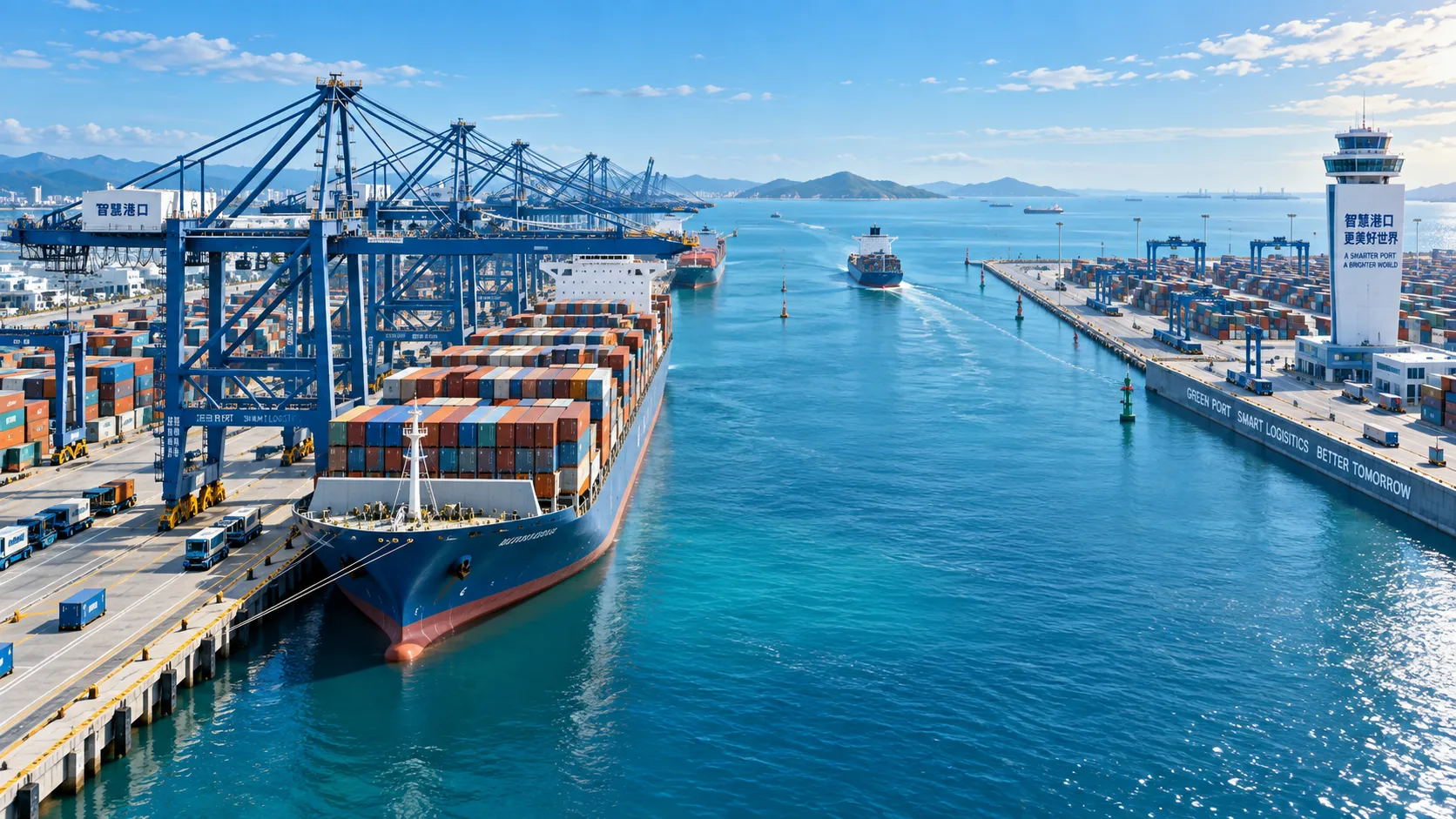
Smart Port Solutions for Berth Planning: Reducing Vessel Wait Times and Conflicts
Smart port solutions for berth planning reduce vessel wait times, prevent conflicts, and optimize quay, crane, and yard resources for faster turnarounds.
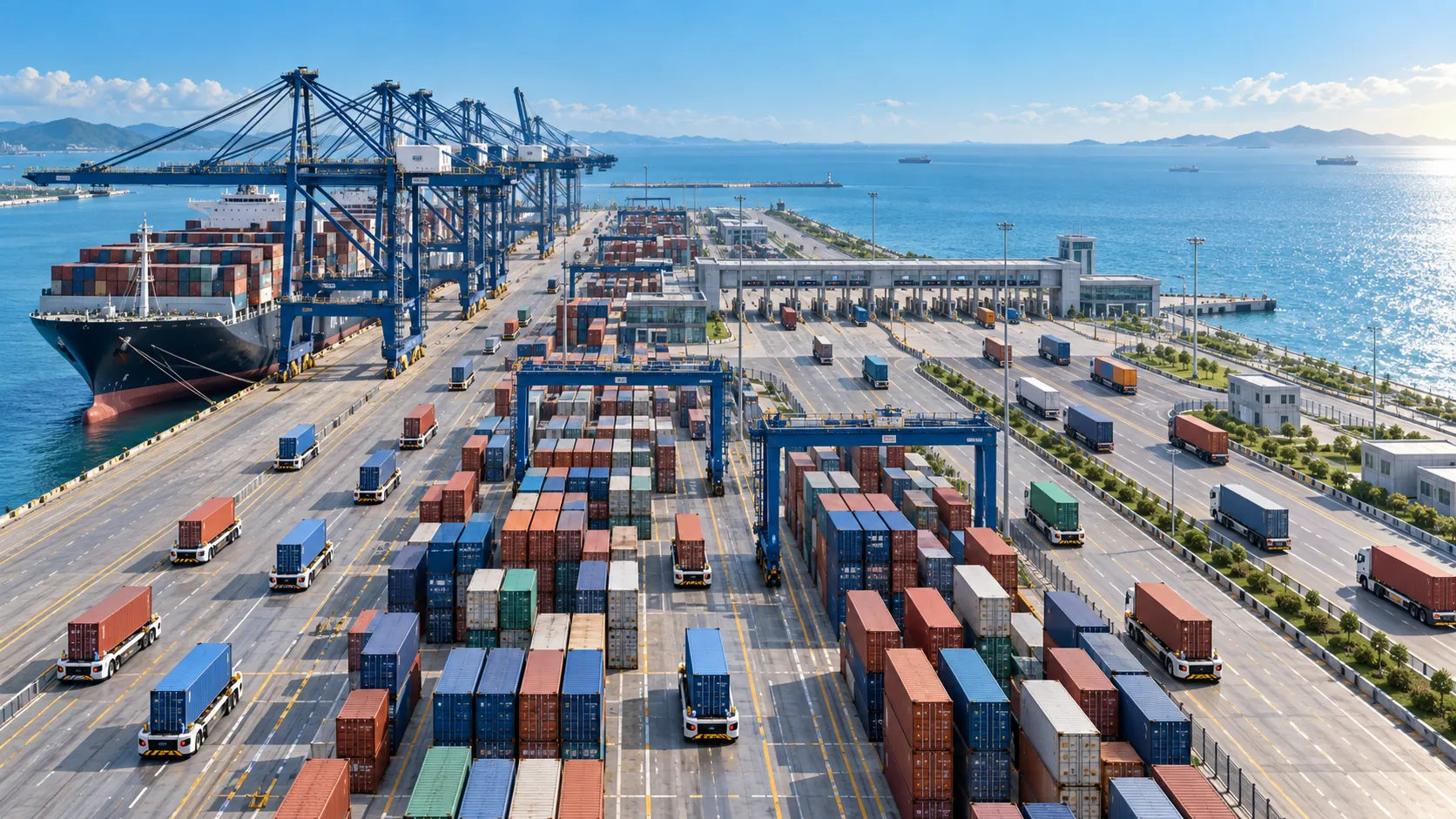
How AI Scheduling Improves Berth, Yard, and Gate Coordination at Terminals
Terminal automation systems with AI scheduling align berth, yard, and gate operations to reduce congestion, improve throughput, and strengthen terminal resilience.
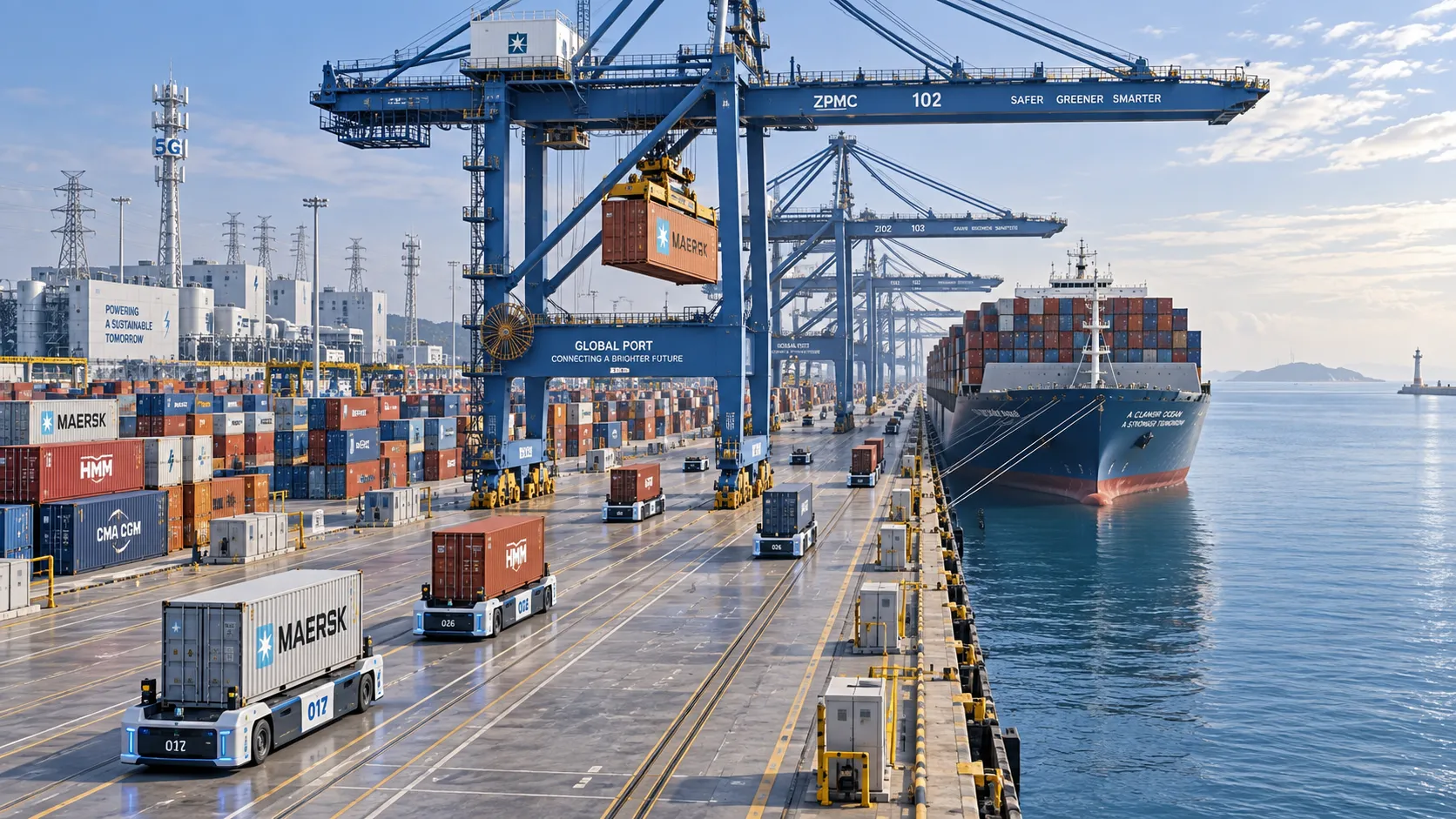
How to Evaluate a Port Logistics Solutions Supplier for Terminal Uptime and Scalability
Choose a port logistics solutions supplier with confidence. Learn how to assess uptime, scalability, service strength, integration, and lifecycle risk for resilient terminal growth.
Smart Port Systems in Southeast Asia: Investment Priorities and Adoption Barriers
Smart port systems Southeast Asia: discover investment priorities, adoption barriers, and practical steps to build resilient, connected, high-performing terminals.
How to Evaluate Terminal Efficiency Solution Suppliers for High-Throughput Operations
Choose a terminal efficiency solutions supplier with confidence. Explore proven criteria for throughput, integration, lifecycle cost, safety, and reliable delivery.
How to Specify a Quay Crane for Container Terminals by Vessel Size and Throughput?
Quay crane for container terminals: learn how to match outreach, lift height, capacity, automation, and cycle performance to vessel size and throughput goals.
Work Vessel Procurement Risks: Verifying Build Scope and Delivery Terms
Work vessel procurement risks explained: verify build scope, testing, documentation, delivery terms, and acceptance criteria to protect cost, schedule, and operational readiness.
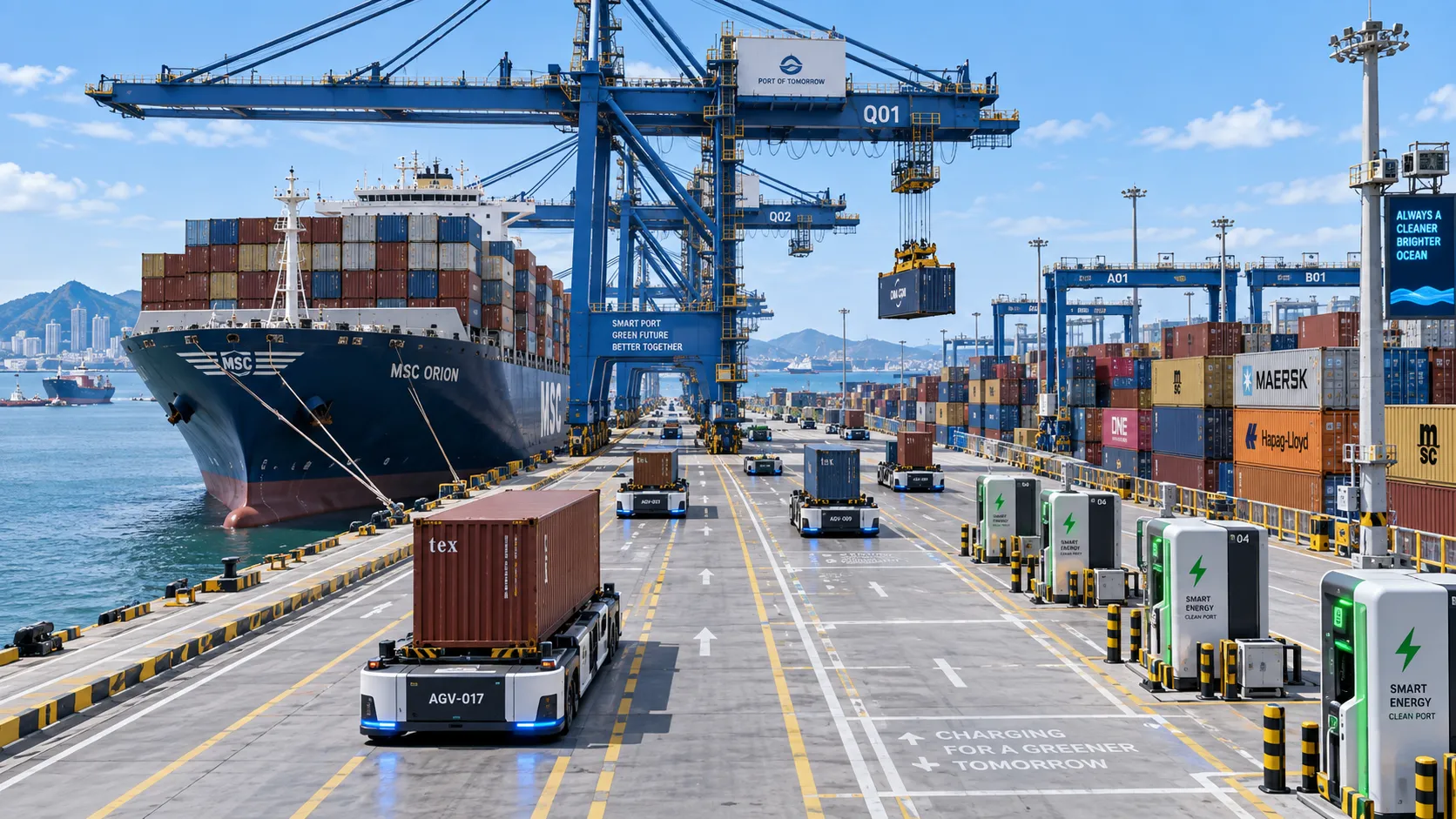
What Data Is Required for a Smart Port Control Architecture?
What data is needed for a smart port control architecture? Discover the operational, safety, equipment, and environmental data that enables smarter port decisions.
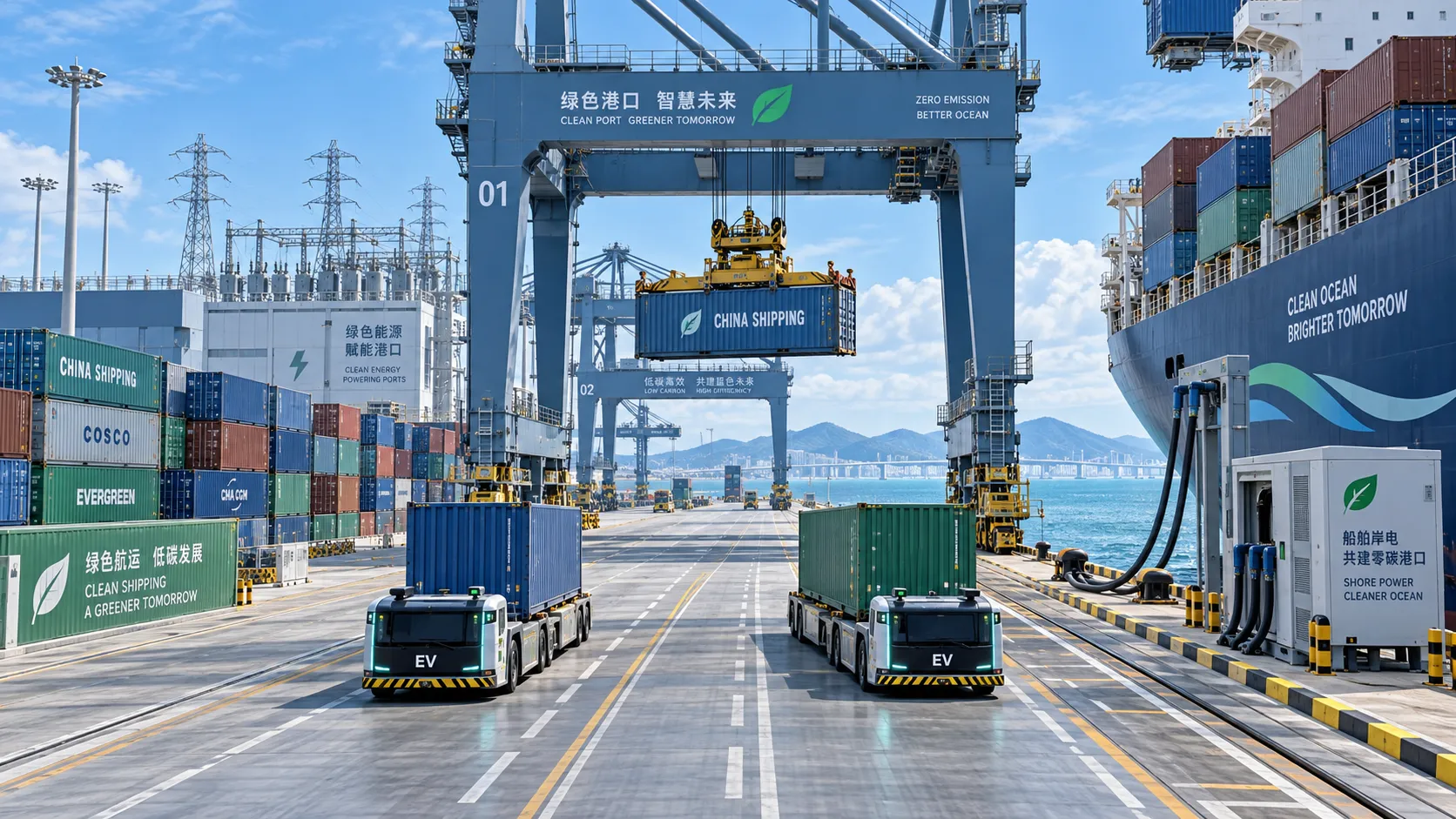
Can Electric Port Machines Help Meet Net-Zero Targets?
Do electric port machines help meet net-zero targets? Explore how smart electrification, clean power, charging, and automation can cut port emissions.