
Related News
- 00
0000-00
What Should a Port Capacity Plan Measure Before a New Berth or Crane Investment? - 00
0000-00
Work Vessel Procurement Risks: Verifying Build Scope and Delivery Terms - 00
0000-00
Shipping Route Analysis: How to Compare Transit Time, Risk, and Total Cost - 00
0000-00
How Port Congestion Reshapes Trade Routes, Schedules, and Inventory Risk - 00
0000-00
What Port Insights Data Reveals About Vessel Delays and Berth Utilization
Shipping Route Analysis: How to Compare Transit Time, Risk, and Total Cost
A shipping route should not be selected on nominal sailing days or freight rate alone. For port equipment, dredging machinery, fabricated structures, and infrastructure components, the route that appears shortest can create the largest schedule exposure once transshipment reliability, port handling capability, seasonal weather, import formalities, and inland delivery are included.
The useful comparison is therefore not “Which route is fastest?” but “Which route gives the project the highest probability of arriving within the required installation window at an acceptable total cost?” That question connects transport planning with commissioning dates, vessel availability, site readiness, crane access, storage limits, and contractual delay exposure.
Measure the transit time that the project will actually experience
Published port-to-port transit time is only one component of the delivery duration. It may describe the ocean leg under normal operating conditions, but it rarely represents the elapsed time between cargo release at origin and cargo availability at the project site. A route analysis needs to distinguish between planned duration, operational duration, and schedule-critical duration.
For a standard container shipment, the difference may be manageable. For a quay crane component, dredge pump, spud section, gantry assembly, transformer skid, or oversized hydraulic package, a missed connection or an unavailable discharge berth can affect lifting plans, specialist contractor mobilization, and adjacent construction activities.
A practical route timeline should include:
- cargo readiness, packing completion, and export clearance;
- pre-carriage to the load port, including permits for out-of-gauge or heavy-lift transport;
- terminal receiving cut-off and load-port dwell time;
- ocean sailing time;
- transshipment dwell time, where applicable;
- discharge-port waiting time, berth availability, and handling sequence;
- customs, inspection, and documentary release;
- availability of project-cargo lifting equipment or breakbulk handling resources;
- inland movement, route permits, escorts, bridge restrictions, and site access;
- final unloading, inspection, and handover at the designated laydown area.
The key planning output is not a single ETA. It is a delivery range with a defined basis. A project schedule should identify the earliest credible arrival, the most likely arrival, and the latest arrival that can occur without affecting a critical milestone. This makes it easier to see whether a routing option has genuine schedule margin or merely a shorter advertised sailing time.
Direct services often reduce connection risk, but they are not automatically superior. A direct call may operate less frequently, use a port with constrained project-cargo facilities, or arrive at a gateway where inland permits take longer to obtain. A transshipment route may be more viable when the hub has dependable feeder links, established breakbulk procedures, sufficient storage, and a destination port better suited to final handling. The decision depends on the performance of the whole chain rather than the number of sea legs.
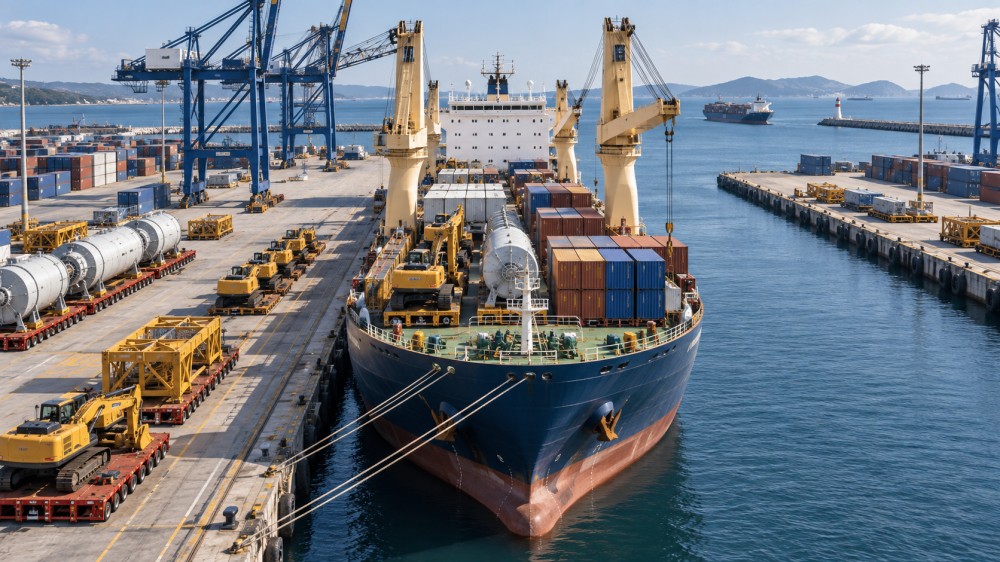
Route risk is the probability of disruption multiplied by its project consequence
Risk assessment becomes useful only when it goes beyond a generic list of possible disruptions. A route can be exposed to weather, congestion, geopolitical restrictions, labor interruptions, canal delays, equipment shortages, or regulatory intervention. Yet the operational significance of each event depends on whether the shipment can be rerouted, whether cargo can remain safely in storage, and whether the project has time to absorb the delay.
For project cargo, the consequences can be disproportionate. A standard container may be rolled to a later sailing with limited handling changes. A heavy-lift shipment may require a booked vessel crane arrangement, shore-crane capacity, lashing approval, stowage planning, and coordinated discharge resources. If any of these arrangements lapse after a delay, the cargo may not simply move on the next available vessel.
Congestion and terminal capability are separate issues
A port can have acceptable berth waiting time while still being unsuitable for complex cargo. Route analysis should check whether the origin, transshipment, and destination terminals can handle the actual unit dimensions, weight, lifting points, center of gravity, and cargo condition. This is particularly important for components shipped on flat racks, mafi trailers, open-top containers, breakbulk vessels, or heavy-lift multipurpose tonnage.
Terminal capability questions include quay load limits, crane outreach and safe working load, availability of spreader beams, storage conditions, dangerous-goods segregation where relevant, access for self-propelled modular transporters, and the ability to segregate project cargo from general terminal flows. A terminal that can technically discharge a piece may still not be able to release it in the sequence required for site installation.
Weather exposure must be connected to cargo and season
Weather is not a uniform route risk. Its effect depends on vessel type, cargo securing method, the timing of the voyage, and the sensitivity of the cargo. Heavy or irregular units may need marine warranty review, engineered seafastening, and specific limitations on lifting or discharge conditions. Sensitive electrical cabinets, hydraulic systems, precision assemblies, and unprotected steel structures also carry different moisture, corrosion, and contamination exposures during extended port stays.
Seasonal conditions should be evaluated at the loading port, along the sea passage, at transshipment hubs, and at the final discharge location. A route with a few fewer sailing days may be less reliable if it places the cargo in a known weather-sensitive operation during a narrow installation period. Conversely, a longer route can be safer when it uses a more stable operational window and avoids an exposed port call.
Geopolitical and regulatory exposure can change the route after booking
Canal restrictions, security concerns, sanctions compliance, trade controls, and changing port-entry requirements may affect routing options with little notice. The planning issue is not simply whether a route is currently open. It is whether the shipment has a workable alternative if the planned corridor becomes unavailable or commercially impractical.
For equipment containing controlled technology, batteries, fuel systems, radio equipment, or specialized hydraulic and electrical assemblies, documentation must align with both the route and destination requirements. A change in transshipment port can introduce additional screening, documentation review, or local handling restrictions. Route contingency planning should therefore include document readiness, not only alternative vessel strings.
Total cost means landed project cost, not the ocean freight quotation
The lowest freight offer can be the most expensive routing option when it shifts cost into port storage, demurrage, detention, rehandling, escort permits, standby labor, or delayed construction work. For complex deliveries, cost comparison must use the same scope and assumptions for every route.
At minimum, the comparison should separate four cost layers:
Schedule-impact cost is often the decisive layer. It should not be represented by an arbitrary percentage added to freight. Instead, identify the specific project activity affected by late delivery. If a shipment is needed before a civil interface is closed, before a temporary crane is demobilized, or before a dredging spread moves to another work area, the cost of a missed date can be materially higher than the rate difference between two shipping options.
Cash-flow timing also matters. Some routes require earlier delivery into a destination port, creating storage and preservation obligations before the site is ready. Others arrive closer to the installation window but offer little recovery time if delayed. The financially optimal route is often the one that balances inventory carrying cost against the cost of schedule vulnerability.
Build route options around the cargo’s operational constraints
Shipping route analysis is more accurate when cargo is grouped by handling and schedule characteristics rather than by purchase order or supplier alone. A project may contain high-value control equipment, oversized fabricated steel, consumable spare parts, and critical mechanical assemblies. Sending every item through the same route can simplify administration but may increase the overall project risk.
Critical-path equipment deserves a route with dependable milestone protection, even if its freight cost is higher. Items with long replacement lead times, unique interfaces, or mandatory pre-commissioning status should receive the strongest documentation control and the largest schedule buffer. Non-critical bulk materials may tolerate lower-cost routings, consolidated shipments, or longer inland legs if they do not constrain construction sequencing.
For port and marine infrastructure work, the physical destination can also change the choice of gateway. The nearest commercial port is not necessarily the best project port. A more distant gateway may offer better access for heavy cargo, faster customs release, secure storage, stronger lifting capability, or a more practical inland corridor. Distance should be assessed in operating hours, permit complexity, road geometry, and handling transfers—not only in kilometers.
Use a route decision matrix, but do not reduce it to a simple score
A weighted comparison can make competing options visible, especially when logistics, engineering, construction, procurement, and finance teams are using different assumptions. Useful criteria include expected door-to-site duration, schedule variability, frequency of service, transshipment exposure, cargo-handling suitability, customs complexity, inland feasibility, total landed cost, and recoverability after disruption.
However, an average score can hide an unacceptable condition. A route should be screened for “no-go” constraints before it enters a weighted comparison. Examples include inadequate terminal lifting capacity, missing over-dimensional transport permits, inability to obtain required import approvals in time, insufficient storage for sensitive equipment, or no viable alternative route if a key corridor is disrupted.
After those exclusions, scoring should reflect project priorities rather than generic logistics preferences. A route that costs more but protects a fixed commissioning date may be preferred. A route with a longer planned transit may still rank higher if it has reliable weekly departures, less weather-sensitive handling, and multiple recovery paths. The purpose is not to prove that one route is universally best; it is to identify the option whose remaining risks are compatible with the project’s actual tolerance.
Plan contingencies before cargo is committed
Contingency is most valuable when the decision triggers are defined in advance. Once cargo is loaded, options narrow quickly, particularly for non-containerized units. A usable contingency plan states what event will trigger action, who can authorize a route change, what documents must be amended, which port or inland alternative is technically feasible, and what additional cost authority is available.
For example, a delay at transshipment may require a decision between waiting for the original feeder service, discharging at an alternative gateway, or moving the cargo through a different corridor. Each choice has implications for customs entries, cargo release, inland permits, lifting equipment, insurance notification, and site receiving capacity. If these dependencies have not been assessed beforehand, the apparent alternative may not be executable.
Milestone-based monitoring is more actionable than tracking vessel position alone. Relevant control points include cargo ready date, port gate-in, vessel loading confirmation, transshipment discharge and reload confirmation, arrival notice, customs release, port release, inland permit issuance, and site delivery appointment. A late update is less damaging when the project has already defined what must happen next.
The best route is the one that preserves the installation plan
Transit time, risk, and total cost should be treated as connected variables. Faster routes can carry hidden handling or disruption exposure. Lower freight routes can create expensive downstream delays. Highly resilient routes can be wasteful when cargo is non-critical and the site has sufficient buffer. Sound routing decisions come from matching the transport chain to cargo characteristics, project logic, and the real consequences of a missed delivery window.
For major port equipment and marine infrastructure deliveries, the final route approval should demonstrate more than a competitive freight rate. It should show a credible door-to-site timeline, confirmed handling feasibility at every node, transparent landed-cost assumptions, and an executable response if the original plan fails. That is the level of shipping route analysis that protects both the transport budget and the project schedule.
Related News
How to Evaluate a Yard Mobility Solutions Manufacturer for High-Throughput Sites
Yard mobility solutions manufacturer evaluation guide for high-throughput terminals: assess performance, integration, service, lifecycle costs, and delivery risk.
Automated Port Systems in Latin America: Investment Priorities for Container Terminals
Automated port systems Latin America: discover investment priorities for container terminals, from smart gates and remote cranes to resilient digital control layers.
Selecting Intermodal Yard Equipment for Fast, Safe Container Transfers
Container handling equipment for intermodal yards: compare reach stackers, RTGs, automation, safety planning, and lifecycle costs to build faster, safer container flow.
Terminal Control System Costs: Budgeting Hardware, Integration, and Lifecycle Support
Terminal control systems cost explained: budget hardware, integration, safety, cybersecurity, commissioning, and lifecycle support for resilient terminal operations.
Smart Operations in the Middle East: Where Industrial Investment Is Growing
Smart operations Middle East investment is reshaping ports, industrial corridors, and logistics networks through connected data, automation, resilience, and smarter asset performance.
How to Select Harbor Structures for Quay Walls Under Berthing and Wave Loads
Harbor structure for quay wall selection: evaluate berthing energy, wave loads, soil conditions, durability, and lifecycle risk to build safer, adaptable terminals.
Selecting Smart Terminal Software for Multi-Site Field Service Operations
Smart terminal solutions software helps multi-site field service teams unify asset history, mobile maintenance, integrations, and reporting for safer, faster terminal operations.
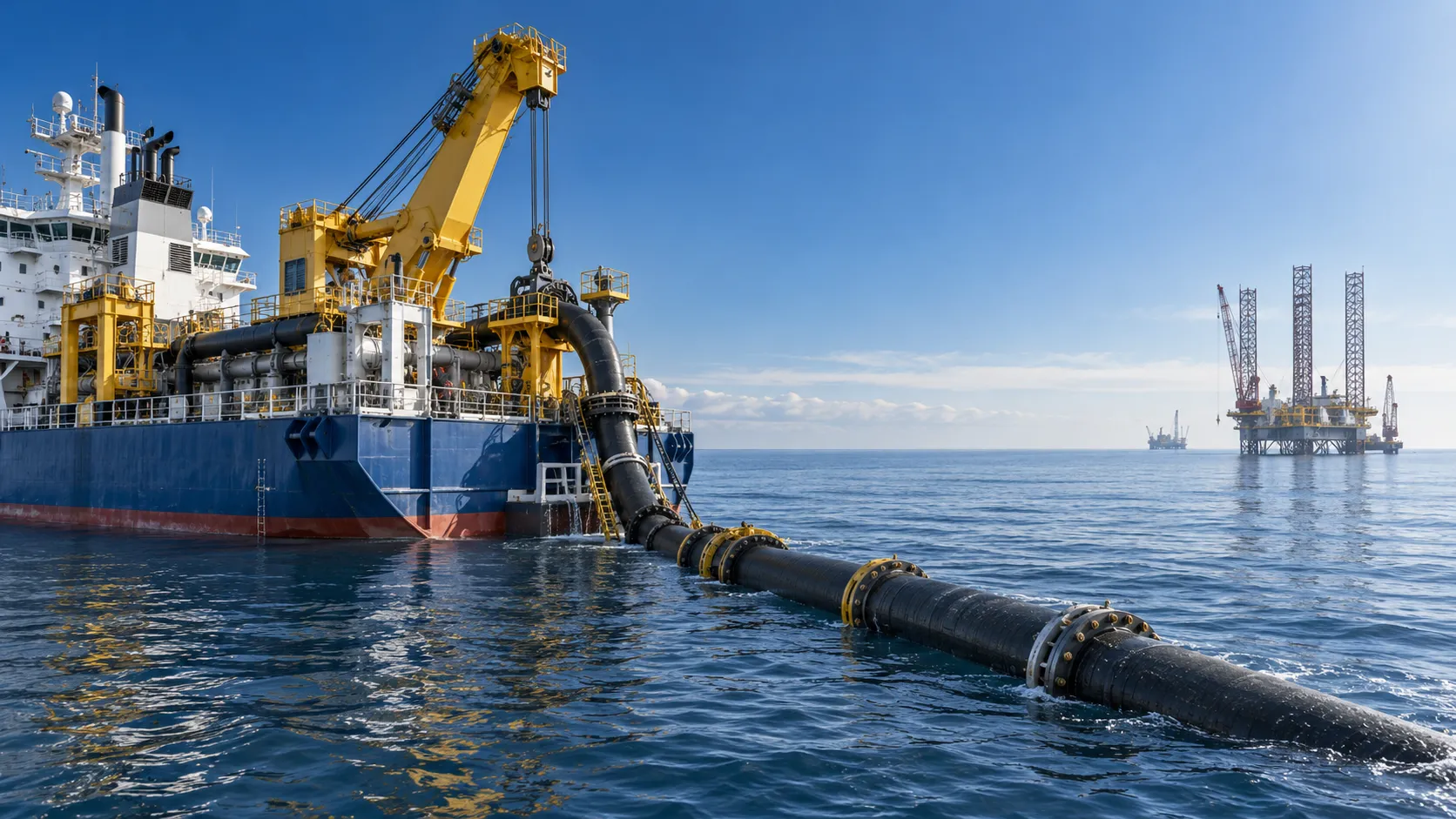
How to Specify Heavy-Duty Marine Engineering Equipment for Offshore Projects
Heavy duty marine engineering equipment: learn how to specify reliable offshore assets for safety, uptime, integration, lifecycle cost, and project success.
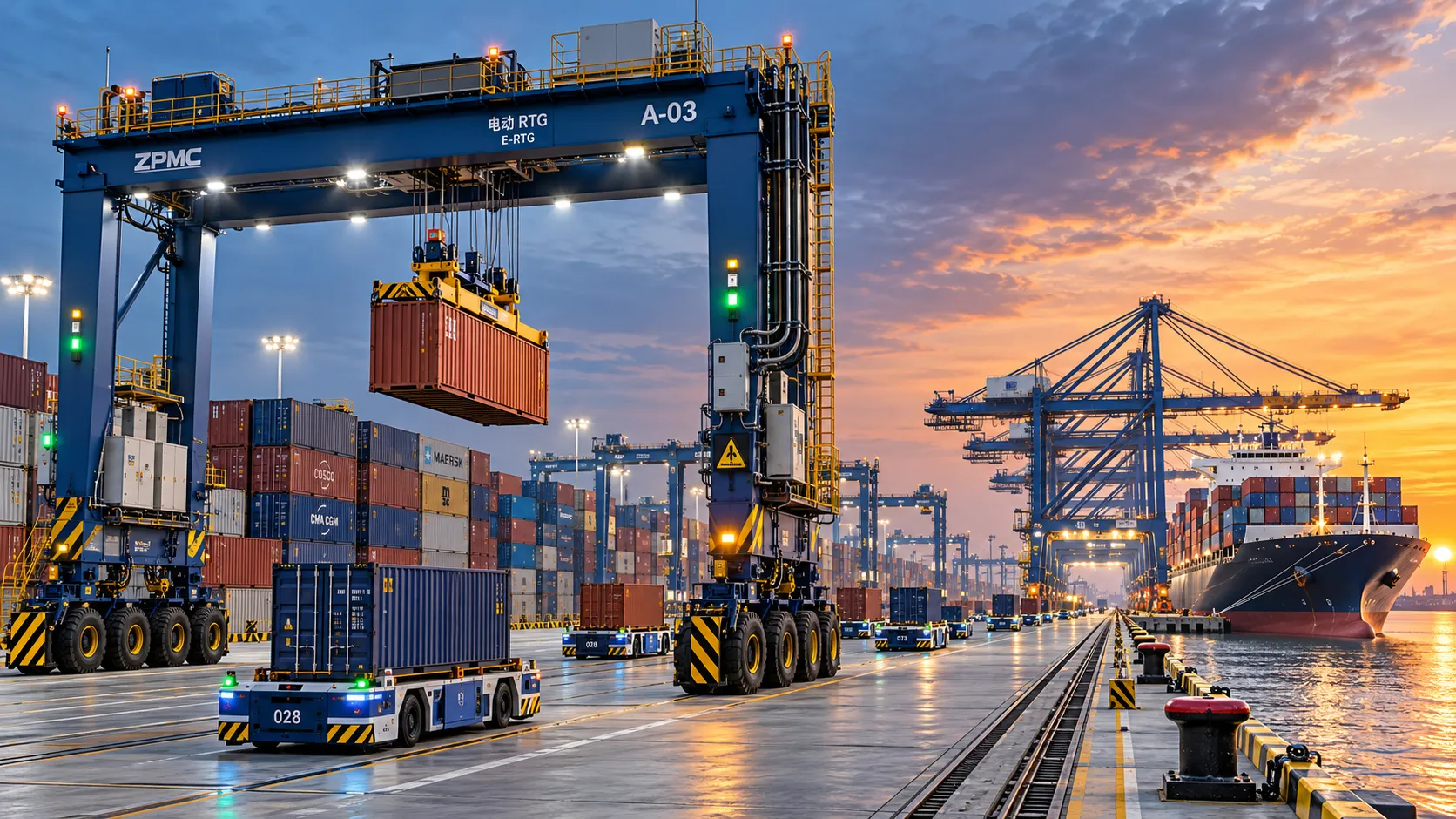
How to Evaluate a Container Handling Equipment Exporter for Port and Yard Projects
Choose the right container handling equipment exporter with a practical guide to compliance, automation, service support, delivery reliability, and lifecycle value.