Related News
- 00
0000-00
What Should a Port Capacity Plan Measure Before a New Berth or Crane Investment? - 00
0000-00
Work Vessel Procurement Risks: Verifying Build Scope and Delivery Terms - 00
0000-00
How Port Congestion Reshapes Trade Routes, Schedules, and Inventory Risk - 00
0000-00
What Port Insights Data Reveals About Vessel Delays and Berth Utilization - 00
0000-00
Shipping Logistics Intelligence: Turning ETA Data Into Exception Management
How Port Congestion Reshapes Trade Routes, Schedules, and Inventory Risk
A vessel arriving two days late can look manageable on a dashboard. The disruption becomes more serious when the berth is unavailable, containers cannot be discharged, inland appointments expire, and the next sailing is omitted to recover a published schedule. At that point, port congestion is no longer a localized terminal problem. It changes the practical geography of a supply chain.
Port congestion and trade routes are now directly linked: when a gateway loses fluidity, carriers alter port rotations, add waiting time, skip calls, use alternative hubs, or reposition equipment through less efficient corridors. The immediate effect is schedule uncertainty, but the larger business effect is inventory risk. Decision-makers should treat congestion as a routing, capacity, and working-capital issue—not simply a freight delay that can be solved after cargo has sailed.
Why congestion changes routes rather than only arrival times
A liner service is built around a sequence of port calls, berth windows, vessel speeds, cargo exchanges, crew requirements, and connections to rail, truck, barge, or feeder networks. Delays at one terminal consume the buffer designed into that rotation. Once the vessel misses a downstream berth window, the carrier must choose between waiting again, reducing time at later ports, omitting a call, or changing the order of calls.
Those choices are made to protect the wider network, not necessarily one shipment. A carrier may bypass a congested port to preserve a weekly loop, discharge cargo at a nearby hub for onward feeder movement, or redirect later sailings to a different regional gateway. For cargo owners, the original origin-destination route may still appear valid in a contract or booking system, while its operational path has become materially different.
This is why a simple estimated time of arrival is insufficient for planning. The meaningful question is whether the vessel can berth, unload, release equipment, connect to an inland mode, and receive export cargo for the next leg. A ship at anchorage may be physically close to its destination but operationally far from delivery.
Congestion often develops through interacting constraints rather than a single visible failure:
- Berth and crane constraints: vessel bunching, reduced quay productivity, labor interruptions, adverse weather, equipment downtime, or limited operating windows can slow the discharge cycle.
- Yard saturation: containers remain longer when importers cannot collect them, inspections take time, rail capacity is short, or warehouses reject early arrivals. Dense stacks make every additional move slower.
- Marine access limits: restricted channels, tidal windows, pilot availability, tug constraints, or dredging activity may cap the number and size of vessels that can enter or leave.
- Equipment imbalance: delayed empty returns and disrupted export loading create shortages in one place and accumulation in another.
- Network spillover: congestion at a transshipment hub can delay cargo that never planned to enter that local market.
The commercial lesson is that a port should not be assessed only as an origin or destination. It is also a node whose condition can influence equipment availability, feeder reliability, schedule recovery, and inland delivery across an entire trade lane.
The schedule effects that purchasing teams often underestimate
Published transit time is usually a planned duration under normal terminal flow. Congestion creates several types of delay, and each has a different impact on inventory planning. An extended waiting time before berthing may be visible through vessel tracking. A missed connection after discharge may be less visible, yet it can add more uncertainty because cargo has entered a queue for a feeder, rail departure, or truck appointment.
Schedule recovery can also produce an unintuitive result: the late vessel may appear to regain time while a particular port call is skipped or cargo is rolled. In that situation, carrier network performance may improve while the affected shipper’s delivery performance deteriorates. Procurement and supply-chain teams should distinguish between the vessel’s recovery plan and the shipment’s actual handoff plan.
Schedule volatility also affects the reliability of booking windows. A supplier may finish production according to plan, yet find that the booked cut-off has moved, empty equipment is not available, or a carrier has reduced accepted volume to clear accumulated cargo. These issues are often treated as separate exceptions, but they are connected to the same network stress.
Inventory risk begins before the cargo is delayed
The most damaging inventory decisions are frequently made before a delay becomes certain. A business relying on a single estimated arrival date may postpone replenishment, schedule labor around a narrow receiving window, or allocate limited stock to customers based on an assumed discharge date. Once congestion is confirmed, there may be little time to correct those downstream commitments.
Inventory risk has at least four dimensions. The first is stockout risk: essential components, seasonal goods, or high-turnover products arrive after demand or production requirements. The second is excess stock risk: companies respond by ordering earlier or increasing safety stock, only to receive multiple delayed shipments in a compressed period. The third is allocation risk, where available stock is assigned to the wrong market or customer because updated arrival certainty is poor. The fourth is condition risk, particularly for time-sensitive, temperature-sensitive, or regulated cargo that cannot tolerate open-ended dwell time.
A supply chain with a long nominal lead time is not automatically fragile. The critical measure is the variability around that lead time and the company’s ability to detect a route change early enough to act. A buyer with a reliable early-warning process may decide to expedite only selected components, revise manufacturing sequences, or divert supply to a different distribution center. Without that visibility, the default response is often broad and expensive: emergency freight, excess purchasing, or late customer communication.
Read congestion signals at node level, not as a generic market warning
General reports of “congestion” are too broad for operational decisions. A gateway can have vessel waiting times while inland rail is moving well; another can berth ships quickly but trap containers in a full yard. The relevant signal depends on where the shipment is in its journey and what event must occur next.
For imports, watch the progression from vessel arrival to berth, discharge, customs release, terminal availability, and inland collection. For exports, focus on empty-container availability, gate-in acceptance, cut-off stability, load-list confirmation, and whether the vessel has enough remaining capacity after prior-port delays. For transshipment cargo, the key issue is connection integrity: has the box discharged, is the connecting vessel still scheduled to call, and is the feeder leg protected?
Questions that reveal whether a delay is becoming structural
- Is the delay isolated to one vessel, or are several consecutive sailings arriving outside their planned windows?
- Has the carrier issued a revised rotation, omission notice, terminal change, or alternate discharge instruction?
- Is cargo waiting offshore, on the terminal, at a rail ramp, or for an onward feeder? Each location requires a different response.
- Are empty containers, chassis, rail slots, and warehouse appointments available when cargo is finally released?
- Will late arrivals overlap with later orders already in transit, creating a receiving or storage surge?
These questions help separate a manageable delay from a network disruption. They also prevent a common reporting mistake: treating “vessel arrived” as equivalent to “inventory is accessible.” For many importers, usable inventory begins only after clearance, pickup, and receipt into a warehouse or plant system.
Route diversification works only when the alternatives are operationally real
When congestion persists, the obvious answer is to use another port. That can be sensible, but an alternate gateway is not automatically a resilient gateway. It must have adequate marine access, terminal capacity, equipment availability, customs handling capability, inland transport options, warehouse capacity, and enough commercial service frequency to support the required volume.
An alternative port can shift the problem rather than remove it. Diverting cargo to a less congested terminal may create a much longer inland movement, expose cargo to scarce truck capacity, or require a rail network with limited frequency. It can also fragment inventory across facilities, making stock allocation more complex. The cost comparison should therefore include more than ocean freight and port charges.
A practical evaluation compares the total landed flow: probability of berth delay, expected terminal dwell, inland transit reliability, handling complexity, inventory carrying exposure, and the cost of maintaining contingency capacity. The best route for routine cargo may not be the best route for production-critical materials. Segmentation is usually more effective than moving every shipment through the same backup corridor.
For example, a company may retain its primary gateway for predictable, replenishable products while reserving an alternate port and inland carrier arrangement for constrained components or high-margin goods. The objective is not to eliminate every delay; it is to preserve choices when the original route stops delivering usable inventory on time.
Adjust planning assumptions instead of adding blanket safety stock
Higher safety stock can absorb variability, but it is a blunt tool when congestion is concentrated by route, season, port pair, or cargo type. A better approach is to revise planning assumptions using lane-specific uncertainty. The planning team should distinguish between normal ocean transit, likely port dwell, transfer time, and inland handoff. Combining all of them into a single fixed lead time hides the source of risk.
Purchase orders can then be grouped by consequence of lateness. Materials that stop production, goods tied to fixed promotions, and items with limited substitution need tighter monitoring and clearer escalation thresholds. Products with flexible demand or local substitutes can tolerate more route uncertainty. This classification supports more disciplined use of premium transport, alternate sourcing, or earlier ordering.
It is equally important to define when a forecasted disruption becomes an action trigger. A revised ETA alone may not justify intervention. A missed berth, confirmed port omission, loss of a feeder connection, or inability to secure an inland appointment may justify a different response. Clear triggers keep teams from reacting to every vessel movement while preventing passivity when a shipment’s risk profile changes materially.
Terminal performance is part of commercial risk management
Port congestion is shaped by physical and digital capacity. Quay cranes, yard cranes, automated stacking systems, gate operations, appointment platforms, and terminal operating systems all influence the speed at which cargo moves through a node. Marine infrastructure matters as well: channel depth, turning basins, dredging maintenance, and berth availability determine whether larger vessels can access terminals safely and predictably.
For businesses choosing long-term trade corridors, terminal capability should be examined as a resilience variable rather than a distant operational detail. High throughput alone does not guarantee dependable flow. The more useful question is how the terminal handles peaks, late vessel bunching, equipment failures, yard density, and changes in truck or rail demand. Visibility between terminal, carrier, forwarder, inland provider, and cargo owner is also decisive; disconnected updates delay decisions even when physical capacity is available.
Companies cannot control port operations, but they can improve how port disruption enters their planning process. Contract discussions can address notice expectations, alternate discharge procedures, equipment return terms, and data-sharing requirements. Internal teams can establish a shared view of critical cargo by route, available inventory, substitute supply, and feasible recovery options. These preparations are most valuable before the terminal queue becomes visible.
A more realistic view of route resilience
Resilient routing is not the same as choosing the shortest lane or the cheapest port under normal conditions. It means understanding where a route can fail, how quickly that failure becomes visible, and whether inventory and transport decisions can change before customer service or production is affected.
As port congestion reshapes trade routes, schedules, and inventory risk, businesses should measure performance around usable delivery rather than vessel arrival alone. The strongest planning combines lane-level monitoring, credible alternate gateways, inland contingency capacity, and inventory rules tied to the consequence of delay. That approach turns congestion from an opaque external event into a risk that can be identified, classified, and managed with greater discipline.
Related News
Automated Port Systems in Latin America: Investment Priorities for Container Terminals
Automated port systems Latin America: discover investment priorities for container terminals, from smart gates and remote cranes to resilient digital control layers.
Selecting Intermodal Yard Equipment for Fast, Safe Container Transfers
Container handling equipment for intermodal yards: compare reach stackers, RTGs, automation, safety planning, and lifecycle costs to build faster, safer container flow.
Terminal Control System Costs: Budgeting Hardware, Integration, and Lifecycle Support
Terminal control systems cost explained: budget hardware, integration, safety, cybersecurity, commissioning, and lifecycle support for resilient terminal operations.
Smart Operations in the Middle East: Where Industrial Investment Is Growing
Smart operations Middle East investment is reshaping ports, industrial corridors, and logistics networks through connected data, automation, resilience, and smarter asset performance.
How to Select Harbor Structures for Quay Walls Under Berthing and Wave Loads
Harbor structure for quay wall selection: evaluate berthing energy, wave loads, soil conditions, durability, and lifecycle risk to build safer, adaptable terminals.
Selecting Smart Terminal Software for Multi-Site Field Service Operations
Smart terminal solutions software helps multi-site field service teams unify asset history, mobile maintenance, integrations, and reporting for safer, faster terminal operations.
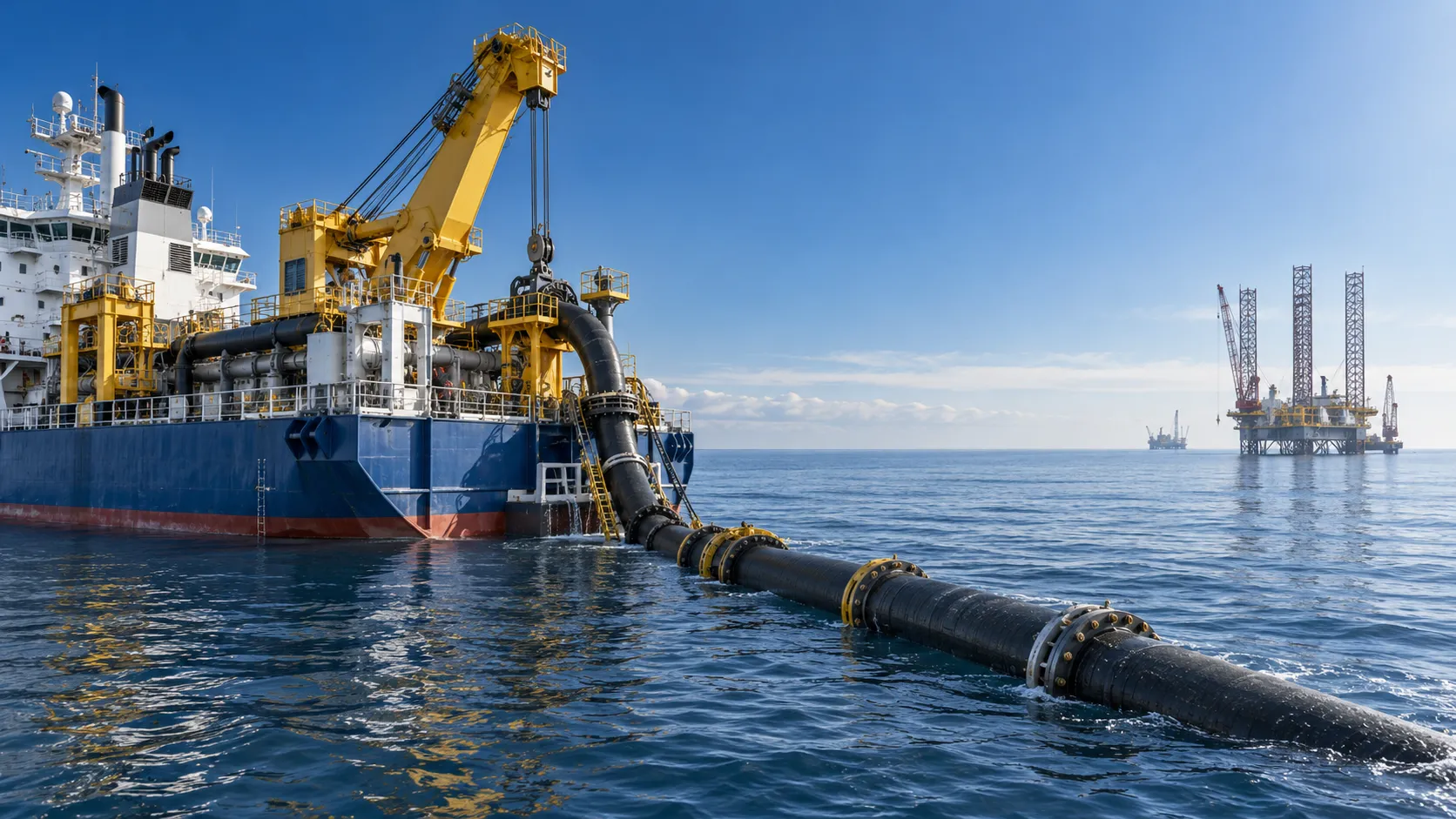
How to Specify Heavy-Duty Marine Engineering Equipment for Offshore Projects
Heavy duty marine engineering equipment: learn how to specify reliable offshore assets for safety, uptime, integration, lifecycle cost, and project success.
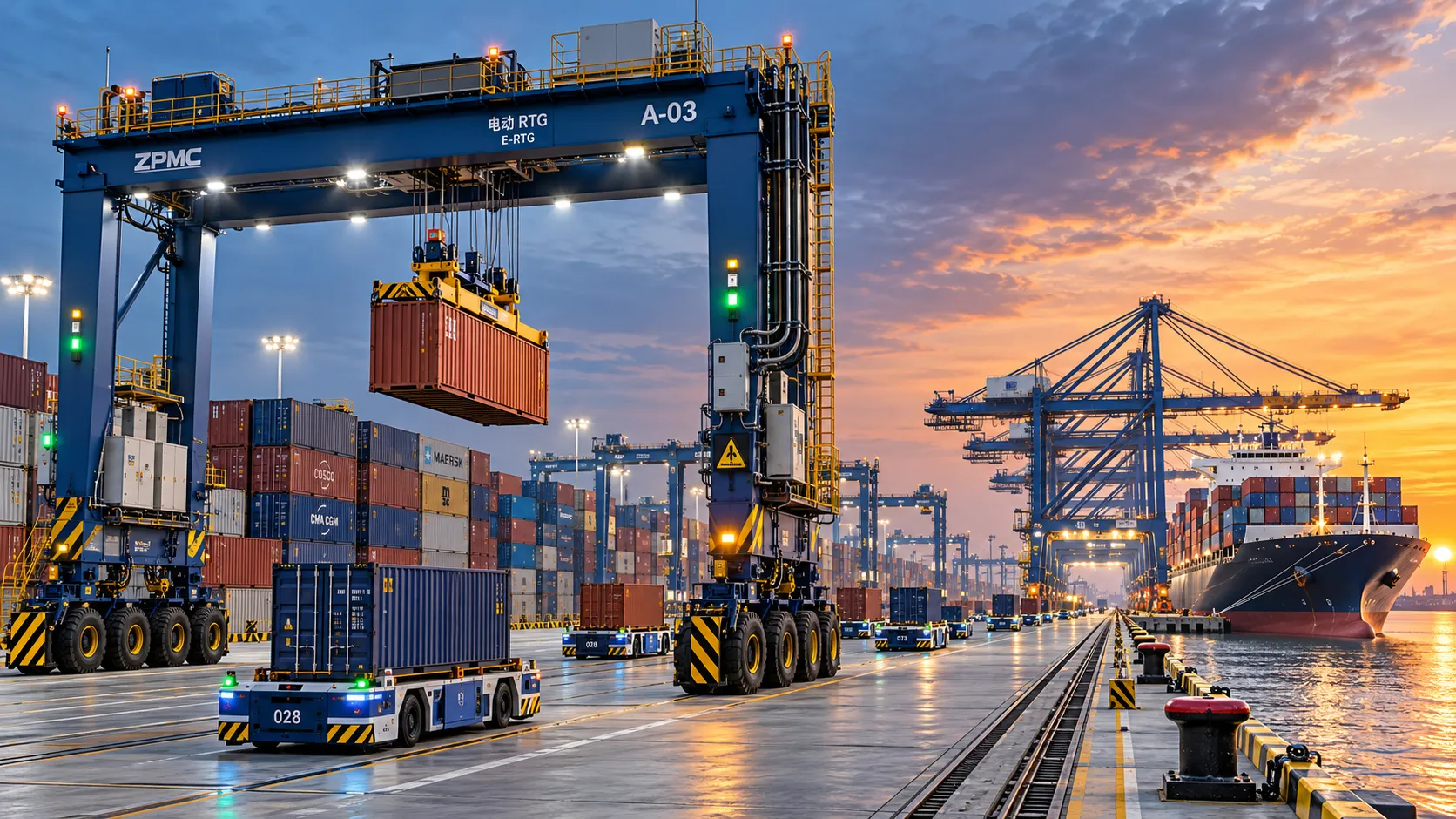
How to Evaluate a Container Handling Equipment Exporter for Port and Yard Projects
Choose the right container handling equipment exporter with a practical guide to compliance, automation, service support, delivery reliability, and lifecycle value.
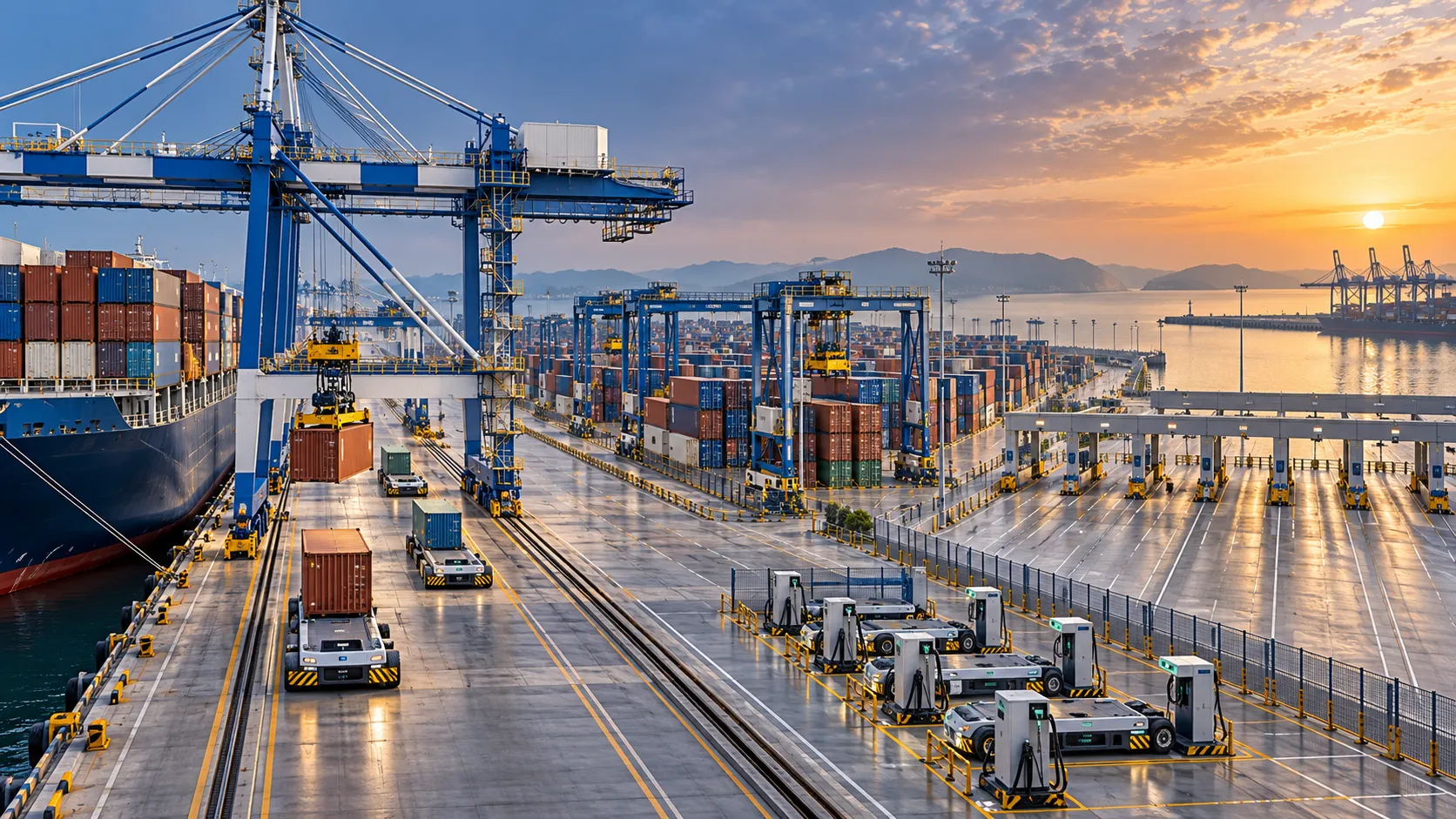
How to Select Automated Terminal Systems for High-Throughput Cargo Terminals
Automated terminal systems for cargo terminals: learn how to select scalable, resilient solutions that boost throughput, streamline integration, and control lifecycle risk.