Selecting a harbor structure for quay wall projects requires more than comparing wall types or initial construction prices. Berthing energy, waves, soil behavior, and operating plans must be evaluated together.
For project managers, the right decision is usually the system that controls lifecycle risk while maintaining vessel access, cargo throughput, construction certainty, and adaptability for future terminal upgrades.
Start With the Operating Case, Not the Structural Catalogue
The most reliable harbor structure for quay wall selection starts with a defined operating envelope. The wall must support actual vessels, handling equipment, mooring arrangements, cargo flows, and dredged water depths.
Projects often encounter cost overruns because vessel assumptions change after concept design. A quay designed for feeder ships may become inadequate when operators introduce larger vessels or higher berthing frequencies.
Define the design vessel fleet by displacement, beam, draft, approach velocity, hull geometry, and expected calling frequency. Include both the largest ship and the most demanding routine vessel.
Berthing loads do not act independently from operational loads. A crane-loaded apron, stacked containers, rail-mounted equipment, pipelines, and service vehicles can materially alter the wall’s foundation demand.
Project leaders should request an operations-led design brief before selecting a structural concept. This brief should state throughput targets, berth occupancy, cargo types, equipment loads, and expansion scenarios.
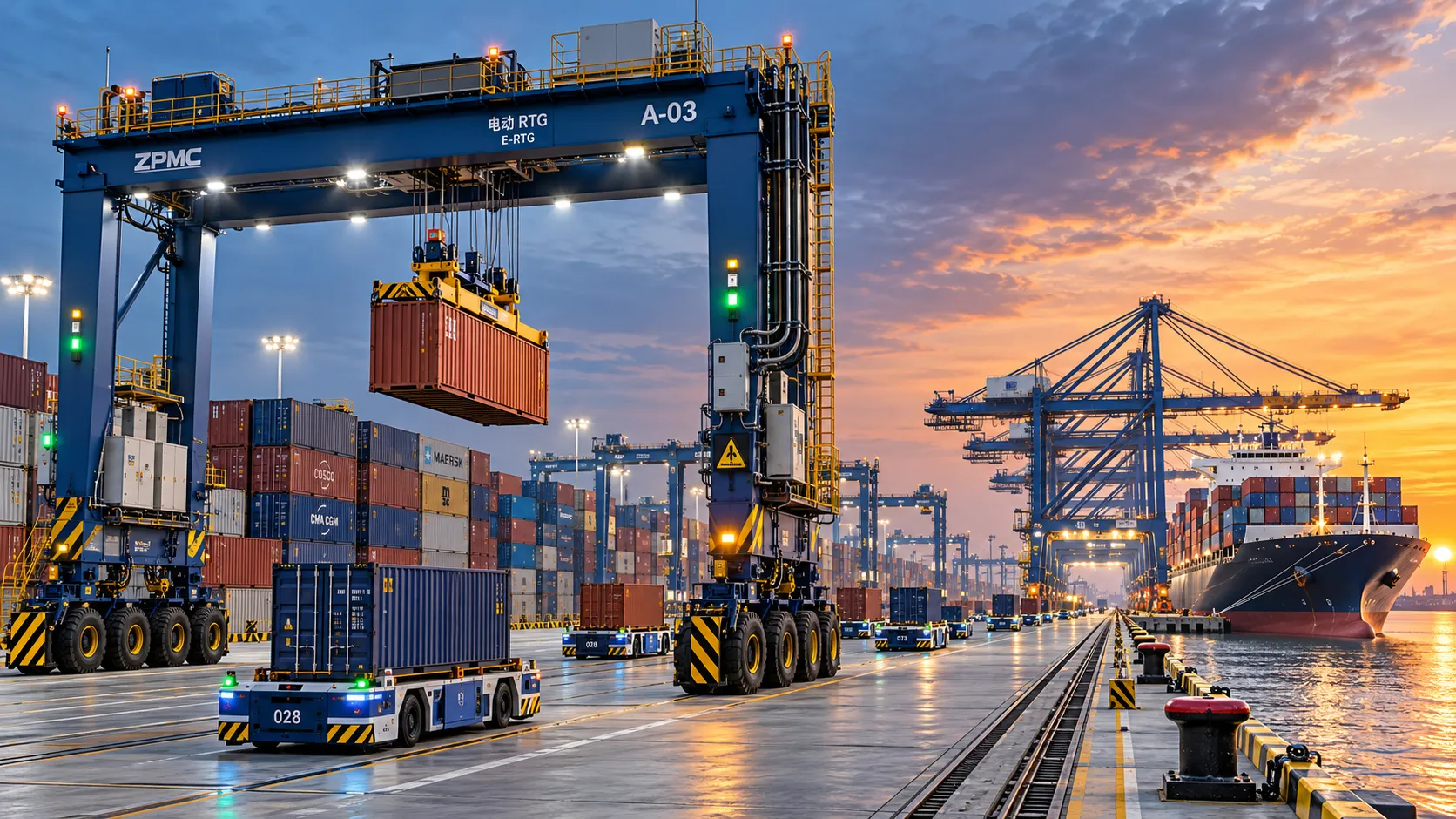
For automated terminals, include the wheel loads and travel paths of automated guided vehicles, stacking cranes, charging infrastructure, communication cabinets, and maintenance access zones from the earliest stage.
A technically sound wall can still become a commercial constraint if it limits crane gauge, apron width, rail alignment, dredging access, or future electrification requirements.
Use a decision matrix that ranks safety, operational capacity, capital cost, buildability, environmental exposure, maintenance needs, and expansion potential. Weightings should reflect the terminal’s business case.
Calculate Berthing Energy Before Choosing Fender and Wall Capacity
Berthing energy is a primary driver of quay wall design because it determines fender reaction, local deck forces, anchor loads, and the structural demand transferred into the retaining system.
The calculation should consider vessel mass, added water mass, approach velocity, eccentricity, berth configuration, and the effectiveness of the fender system. Simplified assumptions can create misleading results.
Approach velocity deserves particular attention where tug assistance is inconsistent, currents are strong, or wind conditions make vessel control difficult. Historical incident data can improve realistic design inputs.
Fender selection is not merely an equipment procurement exercise. Higher-capacity fenders can reduce vessel impact but may transmit larger reaction forces into the quay structure and its anchorage.
Review both normal berthing and abnormal impact cases. A low-probability impact event may govern local reinforcement, dolphin design, coping beam detailing, or the arrangement of sacrificial protective elements.
For continuous quay walls, establish whether fender reactions spread through a robust capping beam or create concentrated bending and shear demands in sheet piles, combi walls, or caissons.
For open piled structures, verify load transfer through the deck, pile caps, beams, and pile groups. Fender panels and bollards may produce demanding horizontal and torsional actions.
Do not assume a larger vessel automatically creates the governing berthing case. Smaller ships can approach faster, use different fender contact points, or berth under less controlled maneuvering conditions.
Ask the marine consultant to document assumptions clearly, including safety factors and adopted standards. This creates traceability when operators, insurers, lenders, or authorities challenge the design basis.
Assess Wave, Current, and Water-Level Conditions as Combined Actions
Wave action affects a harbor structure for quay wall projects through direct pressure, overtopping, scour, mooring motion, deck uplift, and fatigue. Its importance depends strongly on local shelter conditions.
A protected basin may experience limited wave loading during normal operations, yet still face severe long-period waves, storm surges, or wave penetration during rare regional weather events.
Develop a metocean basis that covers operational and extreme conditions separately. Include significant wave height, peak period, direction, currents, tides, storm surge, and projected sea-level rise.
Wave periods matter as much as wave heights. Long-period waves can produce vessel surge and excessive line loads even when visible surface conditions appear manageable to terminal operators.
Where waves reach the berth directly, evaluate reflection from vertical faces. Reflected waves can worsen basin agitation, increase mooring loads, and create operational downtime beyond structural damage concerns.
Water-level combinations should include low tide, high tide, storm surge, and future design levels. These cases influence earth pressure, hydrostatic loading, freeboard, fender elevation, and drainage behavior.
Quay walls adjacent to navigation channels require a detailed scour assessment. Propeller wash, bow thrusters, currents, and wave-induced bed movement can undermine toe support or exposed pile foundations.
Scour protection should be designed as an integrated system, considering filter compatibility, rock sizing, geotextile durability, installation tolerances, and inspection access after marine construction is complete.
Project managers should distinguish between structural survival and terminal operability. A berth that remains standing but cannot safely moor vessels during common storms still loses commercial value.
Match the Structural System to Ground Conditions and Waterfront Geometry
Geotechnical conditions often decide which harbor structure for quay wall solutions are feasible. Soil strength, compressibility, permeability, seismic response, and dredge depth influence both structural behavior and construction risk.
Early site investigation should extend beyond the proposed wall alignment. It must characterize the retained fill, marine sediments, bearing strata, groundwater regime, and possible obstructions within installation zones.
Combi walls commonly suit deep retained heights and high lateral loads where robust vertical elements are needed. Their suitability depends on drivability, interlock performance, and reliable tie-back conditions.
Anchored sheet-pile walls can offer efficient construction for moderate loads and favorable soils. However, corrosion allowances, tie-rod durability, anchor capacity, and deformation limits require careful scrutiny.
Diaphragm walls provide high stiffness and can control deformation near sensitive assets. They may be appropriate where adjacent infrastructure, deep excavation, or difficult groundwater conditions constrain movement.
Gravity caisson walls can be effective where foundation preparation is achievable and dredge levels are controlled. They require confidence in bearing capacity, settlement performance, and marine placement logistics.
Open piled wharves reduce the retained-soil problem and can accommodate water movement beneath the deck. They are often attractive in soft ground, seismic areas, or environmentally sensitive shorelines.
However, piled structures introduce their own risks, including pile fatigue, ship-impact demands, corrosion, marine access limitations, and greater complexity for installing buried utility systems.
A relieving platform can reduce lateral pressure on a retaining wall by transferring apron loads to piles. This option is valuable where container stacks or crane rails would otherwise govern wall size.
Control Deformation, Not Only Ultimate Failure
Ultimate strength checks are essential, but serviceability often determines whether a quay performs successfully. Excessive movement can misalign crane rails, damage utilities, disrupt pavement, and restrict safe cargo handling.
Set measurable deformation criteria for the wall, apron, crane foundations, mooring hardware, and adjacent buildings. These limits should reflect equipment supplier requirements and operational tolerances.
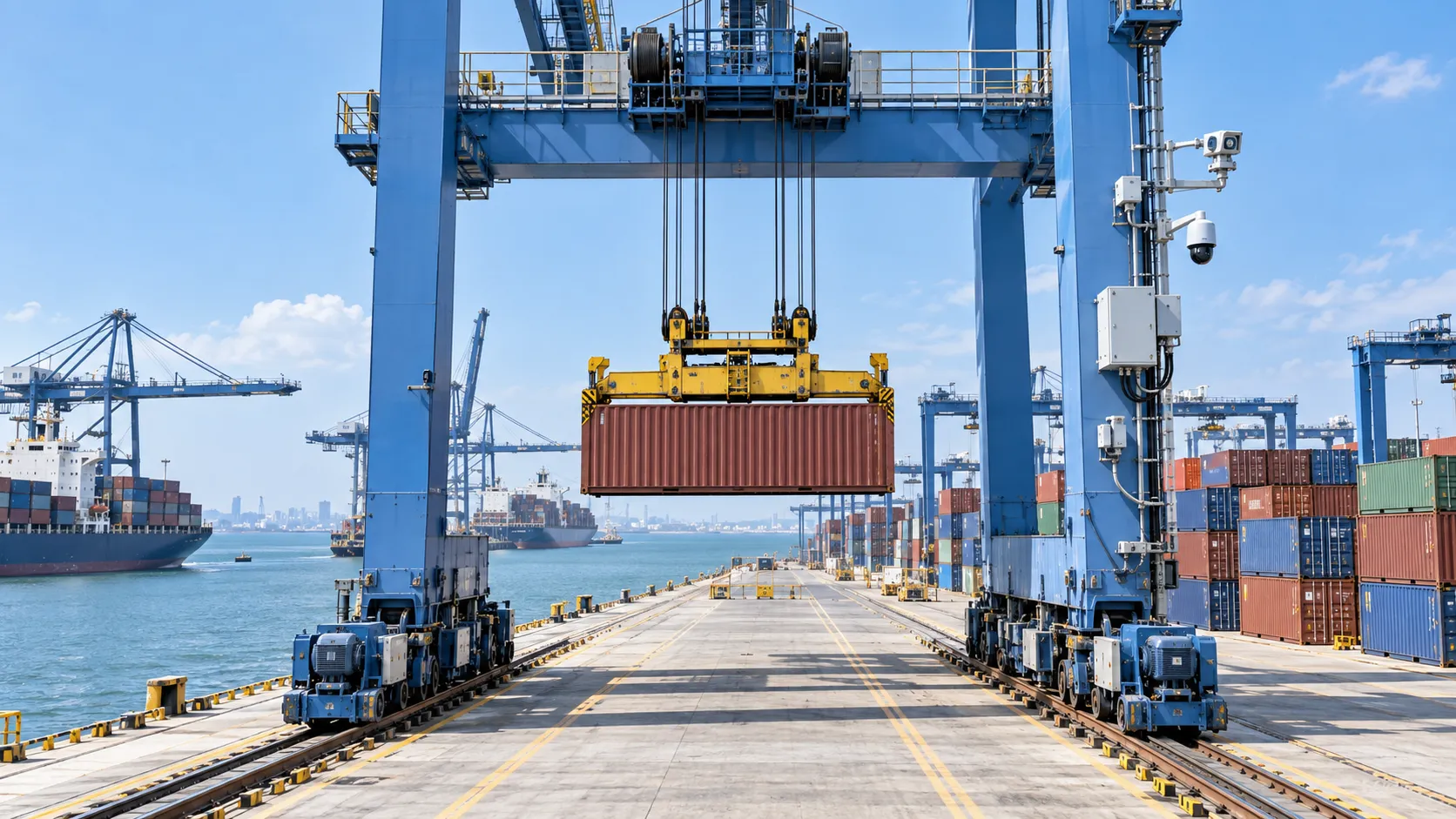
Container crane rails are particularly sensitive to settlement and differential movement. Rail tolerances should be incorporated into structural and geotechnical design rather than addressed after construction.
Settlement predictions should account for staged filling, surcharge loads, consolidation periods, and operational loading. Soft marine clays may continue moving long after a terminal begins commercial service.
Ground improvement can improve feasibility, but it must be treated as a critical structural input. Confirm treatment depth, quality-control methods, variability, and post-treatment verification requirements.
Where tie-back anchors cross property boundaries, utility corridors, or future development land, legal access and long-term protection can become greater risks than the anchor design itself.
Specify instrumentation for projects with meaningful deformation exposure. Inclinometers, settlement plates, piezometers, strain gauges, and survey monitoring provide early warning during staged construction.
Monitoring data must have assigned response actions. A dashboard without trigger levels, responsible parties, and authority to pause work does not effectively control construction risk.
Design for Durability, Inspection, and Repair Access
Marine corrosion and concrete deterioration can dictate lifecycle cost for a harbor structure for quay wall infrastructure. The splash zone, tidal zone, and buried zones each require different protection strategies.
Material selection should consider chloride exposure, abrasion, stray current, coating damage, marine growth, ultraviolet exposure, and expected inspection access. A generic corrosion rate is rarely sufficient.
Steel sheet piles and tubular piles may need corrosion allowances, protective coatings, cathodic protection, or combinations of these measures. The appropriate strategy depends on exposure and maintenance capability.
Concrete elements need appropriate cover, mix design, crack control, curing, and joint detailing. Inadequate detailing around fender anchors, bollards, and drainage penetrations creates frequent durability weaknesses.
Drainage is often underestimated. Poor drainage increases hydrostatic pressure behind retaining walls, accelerates material deterioration, and may cause pavement failures that interrupt terminal operations.
Include access for diver inspections, fender replacement, cathodic-protection monitoring, drainage maintenance, and repair equipment. A system that cannot be inspected economically becomes difficult to manage responsibly.
Lifecycle cost comparisons should include planned maintenance, likely renewal cycles, downtime exposure, and spare-part availability. Lowest initial cost is not necessarily the lowest cost across a berth’s service life.
For concession projects, align the design service life with lease terms, handback obligations, and residual asset condition requirements. This avoids disputes over deferred maintenance near contract expiry.
Address Construction Method, Programme Risk, and Interface Management
Construction methodology can change the preferred quay wall concept. Marine access, available plant, noise limits, restricted work windows, and nearby operations may outweigh theoretical structural efficiency.
Driven piling can be fast but may cause vibration, noise, refusal risk, or damage near existing structures. Pre-drilling, press-in methods, or alternative systems may be necessary.
Caisson construction requires dependable fabrication, transport, lifting, foundation leveling, and weather windows. A small positioning error can create major follow-on issues for deck construction and dredging.
Brownfield port projects require detailed interface planning. Existing utilities, fuel lines, rail tracks, crane foundations, and live vessel operations can introduce risks absent from greenfield construction.
Sequence temporary works with permanent design assumptions. Excavation support, dewatering, temporary anchors, and staged backfilling can produce loading conditions more critical than final operational cases.
Procurement strategy should assign responsibility clearly for soil risks, marine weather delays, dredging tolerances, and performance of specialist systems. Unclear risk allocation usually becomes a claims problem.
Require constructability reviews involving designers, contractors, equipment suppliers, and terminal operators. Their combined input can identify impractical lifting sequences, access conflicts, and commissioning constraints early.
A realistic programme includes time for testing, monitoring, remedial work, rail alignment, fender commissioning, and acceptance surveys. These activities are integral to opening a safe berth.
Use a Transparent Selection Process for Investment Approval
Project managers need an auditable basis for choosing a harbor structure for quay wall development. The preferred option should be demonstrably aligned with performance, risk, cost, and future capacity.
Develop at least two credible structural options through concept design. Compare capital expenditure, programme duration, ground treatment, dredging implications, maintenance, operational limitations, and expansion flexibility.
Use sensitivity testing for uncertain variables, including vessel growth, steel prices, soil parameters, sea-level rise, construction duration, and predicted maintenance rates. This identifies decisions with fragile economics.
Risk workshops should include marine operations, geotechnical specialists, structural designers, environmental teams, insurers, and asset managers. Each discipline identifies failures that isolated reviews may miss.
Translate technical risks into business outcomes wherever possible. Examples include berth downtime, reduced crane availability, emergency repair cost, vessel damage exposure, and delayed revenue generation.
Do not approve a concept solely because it meets current code requirements. Codes establish minimum safety expectations, while the investment decision must also address resilience, availability, and commercial flexibility.
Document the selected option’s assumptions and hold points. When vessel mix, equipment specifications, or dredging levels change, the team can quickly determine whether the structural basis remains valid.
Conclusion: Select for Reliable Terminal Performance
The right quay wall is not simply the strongest or cheapest structural system. It is the solution that safely absorbs berthing and environmental loads while supporting productive, maintainable port operations.
Begin with the operating case, quantify combined load effects, understand the ground, and control deformation. Then compare structural alternatives through lifecycle cost, construction risk, and expansion capability.
For project managers, this disciplined approach turns harbor structure for quay wall selection into a defensible investment decision rather than a late-stage response to engineering constraints.