Related News
- 00
0000-00
What Should a Port Capacity Plan Measure Before a New Berth or Crane Investment? - 00
0000-00
Work Vessel Procurement Risks: Verifying Build Scope and Delivery Terms - 00
0000-00
Shipping Logistics Intelligence: Turning ETA Data Into Exception Management - 00
0000-00
How Do Maritime Disruptions Affect Port Equipment Procurement? - 00
0000-00
How Can Port Equipment Lead-Time Risk Be Managed?
Shipping Logistics Intelligence: Turning ETA Data Into Exception Management
Shipping Logistics Intelligence: Turning ETA Data Into Exception Management
Shipping logistics intelligence turns volatile ETA data into actionable exception management for terminal operators, vessel planners, and cargo-handling teams. When a vessel’s arrival forecast changes, the consequence is rarely limited to one revised timestamp. Berth windows, pilotage, tug allocation, crane sequences, labor rosters, yard blocks, gate appointments, rail connections, and customer commitments can all be affected. The operational question is not simply, “When will the ship arrive?” It is, “What must change now, who owns that decision, and what disruption can still be avoided?”
That distinction matters because an ETA is a forecast, not a promise. It can improve as a vessel enters a more reliable tracking range, but it can also deteriorate quickly because of weather, port congestion, a slow transit through a chokepoint, maintenance issues, tidal restrictions, or a late departure from the previous port. Teams that treat every ETA update as an isolated message create noise. Teams that connect arrival intelligence to the actual operating plan can identify exceptions early and protect the flow of cargo.
ETA visibility is useful; decision context is what makes it operational
Many maritime organizations already receive vessel positions and estimated arrival times through AIS feeds, carrier notices, port community systems, agent updates, or internal planning tools. The weakness is often not a lack of data. It is that the data sits apart from the constraints that determine whether a berth plan remains feasible.
A predicted arrival at 06:00 may look acceptable on a vessel schedule. In practice, it may conflict with a berth occupied by a delayed departure, a crane undergoing planned maintenance, a yard zone approaching its safe operating limit, or a restricted pilotage window. Conversely, a vessel arriving later than planned may not create a serious problem if the terminal can resequence another call, adjust equipment deployment, or use available buffer in the discharge plan. The ETA itself does not define urgency. Its relationship to the plan does.
This is where shipping logistics intelligence becomes more than tracking. A useful system combines arrival forecasts with operational dependencies: vessel characteristics, berth compatibility, cargo type, crane availability, yard inventory, hazardous cargo controls, truck or rail cut-off times, weather limits, and the status of connecting services. It should then distinguish between routine forecast movement and a condition that requires coordinated action.
For operators, the practical outcome is a shift from passive monitoring to managed exceptions. Instead of scrolling through a long list of vessels with changing ETAs, a planner sees which changes threaten berth productivity, which ones will create yard pressure, and which can wait for the next planning cycle.
What an ETA-driven exception actually looks like
An exception is not necessarily a delay. It is a deviation that crosses a defined operational threshold or creates a conflict with a committed plan. The threshold should reflect the terminal’s own rules and risk appetite rather than an arbitrary number of minutes applied to every vessel.
Consider a container vessel whose expected arrival moves forward by several hours. That may initially sound positive, but an early arrival can be disruptive when the assigned berth is still occupied, the planned receiving window has not opened, or quay crane teams are allocated to another call. The right response may be to hold the vessel outside the port, resequence the berth plan, or prepare an alternative slot. If the same change occurs on a day with open berth capacity and a ready yard, it may need no intervention at all.
Bulk and breakbulk operations add different dependencies. A shift in a vessel’s arrival can collide with conveyor availability, stockpile capacity, grab or hopper maintenance, cargo segregation requirements, or weather conditions affecting open handling. Dredging and marine engineering logistics can be equally sensitive: equipment movement, channel access, tidal windows, support craft, and maintenance readiness may all need to be checked before a revised arrival plan is accepted.
The goal is not to create an alert for every altered forecast. A mature workflow assigns severity based on operational impact. A late vessel with no downstream conflict may be informational. A modest ETA slip that misses a pilotage window, blocks a berth rotation, and risks a rail connection deserves immediate attention.
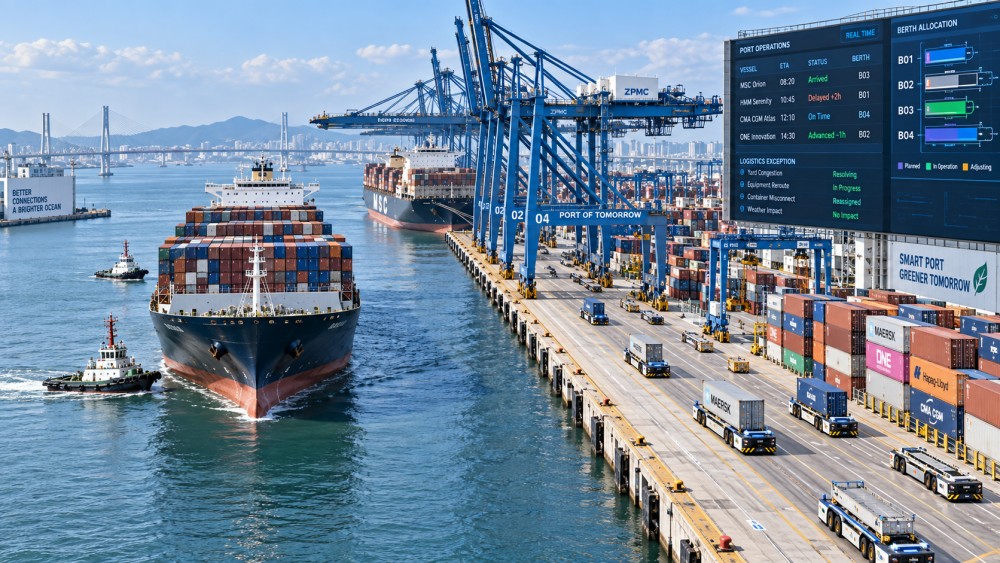
From alert fatigue to a usable exception workflow
Alert fatigue is one of the fastest ways to undermine confidence in arrival intelligence. If dispatchers, planners, and supervisors receive a stream of notifications with no clear consequence, they learn to ignore them. The system becomes another screen to check rather than a tool that supports decisions under pressure.
A better approach starts with explicit business rules. These rules do not need to be overly complex, but they must reflect how the operation works. Typical triggers may include an ETA moving beyond the berth tolerance, a predicted arrival outside the available tidal or pilotage window, an expected overlap with a planned crane outage, a yard occupancy threshold, or a conflict with a confirmed landside cut-off. The rule should identify both the event and the affected object: berth, crane pool, yard block, cargo stream, gate program, or outbound connection.
Every meaningful exception also needs an owner. Without ownership, visibility becomes a shared assumption that someone else will act. A berth planning conflict may belong to the vessel planner; a reefer-yard constraint may require the yard control team; a revised cargo readiness date may need input from the shipping line, agent, or consignee. Escalation paths should be clear enough that an overnight team can use them without relying on informal knowledge.
The best workflows preserve the reasoning behind a response. If a vessel is moved to an alternate berth, held at anchorage, or allowed to proceed with a changed crane allocation, that decision should be visible to the teams whose work follows. A short operational note is often more valuable than a perfect dashboard: what changed, why it matters, what action was selected, and what condition would trigger another review.
Confidence matters as much as the ETA
An arrival forecast without a confidence signal can encourage false precision. Offshore, predicted arrival times may be influenced by speed changes, routing choices, traffic, and weather. Closer to port, local constraints often become more important. Operators should avoid planning a high-consequence sequence around a single exact time when the underlying forecast remains uncertain.
A practical interface can show an expected arrival range, the time of the most recent update, and the source or basis of the estimate where available. This gives planners a better sense of whether they are dealing with a stable forecast or an emerging uncertainty. It also supports sensible planning buffers. Buffers should not be treated as wasted capacity; they are a controlled allowance for the variability that is already present in marine operations.
The operational data that must meet at the same decision point
ETA intelligence works only when it is connected to the systems and people that manage execution. The exact architecture differs by terminal, but the operational picture commonly brings together vessel schedules, AIS or carrier-derived arrival updates, berth planning, terminal operating system records, equipment maintenance status, weather and tide information, yard inventory, and gate or rail plans.
Integration should be judged by decision quality, not by the number of feeds displayed. A dashboard that shows vessel location, crane telemetry, and yard occupancy can still fail if it does not explain the relevant relationship between them. For example, a predicted delay becomes actionable when the planner can see that it frees a crane window, creates an overlap with another vessel, or changes the expected dwell time of import containers in a constrained yard area.
Data quality needs disciplined attention. Vessel names and voyage references can vary across systems. Time zones are a recurring source of operational error. A berth identifier meaningful to the marine department may not map cleanly to a terminal planning system. Equipment status can be technically available but operationally misleading if a crane marked “available” is still awaiting inspection, a spreader change, or a qualified operator. Before adding advanced analytics, teams should resolve these basic definitions and establish which source is authoritative for each critical field.
This is particularly relevant for automated terminals. Automated guided vehicles, remote-controlled cranes, and control systems create richer streams of equipment and task data, but more data does not automatically produce better coordination. Low-latency control communications are essential for direct equipment operation, while ETA-based exception management typically operates at the planning and orchestration layer. Mixing those two requirements without clear boundaries can create unnecessary complexity.
Where operators should be cautious
One common mistake is to automate a response before the operation has agreed on the decision rules. Automatic berth reassignment, labor changes, or customer notifications may be appropriate in tightly controlled situations, but they can also create secondary disruption if they ignore commercial commitments, vessel priorities, cargo constraints, or local marine authority requirements. In many environments, the better first step is decision support: flag the conflict, show feasible alternatives, and keep the final approval with the responsible planner.
Another mistake is evaluating a solution only by forecast accuracy. Accuracy is important, but it is not sufficient. Operators should ask whether the platform captures forecast changes early enough to influence planning; whether it shows the operational consequence; whether it supports acknowledgement and handover; and whether the alert logic can be adapted as traffic patterns, berth configurations, or equipment strategies change.
Cybersecurity and access control also deserve attention when arrival intelligence is connected to terminal systems. A planning tool should not become an uncontrolled path into operational technology environments. The appropriate design depends on the system boundaries, local policies, and the criticality of the interfaces, but roles, audit trails, and data-sharing responsibilities should be discussed before deployment rather than after an incident.
A sensible path to implementation
The strongest starting point is usually a narrow, high-friction workflow rather than a port-wide transformation. A terminal may begin with berth-plan conflicts for a selected service group, or with early warnings for vessel delays that threaten rail cut-offs and yard density. The team can then observe which alerts lead to real intervention, which signals are unreliable, and where decision rights are unclear.
During this stage, track operational learning rather than chasing a polished scorecard. Which exceptions were detected too late? Which were detected but not acted upon? Which decisions required information outside the system? These questions reveal whether the obstacle is data quality, rule design, organizational ownership, or a physical capacity constraint that no software can remove.
PS-Nexus examines this intersection of physical terminal capacity, algorithmic scheduling, and maritime logistics intelligence across mega-port equipment, specialized container handling, bulk systems, automation controls, and dredging engineering. That perspective matters because an ETA-driven workflow cannot be separated from the assets that execute the plan. A berth schedule is only credible when quay crane capability, yard mobility, maintenance conditions, fairway access, and local operating limits are understood together.
For teams assessing their next step, the most useful questions are concrete: Which arrival changes currently cause the most expensive or disruptive rework? What operating constraints are known but not visible in the planning process? Which system owns each critical timestamp? And when an exception is identified, can the responsible person make a decision with the information already available?
Shipping logistics intelligence earns its place when it makes those answers faster and more reliable. The objective is not an ever-more-detailed ETA screen. It is a working exception process that helps people protect berth continuity, use equipment with fewer surprises, and keep cargo moving when the schedule inevitably changes.
Related News
Terminal Control System Costs: Budgeting Hardware, Integration, and Lifecycle Support
Terminal control systems cost explained: budget hardware, integration, safety, cybersecurity, commissioning, and lifecycle support for resilient terminal operations.

Smart Operations in the Middle East: Where Industrial Investment Is Growing
Smart operations Middle East investment is reshaping ports, industrial corridors, and logistics networks through connected data, automation, resilience, and smarter asset performance.
How to Select Harbor Structures for Quay Walls Under Berthing and Wave Loads
Harbor structure for quay wall selection: evaluate berthing energy, wave loads, soil conditions, durability, and lifecycle risk to build safer, adaptable terminals.

Selecting Smart Terminal Software for Multi-Site Field Service Operations
Smart terminal solutions software helps multi-site field service teams unify asset history, mobile maintenance, integrations, and reporting for safer, faster terminal operations.
How to Specify Heavy-Duty Marine Engineering Equipment for Offshore Projects
Heavy duty marine engineering equipment: learn how to specify reliable offshore assets for safety, uptime, integration, lifecycle cost, and project success.
How to Evaluate a Container Handling Equipment Exporter for Port and Yard Projects
Choose the right container handling equipment exporter with a practical guide to compliance, automation, service support, delivery reliability, and lifecycle value.

How to Select Automated Terminal Systems for High-Throughput Cargo Terminals
Automated terminal systems for cargo terminals: learn how to select scalable, resilient solutions that boost throughput, streamline integration, and control lifecycle risk.

How Automated Bulk Cargo Handling Reduces Dust, Spillage, and Port Downtime
Automated cargo handling for bulk cargo cuts dust, spillage, and port downtime through stable flow control, smart sensing, and coordinated recovery.
Designing an Integrated Port Handling System for Faster Yard-to-Vessel Transfers
Discover how an integrated port handling system aligns yard, transport, and vessel operations to reduce delays, improve flow reliability, and accelerate transfers.