Are port automation solutions worth the upgrade in 2026?
As global trade nodes face tighter margins, labor constraints, emissions targets, and rising vessel-call complexity, enterprise leaders are reconsidering automation investment.
The question is no longer whether machines can replace manual processes, but whether data-driven terminals can improve measurable business performance.
For most high-volume, space-constrained, or reliability-sensitive terminals, port automation solutions are worth serious evaluation in 2026.
The short answer: yes, but only with the right business case
Port automation solutions are not automatically profitable because they are advanced, digital, or aligned with smart-port narratives.
They become valuable when they solve specific bottlenecks that directly affect throughput, labor availability, safety, energy use, or asset utilization.
In 2026, the strongest business cases are emerging where terminals face persistent congestion, scarce skilled operators, higher insurance exposure, and demanding shipping-line schedules.
For enterprise decision-makers, the upgrade should be judged as an operating-model transformation, not a procurement decision for isolated equipment.
The winning projects connect quay cranes, yard equipment, gates, energy systems, planning software, and control rooms into one coordinated performance architecture.
Why 2026 changes the automation equation
Several market pressures are making automation more relevant than it was during earlier investment cycles across global port infrastructure.
Larger vessels concentrate container exchanges into shorter windows, forcing terminals to handle intense peaks without proportional labor expansion.
At the same time, many mature port economies face aging workforces, stricter safety expectations, and difficulty recruiting operators for demanding shifts.
Environmental regulation is also reshaping capital planning, especially as ports move toward electrified equipment and better energy visibility.
Automation now overlaps with decarbonization because electric automated equipment can reduce idling, optimize routing, and support smarter charging schedules.
Another factor is data maturity. More terminals now have operating histories, sensor networks, and terminal operating systems capable of supporting predictive decisions.
This does not eliminate risk, but it gives leaders better tools for modeling performance before committing to a large upgrade.
Where automation creates the clearest financial return
The most visible return usually comes from throughput stability, rather than a simple promise of faster individual machine cycles.
Manual operations can perform well under normal conditions, but variability increases when peaks, fatigue, weather, or yard congestion accumulate.
Automated container handling reduces variability by standardizing movements, enforcing planned routes, and coordinating equipment through central control logic.
For terminals paid on volume, service levels, or long-term carrier relationships, stable performance can protect revenue more effectively than headline speed.
Labor efficiency is another major driver, although leaders should avoid framing automation only as headcount reduction.
The stronger argument is workforce reallocation from repetitive, hazardous, or scarce roles into remote operations, maintenance, analytics, and exception management.
Equipment utilization can also improve when dispatching algorithms balance workloads across cranes, automated guided vehicles, straddle carriers, or automated stacking cranes.
Better utilization delays unnecessary fleet expansion and improves return on assets already sitting on the terminal balance sheet.
The value goes beyond cost reduction
Many automation proposals fail internally because they are presented mainly as cost-cutting projects, which narrows executive attention too much.
The broader value is resilience. Automated systems can make terminal performance less dependent on individual operator availability and local disruption.
They also create a more auditable operating environment, with clearer records of moves, delays, exceptions, safety events, and equipment behavior.
For board-level stakeholders, this visibility supports better governance over capital assets, service reliability, and regulatory compliance.
Automation can also strengthen commercial positioning. Shipping lines increasingly favor terminals that offer predictable berth productivity and transparent data integration.
A terminal that consistently executes vessel plans may gain negotiation advantages, even if competitors advertise similar theoretical capacity.
In strategic corridors, port automation solutions can become part of national logistics competitiveness, not merely terminal-level modernization.
Which terminals are most likely to benefit
Automation is most compelling where throughput is high, land is constrained, and yard density must increase without sacrificing operational safety.
Large container terminals with repetitive traffic patterns and predictable container flows usually provide the best environment for advanced automation.
Transshipment hubs can benefit because high move volumes and tight vessel connections reward precise sequencing and reliable crane-yard coordination.
Gateway terminals may also benefit when inland logistics constraints require better appointment systems, gate automation, and yard planning accuracy.
Greenfield terminals have the advantage of designing layouts, power systems, communications, and workflows around automation from the beginning.
Brownfield terminals can still succeed, but they need phased implementation that avoids destabilizing current revenue-generating operations.
Lower-volume terminals should be more selective, often starting with control software, gate automation, remote operation, or maintenance analytics.
When the upgrade may not be worth it yet
Automation is not the right immediate answer for every port, especially when basic process discipline remains weak.
If vessel planning, yard housekeeping, maintenance scheduling, or data quality are poor, automation may simply digitize existing inefficiencies.
Terminals with highly irregular cargo mixes, unstable demand, or insufficient electrical infrastructure may struggle to justify heavy automation quickly.
The business case also weakens when management lacks the authority to redesign labor models, operating rules, and cross-department workflows.
Automation requires organizational commitment because software logic cannot compensate for unresolved governance conflicts between operations, engineering, IT, and commercial teams.
In these cases, a readiness program may generate better near-term value than a full-scale equipment conversion.
What decision-makers should measure before investing
A strong investment review should begin with bottleneck economics, not vendor demonstrations or technology comparisons.
Leaders should quantify berth delays, crane waiting time, yard rehandles, truck turn times, equipment idle time, maintenance downtime, and safety incidents.
Each pain point should be translated into financial impact, including lost revenue, penalty exposure, overtime, fuel costs, insurance costs, and customer dissatisfaction.
The next step is to identify which automation layer addresses which bottleneck, because not every problem requires full terminal automation.
For example, gate congestion may be improved through appointment systems, OCR, and data integration before yard equipment is automated.
Yard congestion may require better planning algorithms, revised block strategy, or automated stacking cranes depending on the root cause.
The best business cases link investment modules to measurable operational indicators that executives can track after deployment.
Core components of modern port automation solutions
Modern port automation solutions usually combine equipment automation, terminal operating systems, control platforms, sensors, communications, cybersecurity, and analytics.
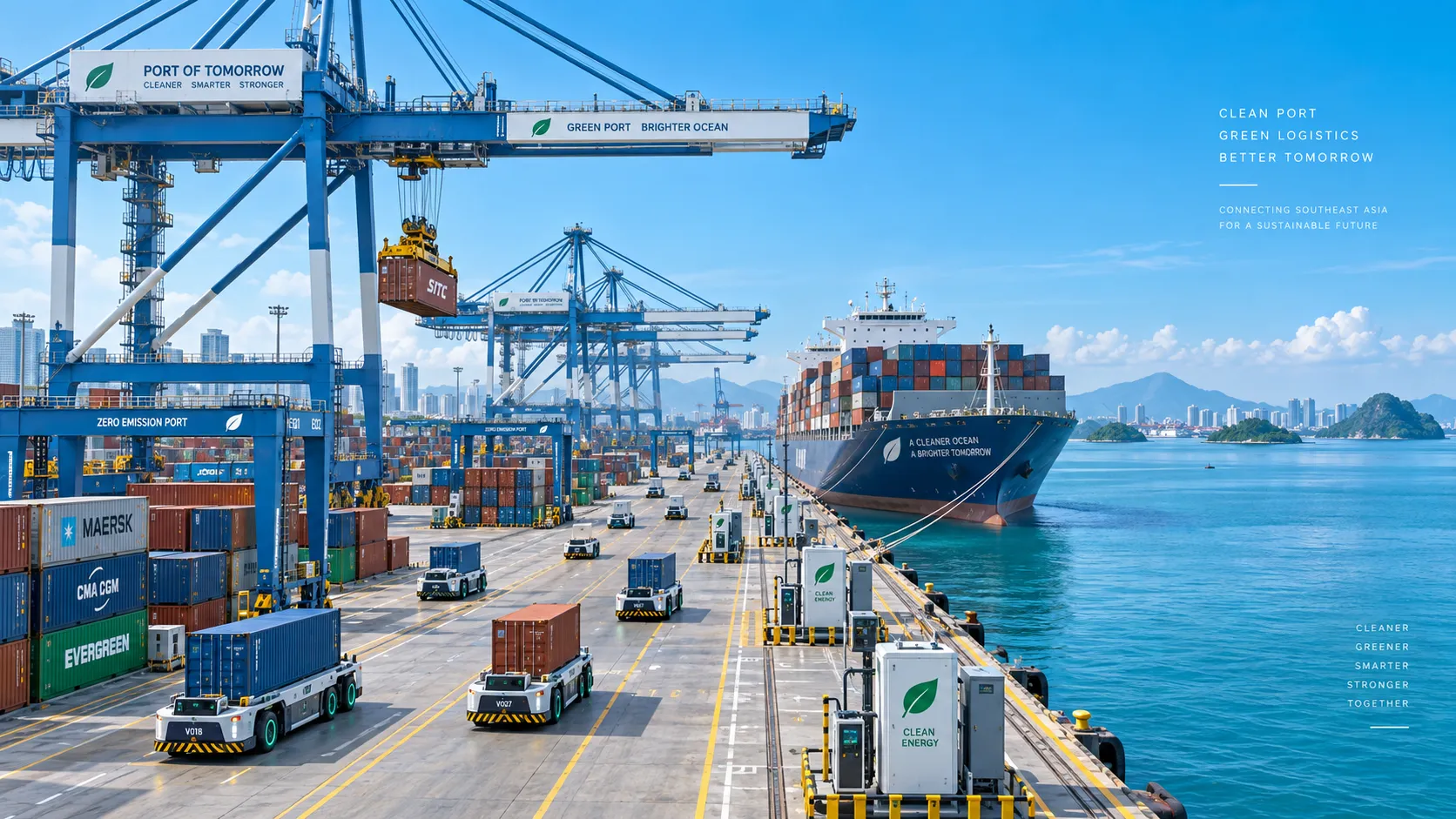
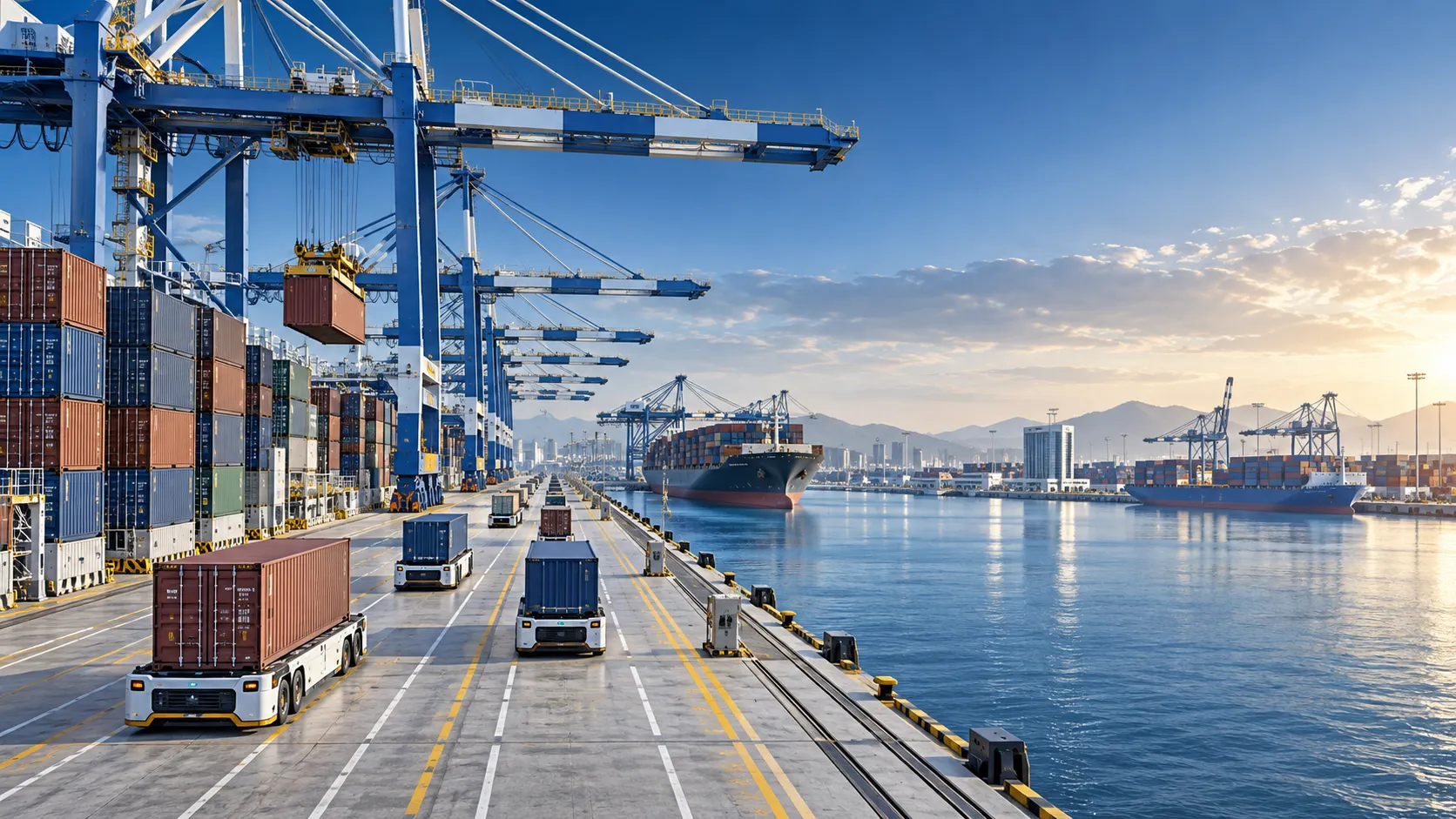
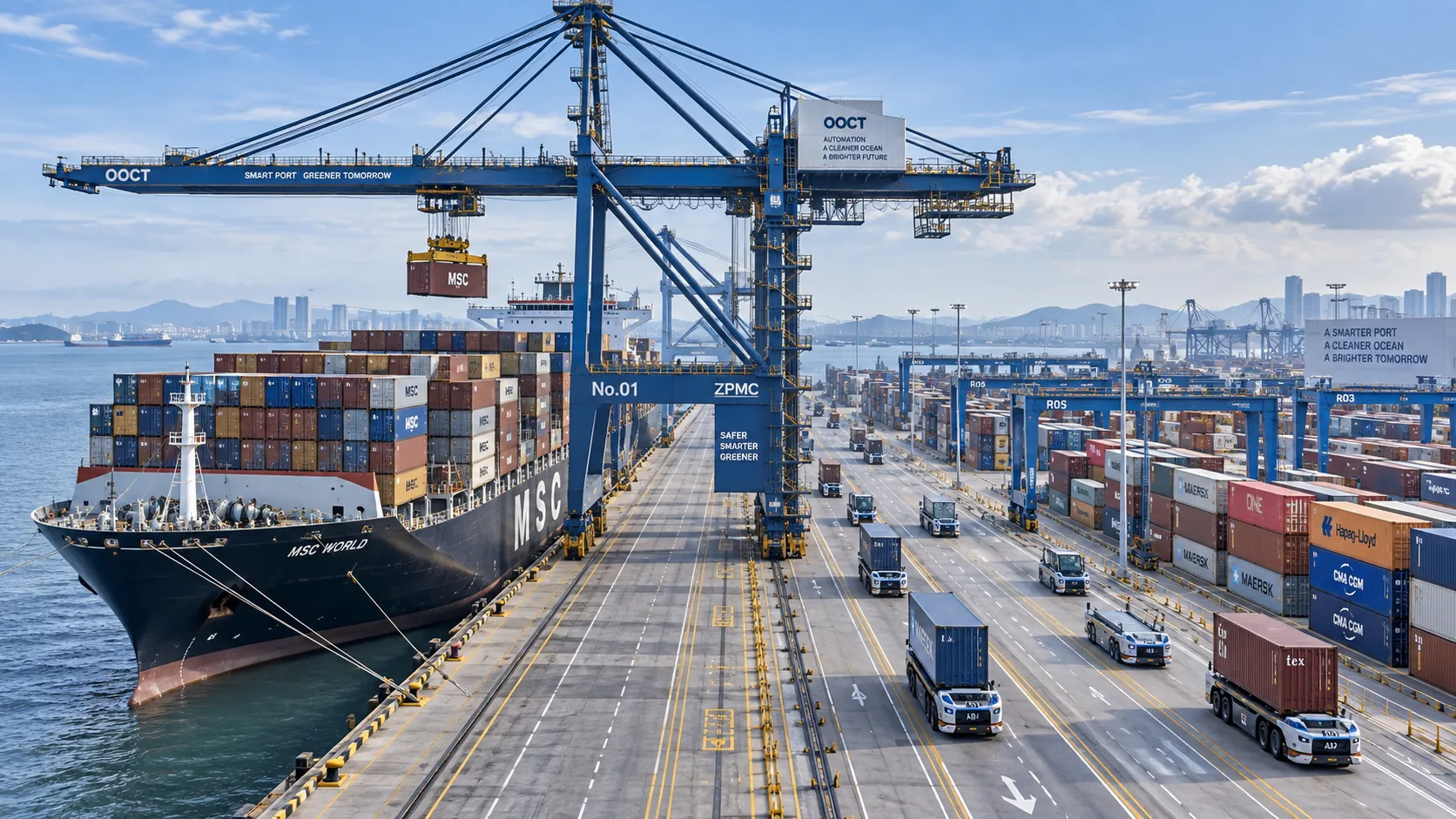
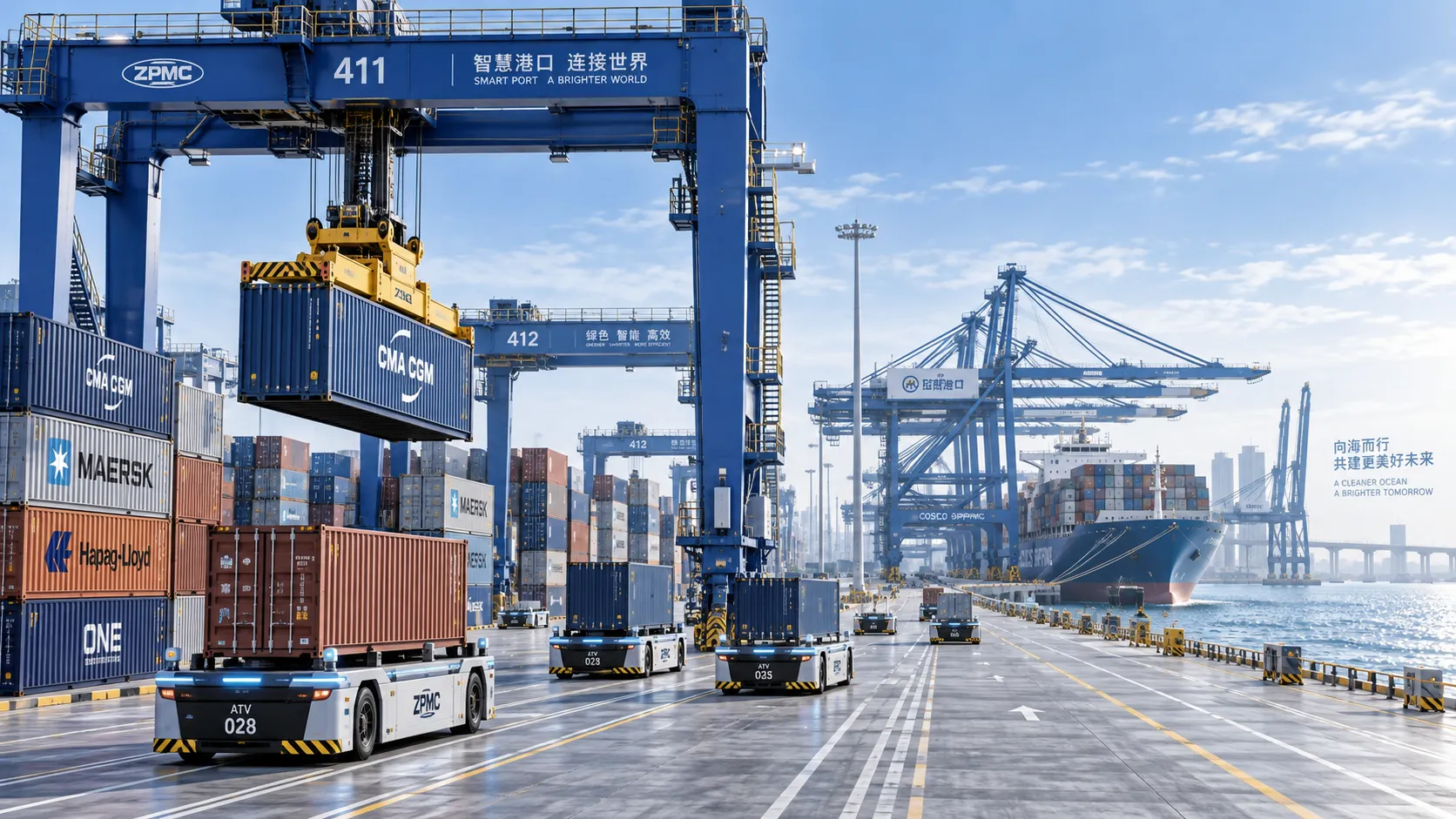
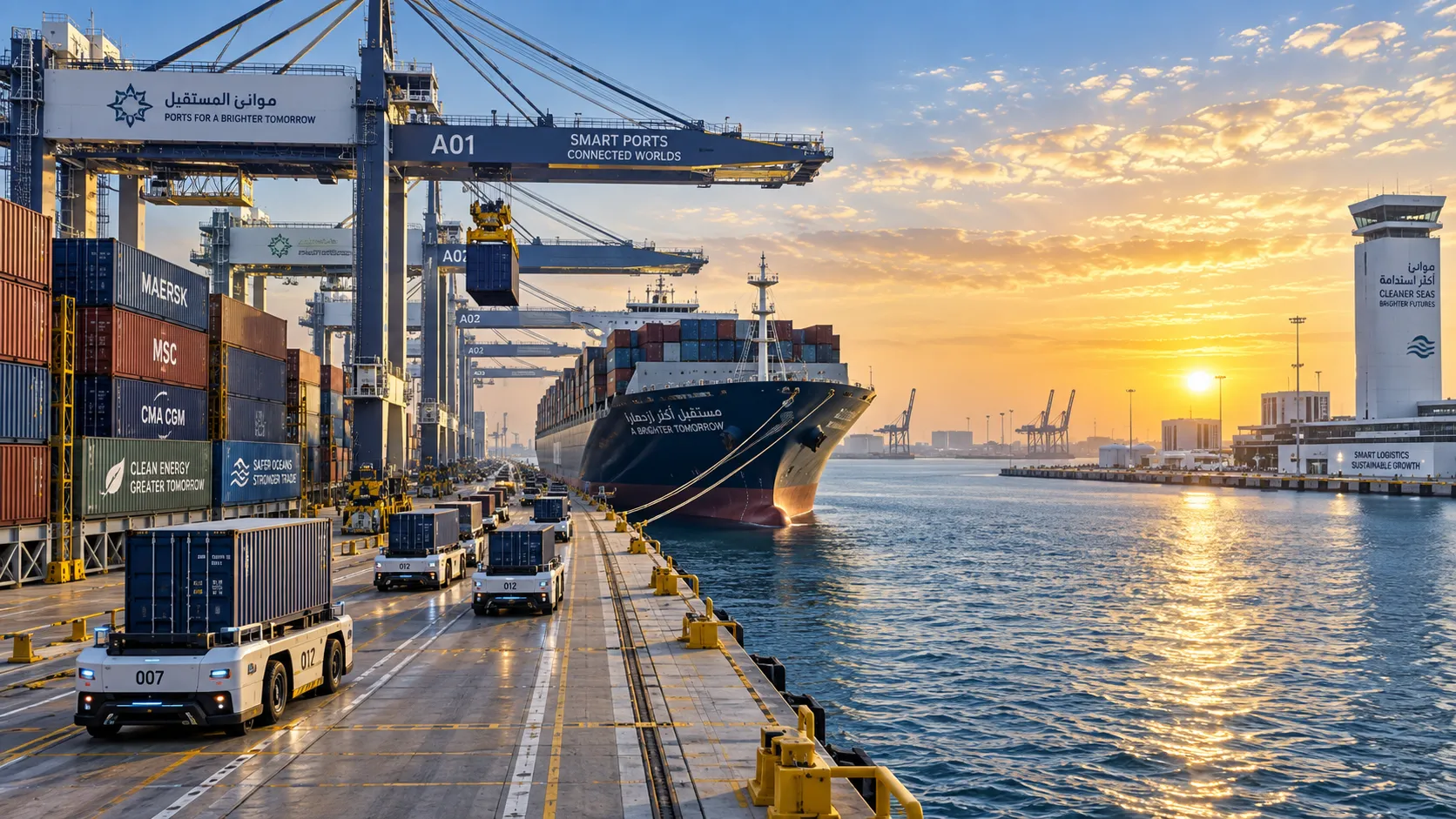
Automated stacking cranes, automated guided vehicles, automated rubber-tired gantries, remote-controlled quay cranes, and smart gates are common hardware layers.
The software layer coordinates dispatching, route planning, yard allocation, equipment health, exception handling, and integration with shipping-line systems.
Low-latency communications are essential because remote and automated operations depend on reliable command, control, and video transmission.
Digital twins are becoming more practical for scenario testing, capacity planning, energy simulation, and disruption response training.
Predictive maintenance tools add value by detecting wear patterns before failures interrupt vessel operations or damage expensive terminal assets.
However, integration quality matters more than buying every available module. Fragmented automation can create new complexity without improving performance.
How to calculate ROI realistically
Executives should expect automation ROI to depend on both direct savings and strategic value over a multi-year horizon.
Direct benefits may include reduced fuel consumption, lower accident frequency, improved labor productivity, higher equipment availability, and fewer unplanned service interruptions.
Revenue-related benefits may include additional vessel calls, improved berth windows, stronger carrier retention, and higher confidence in long-term contracts.
Capital efficiency matters too. If automation increases yard density, a terminal may defer costly land expansion or off-dock storage investment.
ROI models should include transition costs, software licensing, training, cybersecurity, maintenance capability, spare parts strategy, and temporary productivity disruption.
Leaders should also model conservative, expected, and upside scenarios rather than relying on one optimistic payback calculation.
The most credible ROI cases use baseline operational data from the terminal itself, not generic benchmark claims from unrelated facilities.
Key risks that must be managed
The first risk is implementation disruption. Ports cannot pause operations like factories during modernization, so phasing is critical.
Brownfield upgrades require temporary operating modes, traffic segregation, commissioning windows, and clear contingency plans for system faults.
The second risk is integration failure. Automation depends on consistent data flows between equipment controllers, planning systems, sensors, and enterprise platforms.
The third risk is cybersecurity. As terminals become connected industrial systems, they become more exposed to operational technology attacks.
Cybersecurity should be designed into architecture, procurement, access control, monitoring, vendor management, and incident response from the beginning.
The fourth risk is workforce resistance. Successful projects usually involve early communication, reskilling pathways, safety arguments, and credible role transition plans.
The fifth risk is vendor lock-in. Leaders should examine interoperability, data ownership, lifecycle support, and upgrade flexibility before signing long contracts.
A practical upgrade pathway for enterprise leaders
A sensible pathway begins with diagnostic assessment, including operational data review, infrastructure audit, stakeholder interviews, and bottleneck mapping.
The next phase is target operating model design, defining which decisions should be automated, supervised, or retained manually.
After that, leaders can prioritize modules based on value, risk, dependency, and implementation complexity.
Many terminals should begin with visibility and control improvements, such as equipment monitoring, yard optimization, gate automation, and remote exception management.
Once data quality and operational discipline improve, larger equipment automation becomes less risky and easier to justify financially.
Pilot projects should be designed to test operational assumptions, not merely to prove that a technology works in isolation.
Finally, governance must be clear. Automation programs need executive sponsorship, cross-functional ownership, and performance metrics reviewed regularly.
What to ask vendors before making a decision
Decision-makers should ask vendors how their solution improves specific terminal KPIs under realistic operating conditions.
They should request evidence from comparable terminals, including throughput patterns, layout constraints, labor context, and integration scope.
Questions about downtime recovery are essential. Leaders need to know what happens when sensors, networks, software, or equipment controllers fail.
Vendors should explain data standards, API availability, cybersecurity controls, simulation methods, training requirements, and long-term support commitments.
It is also important to understand how upgrades are handled after commissioning, because terminal requirements evolve with trade flows.
A credible partner will discuss operational change management, not only product features, because automation performance depends on adoption quality.
The 2026 verdict
Port automation solutions are worth the upgrade in 2026 when they are tied to clear business constraints and measurable outcomes.
They are particularly valuable for terminals facing capacity pressure, labor scarcity, safety concerns, emission requirements, or demanding carrier service expectations.
They are less compelling when leaders pursue automation as a branding exercise without reliable data, process maturity, or implementation governance.
The smartest approach is phased, evidence-based, and commercially grounded, balancing ambition with operational continuity.
For enterprise leaders, the question should not be whether automation is modern, but whether it strengthens the terminal’s competitive operating model.
If the answer is supported by data, realistic ROI, and organizational readiness, automation becomes a strategic upgrade rather than a technology gamble.