For port executives weighing automation ROI against operational disruption, control systems upgrades present a strategic dilemma: modernize too slowly and lose efficiency, move too fast and risk integration failures across cranes, AGVs, yard platforms, and terminal operating systems.
As global terminals pursue higher throughput, lower emissions, and resilient 24/7 operations, the real question is not whether upgrades are necessary—but how decision-makers can manage technical risk while unlocking long-term competitive value.
The Short Answer: Yes, If the Upgrade Is Governed as a Business Transformation
Control systems upgrades are usually worth the integration risk when they are linked to measurable terminal outcomes, not treated as isolated engineering projects.
For enterprise decision-makers, the central issue is not whether newer software, PLCs, sensors, or supervisory platforms are technically superior.
The issue is whether the upgrade improves berth productivity, equipment utilization, labor resilience, energy performance, safety, and service reliability.
In port operations, outdated control systems quietly create hidden costs through unplanned downtime, manual workarounds, fragmented data, and limited automation scalability.
These costs rarely appear as a single budget line, yet they directly affect vessel turnaround, yard congestion, and customer confidence.
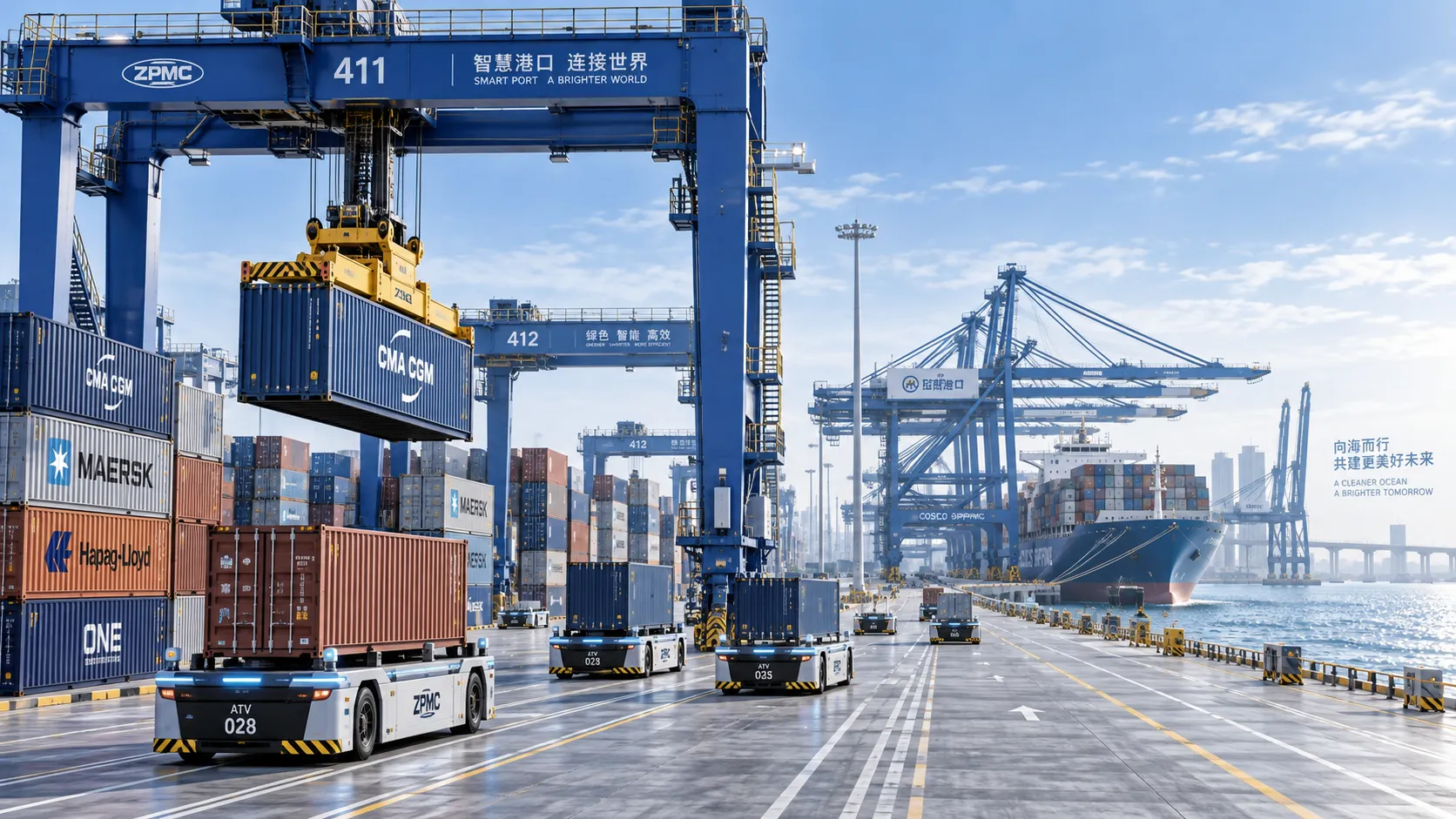
However, the integration risk is real. Ports are complex environments where quay cranes, RTGs, ASCs, AGVs, power systems, and TOS platforms must coordinate continuously.
A poorly sequenced upgrade can interrupt operations, expose cybersecurity gaps, or reveal incompatibilities between legacy assets and modern digital architectures.
The best answer, therefore, is conditional. Control systems upgrades are worth pursuing when risk is quantified, phased, tested, and commercially justified.
Why Control Systems Have Become a Board-Level Decision
Port control systems were once viewed mainly as technical infrastructure, maintained by engineering teams and evaluated through reliability metrics.
That view is no longer sufficient because control systems increasingly determine how efficiently a terminal converts physical assets into revenue.
Modern terminals depend on synchronized decision-making between equipment control, fleet management, yard planning, gate operations, and terminal operating systems.
When those layers communicate poorly, even expensive machinery cannot deliver its designed productivity under real operating pressure.
Executives are also facing new external pressures. Shipping alliances expect reliable windows, cargo owners demand visibility, and regulators are tightening emissions standards.
Automation, electrification, remote operations, and predictive maintenance all require control systems capable of handling reliable data exchange and low-latency coordination.
In this environment, delaying upgrades may feel safe, but it can gradually reduce strategic flexibility and increase dependence on obsolete vendor ecosystems.
The board-level question is whether today’s integration risk is smaller than tomorrow’s competitiveness risk, especially in high-throughput or capacity-constrained terminals.
Where the Business Value Actually Comes From
The strongest business case for control systems upgrades usually starts with throughput, because even small operational gains compound across thousands of container moves.
Improved equipment sequencing can reduce idle time between quay cranes, yard cranes, transport vehicles, and handover points.
Better control logic can also stabilize operations during peak windows, reducing the variability that frustrates shipping lines and inland logistics partners.
A second value source is asset utilization. Many terminals own enough equipment, yet lose capacity because assets are poorly coordinated or unavailable.
Upgraded control systems can support condition monitoring, automated diagnostics, and more intelligent dispatching, improving effective capacity without immediate civil expansion.
Energy efficiency is another increasingly important benefit. Electrified cranes, automated yard equipment, and shore power interfaces need smarter load management.
Control upgrades can help reduce peak demand charges, optimize regenerative energy use, and align equipment operation with decarbonization commitments.
Safety and workforce resilience also matter. Remote control, collision avoidance, geofencing, and automated interlocks can reduce exposure in high-risk operating zones.
Finally, data quality improves. Executives gain more reliable operational intelligence, enabling better investment decisions, customer reporting, and performance benchmarking.
What Makes Integration Risk So Difficult in Port Environments?
Port integration risk is challenging because terminals are not greenfield software environments. They are live industrial ecosystems with mixed-generation assets.
A single terminal may run cranes from multiple OEMs, legacy PLCs, customized interfaces, proprietary protocols, and years of site-specific modifications.
Those modifications often exist because previous teams solved practical problems quickly, not because they were building a future-ready architecture.
When a new control layer is introduced, undocumented dependencies can appear between equipment behavior, safety logic, reporting systems, and operator routines.
Another risk is operational continuity. Ports cannot simply stop working for weeks while systems are rebuilt, tested, and optimized.
Upgrade windows may be limited to night shifts, low-volume periods, or phased equipment blocks, which increases planning complexity.
Cybersecurity adds another layer. Connecting previously isolated equipment to modern platforms can expand the attack surface if governance is weak.
There is also vendor coordination risk. TOS providers, crane OEMs, automation specialists, network teams, and civil contractors may all influence outcomes.
Without strong system ownership, each party optimizes its scope while the terminal absorbs the integration consequences.
How Executives Should Judge Whether an Upgrade Is Worth It
Decision-makers should begin by defining the business problem precisely. “Modernization” is too vague to justify investment or manage accountability.
Stronger objectives include reducing quay crane waiting time, increasing automated yard availability, cutting energy peaks, or enabling remote operation expansion.
Each objective should connect to baseline data, including downtime records, maintenance costs, move rates, truck turn times, and schedule reliability.
The upgrade is more likely to be worthwhile when current constraints are caused by coordination, visibility, or control limitations.
If the main bottleneck is physical berth length, land scarcity, or hinterland congestion, control systems alone cannot solve the problem.
Executives should also distinguish between mandatory replacement and strategic upgrade. Obsolete hardware may require action regardless of immediate productivity gains.
Strategic upgrades, however, should be evaluated against future automation pathways, emissions targets, labor strategy, and customer service commitments.
A useful test is to ask whether the new architecture increases optionality. Can it support additional automation, analytics, equipment types, and cybersecurity requirements?
If the answer is yes, the investment may create platform value beyond the first operational improvement.
A Practical ROI Framework for Control Systems Upgrades
A credible ROI model should combine direct savings, revenue protection, capacity gains, risk reduction, and strategic flexibility.
Direct savings may include fewer breakdowns, lower emergency maintenance costs, reduced manual intervention, and improved energy management.
Capacity gains may come from higher moves per hour, shorter vessel stays, better yard density, or improved equipment availability.
Revenue protection is often underestimated. Reliable operations help terminals retain shipping line confidence and avoid service penalties or reputational damage.
Risk reduction should include cybersecurity resilience, safety improvements, reduced dependence on unsupported hardware, and lower probability of catastrophic downtime.
Strategic flexibility is harder to quantify, yet it can be decisive in long-cycle port infrastructure markets.
A modern control architecture may enable later investments in autonomous equipment, AI-assisted planning, digital twins, and emissions optimization.
Executives should avoid ROI models based only on best-case productivity assumptions. Conservative, scenario-based modeling is more useful.
One scenario can test minimal gains, another can reflect expected performance, and a third can model transformational improvement under full adoption.
How to Reduce Integration Risk Before It Reaches Operations
The most effective risk reduction begins before procurement. Terminals should map existing systems, interfaces, protocols, failure modes, and undocumented operational dependencies.
This discovery phase is not administrative overhead. It is the foundation for realistic scope, budget, timeline, and vendor accountability.
A second step is defining an integration architecture, not merely selecting products. The architecture should clarify data ownership, interfaces, redundancy, and cybersecurity boundaries.
Executives should require vendors to demonstrate interoperability with existing terminal operating systems, equipment controllers, and safety requirements.
Factory acceptance testing is useful, but it cannot fully represent live terminal complexity. Simulation and digital twin environments can reduce uncertainty.
Where possible, pilot upgrades should be applied to a limited equipment group, yard block, or operational process before wider rollout.
Phasing protects business continuity and allows teams to refine logic, train operators, and correct assumptions before scaling.
Change management is equally important. Operators, maintenance teams, planners, and IT security staff must understand how workflows will change.
Many integration failures are not caused by bad technology, but by misalignment between system behavior and human operating reality.
When the Risk May Not Be Worth Taking Yet
Not every terminal should pursue a major control systems upgrade immediately, even if modernization is strategically desirable.
If operational data is weak, the business case may be speculative. Leaders may need a diagnostic phase before approving full investment.
If core processes are unstable, automation may amplify inconsistency rather than solve it. Standardization should come before deep integration.
If vendor responsibilities are unclear, the terminal may become the default integrator, carrying risk without sufficient technical control.
If cybersecurity maturity is low, connecting more assets without governance can create unacceptable exposure for critical infrastructure.
Budget pressure is another concern. Underfunded upgrades often remove essential testing, training, redundancy, or support provisions.
In those cases, a staged modernization roadmap is usually wiser than a high-risk, compressed transformation program.
The goal is not to avoid modernization. The goal is to avoid launching an upgrade faster than the organization can absorb it.
What a Sensible Upgrade Roadmap Looks Like
A strong roadmap begins with operational diagnosis. The terminal identifies where control limitations affect cost, service, safety, and capacity.
The second stage is architecture design. Leaders define target integration principles, cybersecurity standards, data models, and vendor interface expectations.
The third stage is business case development, using measurable baselines and phased benefits rather than broad automation promises.
The fourth stage is pilot deployment. A controlled implementation validates technical assumptions and exposes workflow issues before full rollout.
The fifth stage is scaled execution, organized around operational windows, asset groups, training cycles, and contingency planning.
The final stage is performance optimization. After go-live, the terminal compares actual results against baseline metrics and adjusts control logic.
This roadmap treats the upgrade as an evolving capability, not a one-time installation event ending at commissioning.
For ports pursuing automation leadership, that distinction is essential because control systems must keep adapting to trade patterns and technology cycles.
The Strategic View: Integration Risk Versus Competitive Risk
For many executives, the fear of integration failure is immediate and visible, while the cost of inaction is gradual and dispersed.
Yet competitive risk can become more damaging over time. Terminals with outdated control systems struggle to support advanced automation and emissions goals.
They may also find it harder to attract shipping line commitments when reliability, data transparency, and fast recovery matter increasingly.
Meanwhile, ports that modernize carefully can convert control intelligence into a durable advantage across operations, maintenance, sustainability, and customer service.
This is why the decision should not be framed as technology enthusiasm versus operational caution. Both perspectives are necessary.
The winning approach is disciplined modernization: commercially justified, technically governed, phased around live operations, and measured against outcomes that matter.
Conclusion: Control Systems Upgrades Are Worth It When Risk Is Engineered, Not Hoped Away
Control systems upgrades are worth the integration risk for terminals facing automation demands, aging infrastructure, capacity pressure, or rising service expectations.
They are not worth pursuing as vague digital transformation projects with unclear ownership, weak baselines, and insufficient testing.
Enterprise decision-makers should focus on four questions: what business constraint is being solved, what value is measurable, what risks are controllable, and what future capabilities are enabled.
If those questions are answered rigorously, control systems modernization becomes more than a technical refresh.
It becomes a strategic investment in terminal resilience, equipment productivity, emissions performance, and long-term competitiveness in maritime logistics.