Related News
- 00
0000-00
How to Evaluate a Container Handling Equipment Exporter for Port and Yard Projects - 00
0000-00
How to Assess a Smart Port Solution Supplier for Integration, Security, and Support - 00
0000-00
How to Evaluate a Port Logistics Solutions Supplier for Terminal Uptime and Scalability - 00
0000-00
How to Evaluate Terminal Efficiency Solution Suppliers for High-Throughput Operations - 00
0000-00
What to Consider When Buying Electric Port Machinery for Container Terminals
How to Assess a Smart Port Solution Supplier for Integration, Security, and Support
Selecting a smart port solution supplier is a strategic procurement decision that affects terminal integration, cyber resilience, operational uptime, and long-term automation performance.
For buyers, the central question is not whether a supplier offers advanced technology, but whether its solution can operate reliably within an existing terminal environment.
A capable supplier must connect equipment, operational technology, enterprise systems, and field devices without creating fragile interfaces, uncontrolled cyber exposure, or expensive dependency.
Procurement teams should evaluate suppliers through a lifecycle lens, covering technical compatibility, implementation governance, security controls, service capacity, upgradeability, and measurable business outcomes.
This approach is especially important in ports where quay cranes, automated guided vehicles, yard systems, gate operations, and vessel planning platforms must exchange reliable data.
The strongest smart port solution supplier is usually not the company with the longest feature list, but the partner that can manage complexity transparently.
Start with the Terminal’s Integration Reality
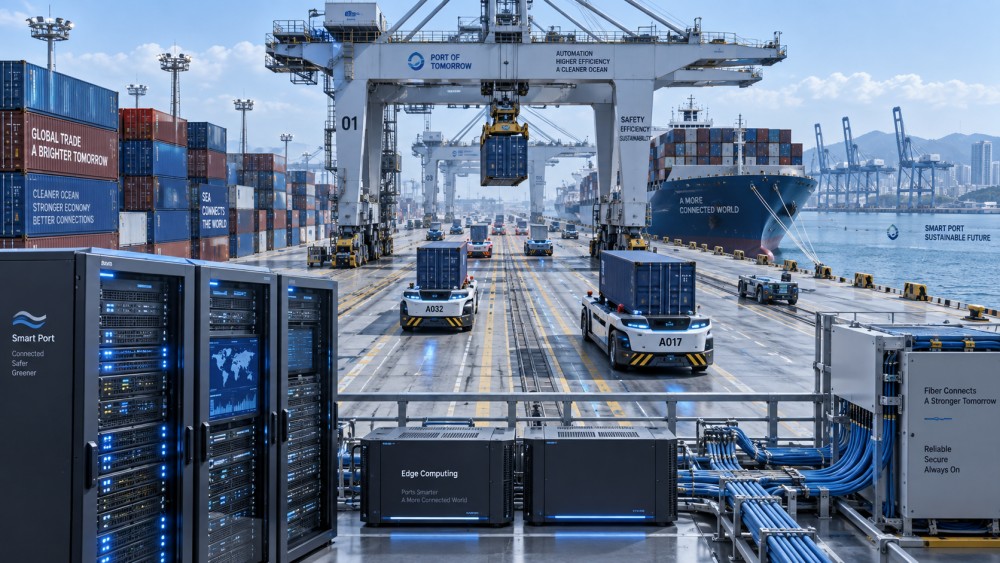
Before comparing suppliers, buyers should document the terminal’s current technology landscape, including handling equipment, control systems, network infrastructure, maintenance software, and operational applications.
Many smart port projects fail to meet expectations because suppliers are evaluated against an ideal future architecture rather than the terminal’s actual installed base.
Terminals commonly operate mixed fleets from different manufacturers, with equipment commissioned across several decades and supported by multiple automation or electrical contractors.
A supplier should demonstrate how its platform connects to legacy programmable logic controllers, crane management systems, terminal operating systems, and newly deployed sensor networks.
Ask whether integration depends on proprietary gateways, undocumented interfaces, custom code, or vendor-controlled cloud services that may complicate future expansion.
Open standards do not eliminate integration work, but they reduce the risk that one supplier becomes the permanent owner of critical operational data.
Buyers should request an interface inventory showing protocols, data owners, refresh rates, failure modes, and responsibilities for every planned system connection.
This inventory should cover operational technology protocols, application programming interfaces, message brokers, industrial Ethernet networks, and links to enterprise resource planning systems.
A credible supplier will identify integration constraints early, including unsupported legacy controllers, inconsistent equipment telemetry, poor network coverage, and incomplete asset data.
If a supplier promises seamless integration without reviewing site drawings, equipment registers, software versions, and communication architecture, procurement teams should treat that claim cautiously.
Test Whether the Architecture Supports Interoperability
Interoperability determines whether a smart port investment can evolve as throughput requirements, automation levels, equipment fleets, and commercial priorities change over time.
Procurement teams should ask suppliers to explain their architecture in practical terms, separating device connectivity, edge computing, control logic, data storage, analytics, and user applications.
This separation matters because terminals need freedom to replace a sensor vendor, upgrade an automated crane subsystem, or introduce new planning tools.
A modular architecture allows individual components to be improved without requiring a disruptive replacement of the entire terminal automation environment.
Examine whether the supplier supports recognized industrial standards such as OPC UA, MQTT, REST APIs, IEC 62443-aligned practices, and common database export methods.
Standards alone are insufficient, however, because a supplier must also prove that its implementation has worked with equipment and systems similar to yours.
Request reference architectures from comparable terminals, preferably involving multiple original equipment manufacturers, phased automation projects, and active brownfield operating conditions.
Buyers should also determine whether data remains accessible when the contract ends, including event histories, equipment condition data, performance records, and configuration documentation.
Data portability should be specified contractually, with clear export formats, ownership rights, delivery frequency, and procedures for transitioning to another technology partner.
An interoperable solution gives operators more negotiating power, while a closed architecture can turn routine upgrades into complex vendor-dependent commercial negotiations.
Assess Cybersecurity as an Operational Requirement
Cybersecurity in smart ports is not an isolated information technology concern because connected cranes, gates, vehicles, and remote-control systems directly affect physical operations.
A security incident can interrupt vessel turnaround, stop yard movements, corrupt inventory records, disable equipment visibility, or create unsafe conditions for personnel.
Buyers should require suppliers to define how their solution separates information technology networks from operational technology networks and critical safety-related systems.
Network segmentation, controlled remote access, identity management, patching procedures, logging, backup systems, and incident response processes should be evaluated together.
Do not accept generic cybersecurity certificates as a substitute for project-specific controls addressing the terminal’s actual equipment, operating model, connectivity, and risk profile.
Ask how the supplier manages remote maintenance access, including multifactor authentication, approval workflows, session recording, time-limited permissions, and emergency revocation procedures.
Remote access is often essential for specialized support, but unmanaged access can become a material vulnerability in a continuously operating marine logistics environment.
Suppliers should explain their vulnerability management process, including how they identify affected assets, prioritize fixes, test patches, and avoid interrupting critical operations.
For terminals with autonomous or remotely controlled equipment, assess whether security events can be detected before they compromise movement commands or safety safeguards.
Require clear obligations for breach notification, forensic cooperation, recovery support, and restoration priorities, rather than leaving those responsibilities to general service language.
Evaluate Functional Safety and System Resilience
Security controls protect systems from unauthorized activity, while resilience ensures that terminal operations can continue or recover quickly when equipment, networks, or software fail.
A smart port solution supplier should explain how the platform behaves during network interruptions, cloud outages, sensor failures, database issues, and loss of external connectivity.
For example, equipment may need local fallback modes that preserve safe movement and controlled manual operation when central optimization services become unavailable.
Buyers should distinguish between solutions that improve visibility and solutions that become mandatory for basic operating continuity after deployment.
The more essential a platform becomes, the more important its redundancy design, disaster recovery capability, failover testing, and documented recovery time objectives become.
Request evidence of tested recovery procedures rather than relying solely on architecture diagrams or statements that systems are designed for high availability.
A supplier should identify single points of failure across power supplies, communications networks, edge servers, cloud regions, licenses, databases, and external integration services.
Service continuity planning should also address operational workarounds, defining what terminal teams can do when automated dispatching, equipment monitoring, or optimization functions are unavailable.
Review how alarms are prioritized and presented because excessive alerts can overwhelm operators, while vague alerts can delay response to significant equipment conditions.
Resilience assessment is ultimately a business continuity exercise: buyers need confidence that technology improves terminal performance without creating unacceptable operational dependence.
Scrutinize Implementation Governance and Delivery Capacity
Even technically strong products can underperform when implementation responsibilities, acceptance criteria, schedule dependencies, and operational change management are poorly defined.
Buyers should assess the supplier’s delivery organization, including project managers, automation engineers, cybersecurity specialists, integration architects, commissioning personnel, and local service resources.
Ask which roles are employed directly, which are subcontracted, and how the supplier controls quality across engineering, installation, testing, and handover activities.
A practical delivery plan should divide the project into discovery, design, integration development, factory testing, site commissioning, operational trials, and final acceptance.
Each phase should have measurable outputs, including approved interface specifications, cybersecurity documentation, test results, training records, defect logs, and operational readiness evidence.
Procurement teams should resist vague promises of rapid deployment when the terminal contains complex interfaces, legacy equipment, active operations, or multiple stakeholder groups.
Phased delivery often reduces risk by proving core interfaces and operational workflows before scaling a solution across cranes, yards, gates, or maintenance functions.
Suppliers should explain how they manage cutovers during live operations, including rollback procedures, vessel schedule constraints, equipment access windows, and contingency staffing.
Acceptance testing must reflect real terminal conditions, not only laboratory scenarios, because data latency, weather, radio coverage, operator actions, and peak loads affect performance.
Include operational users in testing decisions, since planners, maintenance teams, crane operators, and control-room staff can identify practical issues early.
Measure Lifecycle Support, Not Just Initial Commissioning
Smart port technology is a long-term operating asset, so supplier support capability should carry as much weight as product functionality during procurement evaluation.
Buyers should ask how support is delivered across time zones, whether local engineers are available, and which incidents can be resolved remotely.
Service-level agreements should define response times, restoration targets, severity classifications, escalation routes, spare parts responsibilities, and reporting requirements in operational language.
A useful agreement distinguishes between acknowledgment time, engineering engagement time, workaround delivery time, and full resolution time for critical incidents.
Review the supplier’s software release policy, including the frequency of updates, compatibility commitments, testing process, support duration, and procedures for version retirement.
Without a transparent upgrade roadmap, terminals may face accumulating technical debt, unsupported operating systems, obsolete hardware, and expensive forced modernization projects.
Training should also extend beyond launch, covering new employees, updated workflows, cybersecurity practices, system administration, and advanced troubleshooting for internal technical teams.
Ask whether the supplier provides operational performance reviews that translate raw system data into recommendations for availability, throughput, energy consumption, and maintenance priorities.
For major terminals, consider requiring periodic resilience drills, cyber incident exercises, and recovery tests to confirm that support arrangements work in practice.
Reliable support reduces downtime risk, but it also helps operators retain knowledge and avoid dependency on external specialists for routine configuration changes.
Compare Commercial Models Through Total Cost and Control
Purchase price is only one part of the commercial decision because integration, licensing, infrastructure, support, upgrades, and change requests can dominate lifecycle cost.
Buyers should build a total cost of ownership model covering implementation services, hardware, subscriptions, communication links, cybersecurity controls, training, maintenance, and future expansion.
Request a pricing schedule that distinguishes fixed deliverables from variable services, especially where interface development, data cleansing, field modifications, or commissioning extensions may occur.
License metrics deserve close attention because charges based on equipment count, transaction volume, users, data retention, or application modules can rise unexpectedly.
Suppliers should disclose what functionality is included in the base offering and what requires optional modules, professional services, cloud capacity, or third-party subscriptions.
Evaluate commercial terms alongside control rights, including data ownership, source-code escrow where appropriate, termination assistance, documentation delivery, and access to configuration tools.
A lower initial bid can become costly if the terminal cannot independently retrieve data, change workflows, connect new equipment, or retain another support provider.
Use scenario-based comparisons, such as adding automated vehicles, integrating a new crane fleet, extending the yard, or migrating selected systems to another platform.
These scenarios reveal whether a supplier’s commercial structure supports growth or converts every operational improvement into an expensive contract change.
The preferred supplier should provide a defensible cost model that links investment to uptime, throughput, labor productivity, energy efficiency, safety, and risk reduction.
Use a Procurement Scorecard That Reflects Operational Risk
A formal scorecard helps procurement teams avoid selecting a smart port solution supplier based solely on presentation quality, brand recognition, or initial pricing.
Weighting should reflect terminal priorities, but integration capability, cybersecurity maturity, resilience, support capacity, delivery experience, and commercial transparency usually deserve significant emphasis.
Technical claims should be scored only after evidence review, including reference calls, architecture documentation, demonstrations, test reports, service records, and project governance materials.
For high-risk functions, buyers should require proof through a pilot, factory acceptance test, site assessment, or controlled integration exercise before contract award.
Reference checks should focus on operational reality: implementation delays, recurring defects, responsiveness during incidents, upgrade experience, and supplier behavior when requirements changed.
Ask references whether the supplier’s project team remained available after go-live, whether documentation was complete, and whether data access matched contractual commitments.
Include terminal operations, engineering, information technology, cybersecurity, finance, maintenance, and legal stakeholders in the final evaluation process.
This cross-functional review prevents decisions that optimize one department’s budget while transferring operational, technical, or contractual risk to another department.
Document assumptions and unresolved risks before award, then convert material supplier commitments into measurable contract obligations rather than informal sales assurances.
A disciplined assessment process creates a stronger foundation for automation, connected equipment management, and intelligent decision-making across the entire port ecosystem.
Conclusion: Choose a Partner That Can Operate at Port Scale
The right smart port solution supplier combines interoperable technology, realistic integration expertise, strong cybersecurity governance, resilient system design, and dependable lifecycle support.
For procurement teams, the best decision is rarely based on the most impressive demonstration or lowest quoted project price.
It is based on verified evidence that the supplier can integrate with existing assets, protect critical operations, recover from disruption, and support future terminal growth.
By using a structured scorecard, demanding project-specific proof, and evaluating lifecycle control, buyers can select solutions that strengthen long-term port performance.
Related News
Terminal Control System Costs: Budgeting Hardware, Integration, and Lifecycle Support
Terminal control systems cost explained: budget hardware, integration, safety, cybersecurity, commissioning, and lifecycle support for resilient terminal operations.

Smart Operations in the Middle East: Where Industrial Investment Is Growing
Smart operations Middle East investment is reshaping ports, industrial corridors, and logistics networks through connected data, automation, resilience, and smarter asset performance.

How to Select Harbor Structures for Quay Walls Under Berthing and Wave Loads
Harbor structure for quay wall selection: evaluate berthing energy, wave loads, soil conditions, durability, and lifecycle risk to build safer, adaptable terminals.

Selecting Smart Terminal Software for Multi-Site Field Service Operations
Smart terminal solutions software helps multi-site field service teams unify asset history, mobile maintenance, integrations, and reporting for safer, faster terminal operations.
How to Specify Heavy-Duty Marine Engineering Equipment for Offshore Projects
Heavy duty marine engineering equipment: learn how to specify reliable offshore assets for safety, uptime, integration, lifecycle cost, and project success.
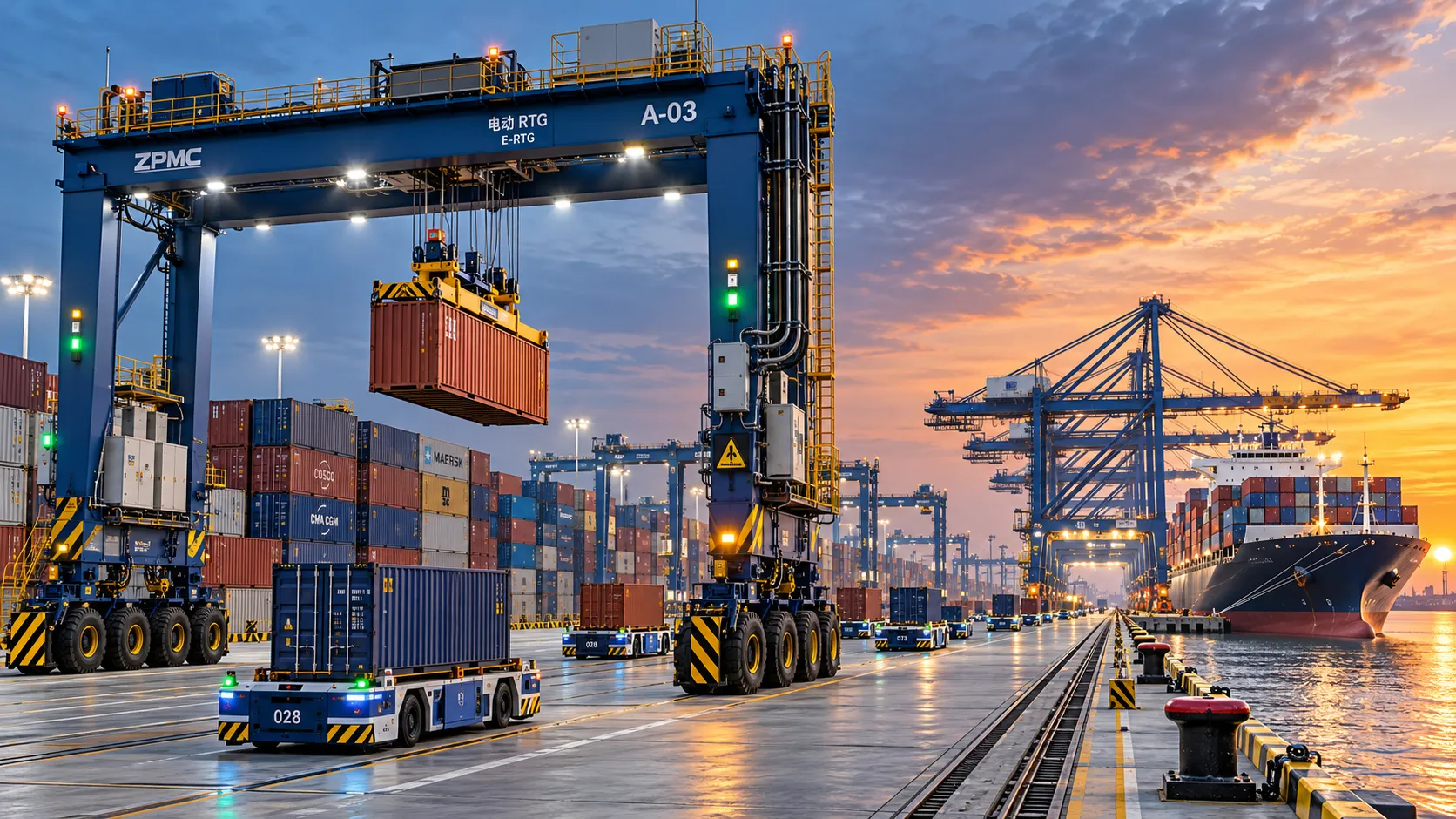
How to Evaluate a Container Handling Equipment Exporter for Port and Yard Projects
Choose the right container handling equipment exporter with a practical guide to compliance, automation, service support, delivery reliability, and lifecycle value.

How to Select Automated Terminal Systems for High-Throughput Cargo Terminals
Automated terminal systems for cargo terminals: learn how to select scalable, resilient solutions that boost throughput, streamline integration, and control lifecycle risk.

How Automated Bulk Cargo Handling Reduces Dust, Spillage, and Port Downtime
Automated cargo handling for bulk cargo cuts dust, spillage, and port downtime through stable flow control, smart sensing, and coordinated recovery.
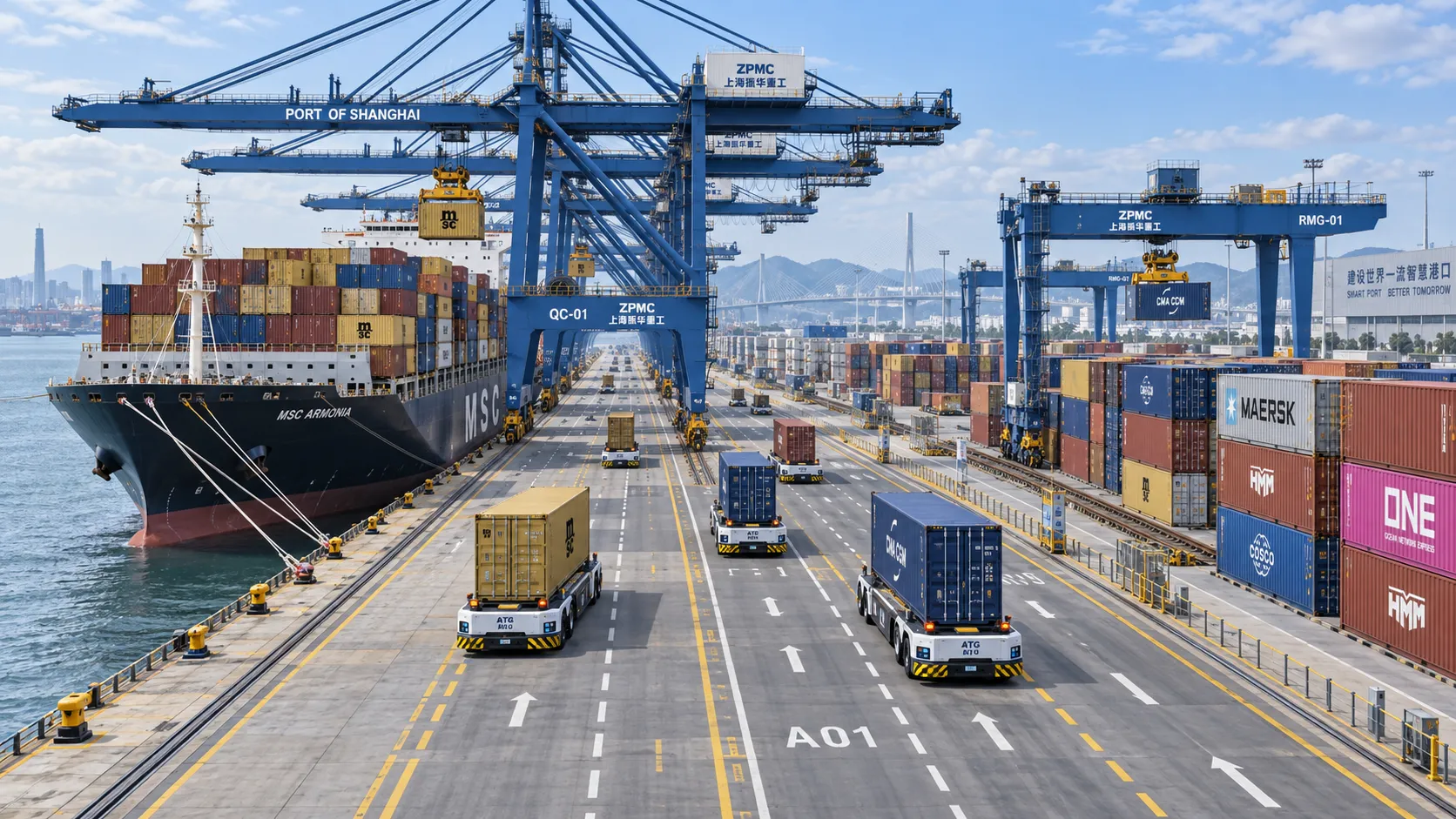
Designing an Integrated Port Handling System for Faster Yard-to-Vessel Transfers
Discover how an integrated port handling system aligns yard, transport, and vessel operations to reduce delays, improve flow reliability, and accelerate transfers.