Related News
- 00
0000-00
Selecting Intermodal Yard Equipment for Fast, Safe Container Transfers - 00
0000-00
How to Select Harbor Structures for Quay Walls Under Berthing and Wave Loads - 00
0000-00
Selecting Smart Terminal Software for Multi-Site Field Service Operations - 00
0000-00
How to Specify Heavy-Duty Marine Engineering Equipment for Offshore Projects - 00
0000-00
How to Select Automated Terminal Systems for High-Throughput Cargo Terminals
Reducing Unplanned Downtime in Port Terminal Logistics Equipment with Condition Monitoring
Condition monitoring reduces unplanned downtime only when it helps a maintenance team make an earlier, better intervention. Installing sensors without defining alarm ownership, inspection actions, and repair windows often creates more data but does not improve availability.
For port terminal logistics equipment, the practical goal is not to predict every possible failure. It is to identify the failure modes that can stop a cargo move, degrade safe operation, or force an urgent call-out: a crane gearbox beginning to wear, a spreader cable circuit becoming unreliable, a conveyor bearing overheating, a hydraulic system losing performance, or an automated vehicle repeatedly generating drive faults.
The best programs start with critical equipment and known failure consequences. They then connect useful signals to a clear maintenance response. That approach protects vessel schedules and yard flow without turning every asset into an expensive monitoring project.
Start with downtime consequences, not a sensor catalogue
Not all terminal assets deserve the same monitoring depth. A failed component on a quay crane working a vessel can have a very different operational effect from a fault on an item that has immediate backup capacity. A maintenance plan should therefore rank equipment by what happens when it becomes unavailable, how quickly it can be recovered, and whether a developing fault can be detected before functional failure.
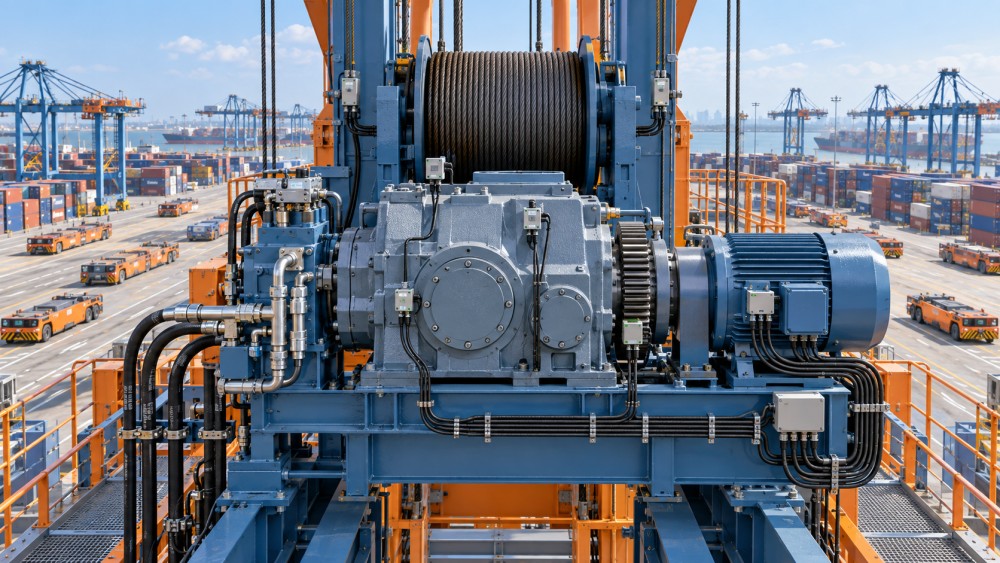
For example, a hoist gearbox, trolley drive, main electrical cabinet, and anti-sway system may be high priorities on a ship-to-shore crane because their failure can take the crane out of service. On a rubber-tyred gantry crane, power supply components, steering systems, drive motors, and spreader connections may deserve close attention where repetitive operating cycles expose emerging defects. For bulk-handling systems, conveyor drive assemblies, pulley bearings, belt alignment, transfer chutes, and dust-control equipment may be more relevant than the same components would be in a container yard.
A useful first question is: what evidence would allow the team to act before this asset stops? If no practical early indicator exists, routine inspection, spare-parts readiness, and recovery procedures may be more valuable than continuous monitoring. Condition monitoring is strongest when failure develops over time and leaves a measurable trace.
Match the monitoring method to the failure mode
“Condition monitoring” is not one technology. Different failure mechanisms produce different signals. Selecting a method because it is widely available, rather than because it fits the component and fault, is one of the most common reasons a program produces weak results.
Continuous sensors are not automatically better than periodic routes. A slowly deteriorating gearbox on a heavily used crane may justify permanent vibration collection. A component that is accessible, stable, and inspected during planned service may be managed effectively with scheduled thermal checks and technician observations. The right choice depends on access, operating duty, fault development speed, and the cost of missing the warning.
Simple signals also have value. Rising motor temperature, longer lift times, repeated inverter trips, increasing hydraulic oil temperature, or a change in brake adjustment frequency can reveal deterioration before a single alarm crosses a fixed limit. Trends are often more informative than isolated readings.
Build a path from signal to maintenance action
An alarm is not a maintenance strategy. Each monitored condition needs an agreed decision path before the system goes live. Without it, teams either ignore alarms because too many are non-actionable, or they stop equipment unnecessarily because no one is confident about the risk.
For each critical measurement, define four points: the normal operating reference, the change that requires review, the person responsible for reviewing it, and the action to take at each escalation level. The action may be as limited as confirming sensor condition and inspecting lubrication, or as significant as scheduling a controlled shutdown and preparing a replacement assembly.
Thresholds should not be copied blindly from generic settings. Port equipment operates under changing loads, ambient temperatures, corrosion exposure, start-stop patterns, and duty cycles. A value that is acceptable at low load may be abnormal during a repeated high-duty cycle, while a short temperature rise after start-up may not justify an intervention. Establishing a baseline for the specific machine, then tracking deviation under comparable operating conditions, gives technicians a more defensible basis for judgment.
Alarm severity must also reflect operational context. A warning on a redundant conveyor drive may allow a planned repair window. The same condition on a bottleneck conveyor or a crane assigned to a critical vessel operation may require a faster response. Condition data should be visible alongside asset criticality, current work orders, spare availability, and operational constraints, not isolated in a separate dashboard.
Use repeat faults to find the real source
Unplanned downtime is often attributed to the component that finally stopped, rather than the condition that caused repeated stress. Replacing a bearing without investigating alignment, contamination, excessive vibration, mounting weakness, or load variation can create a cycle of recurring failure. The same applies to electrical faults that are repeatedly reset without checking cable movement, cabinet cooling, grounding, voltage stability, or communication quality.
When a monitored asset produces recurring alerts, review the fault history with maintenance records and operating events. Look for changes that occurred before the trend began: a new operating pattern, a collision or impact, an altered control setting, a different lubricant, a repair to an adjacent component, or persistent exposure to water and salt spray. The intent is not to create a lengthy investigation for every alert. It is to avoid treating a persistent pattern as a sequence of unrelated incidents.
In automated terminals, this discipline extends beyond mechanical health. Repeated vehicle stops can be caused by a drive issue, but they can also originate in position feedback, charging behavior, wireless coverage, interface timing, or fleet-control logic. Diagnostic data should be reviewed by people who can distinguish equipment faults from system-level conditions. A maintenance team cannot reduce downtime reliably when every interruption is classified as a machine failure.
Where monitoring programs lose credibility
The fastest way to weaken confidence in condition monitoring is to generate alarms that nobody can interpret. False alarms consume attention, and teams eventually learn to dismiss alerts, including the meaningful ones. This commonly happens when sensors are poorly mounted, data is collected at inconsistent operating states, limits are too tight, or the monitored value has no defined maintenance response.
Another mistake is monitoring easy-to-reach components while ignoring difficult but consequential failure points. Sensors are often installed where wiring and installation are convenient. The resulting system may show excellent data quality while missing the mechanisms responsible for service interruptions. Asset criticality and failure history should decide the scope before installation convenience does.
Condition monitoring also cannot compensate for weak fundamentals. Poor lubrication practices, contaminated hydraulic oil, loose electrical terminations, neglected corrosion control, and incomplete inspection records will continue to cause failures. Monitoring should reinforce disciplined maintenance, not become an excuse to reduce basic checks.
Integrate data with the maintenance workflow
Useful monitoring information reaches the team where work is planned. When possible, condition events should be linked to the asset register, inspection history, work orders, and parts records. This lets a technician see whether an abnormal bearing trend follows a recent repair, whether the same fault has appeared before, and whether the required spare is available before equipment is released for service.
That integration does not require a large, fully automated program from day one. A controlled pilot on several high-consequence assets can establish the process: collect the right measurements, validate alerts through inspection, record the confirmed failure mode, and adjust the alert logic. The learning from this pilot is more valuable than a broad installation that cannot be supported by existing maintenance capacity.
Maintenance planners should also reserve controlled intervention windows. Detecting a problem early has limited value if the only options are to keep operating until failure or stop the asset immediately. A planned window, prepared labor, confirmed parts, and a defined test procedure turn a warning into reduced downtime.
Choose priorities that fit the terminal’s operating reality
A practical rollout usually begins with assets that combine high operational consequence, recurring faults, expensive recovery, and detectable deterioration. This may include critical crane drives, hoist machinery, conveyor systems, power-distribution equipment, hydraulic units, or automated transport subsystems. A recent failure history can help identify candidates, but it should be reviewed carefully: frequent faults may point to a process issue that sensors alone cannot solve.
Equipment age is not enough to set priorities. A newer machine working hard in a corrosive environment or under repeated peak demand may need closer attention than an older unit with stable duty and strong inspection history. Likewise, monitoring an asset with abundant standby capacity may provide less operational value than improving the condition visibility of a single bottleneck machine.
For terminals combining conventional handling equipment with automation, the monitoring scope should include the interfaces between mechanical assets and control systems. A healthy motor is of little use if the crane cannot receive commands or an automated vehicle cannot complete a route. PS-Nexus tracks developments across heavy terminal gear, automated container handling, control systems, and digital pump monitoring, reflecting the fact that equipment availability increasingly depends on both physical condition and operational data quality.
What to confirm before expanding the program
- Identify the equipment failures that have the largest effect on cargo flow, safety, recovery effort, or vessel commitments.
- Confirm that each selected failure mode has an observable condition change before failure.
- Choose a sensing or inspection method that can distinguish meaningful deterioration from normal duty-cycle variation.
- Assign responsibility for daily or scheduled review, escalation, and final maintenance decisions.
- Set practical response actions, including inspection tasks, repair criteria, spare preparation, and return-to-service checks.
- Review every confirmed alert and missed failure to improve baselines, alarm logic, and inspection routes.
The measure of success is not the number of sensors installed or alarms issued. It is whether emerging faults are identified early enough to schedule the right work, prevent secondary damage, and return the asset to reliable service without disrupting terminal operations. When condition monitoring is designed around those decisions, it becomes a working part of maintenance control rather than another disconnected source of data.
Related News
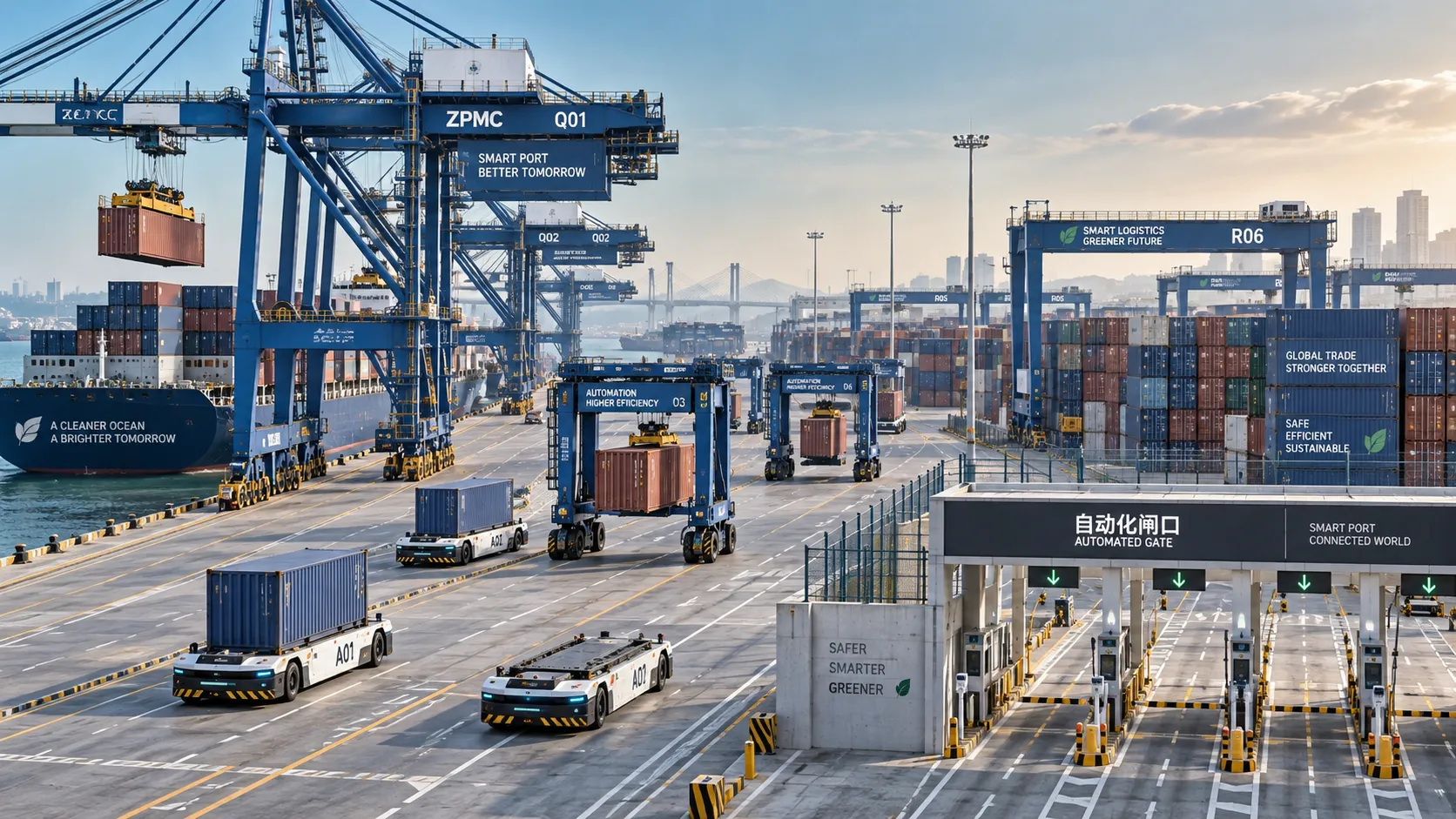
Automated Port Systems in Latin America: Investment Priorities for Container Terminals
Automated port systems Latin America: discover investment priorities for container terminals, from smart gates and remote cranes to resilient digital control layers.
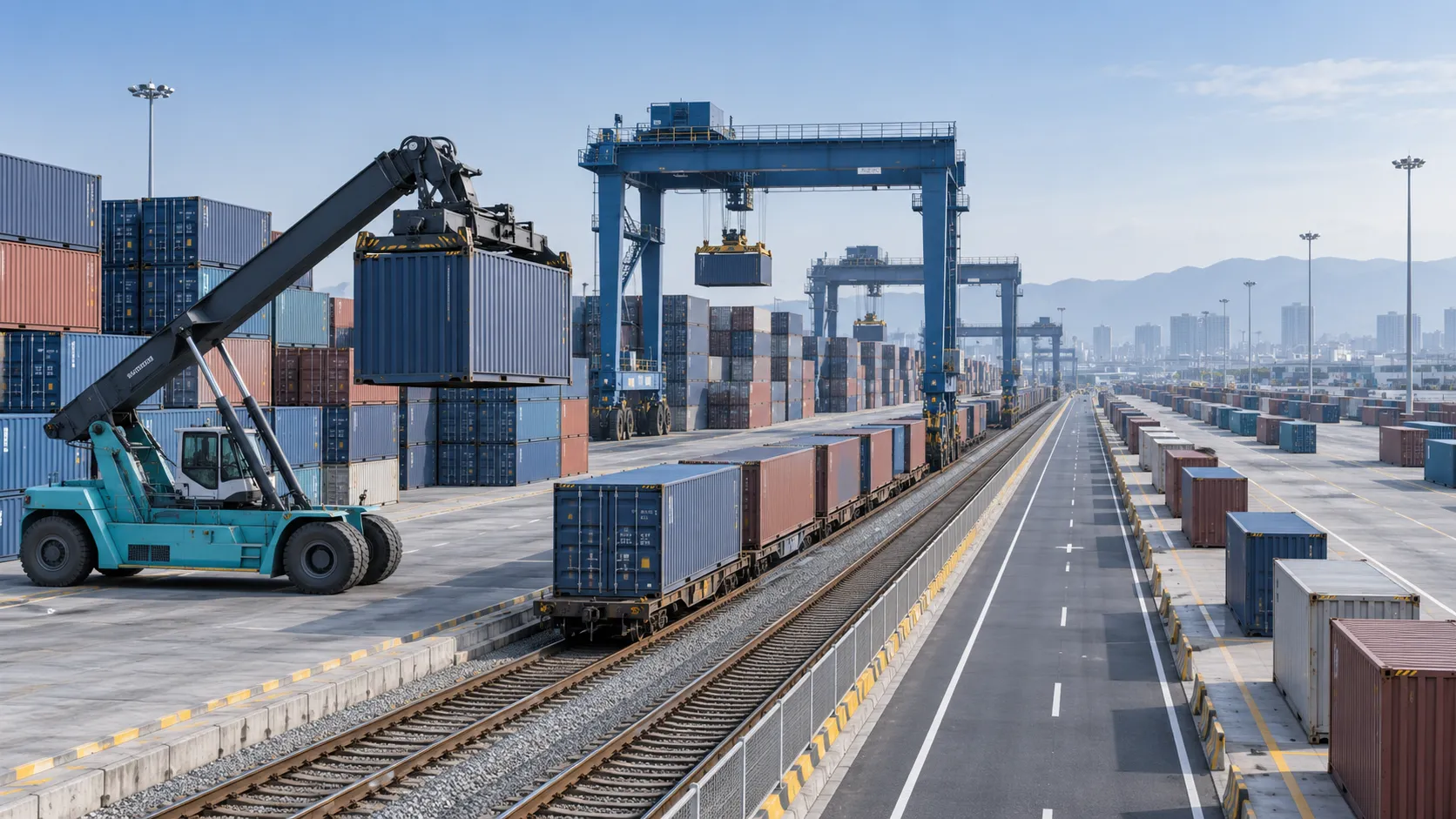
Selecting Intermodal Yard Equipment for Fast, Safe Container Transfers
Container handling equipment for intermodal yards: compare reach stackers, RTGs, automation, safety planning, and lifecycle costs to build faster, safer container flow.
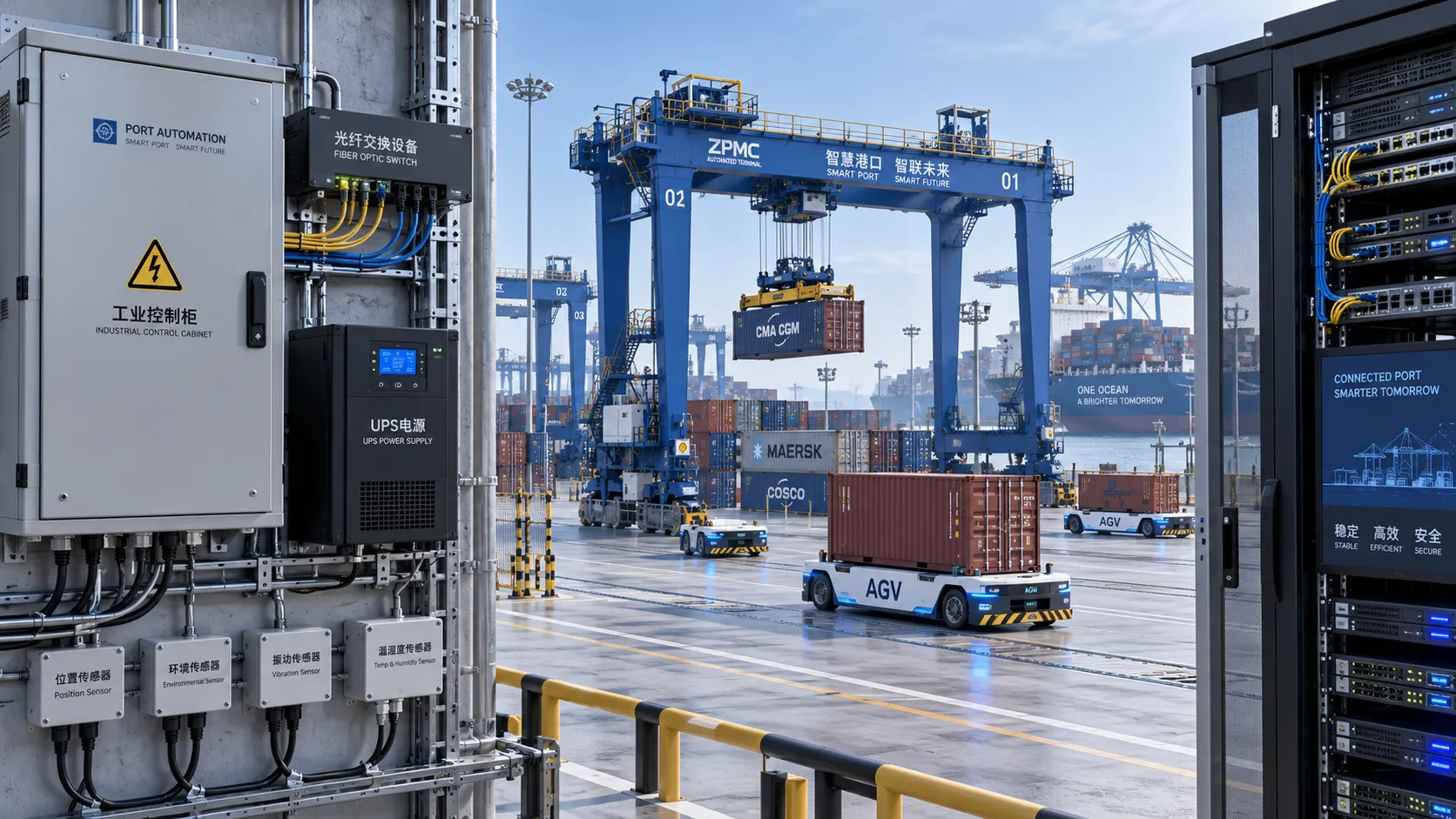
Terminal Control System Costs: Budgeting Hardware, Integration, and Lifecycle Support
Terminal control systems cost explained: budget hardware, integration, safety, cybersecurity, commissioning, and lifecycle support for resilient terminal operations.
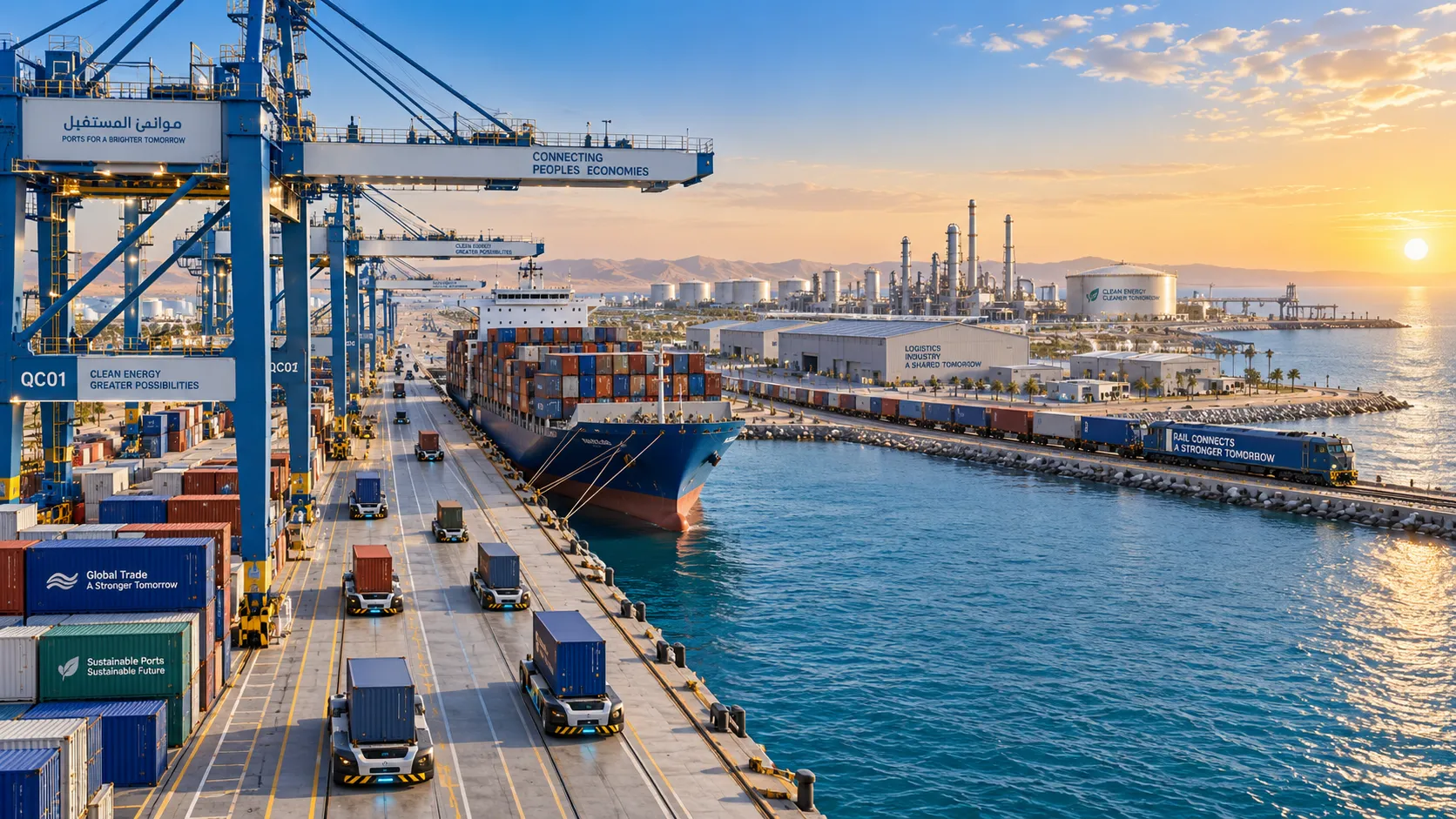
Smart Operations in the Middle East: Where Industrial Investment Is Growing
Smart operations Middle East investment is reshaping ports, industrial corridors, and logistics networks through connected data, automation, resilience, and smarter asset performance.
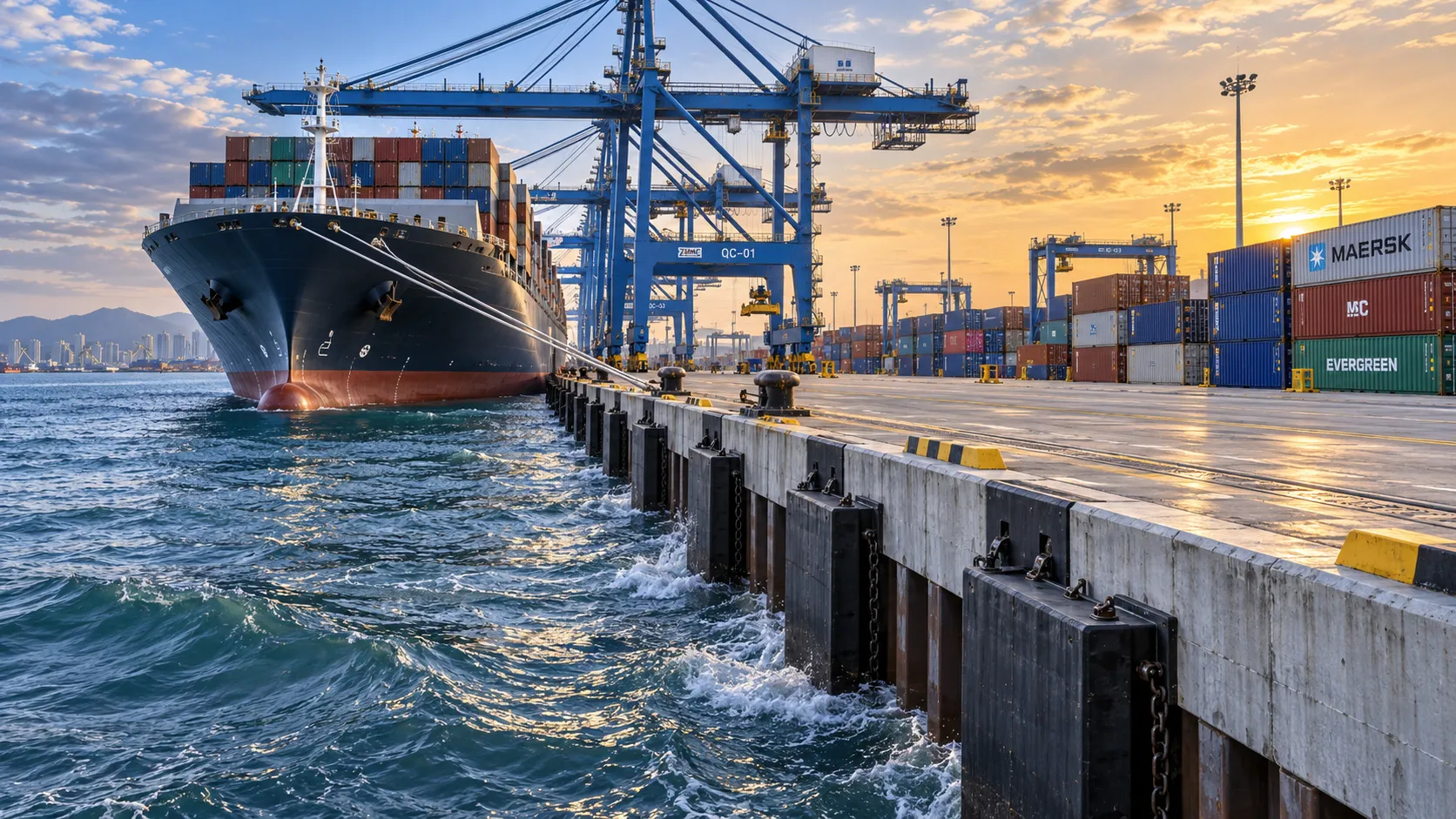
How to Select Harbor Structures for Quay Walls Under Berthing and Wave Loads
Harbor structure for quay wall selection: evaluate berthing energy, wave loads, soil conditions, durability, and lifecycle risk to build safer, adaptable terminals.
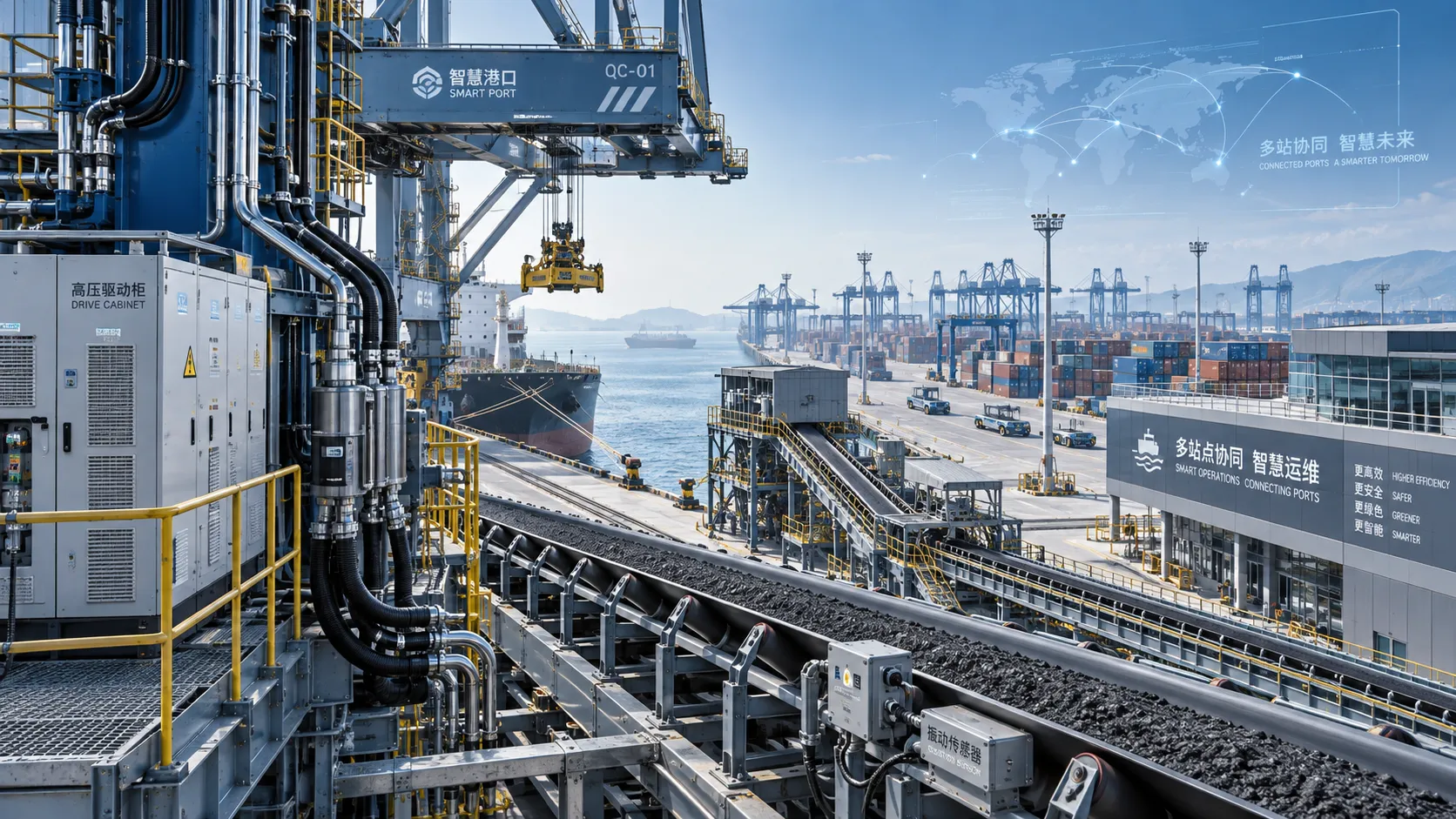
Selecting Smart Terminal Software for Multi-Site Field Service Operations
Smart terminal solutions software helps multi-site field service teams unify asset history, mobile maintenance, integrations, and reporting for safer, faster terminal operations.
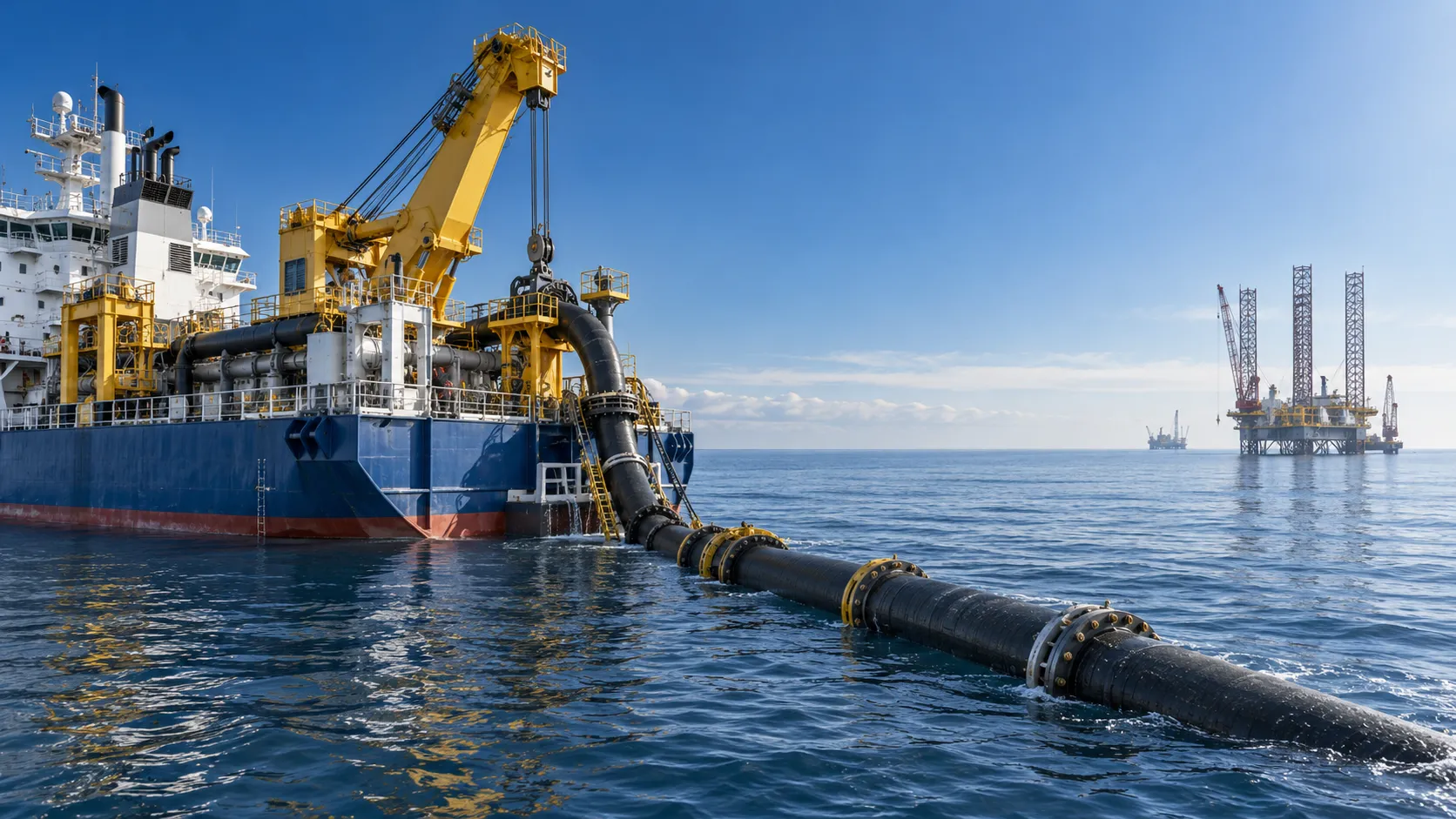
How to Specify Heavy-Duty Marine Engineering Equipment for Offshore Projects
Heavy duty marine engineering equipment: learn how to specify reliable offshore assets for safety, uptime, integration, lifecycle cost, and project success.
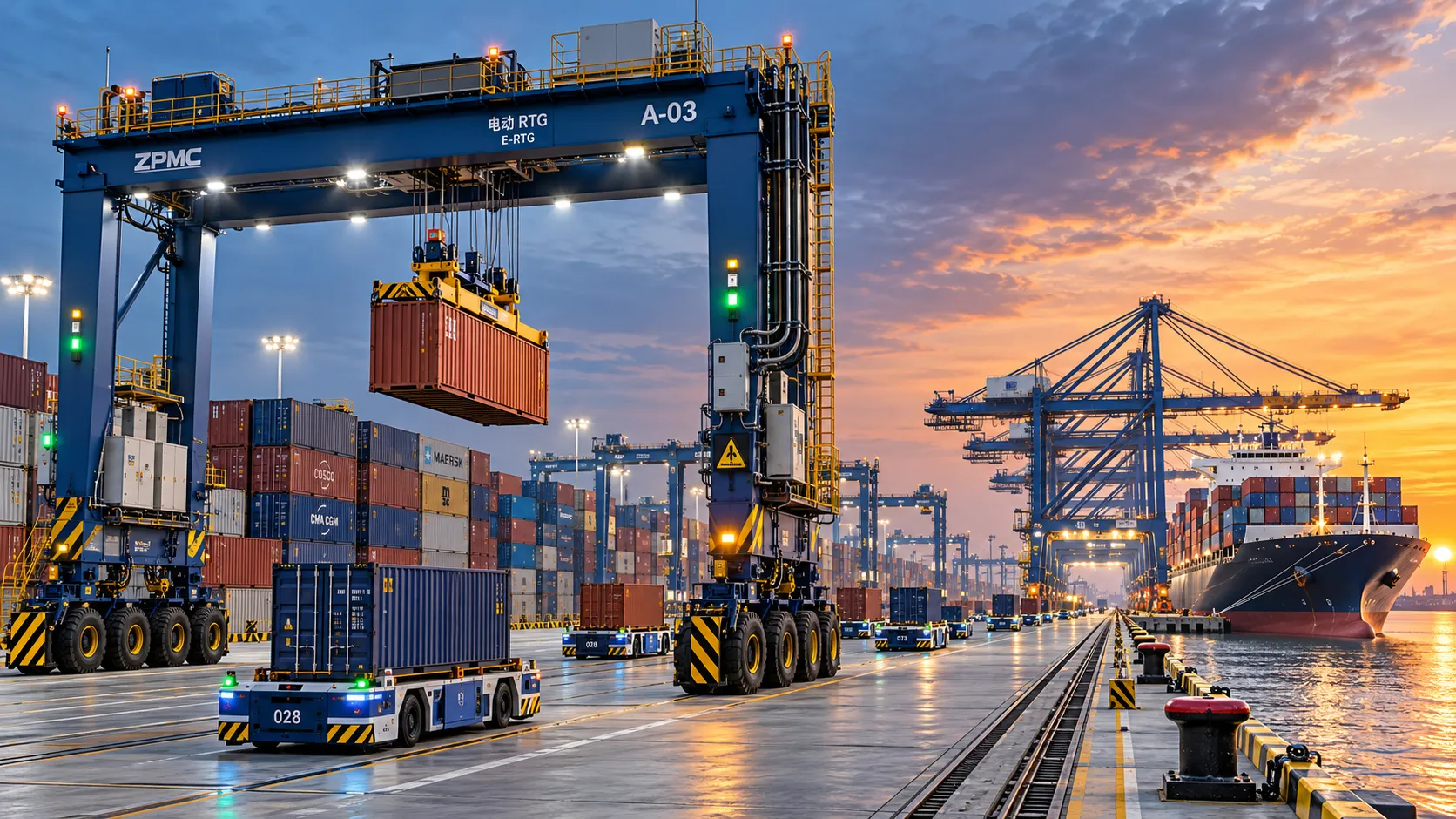
How to Evaluate a Container Handling Equipment Exporter for Port and Yard Projects
Choose the right container handling equipment exporter with a practical guide to compliance, automation, service support, delivery reliability, and lifecycle value.
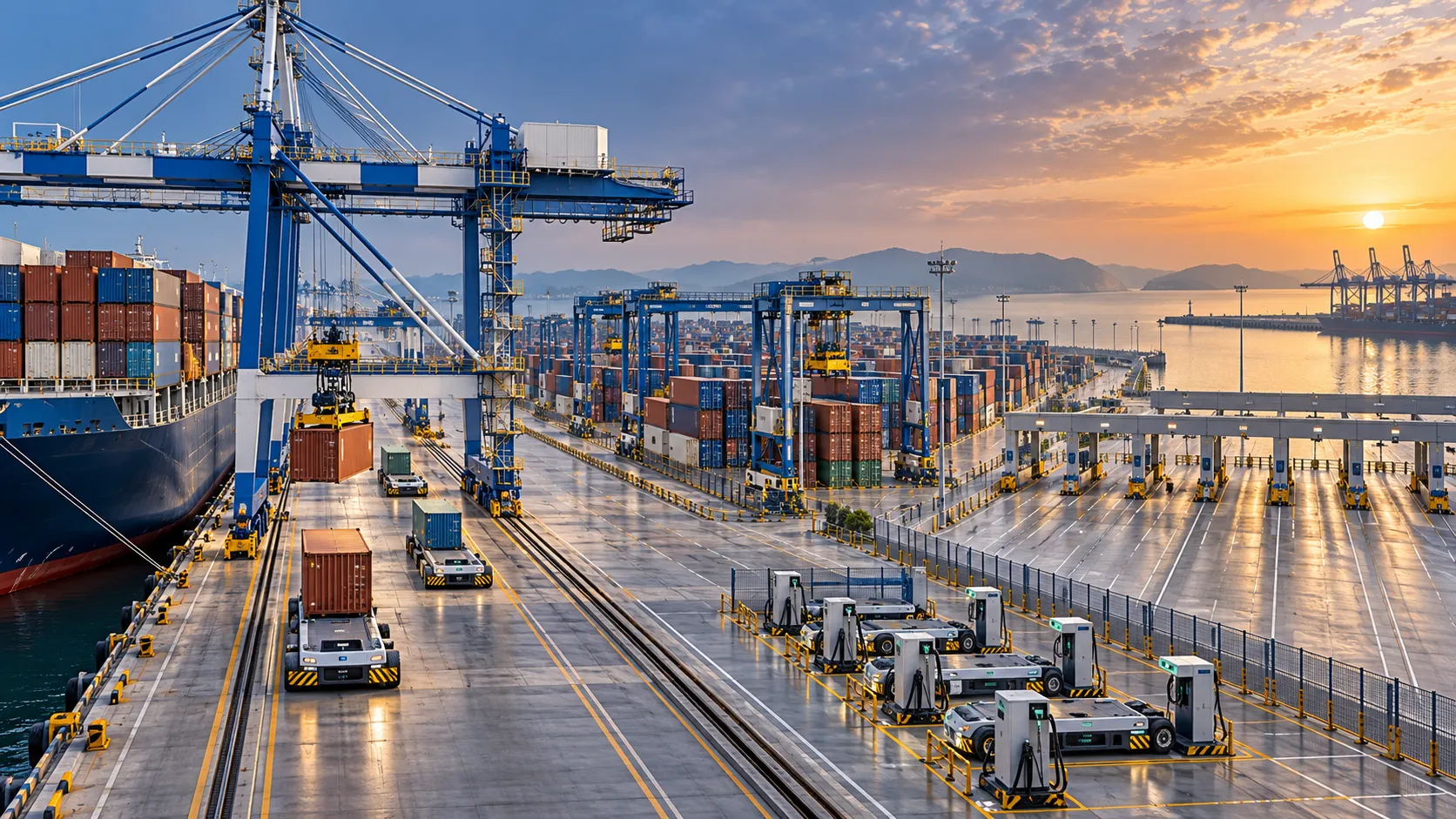
How to Select Automated Terminal Systems for High-Throughput Cargo Terminals
Automated terminal systems for cargo terminals: learn how to select scalable, resilient solutions that boost throughput, streamline integration, and control lifecycle risk.