Related News
- 00
0000-00
How to Specify a Quay Crane for Container Terminals by Vessel Size and Throughput? - 00
0000-00
Which Bulk Handling Equipment Suits High-Moisture Cargo? - 00
0000-00
Terminal Automation Technologies That Raise Container Throughput Without Yard Disruption - 00
0000-00
Planning Offshore Dredging Operations: Key Risks, Methods, and Project Controls - 00
0000-00
Where Do Automated Guided Vehicles Deliver the Fastest Warehouse Gains in the Middle East?
How to Verify That Port Terminal Equipment Is ISO Compliant
A terminal may receive a supplier package that includes an ISO certificate, a declaration of conformity, and a polished inspection report, yet still have unresolved safety or operational gaps. This happens because “ISO compliant” is not a single status that automatically applies to every crane, conveyor, automated guided vehicle, ship loader, or dredging unit. A certificate can confirm a manufacturer’s management system while saying very little about whether a specific machine, configuration, control system, or retrofit is suitable for service at a particular berth or yard.
To verify that port terminal equipment is ISO compliant, start by identifying the exact standards that apply to the equipment and intended duty, then confirm that the supplied evidence covers the delivered configuration—not merely a product family or factory process. The verification should connect four things: applicable standards, traceable technical documentation, inspection and test evidence, and the actual equipment installed or accepted at the terminal.
Do not treat an ISO certificate as proof of machine conformity
The most frequent error is accepting an ISO 9001 certificate as evidence that equipment itself complies with ISO technical or safety standards. ISO 9001 concerns the manufacturer’s quality-management system. It can indicate that the supplier has controlled processes for design, purchasing, production, nonconformity handling, and document management. It does not prove that a particular quay crane has been risk assessed, that a spreader’s safety interlocks work, or that an automated yard vehicle can stop safely within its specified operating environment.
The same distinction applies to ISO 14001 and ISO 45001. These may be relevant when evaluating the supplier’s environmental or occupational health and safety management practices, but they are not product certificates for terminal equipment. A technical evaluator should ask a direct question: Which standard is this document certifying, what is its scope, and does the scope include the delivered machine?
There is also no universal “ISO certificate” for all port equipment. Compliance is generally established against a set of standards selected according to machine type, lifting function, control architecture, operating conditions, and jurisdictional requirements. A credible conformity package explains that selection rather than relying on broad claims such as “fully ISO certified.”
Begin with an equipment-specific standards map
Before reviewing documents, define the machine boundary. A ship-to-shore crane, for example, includes the steel structure, hoisting and trolley mechanisms, electrical drives, controls, anti-collision devices, operator station or remote-control interface, spreader, communications equipment, and safety-related sensors. A supplier may have assessed only the crane structure or only the lifting appliance, while the terminal is receiving a machine with automated positioning, optical systems, and integration to a terminal operating system.
Prepare a standards map that links each major subsystem to the applicable requirements. The exact list depends on the equipment and local legal framework, but a review may include the following categories:
- Risk assessment and machinery safety: ISO 12100 is commonly used for hazard identification, risk estimation, and risk reduction. It helps determine whether the supplier has addressed foreseeable use, misuse, maintenance access, emergency situations, and human-machine interaction.
- Safety-related control systems: ISO 13849 may be relevant where guards, emergency stops, overspeed protection, interlocks, anti-collision functions, or automated movement depend on control-system performance. Functional safety requirements may also involve IEC standards, depending on architecture and local practice.
- Cranes and lifting appliances: Equipment with lifting functions may require review against ISO crane standards addressing classification, inspection, wire ropes, safe use, and condition monitoring. ISO 4301, ISO 4309, ISO 9927, and ISO 12482 are examples that can become relevant depending on the application.
- Electrical equipment and enclosure protection: Electrical panels, cables, motors, control cabinets, and field devices must be considered against relevant electrical safety and ingress-protection requirements. Marine salt exposure, washdown, condensation, dust, vibration, and electromagnetic interference can materially affect suitability.
- Automation, remote operation, and cyber interfaces: Automated cranes, AGVs, ASC systems, and remote-control stations need documentation for safety zones, communication loss response, manual override, degraded modes, and interface responsibilities.
- Environmental and duty conditions: Wind, seismic exposure, corrosion category, ambient temperature, humidity, rail alignment, pavement loading, bulk material characteristics, and vessel interface conditions can change whether a nominally compliant design is fit for the terminal.
The purpose is not to create the longest possible standards list. It is to prevent a mismatch between the claimed compliance basis and the actual equipment. A bulk conveyor designed for dry, predictable material handling has a different risk profile from a mobile harbor crane operating near saltwater, high winds, and mixed traffic. A dredging pump system may require particular attention to abrasion, pressure containment, guarding, access for maintenance, and alarms for abnormal operating conditions.
Check the scope, revision, and identity of every document
Once the relevant standards are identified, examine the evidence package as a traceability exercise. Documents should identify the manufacturer, machine model, serial number or unique equipment identifier, contract configuration, and applicable revision. A generic manual that refers to a model range is useful, but it is not enough when the delivered unit includes nonstandard lifting gear, alternate drives, a different power supply, additional automation functions, or site-specific structural modifications.
Start with the certificate itself. Verify the issuing body, certificate number, validity dates, stated scope, legal entity, and production location. If the certificate is for a parent organization while the machine was built by a separate fabrication or integration entity, request clarification. A certificate may be legitimate yet not cover the organization responsible for the final assembly, control-system integration, or commissioning.
Then compare all documents against the commercial and technical specification. The model name alone is not a reliable identifier. The review should reconcile the equipment serial number, rated capacity, duty classification, boom or outreach dimensions, lifting height, drive arrangement, spreader type, control software version, and installed options. Any difference should be recorded as a deviation requiring disposition rather than informally assumed to be equivalent.
Read the risk assessment for unresolved assumptions
A risk assessment is often the most revealing document in the package. It should not merely list broad hazards such as crushing, falling loads, electrical shock, and noise. It should show how the machine’s design reduces those hazards and which residual risks remain for the terminal operator to control.
For a quay crane, look for treatment of trolley travel, skewing, boom movement, container swing, spreader lock verification, landside and waterside collision zones, high-wind parking, access to elevated machinery, emergency evacuation, and safe maintenance isolation. For automated equipment, the assessment should address people entering controlled areas, object detection limits, degraded sensor operation, loss of positioning, communication interruption, and the transition between automated and manual modes.
Pay close attention to assumptions assigned to the user. A supplier may state that a safety function depends on restricted access, marked exclusion zones, adequate lighting, trained personnel, a defined radio network, or third-party traffic controls. These are not necessarily defects, but they must be realistic for the terminal. A machine cannot be considered fully acceptable if its compliance depends on site controls that have not been designed, installed, or assigned to an accountable party.
Confirm that safety functions have been tested, not just designed
Drawings and control narratives explain intended behavior. They do not prove that a safety function performs correctly in the installed machine. Request test records for functions that prevent or mitigate credible high-consequence events.
Examples include emergency-stop circuits, overspeed and overload protection, upper and lower hoist limits, anti-collision systems, travel-end limits, wind alarms, brake testing, interlocked access gates, emergency lowering arrangements, fire detection where fitted, and safe shutdown following loss of communications. For automated machines, test evidence should cover obstacle detection boundaries, protective-field behavior, response to sensor faults, controlled stopping, restart authorization, manual intervention, and fail-safe behavior after network loss.
Tests should state the equipment identity, procedure revision, instruments used, acceptance criteria, actual observations, and disposition of failures. Calibration certificates for measurement instruments matter when test results depend on load, speed, distance, pressure, electrical values, or alignment. A signed commissioning sheet without methods or results may demonstrate that an activity occurred, but it is weak evidence of conformity.
Factory acceptance is not the same as site acceptance
Factory acceptance testing can confirm fabrication quality, basic movement, panel wiring, software logic, and selected functional tests before shipment. It cannot fully replicate site conditions. Rail-mounted cranes need alignment and travel verification on installed rails. Automated yard equipment needs its actual geofencing, communications coverage, traffic rules, and interfaces. Bulk-handling machinery may behave differently with the intended material, moisture level, feed pattern, and dust-control arrangement.
Site acceptance testing should therefore be planned as a separate verification stage. The terminal should define operational scenarios that reflect real use, including normal cycles, emergency stops, recovery after interruption, maintenance isolation, alarm handling, reduced-speed modes, and safe response to abnormal conditions. The goal is not to force a machine into unsafe testing; it is to verify that stated controls work under representative conditions.
Inspect the machine against the dossier
Document review must be followed by a physical walkdown. The evaluator should compare nameplates, labels, guards, access systems, limit switches, control panels, cable routes, load indicators, safety signage, and installed options against approved drawings and manuals. This is especially important after transport, erection, commissioning changes, or field retrofits.
Physical inconsistencies often reveal where compliance has drifted. A removed guard, bypassed interlock, unlabelled isolator, missing access gate, substituted component, damaged cable gland, or undocumented software update can invalidate assumptions made in the original assessment. In marine terminal environments, inspect corrosion protection, drainage, enclosure sealing, lubrication access, walkway surfaces, handrails, lighting, and the condition of safety-critical fasteners or rope systems. These details may appear minor in isolation but can affect availability and safe maintenance over the equipment’s service life.
For lifting equipment, verify rated-capacity markings, reeving arrangement, hook or spreader identification, load-control components, rope inspection records, and evidence that periodic inspection responsibilities have been handed over. Standards related to crane inspection and maintenance support ongoing safe use, but the terminal still needs a practical inspection regime, competent personnel, and clear criteria for removing equipment from service.
Review modifications, interfaces, and software changes separately
A machine can be compliant at delivery and become nonconforming after a modification. Common changes include installing a different spreader, adding anti-sway functions, altering travel speeds, replacing a programmable controller, integrating remote operation, revising collision-avoidance zones, or connecting the machine to a new terminal control platform. Each change may affect the original risk assessment and test basis.
Require a change-control record that identifies what changed, why it changed, which hazards were reassessed, which standards were reviewed, and what validation was performed. Software deserves the same discipline as mechanical alterations. A revised parameter set may change braking distance, load limits, alarm thresholds, stopping logic, or access permissions without any visible change to the machine.
Interfaces also need defined responsibility. The equipment supplier may be responsible for a crane’s local safety functions, while the terminal or system integrator controls geofencing, dispatch commands, radio infrastructure, or access management. The boundary should be documented. A declaration that excludes all external interfaces may be reasonable only when the terminal has evidence that those interfaces are assessed and validated elsewhere.
Decide whether the evidence supports acceptance
Acceptance should be based on whether the conformity claim is complete, traceable, and consistent with the delivered equipment and intended use. Missing documents are not always equal in severity. An outdated brochure is usually an administrative issue; an absent risk assessment for automated travel, an untested emergency-stop circuit, or an unverified overload-protection function is a material acceptance concern.
When gaps are found, record them as specific, closeable actions: identify the required standard or contractual requirement, describe the missing or inconsistent evidence, assign responsibility, define the evidence needed for closure, and state whether the issue affects commissioning, restricted operation, or final acceptance. Avoid accepting vague assurances that documents will be “updated later” without a controlled revision and verification path.
The strongest conclusion is rarely that a supplier is simply “ISO compliant.” It is that a defined item of port terminal equipment has been evaluated against identified applicable requirements; its documentation, tests, installation, and operating limits are traceable; and any residual risks or open actions are visible to the party responsible for safe operation. That is the level of evidence needed before equipment is relied upon in a critical terminal environment.
Related News
Smart Port Systems in Southeast Asia: Investment Priorities and Adoption Barriers
Smart port systems Southeast Asia: discover investment priorities, adoption barriers, and practical steps to build resilient, connected, high-performing terminals.

How to Evaluate Terminal Efficiency Solution Suppliers for High-Throughput Operations
Choose a terminal efficiency solutions supplier with confidence. Explore proven criteria for throughput, integration, lifecycle cost, safety, and reliable delivery.

How to Specify a Quay Crane for Container Terminals by Vessel Size and Throughput?
Quay crane for container terminals: learn how to match outreach, lift height, capacity, automation, and cycle performance to vessel size and throughput goals.
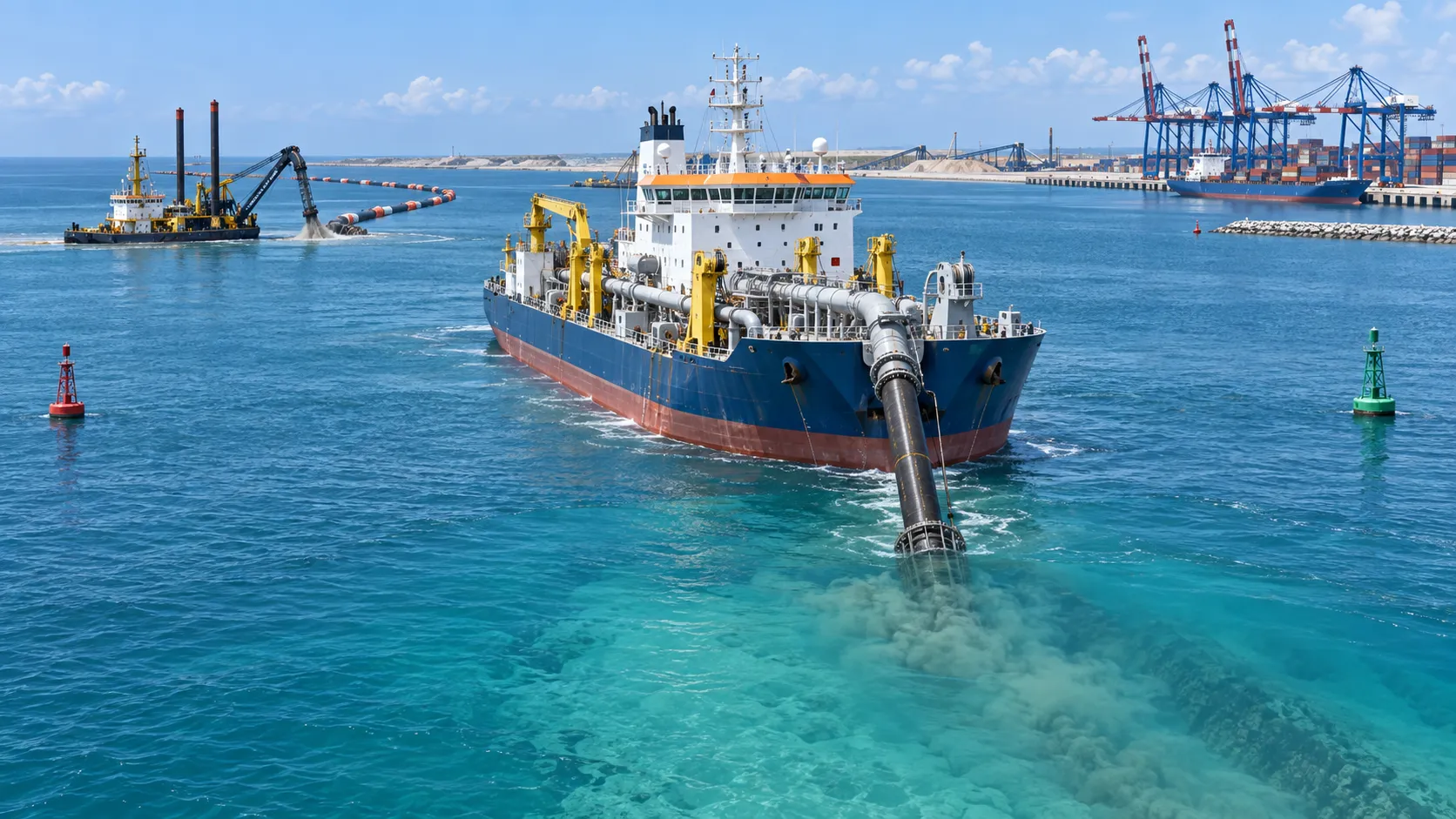
What Dredging Equipment Is Needed for Channel Deepening?
What dredging equipment is needed for channel deepening? Explore dredgers, pipelines, survey tools, and planning strategies for safer, more efficient port access.
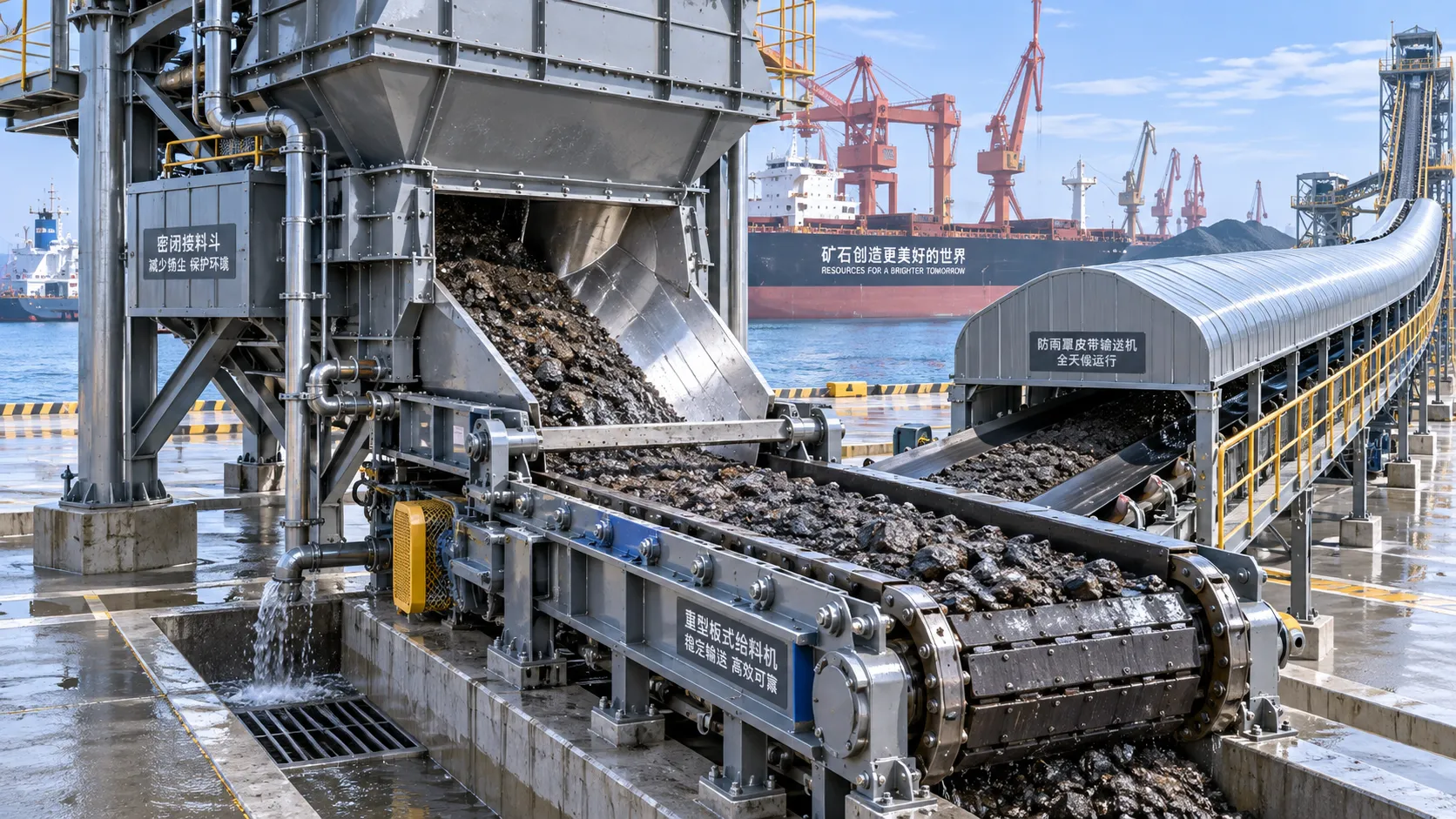
Which Bulk Handling Equipment Suits High-Moisture Cargo?
Which bulk handling equipment suits high-moisture cargo? Compare belt, apron, screw, drag, and slurry systems for reliable flow, less carryback, and higher terminal uptime.
How Can Port Equipment Lead-Time Risk Be Managed?
How can port equipment lead-time risk be managed? Explore practical strategies to control critical paths, suppliers, transport, site readiness, and commissioning delays.

Terminal Automation Technologies That Raise Container Throughput Without Yard Disruption
Terminal automation technology that increases container throughput without disrupting yard flow. Explore smarter integration, resilient workflows, and phased deployment strategies.

Middle East Port Automation: Key Market Drivers, Projects, and Investment Risks
Port automation systems Middle East: explore market drivers, flagship projects, integration challenges, and investment risks shaping smarter, resilient terminals.
Planning Offshore Dredging Operations: Key Risks, Methods, and Project Controls
Offshore dredging operations demand smart planning. Explore key risks, proven methods, environmental controls, and project strategies for reliable delivery.