Related News
- 00
0000-00
How to Evaluate a Bulk Handling Equipment Exporter for Port and Plant Projects - 00
0000-00
How to Evaluate a Yard Mobility Solutions Manufacturer for High-Throughput Sites - 00
0000-00
How to Evaluate a Container Handling Equipment Exporter for Port and Yard Projects - 00
0000-00
Selecting Port and Terminal Cargo Handling Equipment by Cargo Mix and Duty Cycle - 00
0000-00
How to Assess a Smart Port Solution Supplier for Integration, Security, and Support
How to Evaluate a Bulk Handling Equipment Exporter for Port and Plant Projects
How to Evaluate a Bulk Handling Equipment Exporter for Port and Plant Projects
Selecting a bulk handling equipment exporter is a project-risk decision, not simply a sourcing exercise. The lowest initial quotation can become expensive when equipment underperforms, arrives late, or lacks service support.
For port terminals, power plants, mines, cement facilities, and fertilizer operations, handling systems directly influence throughput, operating cost, safety, and contractual performance commitments. Procurement teams need a disciplined exporter evaluation framework.
The strongest suppliers combine proven engineering, credible export execution, transparent technical documentation, lifecycle support, and realistic delivery control. Buyers should evaluate these areas before comparing commercial terms or final purchase prices.
What Procurement Teams Are Really Trying to Solve
Buyers searching for a bulk handling equipment exporter usually need confidence that a supplier can deliver operationally suitable machinery across borders, under demanding project schedules and site-specific engineering conditions.
They are rarely purchasing an isolated machine. They may be sourcing conveyors, ship loaders, reclaimers, stackers, hoppers, feeders, crushers, dust-control systems, or integrated material handling lines.
Each component must work with civil structures, marine interfaces, electrical infrastructure, automation platforms, environmental controls, and downstream production assets. A technically acceptable machine can still create project-wide integration problems.
Procurement professionals also worry about unclear responsibilities. When several suppliers are involved, failures often occur at equipment boundaries, including transfer chutes, control signals, foundations, cable interfaces, and performance guarantees.
Therefore, the central question is not whether an exporter can manufacture bulk equipment. It is whether the exporter can manage the engineering, documentation, logistics, commissioning, and support responsibilities attached to the project scope.
For major port and plant investments, this assessment should include technical, commercial, legal, operational, and service stakeholders. Purchasing cannot reliably evaluate a complex exporter relationship through price analysis alone.
Start With Application Fit, Not the Product Catalogue
A broad catalogue may indicate manufacturing capacity, but it does not prove that the exporter understands your application. Begin by defining the operating conditions that actually drive equipment design and reliability.
Material characteristics are fundamental. Buyers should identify bulk density, particle size, moisture level, abrasiveness, corrosiveness, flow behavior, temperature, dust generation, and potential for degradation or spontaneous combustion.
For example, coal, iron ore, grain, clinker, sulfur, biomass, and fertilizer require different belt selections, chute designs, sealing arrangements, cleaning systems, and safety measures. Generic specifications often conceal expensive design gaps.
Operating duty should be equally clear. Ask whether the system must run continuously, seasonally, intermittently, or at peak campaign rates. Required availability and maintainability should be defined before supplier comparisons begin.
In port projects, vessel size, berth geometry, tidal conditions, loading rates, stockyard layout, and ship turnaround requirements can materially change the best equipment configuration. Exporters should ask detailed questions about these constraints.
In plant projects, the exporter should understand upstream and downstream process limits. Conveyor capacity alone is insufficient if a transfer point, crusher, storage silo, feeder, or dust-collection unit becomes the bottleneck.
A capable bulk handling equipment exporter will challenge incomplete assumptions constructively. Suppliers that provide immediate quotations without clarifying material data, duty cycles, interfaces, and regulations may be pricing uncertainty rather than solving it.
Assess Engineering Depth and System Integration Capability
Engineering capability is the most important differentiator when equipment will form part of a critical port or plant process. Buyers should evaluate the supplier's design discipline, not only its finished-product references.
Request an explanation of the engineering workflow from concept design through detailed drawings, fabrication, factory testing, shipment, installation support, and commissioning. Clear milestones reveal whether the exporter manages projects systematically.
Technical submissions should include general arrangement drawings, process flow diagrams, load data, equipment lists, utility requirements, electrical architecture, control philosophy, and interface responsibility matrices where relevant.
For structural equipment, review how the supplier handles fatigue loading, wind loads, seismic conditions, corrosion exposure, marine environments, and local design codes. Port equipment often requires more rigorous structural assumptions than inland installations.
For conveyor systems, investigate belt tracking, transfer chute design, impact protection, dust suppression, spillage control, belt cleaning, emergency pull-cord systems, and access arrangements for maintenance personnel.
Automation capability is increasingly essential. The exporter should explain how drives, sensors, PLCs, safety systems, condition monitoring, and remote diagnostics will integrate with the owner's existing control platform or terminal operating systems.
Ask whether the supplier owns the control logic and software source files, or relies on external subcontractors. This affects commissioning speed, fault resolution, cybersecurity review, and future modification costs.
Engineering competence is also visible in what the supplier refuses to guarantee. A reliable exporter will distinguish between confirmed design assumptions and items requiring client data, field verification, or third-party approvals.
Verify Proven Performance Through Relevant References
References should be evaluated by similarity, not quantity. A supplier with many small conveyor installations may not be qualified to deliver high-capacity ship loading equipment or a fully integrated bulk terminal system.
Ask for references that match your material, capacity range, climate, project type, equipment configuration, and export destination. Recent projects are more useful because standards, technology, and supply-chain conditions evolve.
For each reference, request the project owner, location, scope supplied, commissioning date, design capacity, actual operating data where available, and the supplier's continuing role after handover.
Contactable references are significantly stronger than marketing brochures. Project owners can clarify whether equipment arrived on time, performed as guaranteed, required major modifications, or received adequate post-delivery support.
Pay special attention to projects completed under difficult conditions, such as corrosive coastal sites, hot climates, remote mines, high-rainfall locations, or operations handling abrasive and variable bulk materials.
A capable exporter should also show evidence of lessons learned. Improvements in chute geometry, sealing, wear-liner selection, bearing arrangements, automation alarms, or maintenance access demonstrate practical field experience.
Be cautious when references are supplied only through intermediaries. Confirm which entity performed the engineering, fabrication, export documentation, supervision, and warranty service, especially when brands operate across multiple subsidiaries.
Examine Manufacturing Control and Quality Assurance
Factory capability matters because bulk handling equipment includes structural steel, rotating equipment, fabricated chutes, electrical cabinets, mechanical drives, and often numerous purchased components with varying quality levels.
Request a factory profile that identifies which elements are manufactured in-house and which are outsourced. Outsourcing is not inherently negative, but buyers need visibility into quality responsibility and supplier qualification.
Review the quality management plan before contract award. It should define material traceability, welding procedures, welder qualifications, inspection points, dimensional checks, coating control, non-destructive testing, and documentation deliverables.
For marine and outdoor projects, surface treatment deserves particular scrutiny. Corrosion protection failures can damage structural integrity, appearance, reliability, and maintenance budgets long before the equipment's intended service life ends.
Ask for coating specifications, surface-preparation standards, dry-film thickness requirements, inspection records, and warranty conditions. These details are especially important for port environments exposed to salt spray and humidity.
Factory acceptance testing should be defined by equipment type. Controls, motors, gearboxes, hydraulic systems, weighing devices, safety circuits, and automation functions may require different test protocols and witness requirements.
Third-party inspection can reduce risk for high-value orders. Independent inspectors can verify fabrication progress, materials, dimensions, testing, packing, and final documentation before equipment is released for international shipment.
Evaluate Export Capability and Delivery Reliability
An exporter must manage much more than manufacturing. International projects depend on accurate packing, shipping coordination, customs documents, certificates, insurance, preservation methods, and realistic delivery planning.
Ask which Incoterms the supplier regularly supports and whether it has experience shipping oversized, heavy, or breakbulk cargo. Large conveyor sections, ship-loader components, and steel structures need specialized transport planning.
Export documentation should be treated as a deliverable, not an administrative afterthought. Required documents may include commercial invoices, packing lists, certificates of origin, inspection certificates, manuals, drawings, and customs classifications.
Verify whether the exporter has delivered to your destination country or comparable markets. Local requirements may affect electrical standards, language requirements, safety labels, import permits, certifications, and customs clearance timelines.
Delivery schedules should distinguish between engineering completion, long-lead component procurement, fabrication, factory testing, shipping readiness, vessel departure, arrival, customs release, and site delivery. A single promised date is not enough.
Ask the supplier to identify critical path items. Gearboxes, variable-frequency drives, motors, bearings, PLC hardware, cables, and specialized wear materials can create delays when procurement planning is weak.
For large projects, include a schedule-reporting requirement in the contract. Regular progress reports, photographs, procurement status, recovery actions, and updated milestone dates provide early warning before delays become irreversible.
Review Commercial Terms Through Lifecycle Cost
Price matters, but the purchase price is only one part of the economic decision. A lower-cost system may have higher energy use, more frequent downtime, shorter wear-part life, or more expensive maintenance access.
Compare quotations using a normalized technical and commercial matrix. Ensure that capacity, design duty, motors, controls, corrosion protection, safety equipment, spares, supervision, documentation, and warranty conditions are aligned.
Buyers should identify exclusions explicitly. Common gaps include foundations, erection tools, electrical cabling, local installation labor, commissioning consumables, control integration, operator training, and site accommodation for supervisors.
Performance guarantees should be measurable and enforceable. They may cover handling capacity, power consumption, availability, dust emissions, noise levels, product degradation, belt spillage, or loading accuracy depending on the application.
Payment terms should align with verified progress. Milestones tied to approved drawings, inspected fabrication, factory acceptance testing, shipping documents, and successful commissioning offer stronger protection than loosely defined payment triggers.
Warranty terms require close reading. Confirm the warranty start date, duration, exclusions, response obligations, spare-part availability, defect correction responsibilities, and the process for determining whether an operating issue is a design defect.
For critical equipment, buyers should quantify the cost of downtime. This calculation often justifies a better-engineered design, enhanced redundancy, local spare parts, or more comprehensive commissioning support from the exporter.
Confirm After-Sales Support Before Signing
Lifecycle support is frequently underestimated during supplier selection. Yet a project may operate for decades, while the original exporter relationship is tested most severely during commissioning failures and unplanned shutdowns.
Ask where service engineers are located, how rapidly they can travel, what languages they support, and whether local partners have authority to diagnose issues, supply parts, and perform warranty work.
Spare-parts planning should be based on criticality and lead time. The exporter should recommend commissioning spares, two-year operating spares, insurance spares, and long-lead replacements with clear part numbers and pricing.
Documentation quality determines how independently the owner can operate and maintain the equipment. Manuals should include assembly records, wiring diagrams, maintenance schedules, lubrication requirements, troubleshooting guides, and approved component lists.
Training should address operators, maintenance technicians, electrical personnel, and automation staff. Practical site training is more valuable when it includes normal operation, emergency response, inspection routines, and common fault scenarios.
Digital support can add value, particularly for remote sites. Condition monitoring, remote diagnostics, alarm histories, and performance dashboards may help owners identify wear, misalignment, overheating, or abnormal vibration before a failure occurs.
Use a Structured Supplier Evaluation Process
A structured scorecard helps procurement teams avoid decisions driven by sales presentations or incomplete price comparisons. The assessment should involve engineering, operations, maintenance, logistics, finance, legal, and health-and-safety representatives.
Weighting should reflect project risk. For a mission-critical port conveyor, technical fit, relevant references, delivery reliability, and service capability may deserve greater weight than a modest difference in initial equipment price.
Typical scorecard categories include application fit, engineering capability, reference quality, manufacturing control, export compliance, schedule credibility, commercial completeness, lifecycle cost, warranty strength, and after-sales support.
Conduct clarification meetings with shortlisted suppliers. These sessions should test whether the supplier understands your operating risks, responds consistently across departments, and can explain assumptions without relying on vague assurances.
Before final selection, perform a commercial and technical reconciliation. Confirm that the chosen exporter's final offer incorporates all agreed clarifications, interface obligations, design changes, and schedule commitments discussed during evaluation.
For high-value orders, consider a factory audit or reference-site visit. Direct observation often exposes differences between claimed capacity and actual engineering organization, manufacturing discipline, safety culture, and service readiness.
Conclusion: Choose an Export Partner, Not Just a Machine Supplier
The right bulk handling equipment exporter reduces uncertainty across engineering, manufacturing, transport, commissioning, and long-term operation. This matters most where downtime can disrupt vessel schedules, plant output, or contractual delivery commitments.
Procurement teams should prioritize application-specific engineering, relevant operating references, quality assurance, export discipline, transparent commercial scope, and credible lifecycle support. These factors create a more defensible purchasing decision than price alone.
For port and plant projects, the best exporter is the supplier that can demonstrate how its equipment will perform within your entire operating system, while accepting clear responsibility for the interfaces it controls.
A disciplined evaluation process protects capital investment, improves commissioning outcomes, and supports reliable throughput for years after installation. In complex bulk operations, supplier selection is ultimately a decision about operational resilience.
Related News
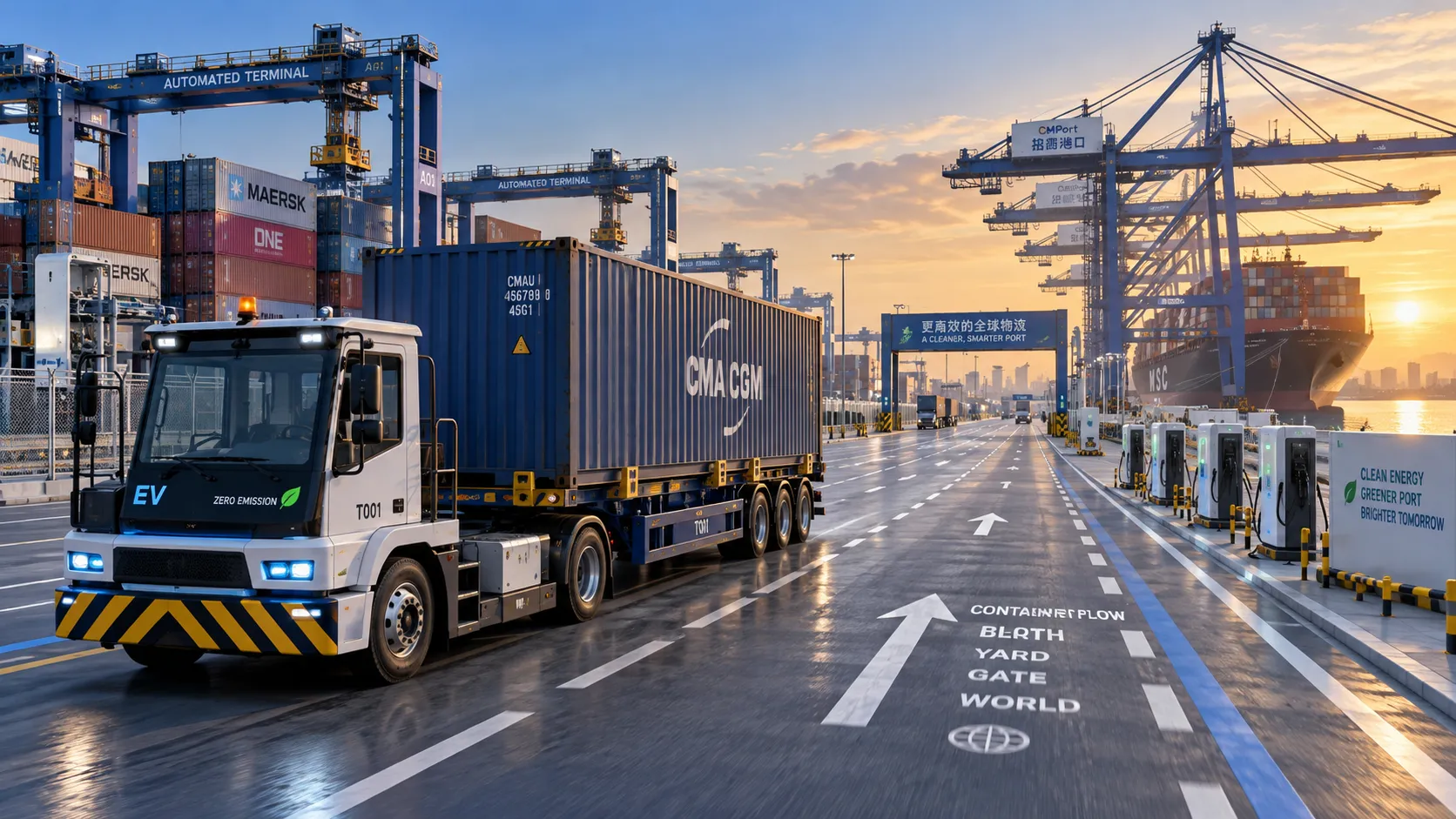
How to Evaluate a Yard Mobility Solutions Manufacturer for High-Throughput Sites
Yard mobility solutions manufacturer evaluation guide for high-throughput terminals: assess performance, integration, service, lifecycle costs, and delivery risk.
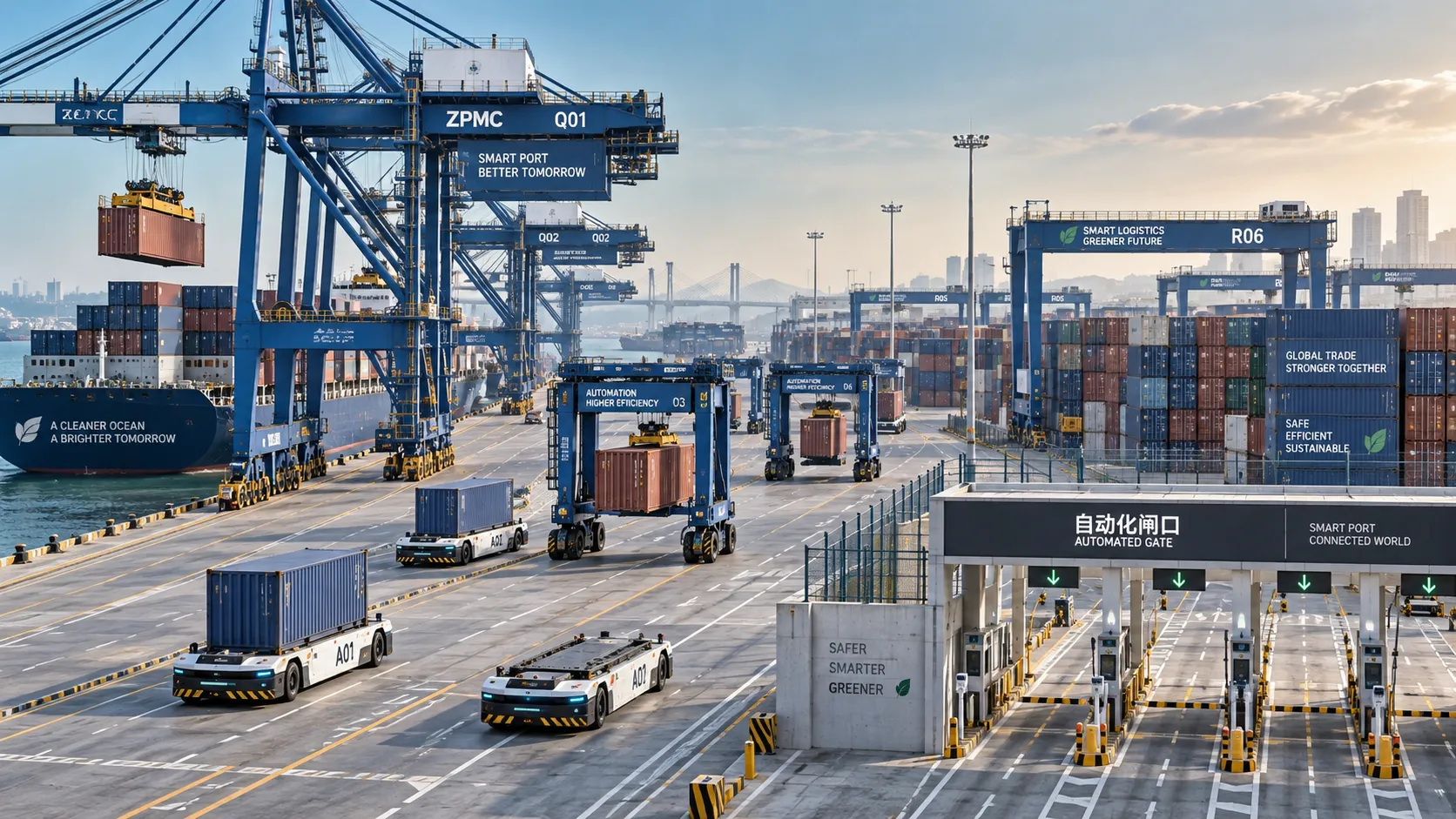
Automated Port Systems in Latin America: Investment Priorities for Container Terminals
Automated port systems Latin America: discover investment priorities for container terminals, from smart gates and remote cranes to resilient digital control layers.
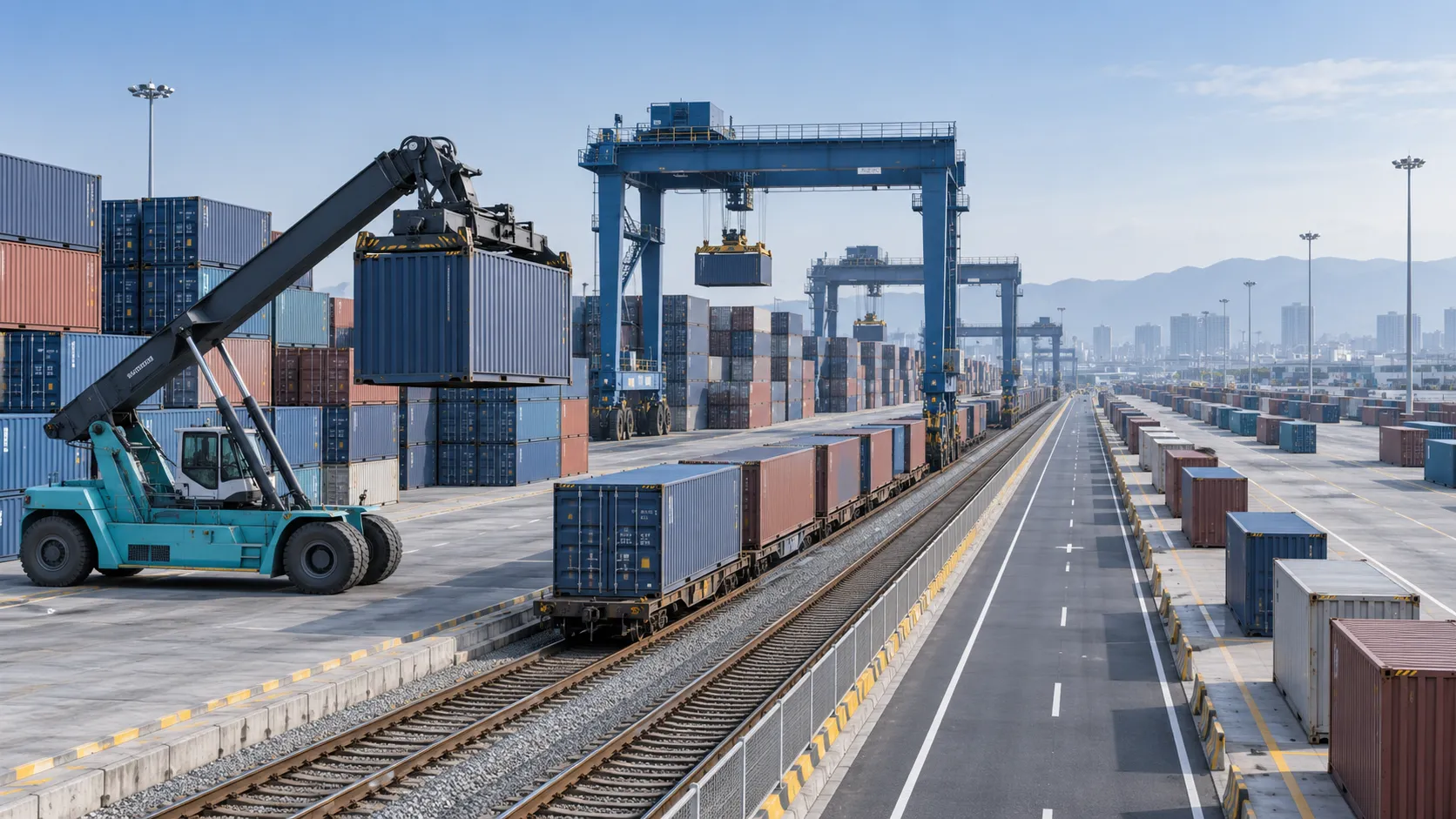
Selecting Intermodal Yard Equipment for Fast, Safe Container Transfers
Container handling equipment for intermodal yards: compare reach stackers, RTGs, automation, safety planning, and lifecycle costs to build faster, safer container flow.
Terminal Control System Costs: Budgeting Hardware, Integration, and Lifecycle Support
Terminal control systems cost explained: budget hardware, integration, safety, cybersecurity, commissioning, and lifecycle support for resilient terminal operations.

Smart Operations in the Middle East: Where Industrial Investment Is Growing
Smart operations Middle East investment is reshaping ports, industrial corridors, and logistics networks through connected data, automation, resilience, and smarter asset performance.

How to Select Harbor Structures for Quay Walls Under Berthing and Wave Loads
Harbor structure for quay wall selection: evaluate berthing energy, wave loads, soil conditions, durability, and lifecycle risk to build safer, adaptable terminals.

Selecting Smart Terminal Software for Multi-Site Field Service Operations
Smart terminal solutions software helps multi-site field service teams unify asset history, mobile maintenance, integrations, and reporting for safer, faster terminal operations.
How to Specify Heavy-Duty Marine Engineering Equipment for Offshore Projects
Heavy duty marine engineering equipment: learn how to specify reliable offshore assets for safety, uptime, integration, lifecycle cost, and project success.
How to Evaluate a Container Handling Equipment Exporter for Port and Yard Projects
Choose the right container handling equipment exporter with a practical guide to compliance, automation, service support, delivery reliability, and lifecycle value.