Related News
- 00
0000-00
How to Specify a Quay Crane for Container Terminals by Vessel Size and Throughput? - 00
0000-00
Which Bulk Handling Equipment Suits High-Moisture Cargo? - 00
0000-00
Terminal Automation Technologies That Raise Container Throughput Without Yard Disruption - 00
0000-00
Planning Offshore Dredging Operations: Key Risks, Methods, and Project Controls - 00
0000-00
Where Do Automated Guided Vehicles Deliver the Fastest Warehouse Gains in the Middle East?
Low Latency Communication Systems for Autonomous Vehicles: Key Metrics and Trade-Offs
Low Latency Communication Systems for Autonomous Vehicles: Key Metrics and Trade-Offs
Low latency communication systems for autonomous vehicles are no longer a niche design topic.
They now sit at the center of safety validation, operational continuity, and infrastructure planning.
That shift is especially visible in smart ports, automated yards, and mixed-traffic logistics corridors.
In these environments, every millisecond affects braking distance, routing confidence, and system coordination.
For PS-Nexus, this is not only a mobility issue.
It is also a port automation issue, because autonomous vehicles increasingly interact with cranes, gates, sensors, and fleet schedulers.
So, when evaluating low latency communication systems for autonomous vehicles, the real question is broader.
Can the network sustain predictable control performance under real operating stress?
Why Low Latency Matters in Autonomous Operations
Latency is the delay between data transmission and effective system response.
In autonomous driving, that delay shapes perception updates, motion commands, and hazard reactions.
In port and terminal environments, the pressure is often higher than on open roads.
Vehicles move near steel structures, containers, human crews, and mission-critical machines.
That means low latency communication systems for autonomous vehicles must deliver more than raw speed.
They must provide deterministic behavior, stable handoffs, and fault-aware recovery.
A fast average delay is useful, but it is not enough.
A system that spikes under congestion can still fail a safety case.
The Core Metrics That Actually Matter
When reviewing low latency communication systems for autonomous vehicles, several metrics deserve close attention.
1. End-to-End Latency
This measures total delay from source generation to usable action at the destination.
It should include sensing, encoding, transmission, routing, decoding, and application processing.
Many vendor claims isolate network transport only, which hides operational reality.
2. Jitter
Jitter is variation in delay over time.
Low jitter supports smooth control loops and cleaner vehicle behavior.
High jitter can destabilize remote driving, cooperative maneuvering, and distributed collision avoidance.
3. Packet Loss
A low packet loss rate is essential for command integrity and situational consistency.
Loss may trigger retries, outdated state maps, or temporary control blind spots.
4. Reliability and Availability
Reliability tracks successful message delivery under defined conditions.
Availability measures whether the service remains usable across operating windows.
For autonomous systems, both matter because downtime and degraded performance create different risks.
5. Handover Performance
Vehicles often transition across cells, edge nodes, or radio zones.
A handover that looks acceptable in a lab may break timing budgets in field operations.
6. Coverage Consistency
Coverage is not just a map.
In ports, moving containers, cranes, and vessels create reflective and obstructed radio conditions.
That makes consistency more valuable than peak signal strength.
Technology Options Behind Low Latency Communication Systems for Autonomous Vehicles
The current market offers several communication paths, each with different strengths.
- 5G private networks support low delay, traffic prioritization, and better local control.
- Wi-Fi 6 and Wi-Fi 6E can perform well in bounded industrial zones with disciplined design.
- DSRC and C-V2X remain relevant in vehicle coordination and standardized road-side communication.
- Fiber-backed edge architectures improve local processing speed for high-value control decisions.
From a technical evaluation standpoint, there is no universal winner.
The better question is whether the chosen stack matches the mobility pattern, interference profile, and safety envelope.
The Main Trade-Offs Evaluators Need to Balance
Low latency communication systems for autonomous vehicles always involve trade-offs.
Those trade-offs become clearer when systems move from demo conditions to continuous operation.
Latency vs Coverage
Ultra-low delay often depends on dense infrastructure.
Broader coverage can reduce deployment density but may weaken timing precision at the edge.
Performance vs Cost
Private wireless, edge compute nodes, and redundant backhaul improve performance.
They also increase capital cost, integration effort, and maintenance requirements.
Determinism vs Flexibility
Highly controlled networks produce better predictability.
But they can be less flexible when traffic patterns, equipment layouts, or software workloads evolve.
Bandwidth vs Response Time
High-resolution video and sensor streaming consume bandwidth quickly.
If traffic shaping is weak, heavy payloads can hurt urgent control packets.
This is why priority scheduling matters in low latency communication systems for autonomous vehicles.
What Changes in Smart Ports and Logistics Hubs
Port automation adds constraints that standard road testing may miss.
Autonomous guided vehicles, terminal tractors, and remote-controlled yard assets often share network resources.
At the same time, cranes, gate systems, and digital twins generate continuous data demand.
More importantly, steel-heavy infrastructure creates complex radio reflection and shadowing behavior.
That makes field validation essential.
For maritime logistics operators, low latency communication systems for autonomous vehicles should be tested during active terminal cycles.
Night shifts, weather changes, stacked containers, and moving machinery all affect outcomes.
A Practical Evaluation Framework
A useful assessment process usually follows a few grounded steps.
- Define the maximum safe delay for each vehicle function, not just the average target.
- Separate critical traffic from noncritical data such as video archives or maintenance uploads.
- Test latency, jitter, and packet loss under peak operating density.
- Measure handover quality on real routes with actual obstacles and moving assets.
- Review failure modes, including fallback logic, local autonomy, and degraded-state behavior.
- Check standards alignment for cybersecurity, functional safety, and interoperability.
This approach gives a more realistic view than headline latency claims alone.
Standards, Risk, and Long-Term Value
Technical performance is only one side of the decision.
The better systems also support compliance, upgradeability, and cross-vendor integration.
In practice, low latency communication systems for autonomous vehicles should be reviewed against three long-horizon questions.
- Can the architecture scale from pilot fleets to full terminal deployment?
- Can it support software updates, new sensors, and future automation layers?
- Can it preserve safety margins when business throughput pressure increases?
These questions matter because many failures appear after expansion, not during early trials.
Final Takeaway
Low latency communication systems for autonomous vehicles should be judged by operational stability, not marketing speed.
The strongest designs balance latency, jitter, reliability, coverage, and recovery behavior as one system.
That is particularly true in smart ports, where mobile assets, heavy machinery, and scheduling engines depend on tight coordination.
For organizations tracking automation readiness through PS-Nexus intelligence, the practical path is clear.
Start with measurable safety thresholds, validate under real operating load, and select architectures that remain trustworthy at scale.
That is where technical performance turns into durable operational value.
Related News

Smart Port Systems in Southeast Asia: Investment Priorities and Adoption Barriers
Smart port systems Southeast Asia: discover investment priorities, adoption barriers, and practical steps to build resilient, connected, high-performing terminals.

How to Evaluate Terminal Efficiency Solution Suppliers for High-Throughput Operations
Choose a terminal efficiency solutions supplier with confidence. Explore proven criteria for throughput, integration, lifecycle cost, safety, and reliable delivery.

How to Specify a Quay Crane for Container Terminals by Vessel Size and Throughput?
Quay crane for container terminals: learn how to match outreach, lift height, capacity, automation, and cycle performance to vessel size and throughput goals.

What Dredging Equipment Is Needed for Channel Deepening?
What dredging equipment is needed for channel deepening? Explore dredgers, pipelines, survey tools, and planning strategies for safer, more efficient port access.

Which Bulk Handling Equipment Suits High-Moisture Cargo?
Which bulk handling equipment suits high-moisture cargo? Compare belt, apron, screw, drag, and slurry systems for reliable flow, less carryback, and higher terminal uptime.
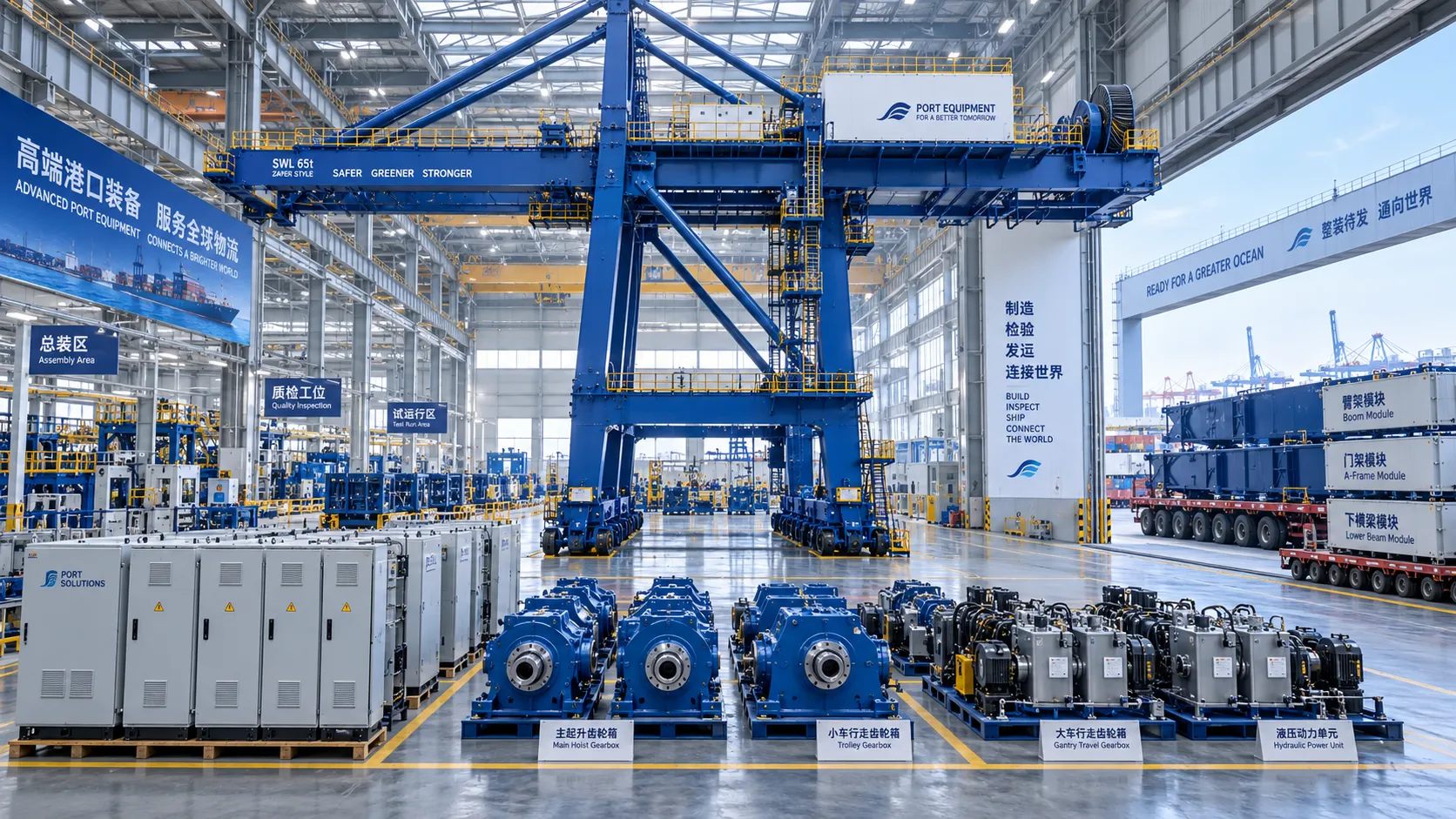
How Can Port Equipment Lead-Time Risk Be Managed?
How can port equipment lead-time risk be managed? Explore practical strategies to control critical paths, suppliers, transport, site readiness, and commissioning delays.

Terminal Automation Technologies That Raise Container Throughput Without Yard Disruption
Terminal automation technology that increases container throughput without disrupting yard flow. Explore smarter integration, resilient workflows, and phased deployment strategies.

Middle East Port Automation: Key Market Drivers, Projects, and Investment Risks
Port automation systems Middle East: explore market drivers, flagship projects, integration challenges, and investment risks shaping smarter, resilient terminals.
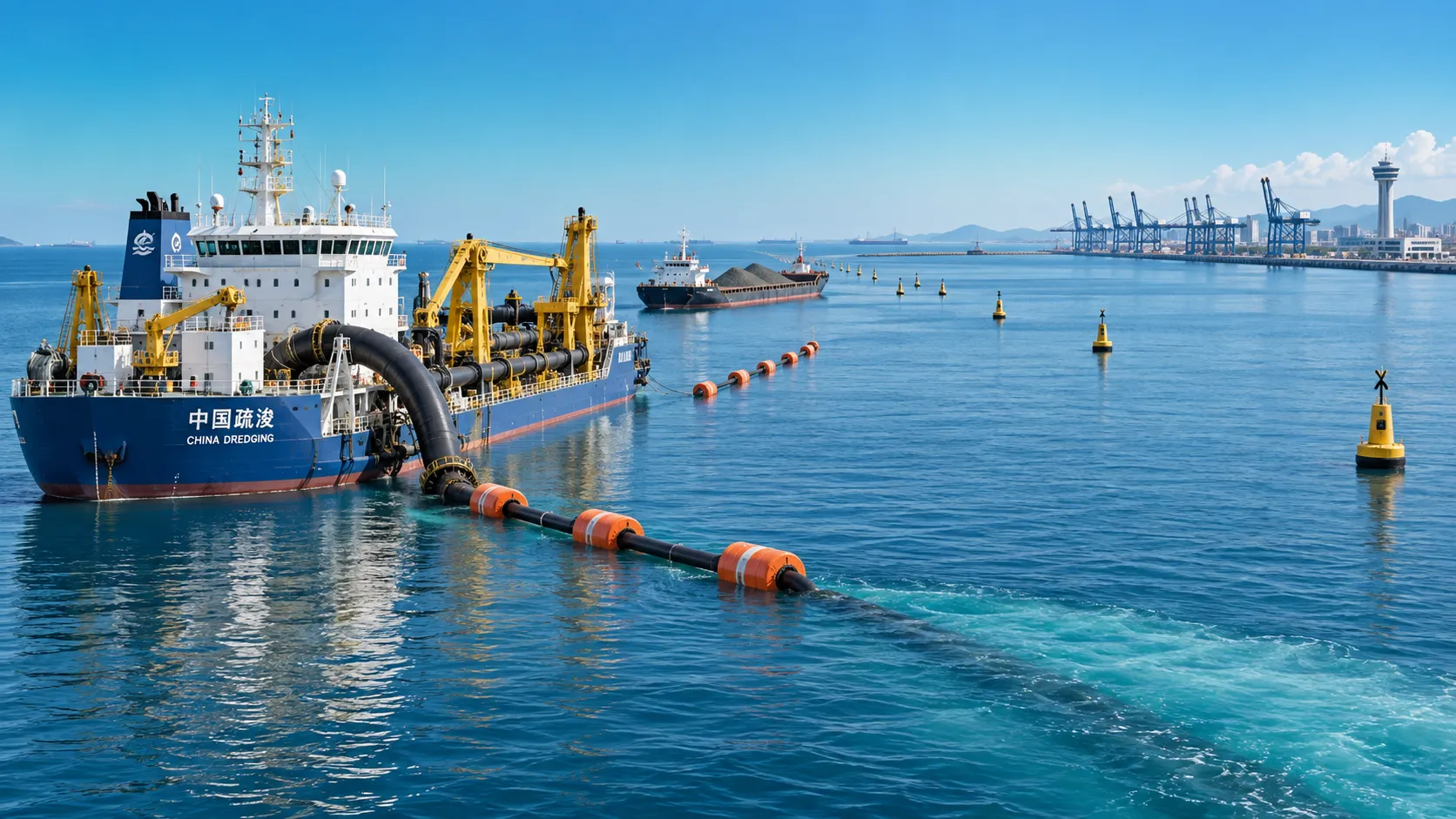
Planning Offshore Dredging Operations: Key Risks, Methods, and Project Controls
Offshore dredging operations demand smart planning. Explore key risks, proven methods, environmental controls, and project strategies for reliable delivery.