Related News
- 00
0000-00
Selecting Port Control Systems for Vessel Traffic: Coverage and Fail-Safe Design - 00
0000-00
Selecting Automated Cargo Handling Systems for Terminal Throughput and Yard Limits - 00
0000-00
Smart Port Solutions for Berth Planning: Reducing Vessel Wait Times and Conflicts - 00
0000-00
How AI Scheduling Improves Berth, Yard, and Gate Coordination at Terminals - 00
0000-00
How to Specify a Quay Crane for Container Terminals by Vessel Size and Throughput?
Is Smart Port Automation Worth It for a Mid-Size Terminal?
Smart port automation is worth considering for a mid-size terminal only when it removes a specific operational constraint that the terminal cannot solve economically through conventional equipment, staffing, or process redesign. It is not automatically justified by vessel size, container volume, or the availability of autonomous vehicles. A terminal with unstable gate flows, poorly standardized yard processes, weak equipment-maintenance discipline, or unreliable communications can spend heavily on automation and still fail to improve berth productivity.
The stronger business case usually starts with selective automation: remote-controlled quay or yard cranes, automated gate processing, terminal operating system (TOS) upgrades, equipment positioning, predictive maintenance, and dispatch optimization. Fully automated horizontal transport with AGVs or autonomous terminal tractors may be appropriate in some layouts, but it is a later decision rather than the default definition of a smart terminal.
The question is not “Can the terminal automate?” but “Which constraint is costing the terminal money?”
Mid-size terminals often operate in a more difficult investment position than major transshipment hubs. They may face rising labor costs, pressure to shorten truck turnaround times, limited land for expansion, and customer expectations for more reliable service. At the same time, their traffic volumes may be seasonal, vessel calls may be irregular, and capital budgets may not tolerate a long period of reduced productivity during a major redevelopment.
Automation creates value when it improves the constraint that governs terminal performance. That constraint is rarely a single machine. It may be the lack of visibility between berth planning and yard operations, excessive rehandles caused by poor container location accuracy, crane idle time while waiting for transport vehicles, gate congestion that disrupts yard dispatching, or safety zones that force people and equipment to operate inefficiently together.
A useful starting point is to examine operational losses over a representative period rather than looking only at headline moves per hour. The review should identify:
- Berth time lost to yard, transport, documentation, or equipment delays;
- Container rehandles by block, cargo type, and dwell-time category;
- Truck cycle-time variation, not merely average gate transaction time;
- Unplanned equipment downtime and the availability of critical assets;
- Labor deployment by shift, including waiting time and exception handling;
- Safety exposure in crane, yard, gate, and maintenance areas;
- Energy use per operational activity, especially where diesel equipment spends substantial time idling.
Without this baseline, a proposal for AGVs, automated stacking cranes, or remote operation is little more than a technology purchase. The technology may be capable, but its financial logic remains unproven.
Automation has different meanings at different parts of the terminal
The term “smart port automation” is often used as if it describes one system. In practice, automation ranges from digitizing administrative tasks to redesigning the entire container-handling flow. These levels have very different capital requirements, implementation risks, and dependence on terminal layout.
Process automation includes appointment systems, optical character recognition at gates, automated document checks, RFID or license-plate recognition, digital damage records, and integration between customs, shipping lines, hauliers, and the TOS. These systems do not eliminate the physical complexity of container handling, but they can reduce manual data entry, improve gate predictability, and provide cleaner operational data.
Decision automation applies algorithms and rules to berth planning, yard allocation, equipment dispatch, workload balancing, and exception alerts. Its value depends on whether the terminal has reliable real-time equipment and container-status data. An optimization engine cannot compensate for inaccurate container locations or operating rules that are routinely overridden without recording the reason.
Remote operation moves crane operators away from the cab into a control room. This can improve safety by separating operators from high-risk work zones and can make workstations more ergonomic. It may also support more flexible staffing, but remote operation is not simply a cab replacement. Camera coverage, network resilience, latency management, control-room design, training, fallback procedures, and maintenance support all affect performance.
Physical automation covers automated stacking cranes, automated rail-mounted gantry cranes, AGVs, autonomous straddle carriers, and autonomous terminal tractors. This category has the largest potential effect on the operating model, but also the greatest dependence on lane geometry, pavement quality, traffic segregation, charging or fueling strategy, software integration, and controlled exception handling.
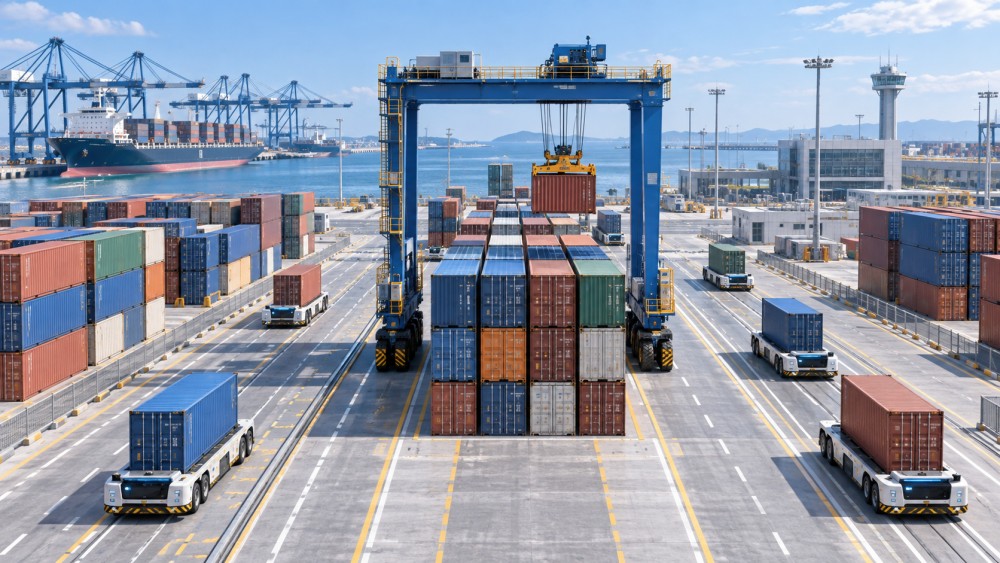
For many mid-size terminals, the most defensible path is to build from process and decision automation toward targeted remote or physical automation in the areas with repetitive, measurable, and relatively controlled workflows. A mixed fleet is not a failure of ambition. It can be the appropriate design when traffic patterns, existing equipment, and capital limits do not support a complete rebuild.
Throughput alone is an incomplete investment metric
A common mistake is to evaluate automation only through expected crane productivity or annual container moves. Higher productivity matters, but a mid-size terminal must also ask whether additional capacity can be sold, whether the berth can absorb it, and whether landside operations can keep pace. Increasing yard crane productivity does not create value if gate queues, customs release timing, or rail handover remain the limiting factors.
The business case should separate several sources of value that are often mixed together:
- Capacity release: More usable yard capacity, fewer rehandles, more predictable crane cycles, or reduced congestion without acquiring adjacent land.
- Labor redesign: Changes in task allocation, shift coverage, overtime exposure, training needs, and safety separation. This is not equivalent to assuming immediate labor elimination.
- Asset utilization: Better use of existing cranes, tractors, stacks, charging systems, and maintenance resources.
- Service reliability: More consistent truck turn times, better ETA management, fewer misdirected containers, and more predictable vessel operations.
- Risk reduction: Reduced exposure to vehicle-pedestrian interactions, work at height, manual identification errors, and preventable equipment incidents.
- Energy and emissions: Lower idling, optimized travel, electrification of appropriate equipment, and better management of charging demand.
Each benefit should be tied to an operational mechanism. “Labor savings” is not a sufficiently precise mechanism if the terminal must retain operators for peak periods, exceptions, maintenance coordination, or manual fallback. Likewise, “emissions reduction” needs to distinguish between improved dispatching of diesel equipment and actual fleet electrification supported by adequate grid capacity.
The cost side must extend beyond equipment purchase. Automation programs commonly require civil works, pavement modifications, electrical distribution, communications infrastructure, cybersecurity controls, systems integration, simulation, testing, spare parts, training, control-room facilities, and long-term software support. A terminal also needs a realistic allowance for productivity disruption during cutover. The relevant comparison is lifecycle cost and operational resilience, not the initial price of a vehicle or crane-control package.
Layout and traffic discipline determine whether AGVs make sense
AGVs attract attention because they visibly represent terminal automation. Yet autonomous horizontal transport is highly sensitive to the operating environment. A terminal with short, repetitive routes between quay and yard, clearly segregated traffic, stable pavement, predictable interchange points, and sufficient space for charging or battery exchange may create favorable conditions. A constrained brownfield terminal with mixed traffic, irregular route crossings, frequent manual interventions, and limited space may not.
AGV productivity is affected by more than vehicle speed. The critical issue is system balance: quay crane handover, vehicle assignment, buffer capacity, yard crane availability, battery management, maintenance response, and the rules for abnormal loads or blocked lanes. A fleet can appear adequately sized on paper but lose effectiveness when a small number of exceptions interrupts the flow.
Autonomous terminal tractors may offer a more adaptable route in terminals that need to retain trailer-based operating patterns. However, they still require dependable localization, safe interaction rules, well-defined transfer zones, and a clear responsibility model when a vehicle encounters an obstacle or inconsistent container data. Replacing manned tractors with autonomous units without redesigning the process merely transfers uncertainty into the control system.
In some terminals, remote-controlled RTGs or RMGs, automated truck appointment systems, and dispatch optimization can solve the more immediate problem at lower physical complexity. The right sequence depends on where variability originates. Automation works best where the terminal can standardize the work, not where it is hoping technology will conceal unmanaged variation.
Data quality and integration are operational infrastructure
A smart terminal cannot function reliably if its TOS, equipment control systems, gate systems, maintenance platform, and customer-facing data tools disagree about the status or location of a container. Integration is often treated as a technical workstream, but it is an operational governance issue. The terminal must define which system is authoritative for container status, equipment state, job assignment, and exception closure.
Interfaces also require careful commercial attention. Before committing to a platform, operators should establish ownership and access rights for operational data, interface documentation, upgrade responsibilities, cybersecurity patching, and performance obligations after go-live. A system may be technically open yet commercially difficult to modify if interface changes require proprietary engineering support.
Cybersecurity deserves the same practical treatment. Connecting cranes, fleet-management systems, cameras, remote-control stations, and operational technology networks increases the consequences of weak access control or poor network segmentation. The objective is not to make abstract claims about cyber risk; it is to ensure that a cyber incident cannot easily stop safety-critical control functions, corrupt operating data, or prevent an orderly manual fallback.
Brownfield implementation is a change-management project disguised as a technology project
Mid-size terminals rarely have the option of stopping operations while an automated system is installed. Phased deployment therefore matters as much as the target architecture. A credible implementation plan identifies which area can be isolated, how manned and automated equipment will coexist, how productivity will be protected during testing, and what conditions permit rollback if the new process is not stable.
The transition period is especially demanding where labor arrangements, safety rules, and maintenance responsibilities were designed for conventional operations. Remote operation changes supervision, response times, workstations, and competency requirements. Autonomous equipment changes traffic management, incident response, and the boundary between operations and maintenance. These changes need to be designed early rather than left for training immediately before commissioning.
Simulation and digital-twin tools can be useful when they test real operating variability: late vessel arrivals, yard density, reefer clusters, dangerous-goods segregation, customs holds, weather restrictions, equipment outages, and peak truck flows. A model built only around average cycle times can produce a misleadingly smooth result. Terminal performance is often determined by what happens during disruption, not by the average day.
Use decision gates instead of a single all-or-nothing approval
For a mid-size terminal, the prudent answer to “Is smart port automation worth it?” is often conditional: yes, if the investment is staged against verified operational constraints and if each stage creates usable value on its own. A terminal should not need the final phase of a large automation program before it sees any improvement in visibility, safety, dispatch quality, or asset utilization.
A practical decision sequence begins with a measurable baseline and a future operating model, not a preferred equipment type. The next gate is technical feasibility: layout, civil works, power supply, communications coverage, equipment compatibility, and safe mixed-mode operations. Then comes commercial feasibility: lifecycle costs, contractual service levels, software dependency, implementation disruption, and a downside case where expected volume or productivity improvements do not materialize.
Only after those conditions are clear should the terminal decide whether to stop at digital coordination and remote operation, automate selected yard blocks, or redesign horizontal transport. The most successful investment is not necessarily the most visible automated terminal. It is the one whose technology, operating rules, infrastructure, and demand profile remain aligned after the project moves from demonstration to daily service.
Related News
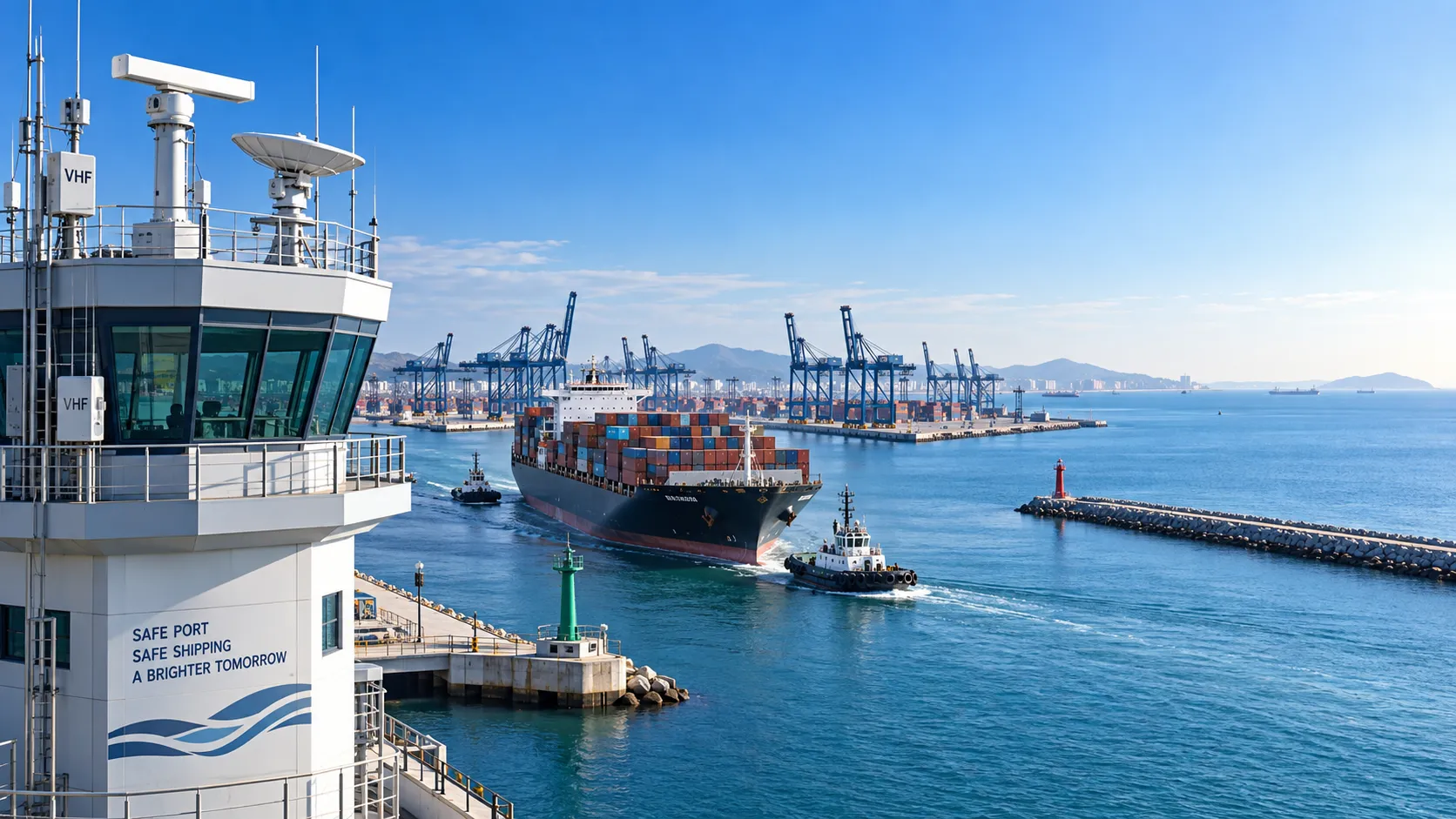
Selecting Port Control Systems for Vessel Traffic: Coverage and Fail-Safe Design
Port control systems for vessel traffic: learn how to assess coverage, redundancy, fail-safe recovery, cybersecurity, and operator workflows for safer port operations.
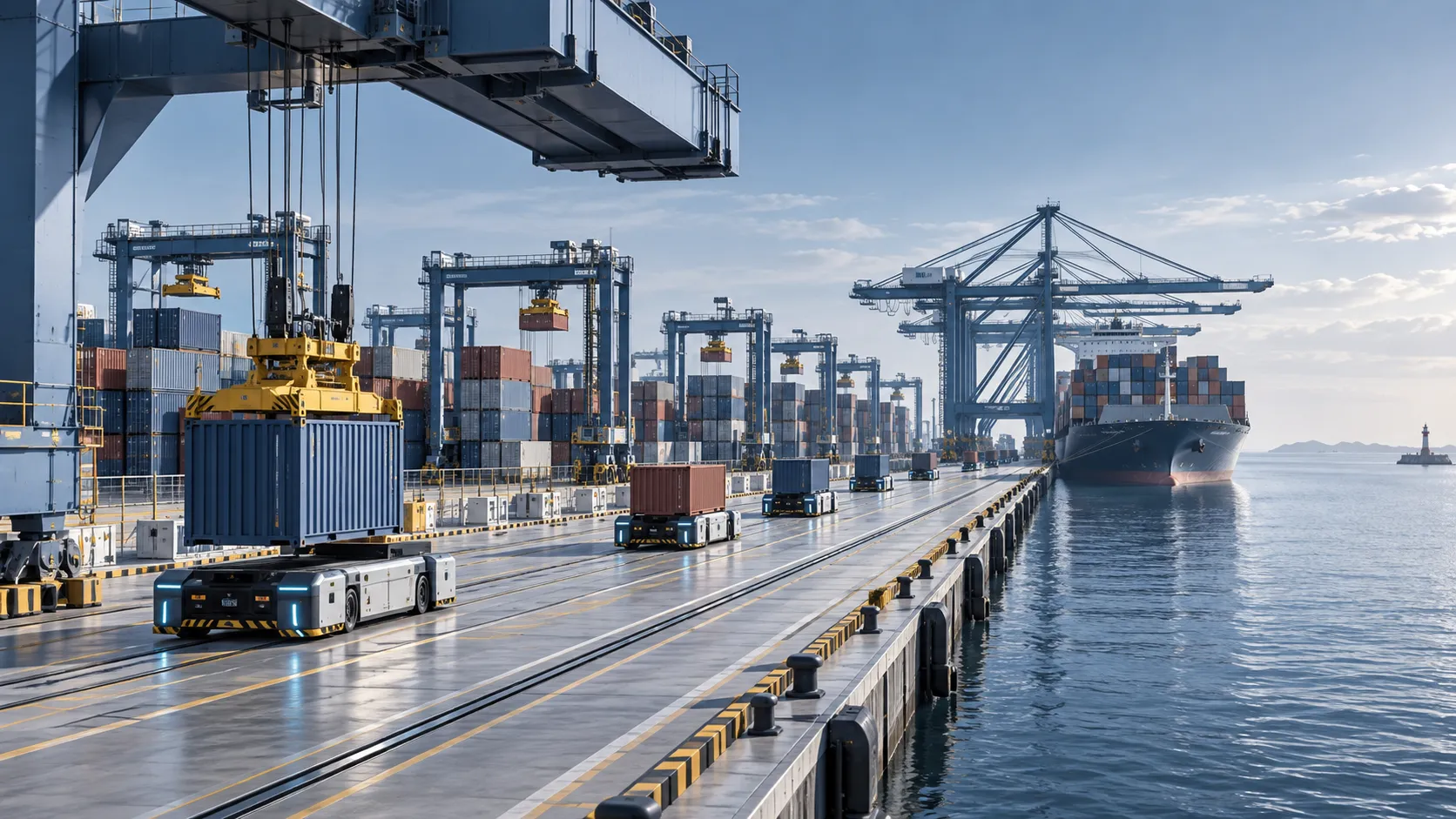
Selecting Automated Cargo Handling Systems for Terminal Throughput and Yard Limits
Automated cargo handling systems for maritime terminals: learn how to balance berth throughput, yard limits, automation software, and lifecycle costs for smarter terminal decisions.
Smart Port Solutions for Berth Planning: Reducing Vessel Wait Times and Conflicts
Smart port solutions for berth planning reduce vessel wait times, prevent conflicts, and optimize quay, crane, and yard resources for faster turnarounds.
How AI Scheduling Improves Berth, Yard, and Gate Coordination at Terminals
Terminal automation systems with AI scheduling align berth, yard, and gate operations to reduce congestion, improve throughput, and strengthen terminal resilience.
How to Evaluate a Port Logistics Solutions Supplier for Terminal Uptime and Scalability
Choose a port logistics solutions supplier with confidence. Learn how to assess uptime, scalability, service strength, integration, and lifecycle risk for resilient terminal growth.
Smart Port Systems in Southeast Asia: Investment Priorities and Adoption Barriers
Smart port systems Southeast Asia: discover investment priorities, adoption barriers, and practical steps to build resilient, connected, high-performing terminals.
How to Evaluate Terminal Efficiency Solution Suppliers for High-Throughput Operations
Choose a terminal efficiency solutions supplier with confidence. Explore proven criteria for throughput, integration, lifecycle cost, safety, and reliable delivery.
How to Specify a Quay Crane for Container Terminals by Vessel Size and Throughput?
Quay crane for container terminals: learn how to match outreach, lift height, capacity, automation, and cycle performance to vessel size and throughput goals.
Work Vessel Procurement Risks: Verifying Build Scope and Delivery Terms
Work vessel procurement risks explained: verify build scope, testing, documentation, delivery terms, and acceptance criteria to protect cost, schedule, and operational readiness.