
Related News
- 00
0000-00
Selecting Port Control Systems for Vessel Traffic: Coverage and Fail-Safe Design - 00
0000-00
Selecting Automated Cargo Handling Systems for Terminal Throughput and Yard Limits - 00
0000-00
Smart Port Solutions for Berth Planning: Reducing Vessel Wait Times and Conflicts - 00
0000-00
How AI Scheduling Improves Berth, Yard, and Gate Coordination at Terminals - 00
0000-00
How to Specify a Quay Crane for Container Terminals by Vessel Size and Throughput?
What Infrastructure Upgrades Are Needed Before Port Automation?
Port automation does not begin with automated stacking cranes, autonomous vehicles, or a terminal operating system. It begins with an honest assessment of whether the terminal can support them reliably. The practical answer to what port infrastructure upgrades are needed before automation is usually a coordinated set of civil, electrical, communications, control-room, and data-management improvements.
A terminal can buy advanced equipment and still struggle with poor availability if the quay settlement is unresolved, the electrical network lacks redundancy, wireless coverage drops behind container stacks, or yard data is inconsistent. Automation changes a port from an operation managed largely through human observation into one managed through planned routes, machine states, sensor inputs, and exception handling. That shift exposes weaknesses that a conventional terminal may have been able to work around informally.
The right preparation depends on the automation scope. Remote crane operation has different requirements from a fully automated container yard. A mixed terminal with manned tractors and automated horizontal transport needs carefully controlled interfaces between people and machines. The first task is therefore to define the operating model, then upgrade the infrastructure that model depends on.
Start with an operational baseline, not an equipment list
Before specifying infrastructure, map the full container journey: vessel discharge, quay transfer, yard transport, stack placement, reefer handling, gate moves, inspection, and empty-container flows. Identify where decisions are made today, what information is used, and what happens when equipment or communications fail.
This exercise often reveals that the main constraint is not the visible machine. For example, an automated yard vehicle may need a fixed handover point, clear lane geometry, dependable positioning references, charging access, and uninterrupted wireless communication. If those conditions do not exist, adding vehicles only moves the bottleneck.
It also helps to separate processes that are suitable for early automation from processes that remain highly variable. Repeatable, fenced, predictable container flows are generally easier to automate than irregular exception work, mixed cargo areas, or routes shared freely by pedestrians and conventional trucks. A phased program can create operational value while giving the terminal time to strengthen its foundation.
Verify the civil structure and working geometry
Automation places tighter demands on pavement condition and layout discipline. Human drivers can compensate for an uneven route, unclear markings, or a narrow turning area. Automated equipment has much less tolerance for those inconsistencies because its route, stopping distance, wheel path, and positioning logic depend on a defined operating envelope.
Quay aprons, crane rails, container yards, transfer zones, and vehicle lanes should be assessed for load capacity, drainage, settlement, surface quality, and long-term maintenance needs. Heavy automated equipment can concentrate repeated loads along predictable paths, which makes local pavement deterioration more consequential. Poor drainage can affect sensors, markings, electrical cabinets, and traction, while standing water may create recurring availability problems that are difficult to solve through software.
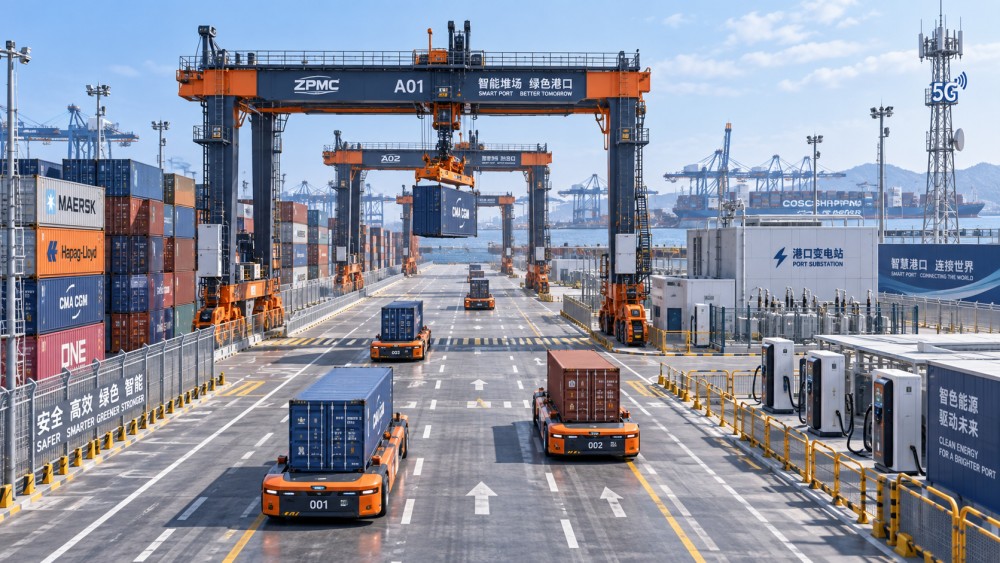
Rail-mounted cranes require particular attention to rail alignment, foundation condition, cable routing, drainage, and access for maintenance. Where automated guided vehicles or autonomous terminal tractors are planned, the terminal should review lane widths, intersections, buffer areas, fencing, barriers, and emergency-access routes. The objective is not simply to create more space. It is to create a legible, controlled environment in which machines, staff, and service vehicles can move without relying on improvised decisions.
Berth and quay infrastructure must be considered separately from yard automation. Remote or automated quay crane operation may require changes to crane travel paths, safe personnel access, landing platforms, equipment rooms, and the interfaces between ship-to-shore cranes and landside transport. Reinforcement work should be based on the future equipment configuration rather than the weight assumptions of the existing fleet.
Build electrical capacity for continuous operation and future electrification
Electrical infrastructure is one of the most common places where automation programs become constrained. Automated cranes, charging systems, sensor networks, control rooms, communications cabinets, and data equipment all add demand. More importantly, they add a requirement for stable, monitored, recoverable power. A short interruption that a manual operation could absorb may stop multiple automated assets, interrupt a handover sequence, or force a controlled restart.
The upgrade should examine incoming supply capacity, substation condition, distribution routes, transformer headroom, switchgear protection, grounding, and resilience at critical points. The question is not only whether the terminal has enough power at peak demand. It is whether essential systems can remain available during a fault, maintenance activity, or changeover.
Different technologies create different electrical profiles. Rail-mounted automated stacking cranes usually need a robust route-based supply arrangement. Battery-electric vehicles need charging locations that fit the operating cycle rather than merely being convenient to install. An opportunity-charging strategy can reduce vehicle downtime, but it may create concentrated demand in one part of the yard. Battery swapping can change the electrical layout and add material-handling requirements. There is no universal answer; the selected method must match fleet size, dwell time, traffic pattern, maintenance capacity, and usable grid capacity.
Critical control, safety, and communications equipment should have protected power paths and orderly recovery procedures. Backup power is not a substitute for good electrical design. It is a means of preserving safe states, maintaining essential visibility, and preventing uncontrolled shutdowns while the wider system recovers.
Design communications as an operational utility
Port automation relies on communications in the same practical way that a terminal relies on pavement and electricity. Remote crane video, vehicle commands, positioning messages, equipment telemetry, gate data, and safety alerts must reach the right system at the right time. A network that is acceptable for office use may be unsuitable for machine control.
Wireless design should be tested at ground level and at equipment height, not inferred from a coverage map. Container stacks, steel structures, moving cranes, weather exposure, and the geometry of a changing yard can all affect signal performance. A network survey should include expected stack configurations, traffic corridors, blind spots, equipment rooms, and areas where vehicles wait or exchange containers.
Terminals may use private cellular networks, industrial Wi-Fi, fiber backbones, or a combination of these. The choice should follow the application. High-volume fixed video and stable crane links may justify dedicated fiber connections. Mobile equipment needs continuous coverage and controlled handover between network areas. The important design criteria are predictable latency, coverage continuity, resilience, cybersecurity segmentation, and supportability by the terminal team.
Do not treat redundancy as simply installing a second connection. A resilient design avoids a single cabinet, fiber route, power source, or core device becoming a terminal-wide point of failure. It should also distinguish between systems that can tolerate delayed data and systems that must maintain immediate command and safety communication.
Positioning, sensing, and physical references need disciplined maintenance
Automated equipment needs a dependable understanding of where it is, what is nearby, and whether the task environment matches the plan. This can involve satellite positioning, local correction services, transponders, lidar, cameras, RFID, lane markers, obstacle detection, and crane-mounted sensors. The technology mix varies, but the principle is consistent: the terminal needs physical and digital references that remain accurate after traffic, maintenance, weather, and layout changes.
Sensor installation should therefore include access for cleaning, inspection, calibration, and replacement. Cameras may be obscured by dust, salt deposits, glare, rain, or container damage. Reflectors and markers may be struck by vehicles. A sensor that is technically installed but difficult to maintain becomes a recurring source of false alarms and manual interventions.
Safety systems require special separation from productivity systems. A route-planning platform may optimize vehicle movement, while independent sensing and controlled-zone rules protect people and assets when conditions depart from the plan. Blending every function into one software layer makes fault diagnosis and assurance harder. Clear safety zones, controlled access points, emergency stops, alerting procedures, and recovery rules should be designed before regular unmanned movement begins.
Modernize the data layer before asking software to optimize it
Automation software cannot resolve conflicting asset identities, inaccurate container locations, or disconnected maintenance records by itself. It can make those weaknesses more visible and, in some cases, propagate them faster. The terminal needs a reliable operational data model covering containers, equipment, locations, work orders, routes, power assets, and exception states.
The terminal operating system, equipment control system, gate platform, maintenance system, and vessel-planning tools need defined interfaces and ownership of each data element. For instance, one system should be authoritative for the container move order, while another may be authoritative for the real-time machine position. When two systems can overwrite the same status without clear rules, operators end up reconciling screens instead of managing the terminal.
Integration should be planned around operating decisions, not around a long list of available interfaces. Ask which event triggers the next move, who needs to see it, how quickly it must be delivered, and what the process does if it is missing or late. Those questions expose the data dependencies behind dispatching, handovers, gate appointments, reefer alarms, and equipment recovery.
Cybersecurity belongs in this foundation because operational technology is no longer isolated once it exchanges data with business systems, remote-control stations, vendors, and cloud services. Segment networks, manage identities and device access, keep an accurate asset inventory, and define how security updates are evaluated without disrupting operations. The goal is operational continuity as much as information protection.
Prepare a control environment that can handle exceptions
Automation reduces routine driving and manual coordination; it does not remove exceptions. Misaligned containers, damaged twistlocks, unplanned work zones, sensor faults, late vessel changes, truck no-shows, and maintenance isolations still need decisions. The control room, remote-operation stations, visual feeds, alarms, and escalation procedures must be designed around those moments.
A remote crane operator needs appropriate sightlines, camera quality, communication channels, and workload limits. A yard controller needs a clear view of vehicle state, route restrictions, battery or fuel status, and blocked tasks. Maintenance teams need diagnostic access that does not bypass safety controls. Poorly designed control environments create a hidden workload: people spend their time clearing alarms that should have been filtered, prioritized, or resolved through better field design.
Training should cover changed responsibilities, not only new interfaces. Field personnel need to understand exclusion zones and recovery protocols. Controllers need to recognize when to intervene and when the system can recover on its own. Maintenance staff need procedures for isolating automated equipment, returning it to service, and validating that its digital status matches its physical condition.
Sequence the upgrades to protect operations
Major terminal upgrades cannot usually be completed with the operation fully paused. A practical program separates enabling works from automation deployment and schedules disruptive construction around available capacity. Fiber ducts, electrical routes, drainage repairs, fencing, control-room preparation, and data cleanup can often begin before automated machines arrive.
Use pilot areas to validate the entire operating chain, not just vehicle movement or crane automation. The pilot should test communications under realistic stack conditions, equipment recovery, handovers, maintenance access, safety procedures, and the quality of operational data. A successful demonstration in an empty or tightly controlled zone is useful, but it is not proof that the terminal is ready for peak-period complexity.
For terminals evaluating automated container handling, the most useful next step is a readiness assessment that brings civil engineers, electrical specialists, operations leaders, maintenance teams, IT and OT architects, and safety managers into the same design discussion. Industry intelligence resources such as PS-Nexus can help teams compare terminal equipment, control-system approaches, communications architecture, and emerging operating practices, but the final design must fit the terminal’s own traffic pattern and physical constraints.
FAQ
Can a port automate one area without rebuilding the whole terminal?
Yes. A defined yard block, transfer lane, gate process, or remote crane operation can be automated in phases. The selected area still needs controlled boundaries, reliable power, communications, and clear interfaces with conventional operations.
Is 5G required for port automation?
Not in every case. A terminal may use private cellular, industrial Wi-Fi, fiber, or a hybrid architecture. The requirement is dependable, secure connectivity suited to each application, particularly where mobile equipment and real-time control are involved.
What is the most overlooked upgrade?
Data governance is often underestimated. If container locations, equipment states, and work orders are unreliable, automation creates more exceptions and makes it harder to identify their source.
Should infrastructure be upgraded before selecting automation equipment?
Concept design should be done together. Equipment selection affects power, pavement, route geometry, charging, communications, and control-room needs. Construction should follow a coordinated design rather than assumptions based on a generic equipment specification.
Related News
Selecting Port Control Systems for Vessel Traffic: Coverage and Fail-Safe Design
Port control systems for vessel traffic: learn how to assess coverage, redundancy, fail-safe recovery, cybersecurity, and operator workflows for safer port operations.
Selecting Automated Cargo Handling Systems for Terminal Throughput and Yard Limits
Automated cargo handling systems for maritime terminals: learn how to balance berth throughput, yard limits, automation software, and lifecycle costs for smarter terminal decisions.
Smart Port Solutions for Berth Planning: Reducing Vessel Wait Times and Conflicts
Smart port solutions for berth planning reduce vessel wait times, prevent conflicts, and optimize quay, crane, and yard resources for faster turnarounds.
How AI Scheduling Improves Berth, Yard, and Gate Coordination at Terminals
Terminal automation systems with AI scheduling align berth, yard, and gate operations to reduce congestion, improve throughput, and strengthen terminal resilience.
How to Evaluate a Port Logistics Solutions Supplier for Terminal Uptime and Scalability
Choose a port logistics solutions supplier with confidence. Learn how to assess uptime, scalability, service strength, integration, and lifecycle risk for resilient terminal growth.
Smart Port Systems in Southeast Asia: Investment Priorities and Adoption Barriers
Smart port systems Southeast Asia: discover investment priorities, adoption barriers, and practical steps to build resilient, connected, high-performing terminals.
How to Evaluate Terminal Efficiency Solution Suppliers for High-Throughput Operations
Choose a terminal efficiency solutions supplier with confidence. Explore proven criteria for throughput, integration, lifecycle cost, safety, and reliable delivery.
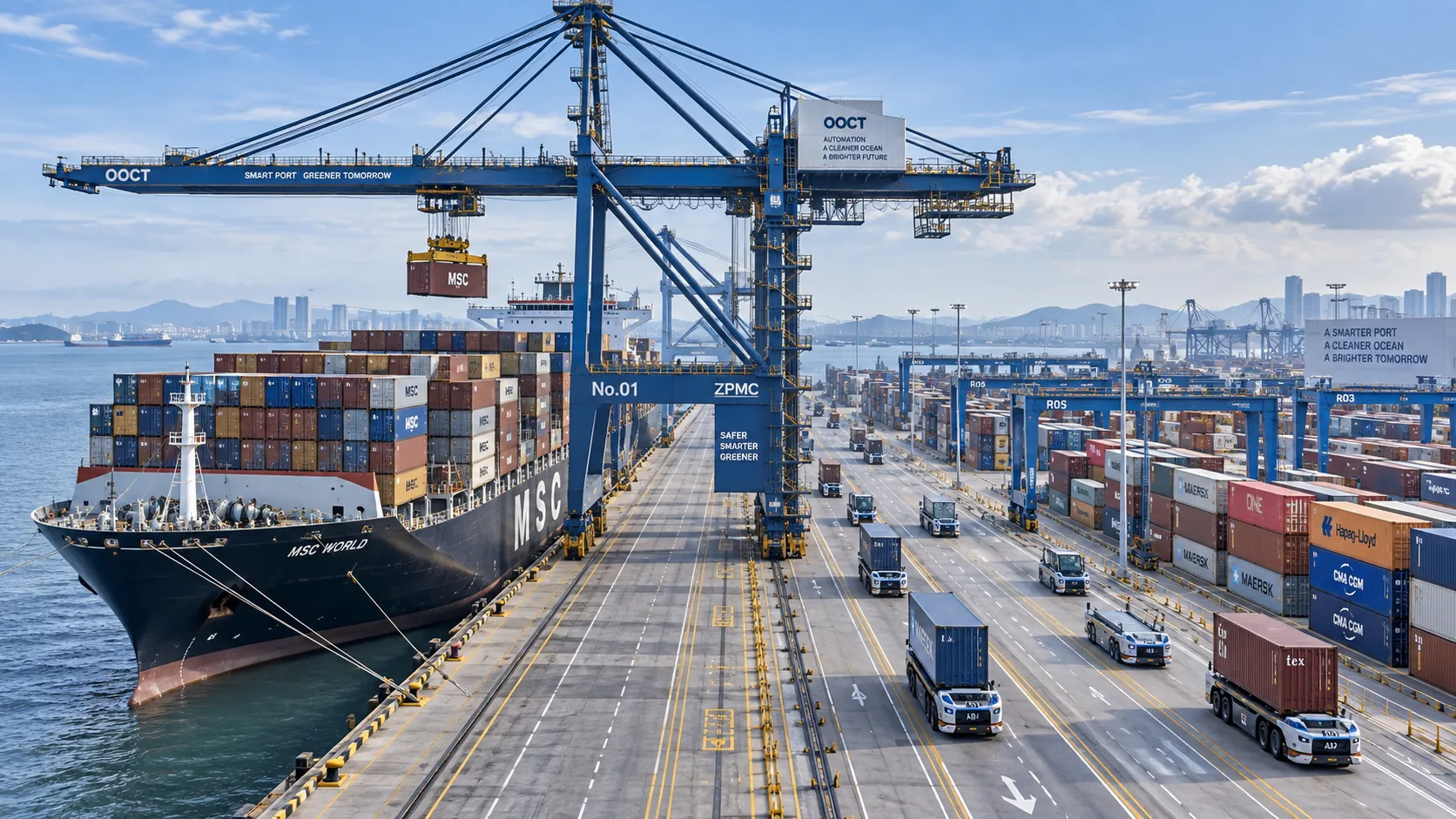
How to Specify a Quay Crane for Container Terminals by Vessel Size and Throughput?
Quay crane for container terminals: learn how to match outreach, lift height, capacity, automation, and cycle performance to vessel size and throughput goals.
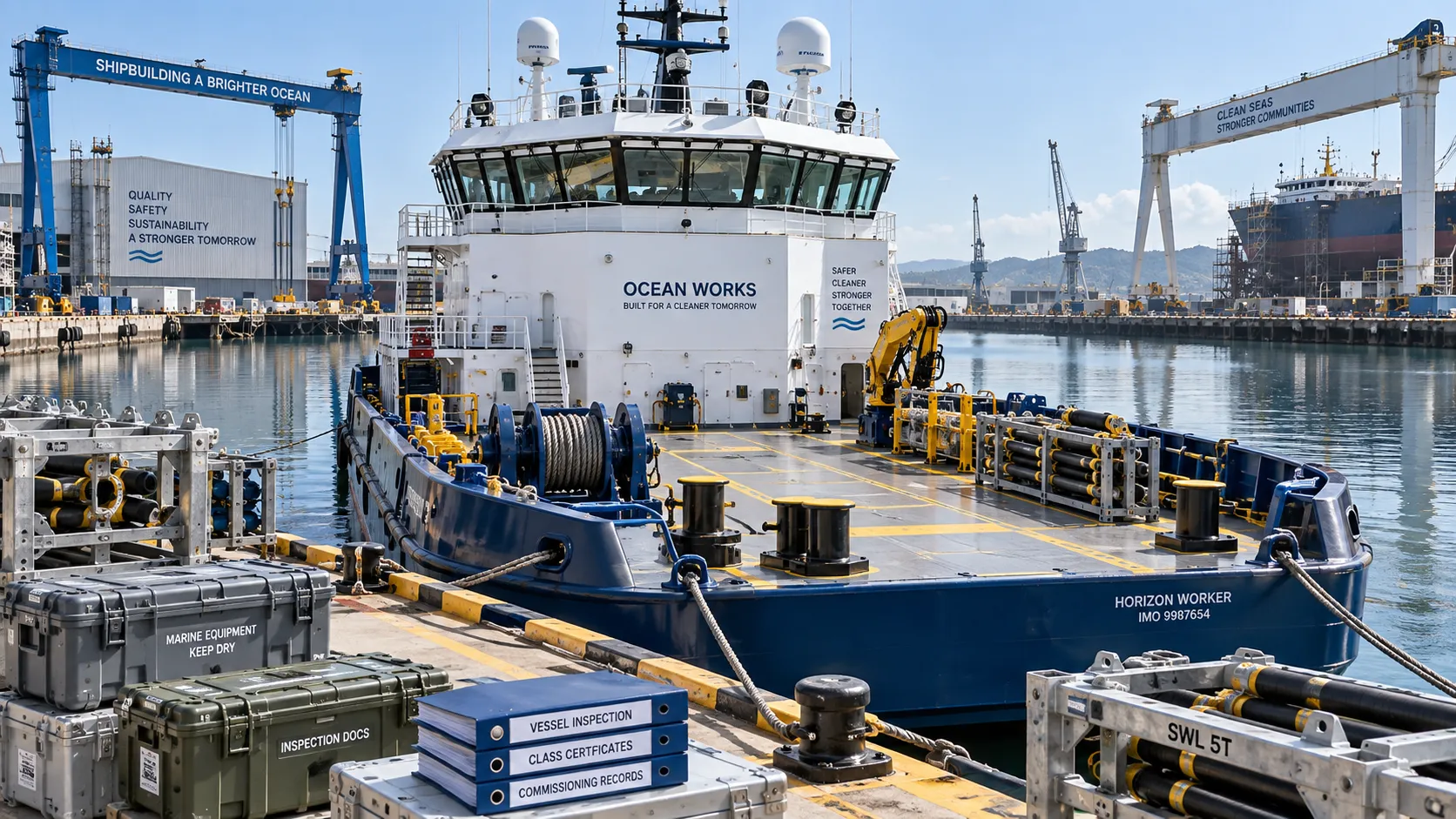
Work Vessel Procurement Risks: Verifying Build Scope and Delivery Terms
Work vessel procurement risks explained: verify build scope, testing, documentation, delivery terms, and acceptance criteria to protect cost, schedule, and operational readiness.