Related News
- 00
0000-00
How to Specify a Quay Crane for Container Terminals by Vessel Size and Throughput? - 00
0000-00
Which Bulk Handling Equipment Suits High-Moisture Cargo? - 00
0000-00
Terminal Automation Technologies That Raise Container Throughput Without Yard Disruption - 00
0000-00
Planning Offshore Dredging Operations: Key Risks, Methods, and Project Controls - 00
0000-00
Where Do Automated Guided Vehicles Deliver the Fastest Warehouse Gains in the Middle East?
Battery Powered AGV Systems: Key Specs to Compare Before You Buy
Battery Powered AGV Systems: Key Specs to Compare Before You Buy
For procurement teams evaluating battery powered AGV systems, the right comparison goes far beyond price.
Battery chemistry, charging strategy, payload fit, navigation accuracy, and software integration all shape total value.
In port yards and automated terminals, small specification gaps often become large operating costs.
That is why battery powered AGV systems should be compared as operating assets, not just equipment purchases.
This guide focuses on the specs that matter most when uptime, safety, and long-term scalability are on the line.
Start With the Operating Profile
Before comparing vendors, define the real job the vehicle must handle every shift.
Battery powered AGV systems perform differently in flat warehouses, mixed yards, and marine terminal environments.
A clean requirements sheet should cover:
- Average and peak payload
- Travel distance per cycle
- Grade, surface condition, and turning space
- Daily operating hours and shift pattern
- Container, pallet, or specialty load type
- Required interface with yard or terminal software
Without that baseline, spec comparisons become misleading very quickly.
In practice, the best battery powered AGV systems are the ones that match the duty profile with minimal compromise.
Compare Battery Chemistry First
Battery chemistry affects charging speed, safety controls, thermal behavior, and replacement cost.
For battery powered AGV systems, the market usually centers on lithium-ion, especially LFP and NMC options.
LFP vs NMC
LFP batteries are often preferred for port and yard applications.
They offer strong cycle life, stable thermal performance, and lower fire risk under harsh duty conditions.
NMC may deliver higher energy density, which can help where vehicle size is tightly constrained.
Still, buyers should weigh that advantage against thermal management complexity and replacement economics.
Questions to ask
- What is the guaranteed cycle life at the stated depth of discharge?
- How does performance change in high heat, salt air, or cold weather?
- What battery management system protections are included?
- Can the battery pack be replaced module by module?
This is one of the most important filters when screening battery powered AGV systems for lifecycle value.
Look Closely at Charging Strategy
Charging design has a direct effect on fleet size, spare capacity, and traffic flow.
Two systems with similar vehicle specs can perform very differently because of charging logic alone.
Common models include opportunity charging, scheduled fast charging, and battery swap strategies.
What matters most
- Charging time from 20% to 80%
- Impact on battery life under repeated fast charging
- Number and placement of charging stations
- Power demand on the local electrical system
- Software coordination between charger, AGV, and dispatch platform
In busy terminals, opportunity charging often reduces the need for extra vehicles.
But that only works if routing software can send vehicles to charge without disrupting operations.
When comparing battery powered AGV systems, ask vendors to model real charging behavior, not ideal lab conditions.
Match Payload, Towing Force, and Chassis Design
Payload rating alone does not tell the full story.
Battery powered AGV systems should be assessed for payload stability, acceleration under load, and braking performance.
In ports, surface quality, turning radius, and uneven loading can expose weak chassis design quickly.
A lower purchase price means little if the platform is oversized, undersized, or mechanically stressed every day.
Navigation Accuracy and Traffic Control Are Critical
Navigation performance is often where brochure claims and field reality start to separate.
Battery powered AGV systems may use lidar, SLAM, magnetic guidance, QR markers, or hybrid methods.
The right choice depends on site complexity, lane discipline, weather exposure, and infrastructure tolerance.
Core navigation checks
- Positioning accuracy under full load
- Reliability in rain, fog, dust, and glare
- Recovery behavior after signal loss or obstacle interruption
- Traffic orchestration for intersections and priority rules
- Cybersecurity and communication redundancy
More accurate navigation usually improves handoff reliability with cranes, racks, and transfer stations.
For battery powered AGV systems in container yards, that can directly improve throughput consistency.
Measure Duty Cycle, Uptime, and Maintenance Burden
A vehicle that looks efficient on paper may still struggle in round-the-clock service.
Battery powered AGV systems should be evaluated against actual utilization targets and downtime tolerance.
Focus on measurable indicators instead of broad availability claims.
- Mean time between failures
- Mean time to repair
- Remote diagnostics capability
- Spare parts lead time
- Local technical support coverage
It is also worth checking service access around motors, brakes, sensors, and battery compartments.
Simple maintenance access can reduce lost hours more than a small efficiency gain ever will.
Integration Can Decide the Real ROI
In automated terminals, hardware rarely delivers full value without strong software integration.
Battery powered AGV systems must connect cleanly with TOS, WMS, fleet managers, and safety systems.
This is especially relevant when scaling beyond a pilot fleet.
Integration questions that matter
- Which APIs and communication protocols are supported?
- How are mission priorities assigned and updated?
- Can the system support mixed fleets later?
- How are software updates tested and rolled out?
- What data is available for utilization and energy analytics?
From a procurement view, interoperability protects future flexibility.
It also reduces the risk of being locked into one vendor across hardware, chargers, and control software.
Compare Total Cost, Not Unit Price
The lowest quote rarely produces the best long-term result.
Battery powered AGV systems should be compared through total cost of ownership over five to ten years.
That model should include:
- Vehicle purchase and commissioning
- Charging infrastructure and power upgrades
- Battery replacement timing
- Energy consumption per duty cycle
- Software licensing and support
- Downtime cost from failures or charging bottlenecks
Ask suppliers to show assumptions clearly.
A realistic cost model makes battery powered AGV systems easier to compare across different technical approaches.
A Practical Shortlist Before Final Selection
A strong buying decision usually comes down to disciplined filtering.
- Confirm duty cycle, payload, route, and integration requirements.
- Screen battery powered AGV systems by battery chemistry and charging model.
- Check navigation accuracy under real yard conditions.
- Review serviceability, uptime metrics, and local support depth.
- Compare total cost using the same operating assumptions.
For marine logistics projects, these comparisons should be grounded in live operational data whenever possible.
That includes route congestion, crane handoff timing, and real energy usage.
The clearer the operating baseline, the easier it becomes to identify the right battery powered AGV systems.
In the end, the best choice is the system that keeps throughput stable, integrates cleanly, and scales without hidden cost.
Related News

Smart Port Systems in Southeast Asia: Investment Priorities and Adoption Barriers
Smart port systems Southeast Asia: discover investment priorities, adoption barriers, and practical steps to build resilient, connected, high-performing terminals.

How to Evaluate Terminal Efficiency Solution Suppliers for High-Throughput Operations
Choose a terminal efficiency solutions supplier with confidence. Explore proven criteria for throughput, integration, lifecycle cost, safety, and reliable delivery.

How to Specify a Quay Crane for Container Terminals by Vessel Size and Throughput?
Quay crane for container terminals: learn how to match outreach, lift height, capacity, automation, and cycle performance to vessel size and throughput goals.

What Dredging Equipment Is Needed for Channel Deepening?
What dredging equipment is needed for channel deepening? Explore dredgers, pipelines, survey tools, and planning strategies for safer, more efficient port access.

Which Bulk Handling Equipment Suits High-Moisture Cargo?
Which bulk handling equipment suits high-moisture cargo? Compare belt, apron, screw, drag, and slurry systems for reliable flow, less carryback, and higher terminal uptime.
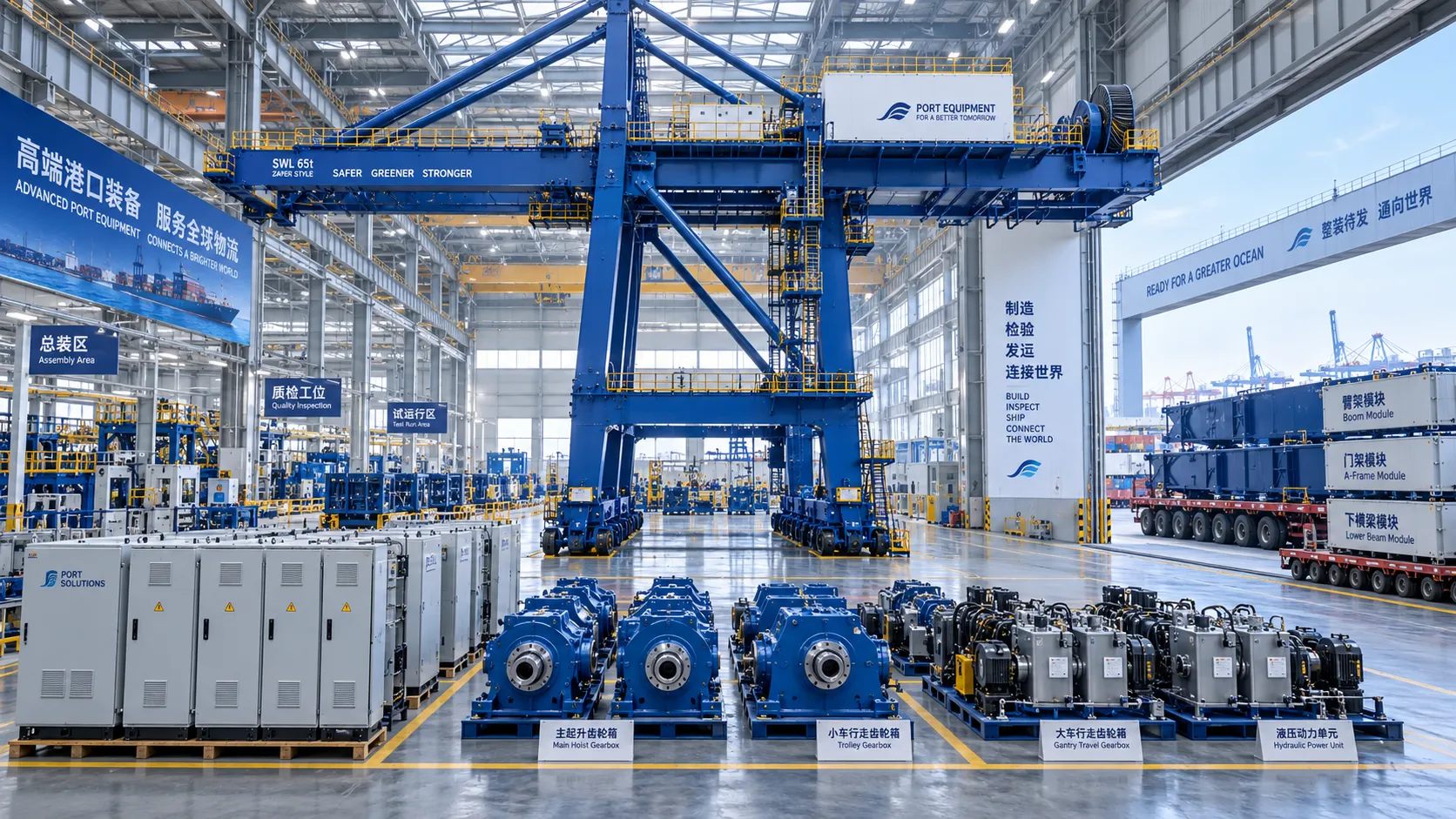
How Can Port Equipment Lead-Time Risk Be Managed?
How can port equipment lead-time risk be managed? Explore practical strategies to control critical paths, suppliers, transport, site readiness, and commissioning delays.

Terminal Automation Technologies That Raise Container Throughput Without Yard Disruption
Terminal automation technology that increases container throughput without disrupting yard flow. Explore smarter integration, resilient workflows, and phased deployment strategies.

Middle East Port Automation: Key Market Drivers, Projects, and Investment Risks
Port automation systems Middle East: explore market drivers, flagship projects, integration challenges, and investment risks shaping smarter, resilient terminals.
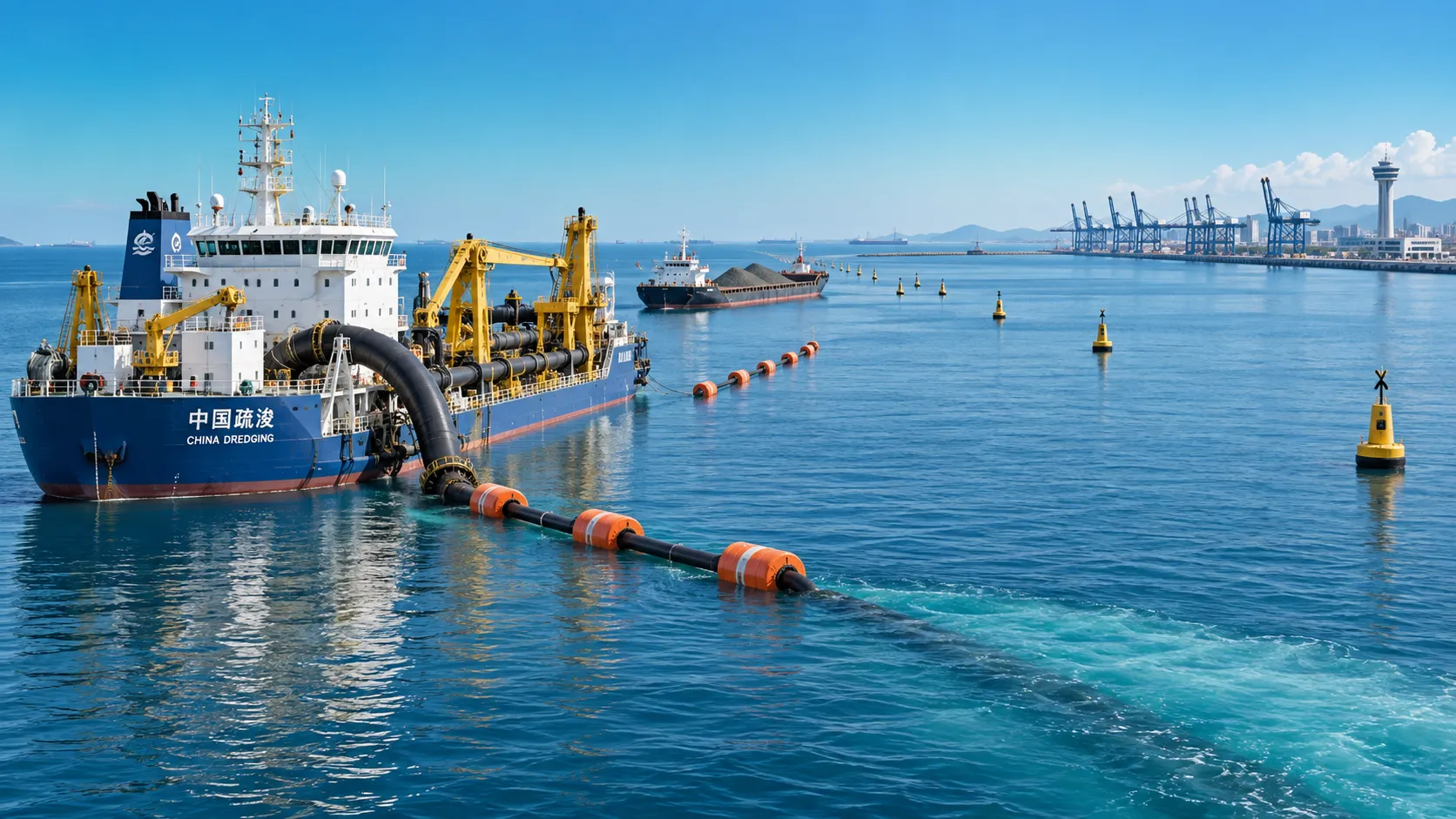
Planning Offshore Dredging Operations: Key Risks, Methods, and Project Controls
Offshore dredging operations demand smart planning. Explore key risks, proven methods, environmental controls, and project strategies for reliable delivery.