Full Automation Costs: What Changes After Year One
For finance approvers evaluating full automation, the real question is not the purchase price, but what shifts after year one. Once commissioning ends, the cost structure often changes across maintenance, software updates, labor allocation, energy use, and uptime risk. This article outlines where long-term value appears, where hidden expenses emerge, and how to judge whether full automation continues to strengthen operational returns.
In port terminals, bulk yards, automated container handling zones, and dredging-linked logistics systems, year-one budgets usually focus on equipment, civil works, integration, and go-live support. After that point, finance teams face a different question set: what becomes fixed, what remains variable, and which cost lines can expand faster than throughput. For decision-makers at the approval stage, full automation should be assessed as a 3- to 7-year operating model rather than a single capital event.
That is especially true in maritime logistics, where uptime windows are tight, asset values are high, and scheduling logic affects every crane move, AGV route, yard handoff, and vessel turnaround target. A terminal can absorb a 4% rise in software support more easily than a 6-hour control-system outage during peak berth utilization. The core issue is not whether full automation is advanced, but whether its post-commissioning cost behavior remains aligned with operational return.
How the Cost Structure Changes After Year One
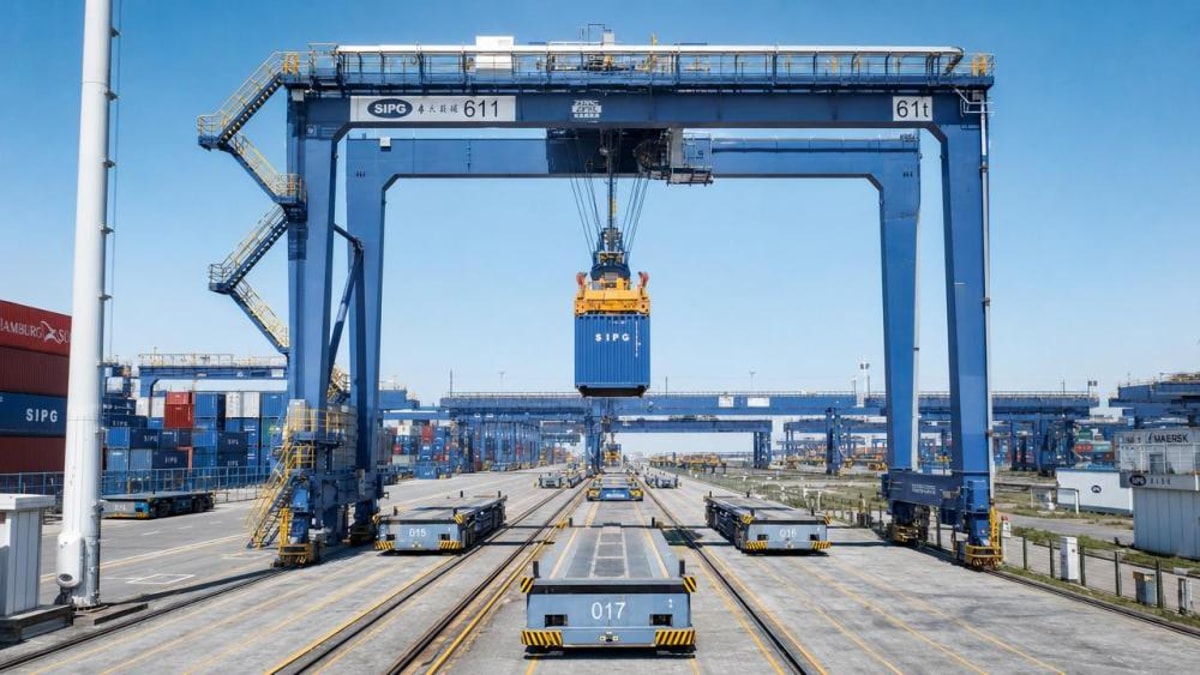
Once the stabilization period ends, full automation moves from project mode into lifecycle mode. In year one, many costs are bundled into implementation contracts. From year two onward, they separate into recurring software fees, spare parts planning, sensor calibration, cybersecurity hardening, remote diagnostics, and selective labor redeployment. This shift often changes financial visibility more than total spend.
For finance approvers, the practical challenge is that some savings appear immediately, while others take 12 to 36 months to materialize. Labor reduction may be partial rather than absolute. Energy efficiency may improve at the equipment level but be offset by added compute load, communications infrastructure, or climate-controlled control rooms. Uptime gains can be strong, but only if maintenance maturity keeps pace with automation complexity.
The five cost categories that usually shift first
- Maintenance transitions from largely mechanical inspection to mixed mechanical-electrical-software support.
- Software becomes a recurring operating line, often renewed annually or every 24 months.
- Labor costs move from direct equipment operation toward supervision, control-room staffing, and technical response roles.
- Energy use may become smoother, but system-wide electricity demand can still rise 3% to 8% if utilization increases materially.
- Downtime risk becomes more concentrated: fewer operators on the field, but greater sensitivity to network faults, software conflicts, or sensor failure.
The table below helps finance teams compare the typical year-one cost logic with the post-year-one operating pattern in automated port environments.
The key conclusion is that full automation rarely becomes “cheap” after year one; it becomes more measurable. For finance approvers, this is a positive development if cost lines are transparent and linked to throughput, berth productivity, equipment availability, and reduced incident exposure.
Why maintenance economics often surprise approval teams
In conventional operations, maintenance spend is often judged by parts usage and technician hours. In a full automation environment, maintenance includes edge devices, positioning systems, PLC logic, wireless connectivity, cameras, lidar, safety interlocks, and server-side orchestration tools. A terminal may reduce unplanned mechanical stoppages while simultaneously increasing its dependency on 24/7 diagnostics capability.
Typical post-warranty planning should assume 2 to 4 structured maintenance windows per quarter for critical systems, plus emergency response protocols measured in 30-minute, 2-hour, and 8-hour severity tiers. If those support layers are missing, even a minor sensor conflict can escalate into berth delay costs far above the annual fee that would have prevented it.
What to monitor financially
- Mean time between failures on critical automation nodes
- Average response time for software incidents
- Ratio of planned vs. unplanned maintenance hours
- Percentage of spare inventory tied to long-lead imported components
Where Long-Term Value Actually Appears
The strongest case for full automation after year one is not a single dramatic saving line. It is a layered return profile. Terminals that sustain stable automation performance often gain from lower variability, more predictable shift coverage, reduced damage events, better asset utilization, and cleaner operational data for planning. For finance teams, that means the return case should be tested on consistency, not only peak efficiency.
In highly scheduled maritime environments, even a 5% to 12% improvement in cycle consistency can matter as much as direct labor reduction. This is because vessel windows, truck turn times, stacking density, and energy loading profiles interact. Full automation can improve those interactions if orchestration logic is stable and if manual exception handling is kept below a defined threshold, such as 8% to 15% of total moves.
Operational value areas finance teams should quantify
Before approving or renewing support structures around full automation, it is useful to translate technical performance into finance language. The table below links operational outputs to the value logic that matters in ports, bulk handling nodes, and automated yards.
The financial value of full automation is often strongest where variability used to be expensive. If a terminal historically relied on overtime-heavy labor coverage, irregular crane performance, or repeated rehandling, automation may create a steadier cost base. That steadiness is often more valuable to finance than isolated productivity peaks.
Data quality becomes a balance-sheet issue
After year one, good automation platforms generate cleaner event logs, more accurate downtime coding, and better maintenance traces. That has a direct effect on capital planning. A finance team can decide whether to refurbish a crane, expand AGV fleets, or adjust dredging support logistics with more confidence when utilization data is granular and reliable over 12 to 24 months.
For PS-Nexus audiences following port automation and control systems, this is an important shift. The “central nervous system” value of automation is not only real-time execution. It is also the creation of dependable intelligence for scheduling, spare strategy, energy management, and long-cycle infrastructure budgeting.
Hidden Expenses That Can Distort the Return Case
Not every post-year-one cost is obvious during procurement. Some of the most significant risks in full automation appear in supporting layers: middleware compatibility, cybersecurity maintenance, vendor dependency, communication network upgrades, training refresh cycles, and fallback operating procedures. These are not edge cases. They are normal lifecycle items that should be priced early.
A common approval mistake is to compare automated OPEX only against historical manual labor costs. That understates the real picture. Full automation may reduce labor intensity, but it also introduces software governance and infrastructure resilience requirements that did not exist at the same depth before. In critical marine logistics settings, underfunding those areas can erode the expected return within 18 to 24 months.
Common expense lines that emerge after commissioning
- Annual software maintenance and patch testing
- Cybersecurity monitoring, access control review, and segmentation hardening
- Sensor replacement cycles, especially in saline, dusty, or vibration-heavy zones
- Network redundancy upgrades for low-latency control traffic
- Refresher training every 6 to 12 months for controllers, technicians, and fallback teams
Vendor lock-in risk
Finance approvers should pay close attention to interface ownership and change-order logic. If core control functions, data schemas, and diagnostic access are tightly locked into one supplier, future modifications may carry premium pricing. This becomes especially relevant when expanding yard blocks, retrofitting quay cranes, or integrating new dredging-support flows with existing terminal systems.
A practical review should test at least 4 points: data export rights, third-party maintenance access, software version dependency, and upgrade pricing methodology. These factors do not always increase cost immediately, but they can sharply affect year-three and year-five budgets.
How Finance Approvers Should Evaluate Full Automation Beyond CAPEX
A robust approval framework for full automation should combine operating metrics, technical resilience, and contract structure. The aim is not simply to ask whether automation reduces cost, but whether it improves controllability of cost at the required service level. In marine logistics, predictable cost with predictable uptime is usually more valuable than optimistic savings built on weak support assumptions.
A useful method is to assess the project in 3 layers: base operating economics, disruption exposure, and expansion flexibility. Each layer should be reviewed over at least a 36-month horizon, with sensitivity tests for throughput swings of plus or minus 10%, support fee inflation, and downtime scenarios lasting 2, 6, or 12 hours.
A practical approval checklist
The following checklist is designed for finance leaders assessing whether full automation remains financially sound after the first operating year.
This checklist shows why full automation approval should extend beyond payback period math. Contract detail, service architecture, and operational discipline are as important as the initial business case. For complex ports and coastal logistics assets, weak lifecycle governance can erase otherwise sound technical value.
When full automation is financially stronger after year one
The model is generally stronger when the site has high equipment utilization, frequent shift coverage pressure, measurable safety exposure, and a clear need for scheduling precision. It is also stronger when the operator has enough internal capability to manage vendors, validate data, and maintain disciplined change control.
It is weaker when automation is purchased mainly for image value, when throughput remains too low to absorb support overhead, or when integration ownership is fragmented across too many parties. Finance teams should be cautious if savings assumptions depend on immediate headcount elimination, zero disruption, or unlimited software scalability without contractual proof.
Final Decision Guidance for Port and Maritime Finance Teams
After year one, full automation should be judged by four outcomes: cost predictability, uptime stability, labor redesign effectiveness, and scalability of the control architecture. If those four areas are improving, recurring costs are usually justified. If they are drifting, the issue is often not the concept of automation itself, but gaps in maintenance planning, software governance, or vendor structure.
For finance approvers in maritime logistics, container handling, bulk terminals, and allied dredging-linked operations, the best decisions come from viewing full automation as an operating system with financial consequences, not simply as advanced equipment. The year after commissioning is where the real cost truth becomes visible.
PS-Nexus tracks these long-cycle shifts across port automation, heavy terminal gear, and control-system evolution so decision-makers can compare technical claims with commercial reality. If you are reviewing a project, support renewal, or expansion roadmap, contact us to obtain a more tailored evaluation framework, discuss product and system details, or explore broader automation solutions for your port infrastructure strategy.
Related News
Port Equipment Automation Maintenance Issues You Can Prevent Early
Port equipment automation maintenance starts with early detection. Learn how to catch sensor, drive, PLC, and network issues before they cause costly downtime and delays.
Marine Logistics Technology Suppliers: What Sets Them Apart
Marine logistics technology suppliers stand apart through automation, integration, and lifecycle support. Discover what helps ports and channel partners choose future-ready solutions.
Port Technology Trends Worth Watching Before Your Next Upgrade
Port technology trends shape smarter upgrade decisions. Explore automation, remote crane control, predictive maintenance, and phased investment strategies to reduce risk and improve ROI.
Automated Port Systems: Common Integration Problems to Expect
Automated port systems face real integration hurdles—from legacy equipment and data mismatches to network latency and safety conflicts. Learn what to check before approval.
Port Automation Solutions That Reduce Manual Handoffs
Port automation solutions reduce manual handoffs, improve crane, AGV, yard, and control room coordination, and help terminals boost safety, speed, and operational efficiency.
Smart Terminal Technology Trends Changing Port Operations
Smart terminal technology is reshaping port operations with AI, automation, predictive maintenance, and electrification. Discover which trends deliver the best ROI for different terminal scenarios.
Marine Geotechnic Risks That Can Delay Coastal Projects
Marine geotechnic risks can quietly derail coastal projects with delays, rework, and compliance issues. Learn the warning signs and practical controls to protect schedule, safety, and budget.
What to Compare Before Choosing Port Logistics Solutions
Port logistics solutions comparison guide: learn what to assess on throughput, compatibility, scalability, lifecycle cost, and automation readiness before choosing the right system.
Port Terminal Equipment Costs Are Shifting in 2026
Port terminal equipment costs are shifting in 2026. Learn how automation, electrification, financing, and compliance reshape TCO, ROI, and smarter terminal investment decisions.