Related News
- 00
0000-00
Sustainable Harbor Engineering: Balancing Erosion Control and Habitat Protection - 00
0000-00
Which ISO Certifications Matter When Specifying Maritime Infrastructure? - 00
0000-00
Selecting Intermodal Yard Equipment for Fast, Safe Container Transfers - 00
0000-00
How to Select Harbor Structures for Quay Walls Under Berthing and Wave Loads - 00
0000-00
Selecting Smart Terminal Software for Multi-Site Field Service Operations
Which ISO Certifications Matter When Specifying Maritime Infrastructure?
For port terminals, dredging packages, bulk-handling systems, quay cranes, and automated yard controls, an maritime infrastructure ISO certified supplier should be evaluated by the relevance and scope of its certification, not by the length of its certificate list.
The most useful ISO certifications are usually ISO 9001 for quality management, ISO 14001 for environmental management, and ISO 45001 for occupational health and safety. These establish a credible management baseline for most engineering and equipment scopes. Yet they do not prove that a supplier's crane, dredger, automation platform, electrical panel, or coating system is technically suitable for a particular marine application. Technical compliance still has to be specified, reviewed, tested, and evidenced separately.
The practical question is therefore not, “Is the supplier ISO certified?” It is, “Which controlled processes must this supplier demonstrate for this package, and what project evidence must accompany those processes?”
Start with the package risk, not a generic ISO checklist
Maritime infrastructure combines long asset life, corrosive exposure, high consequence lifting operations, electrical and software dependencies, and difficult access for repairs. A small failure in a low-risk ancillary item may be manageable. The same failure in a ship-to-shore crane drive, dredging pump train, mooring system, automated guided vehicle control network, or high-voltage shore connection can affect safety, availability, contractual performance, and terminal operations.
That difference should shape the certification requirement. A fabricated handrail, a conveyor transfer tower, and an autonomous container-handling system should not receive the same ISO schedule. Requiring every possible standard from every bidder can narrow competition without reducing risk. Requiring only ISO 9001 for a complex automated terminal package can leave serious gaps in cybersecurity, configuration control, functional testing, and lifecycle support.
A sound specification separates three questions:
- Is the organization managed in a controlled way? This is where management-system certification matters.
- Does the delivered equipment meet the technical design and performance requirements? This requires drawings, calculations, inspection plans, test records, material traceability, software documentation, and acceptance testing.
- Can the asset be operated and maintained safely over its intended life? This depends on maintainability, spare parts, training, corrosion strategy, operating procedures, data ownership, and support arrangements.
ISO certificates mainly answer the first question. They can support confidence in the other two, but they cannot replace project-specific verification.
The core certifications for most marine infrastructure procurement
ISO 9001 is the baseline, but its scope matters more than its presence
ISO 9001 is normally the starting point for a supplier of heavy terminal equipment or marine engineering services. It signals that the organization has documented processes for quality planning, document control, nonconformance handling, corrective action, supplier control, and internal review. In complex supply chains, those disciplines are directly relevant to late design changes, purchased components, weld repairs, factory acceptance tests, and final documentation.
However, a certificate should be read as evidence, not treated as a pass/fail badge. Its scope may cover trading, sales, general fabrication, maintenance, design, or a particular production facility. A certificate covering a local sales office is not equivalent to coverage of the factory producing structural steel, machinery, or control systems. A certificate for mechanical fabrication may not cover software development or system integration.
For a major package, request the current certificate, the certified scope, the legal entity, and the sites included. Then compare them with the actual contract chain. The designer, manufacturer, panel builder, software integrator, installer, and commissioning contractor may be different entities. A prime contractor’s ISO 9001 certificate does not automatically extend to each critical subcontractor.
Where the equipment includes fatigue-sensitive structures, high-duty lifting mechanisms, pressure systems, electrical distribution, or control logic, ISO 9001 should sit alongside a project quality plan. That plan should identify hold points, witness points, inspection responsibilities, traceability requirements, calibration controls, and the evidence required before shipment or handover.
Environmental and safety certification should follow the work, not the brochure
ISO 14001 and ISO 45001 deserve more attention when the scope includes marine construction, dredging, offshore or waterside installation, heavy lifts, confined-space work, hot work, live electrical testing, or prolonged maintenance activities. Both standards show that the organization has management processes for environmental and safety risks. They are especially relevant where field execution is a large part of the contract rather than a minor installation activity.
For dredging and coastal works, ISO 14001 is useful because the operational footprint can involve sediment handling, turbidity controls, fuel management, waste streams, spill prevention, and equipment maintenance near water. Still, an ISO 14001 certificate does not establish whether a contractor’s dredging method is appropriate for a particular seabed, disposal route, habitat condition, or local approval framework. Those project controls should be stated in the execution plan and reviewed against the actual work area.
ISO 45001 supports a disciplined safety-management structure, but safety performance depends heavily on how work is planned and supervised. Specifications should therefore require task-specific risk assessments, lifting plans where relevant, emergency arrangements, competence records, and clear authority to stop unsafe work. Certification is a useful prequalification tool; field controls remain the operative protection.
Automation changes the certification conversation
For manually operated equipment, mechanical reliability and safe work execution often dominate the risk discussion. For automated terminals and connected port equipment, data integrity, network architecture, access control, remote support, and configuration management become equally important. A crane can be mechanically sound yet unavailable because a software update, interface mismatch, or network failure interrupts its operating sequence.
ISO/IEC 27001 is therefore relevant when a supplier hosts, manages, develops, or has privileged access to operational data and connected systems. It is particularly useful for terminal operating platforms, equipment fleet management, remote diagnostic services, cloud analytics, and integration providers. It indicates that the supplier has an information-security management framework covering areas such as risk management, access governance, incident handling, and controlled information processes.
It should not be interpreted as proof that the delivered operational technology is protected against every cyber risk. Security for cranes, automated guided vehicles, programmable controllers, sensors, radio networks, and gate systems must be addressed in the technical specification. Define responsibility for network segmentation, user roles, remote access, logging, patching, backup and recovery, vulnerability handling, and software change approval. For integrated systems, require a clear boundary diagram showing which party owns each interface and security responsibility.
Configuration control is often underestimated. A terminal automation package may include several vendors, each supplying hardware, applications, communications equipment, or interfaces. If revisions are not controlled, a correct component can still fail as part of an incorrect system. Require a controlled software baseline, interface register, revision history, test environment, rollback process, and acceptance criteria for changes after commissioning.
Asset management and energy standards are strategic, not universal tender requirements
ISO 55001 is most valuable when the contract extends beyond delivery into operation, maintenance, lifecycle support, or asset-data handover. It can be relevant to terminal operators, long-term maintenance providers, and organizations responsible for renewals across cranes, conveyors, dredging fleets, electrical assets, and control systems.
Its practical value lies in connecting asset decisions to service objectives. That means defining which asset data will be delivered, how critical spares are identified, what maintenance information is usable in the owner’s system, and how failure information is fed back into planning. For a one-off supply of non-critical equipment, requiring ISO 55001 from every bidder may add little. For a long-life automated terminal, it can support a more disciplined handover and operating model.
ISO 50001 is similar. It is relevant where energy performance is part of the operating strategy, especially for electrified terminal equipment, large conveyor systems, pumps, and shore-side electrical infrastructure. But an organizational energy-management certificate cannot replace duty-cycle analysis. Equipment evaluation still needs to consider operating profiles, peak demand, regeneration where applicable, idle consumption, control logic, power quality, and maintenance condition.
Do not confuse management certification with technical compliance
This is the most common specification error. ISO management-system certification concerns how an organization governs and controls its processes. Product standards, design codes, classification requirements, material standards, electrical requirements, coating specifications, welding procedures, and acceptance tests address the delivered work itself. Both are necessary, but they solve different problems.
A supplier may hold ISO 9001, ISO 14001, and ISO 45001 while a proposed component remains unsuitable for the design environment. For example, a coastal structure may still need defined corrosion categories and coating inspection criteria. A fabricated boom or hopper may still require documented material identification, welding procedures, qualified personnel, and non-destructive examination where the engineering scope demands it. A control cabinet may still need drawings, test records, protection settings, and interface validation.
Write the contract so that management certification is an eligibility or evaluation requirement, while technical deliverables are contractual acceptance requirements. This distinction prevents a certificate from becoming a substitute for engineering review.
A practical way to set certification requirements
Before issuing a tender, build a short risk matrix for each work package. The purpose is not to create paperwork; it is to decide what must be controlled and evidenced.
- Identify the package role. Is it structural, mechanical, electrical, digital, environmental, operational, or a combination?
- Assess the consequence of failure. Consider personnel exposure, port downtime, environmental impact, interface disruption, and repair access.
- Map the delivery chain. Identify who designs, fabricates, assembles, programs, integrates, installs, tests, and supports the asset.
- Select the relevant management certifications. ISO 9001 is commonly appropriate; add ISO 14001, ISO 45001, ISO/IEC 27001, ISO 55001, or ISO 50001 only where the work and risk justify them.
- Define project evidence separately. State the required design reviews, inspection and test plans, factory tests, site acceptance tests, documentation, training, and handover data.
- Evaluate implementation, not certificates alone. Review sample quality plans, corrective-action records, subcontractor controls, testing procedures, and relevant project documentation during bid assessment or audit.
This approach also produces more defensible procurement decisions. It shows why a particular certification is required for a critical control-system integrator, but not necessarily for a minor standard-item supplier.
Questions that expose weak certification claims
During technical clarification, a few focused questions reveal far more than a certificate scan:
- Which legal entity and production or service locations are covered by the certificate?
- Does the scope include the activities being offered: design, fabrication, software development, integration, installation, or maintenance?
- Which critical subcontractors are used, and how are their quality and technical controls verified?
- How are engineering changes approved after design freeze and after site acceptance?
- What traceability will be provided for materials, critical components, software versions, and test results?
- What are the proposed inspection, factory testing, commissioning, and handover records?
- For connected systems, who controls remote access, cybersecurity updates, backups, and incident response?
PS-Nexus focuses on the point where heavy terminal equipment, control architecture, and marine engineering meet. In that context, the strongest procurement documentation links certification review to actual interfaces: crane controls with terminal scheduling, dredging equipment with condition monitoring, and mobile fleet systems with operating data and support responsibilities. The risk is rarely isolated within one machine; it often emerges where disciplines and suppliers meet.
Specify the evidence that will matter at handover
A certificate helps establish supplier capability before award. Handover evidence determines whether the owner can operate, maintain, modify, and defend the asset after acceptance. The required deliverables should be proportionate to the package, but commonly include approved drawings, equipment manuals, maintenance schedules, parts lists, inspection records, test reports, training material, warranties, software and configuration records, interface documentation, and change logs.
For automated infrastructure, clarify data rights and access before procurement is finalized. Operational data, alarm histories, configuration files, diagnostic tools, and user accounts can become essential for maintenance and future expansion. A supplier’s security controls should not leave the owner unable to access its own asset information or dependent on an uncontrolled remote connection for routine support.
The right ISO requirement is therefore the one that supports a defined project control. Use ISO 9001 as the quality foundation for most critical suppliers. Add ISO 14001 and ISO 45001 where environmental exposure and field safety are material. Apply ISO/IEC 27001 when digital access and information handling affect operations. Use ISO 55001 and ISO 50001 where lifecycle asset performance or energy governance is genuinely part of the delivery model. Then make the technical specification, test regime, and handover documents do the work that certificates cannot do.
Related News
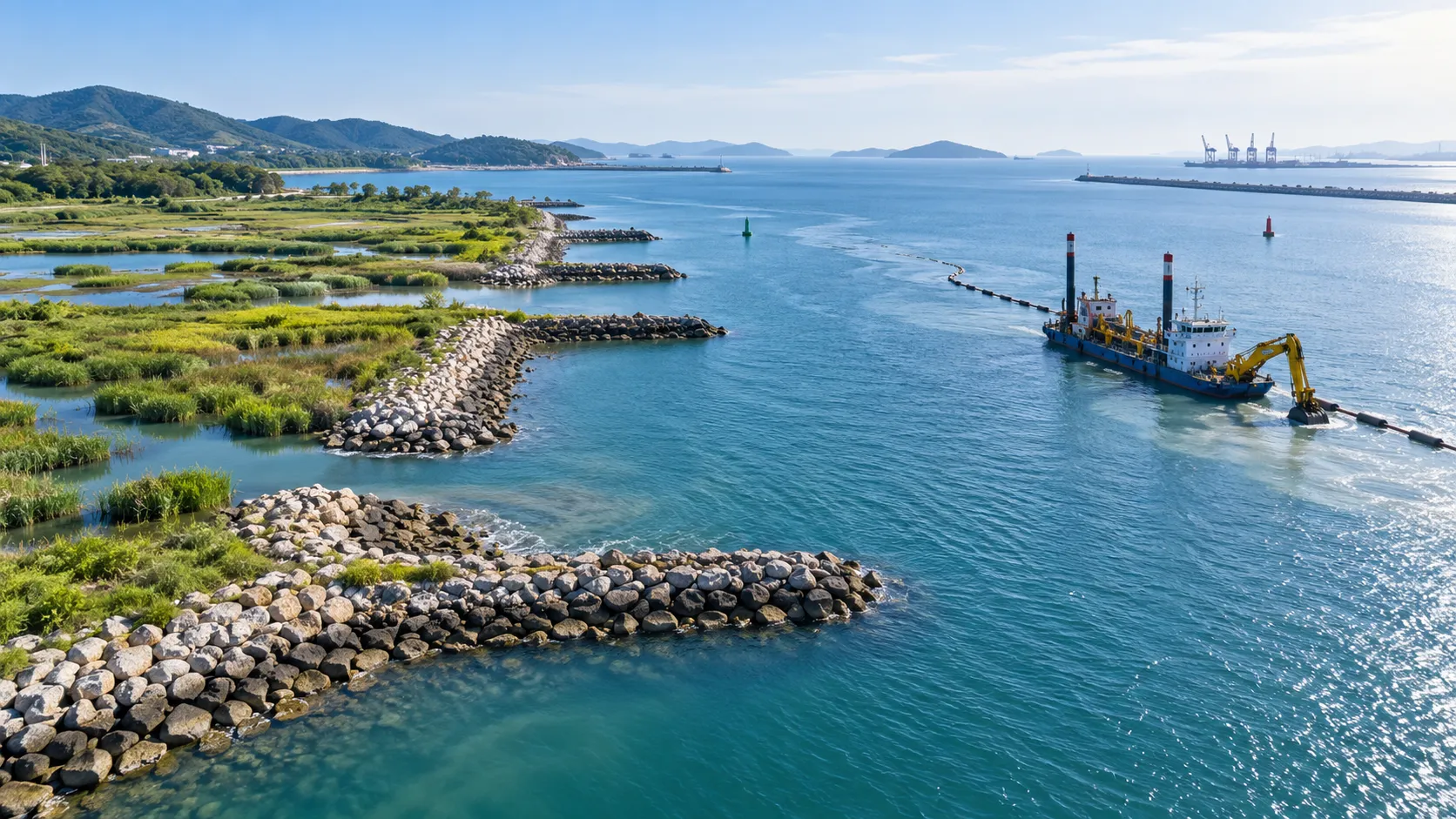
Sustainable Harbor Engineering: Balancing Erosion Control and Habitat Protection
Explore sustainable harbor engineering solutions that balance erosion control, habitat protection, and smarter dredging. Discover practical strategies for resilient harbors.

How to Evaluate a Bulk Handling Equipment Exporter for Port and Plant Projects
Bulk handling equipment exporter evaluation guide for port and plant projects—compare engineering, references, delivery reliability, and lifecycle support.
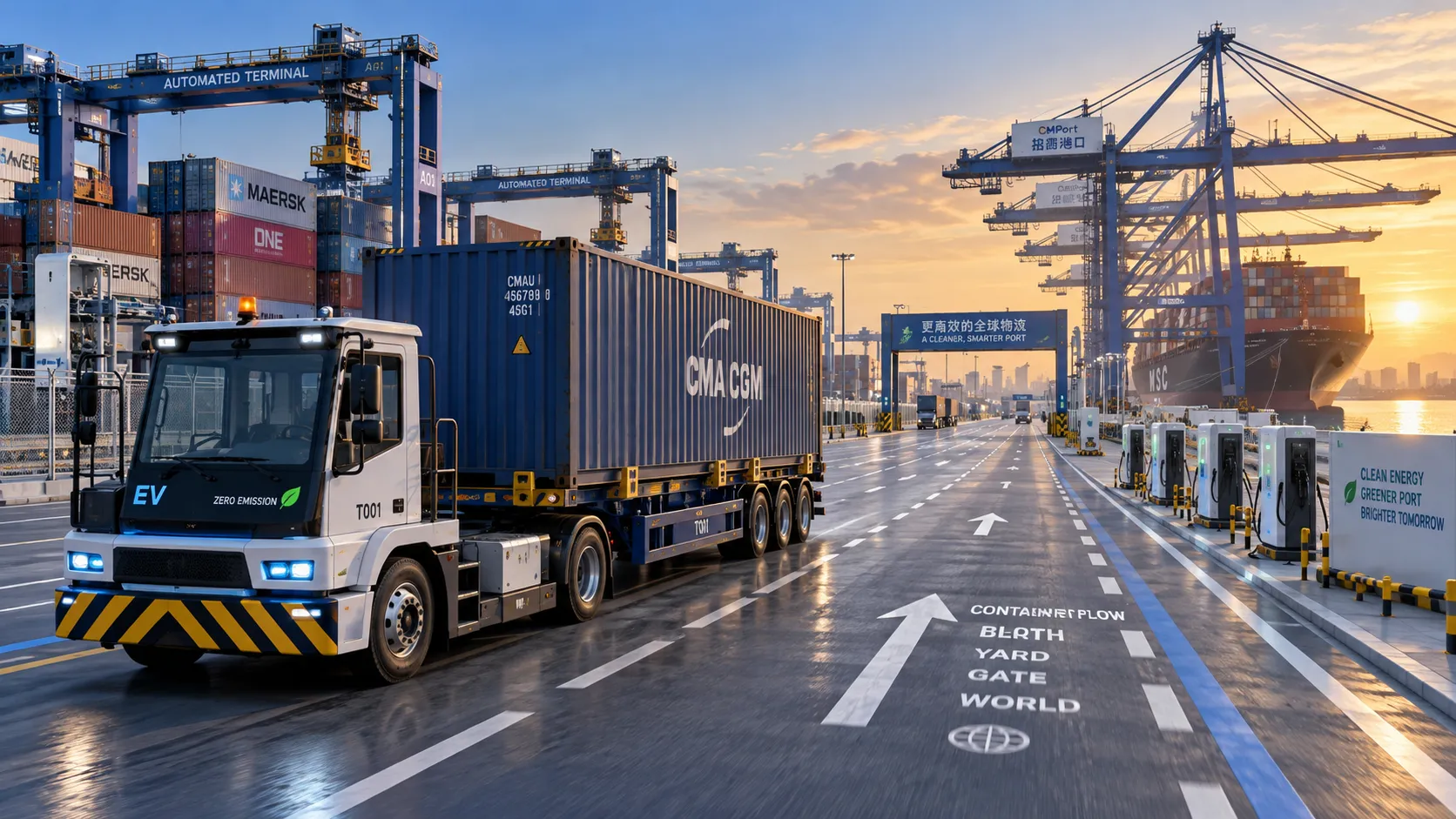
How to Evaluate a Yard Mobility Solutions Manufacturer for High-Throughput Sites
Yard mobility solutions manufacturer evaluation guide for high-throughput terminals: assess performance, integration, service, lifecycle costs, and delivery risk.
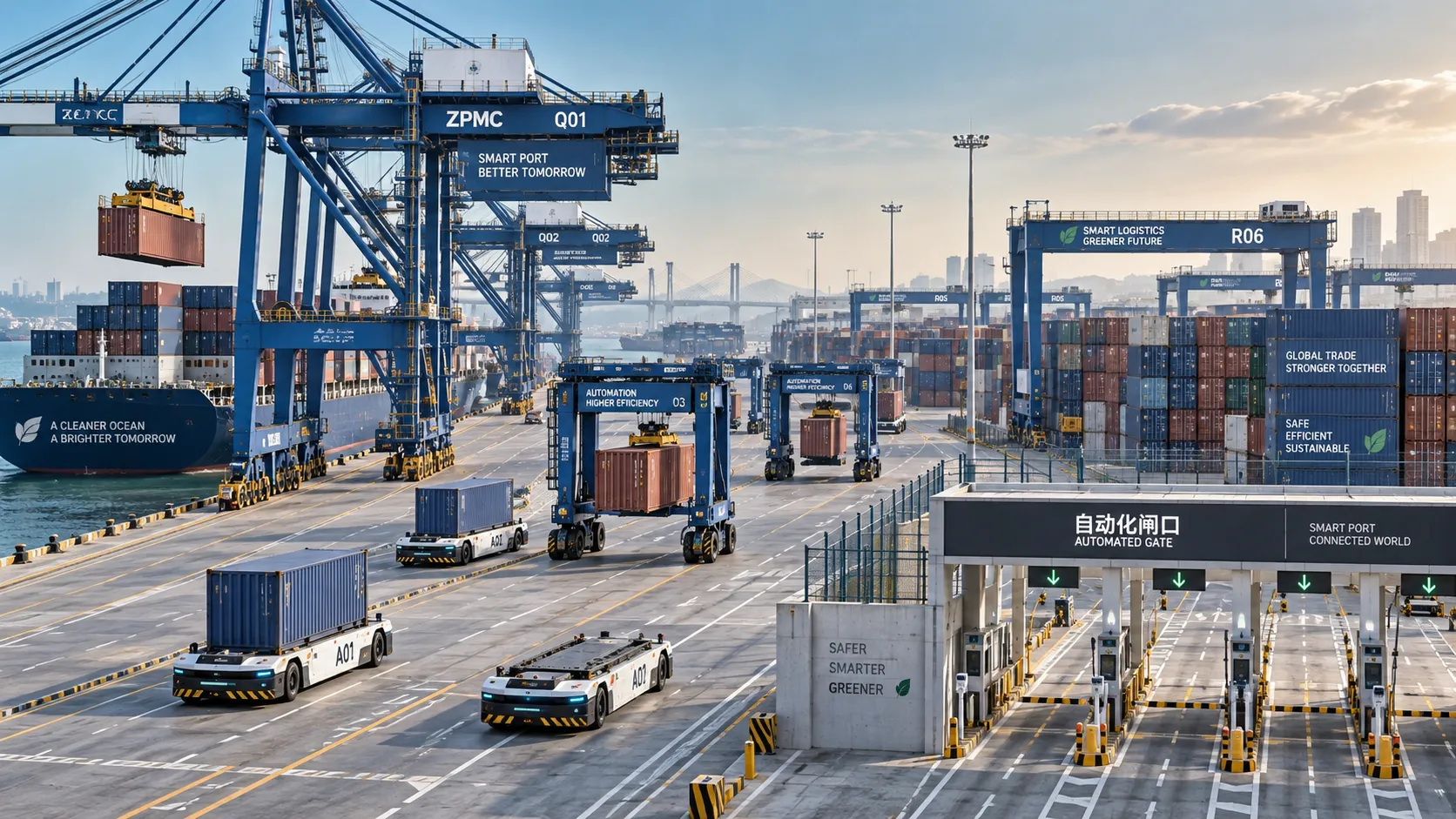
Automated Port Systems in Latin America: Investment Priorities for Container Terminals
Automated port systems Latin America: discover investment priorities for container terminals, from smart gates and remote cranes to resilient digital control layers.

Selecting Intermodal Yard Equipment for Fast, Safe Container Transfers
Container handling equipment for intermodal yards: compare reach stackers, RTGs, automation, safety planning, and lifecycle costs to build faster, safer container flow.
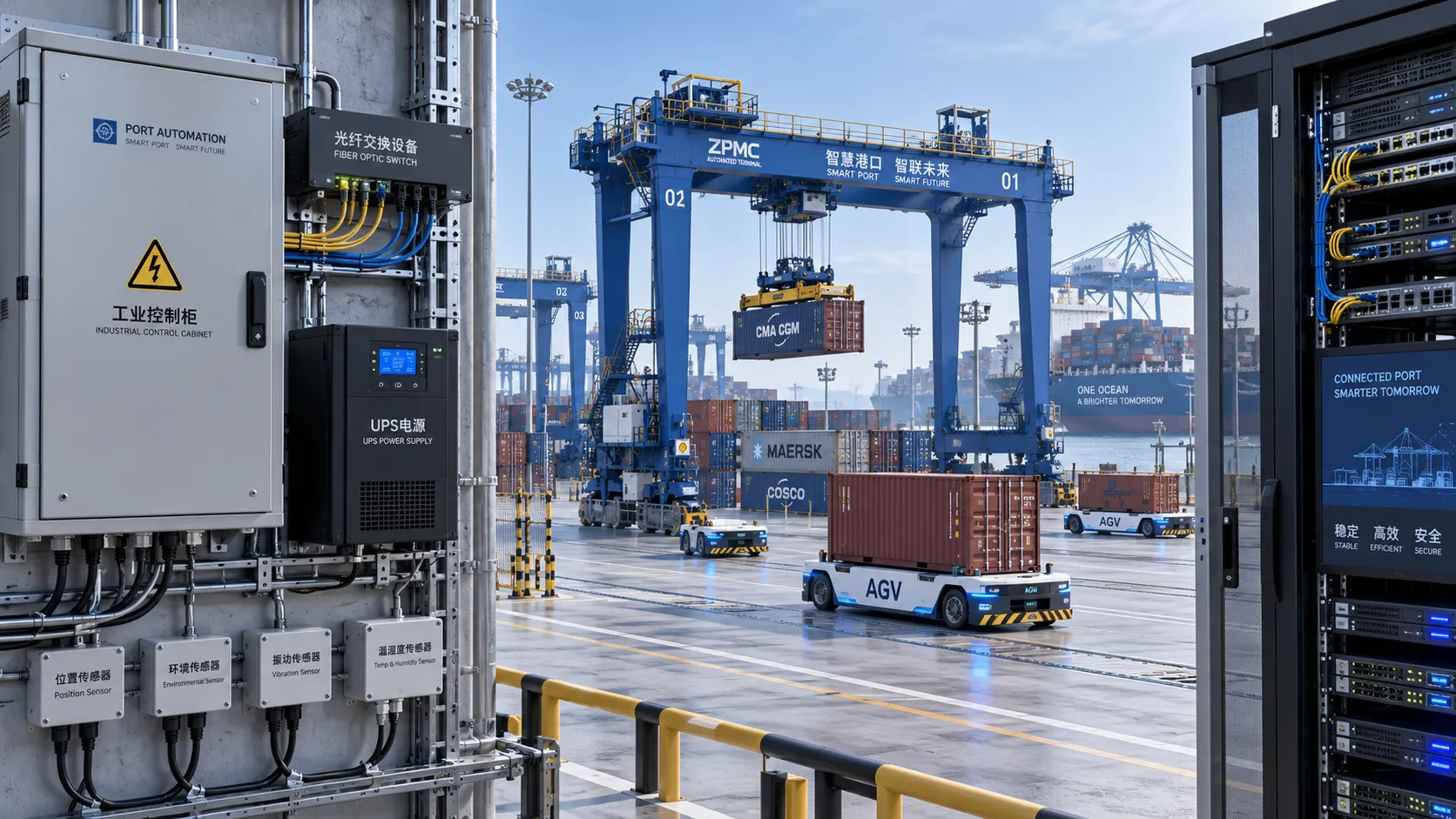
Terminal Control System Costs: Budgeting Hardware, Integration, and Lifecycle Support
Terminal control systems cost explained: budget hardware, integration, safety, cybersecurity, commissioning, and lifecycle support for resilient terminal operations.

Smart Operations in the Middle East: Where Industrial Investment Is Growing
Smart operations Middle East investment is reshaping ports, industrial corridors, and logistics networks through connected data, automation, resilience, and smarter asset performance.

How to Select Harbor Structures for Quay Walls Under Berthing and Wave Loads
Harbor structure for quay wall selection: evaluate berthing energy, wave loads, soil conditions, durability, and lifecycle risk to build safer, adaptable terminals.

Selecting Smart Terminal Software for Multi-Site Field Service Operations
Smart terminal solutions software helps multi-site field service teams unify asset history, mobile maintenance, integrations, and reporting for safer, faster terminal operations.