Related News
- 00
0000-00
Port Control System Integration Checklist: Compatibility, Security, and Failover - 00
0000-00
Sustainable Harbor Engineering: Balancing Erosion Control and Habitat Protection - 00
0000-00
Which ISO Certifications Matter When Specifying Maritime Infrastructure? - 00
0000-00
Selecting Intermodal Yard Equipment for Fast, Safe Container Transfers - 00
0000-00
How to Select Harbor Structures for Quay Walls Under Berthing and Wave Loads
Port Control System Integration Checklist: Compatibility, Security, and Failover
A terminal operating system may exchange messages successfully with crane controls while still issuing a job against an outdated container position. An AGV fleet may reconnect after a network interruption but receive a task that another vehicle has already accepted. These integration faults can interrupt vessel operations, create conflicting equipment assignments, and undermine safe coordination even when individual systems appear healthy.
What should be checked before integrating port control systems? Verify interface semantics, command ownership, operational timing, cybersecurity boundaries, safety independence, and recovery behavior—not just connectivity. Before commissioning, each critical interface needs documented acceptance criteria and evidence that normal operation, degraded operation, and restoration preserve a consistent operational state.
Establish the control boundary before reviewing interfaces
Start with an architecture map covering the terminal operating system (TOS), equipment control system (ECS), crane PLCs, AGV fleet manager, positioning services, operator stations, and supporting infrastructure. Include legacy gateways, remote maintenance connections, identity services, and time synchronization. A component that does not issue motion commands can still become a critical dependency.
For each operational sequence, identify which system requests work, which authorizes execution, which controls movement, and which confirms completion. A TOS job release should not be mistaken for permission to bypass equipment interlocks. Supervisory scheduling and safety-related control have different responsibilities and assurance requirements.
- Command ownership: Define the authoritative controller for each asset and the conditions for transferring control between automatic, remote, and local modes.
- State ownership: Identify the source of truth for container location, equipment availability, task status, and restricted operating areas.
- Dependency boundaries: Record what happens when positioning, authentication, communications, or scheduling services become unavailable.
- Change authority: Assign responsibility for interface changes, safety-impact assessment, test approval, and rollback authorization.
The resulting map should expose ambiguous ownership. If two systems can independently release the same equipment task, resolve that design issue before testing message transport.
Compatibility means matching behavior, not protocol names
Two products supporting OPC UA, MQTT, or a REST API are not necessarily interoperable. Compatibility depends on implemented versions, profiles, data models, authentication options, and error handling. Gateways can translate transport formats without resolving differences in operational meaning.
Request an interface control document for each connection. It should define message schemas, supported operations, identifier formats, units, coordinate frames, timestamps, quality flags, acknowledgments, and versioning rules. Test the actual firmware and software combinations intended for deployment; a demonstration using a different release is insufficient evidence.
For legacy equipment, confirm polling limits, writable registers, encoding, and connection capacity. Increasing polling frequency can overload a controller or gateway. Where timestamps are added by a gateway, distinguish gateway receipt time from the time the equipment actually measured the value.
Follow one job through every state transition
Trace a representative container transfer from planning through equipment assignment, pickup, handover, placement, and inventory confirmation. Then repeat with cancellation, reassignment, and partial completion. These paths often reveal gaps that isolated API tests miss.
Require correlation identifiers and defined transaction boundaries. After a timeout, the requesting system must determine whether a command was rejected, remains pending, or executed without its acknowledgment arriving. Blind retries are unsuitable for commands with physical consequences. State reconciliation should use authoritative equipment and inventory information rather than assume that the last received message remains correct.
Set timing limits around the operation being protected
There is no single acceptable latency for a port control integration. Inventory updates, supervisory dispatch, remote crane operation, and protective control have different requirements. Define budgets for each traffic class and separate application processing time from network delay.
For relevant flows, specify maximum data age, permitted jitter, timeout behavior, and tolerated packet loss. Measure end-to-end performance under expected peak traffic, reconnect bursts, and maintenance activity. Average latency alone can conceal delays that repeatedly disrupt a handover or invalidate an operator display.
- Test wireless roaming and coverage transitions along AGV routes, including transfer zones and areas affected by container stacks.
- Verify traffic prioritization at switches, gateways, and wireless infrastructure, not only at the application endpoint.
- Check clock synchronization, loss-of-sync alarms, and timestamp interpretation across systems.
- Confirm that delayed commands expire or undergo revalidation instead of executing automatically when communications recover.
Acceptance limits should come from the equipment requirements, operational design, and applicable safety assessment. A successful office-network test cannot establish suitability for a moving vehicle or remotely controlled crane.
Protect the OT boundary without creating hidden dependencies
Map permitted communications between enterprise IT, operational technology (OT), equipment zones, and external support networks. Document the source, destination, service, direction, and operational purpose of every allowed flow. Broad access between zones makes troubleshooting easier but increases the consequences of a compromised account or host.
The IEC 62443 series provides a framework for industrial cybersecurity, including zones and conduits, risk assessment, and system requirements. Identify the applicable parts and assessment scope rather than treating a reference to the series as proof that an entire integration is secure.
Evaluate device and user authentication, least-privilege authorization, certificate validation, credential storage, and key rotation. Shared administrator accounts obscure accountability. Remote maintenance should use controlled access paths, individual identities, appropriate multifactor authentication, and logged sessions, with access limited to the equipment and period required.
Security controls also need operational testing. Certificate expiry, identity-service failure, firewall failover, and authentication renewal can interrupt control sessions. Define whether an established session may continue, whether new commands are blocked, and how authorized operators retain necessary local control. Avoid security changes that silently disable interlocks or introduce unrestricted fallback access.
Request a component inventory, vulnerability-handling process, supported patch windows, and backup arrangements for security infrastructure. Scanning and penetration testing on production OT require approved methods and scheduling; intrusive tests can disrupt devices that were not designed to tolerate them.
Keep safety functions distinct from supervisory availability
A redundant server does not make an unsafe command safe. Review emergency stops, access-zone interlocks, collision avoidance, load-related protections, and operating-mode transitions wherever the integration affects them. Confirm which protections remain effective when the supervisory network or application fails.
Depending on the equipment and safety architecture, standards such as IEC 61508, IEC 62061, or ISO 13849 may inform the assessment. Their applicability and required integrity or performance level must be determined through the relevant hazard analysis—not selected from a generic integration checklist.
Test the authority rules around local takeover and return to automation. Restoration of communications must not itself authorize movement. Stale permissions, obsolete route reservations, and queued commands need explicit invalidation or revalidation. Changes that alter a safety-related function or its assumptions require review by the responsible machinery or functional-safety specialists before release.
Prove failover while work is in progress
Failover testing should include active transfers, not merely idle server switchover. Identify failure domains such as application nodes, databases, message brokers, switches, wireless links, power supplies, and shared services. Two servers connected through one switch or one power source do not provide independence against those failures.
Define recovery time and recovery point objectives for each critical service. These describe acceptable service interruption and data loss, but they do not alone establish safe recovery. The integration also needs a rule for uncertain physical state: whether affected work stops, continues under local control, or waits for operator reconciliation.
- Interrupt an active transaction. Disconnect a link or stop a service after command acceptance but before completion acknowledgment.
- Check control authority. Verify that redundant nodes cannot both issue commands during a network partition. Test quorum or fencing behavior where used.
- Observe equipment behavior. Confirm the specified safe or degraded response, including the handling of tasks already underway.
- Restore service. Reconcile jobs, physical positions, route reservations, and inventory before releasing affected work.
- Test failback separately. Returning to the preferred node must not duplicate commands or overwrite newer state.
Also test backup restoration. High availability can replicate accidental deletion or corrupted configuration; it does not replace recoverable backups. Restore the application, configuration, credentials, certificates, and required data in an isolated environment, then verify that the recovered versions remain compatible with equipment interfaces.
Turn the checklist into commissioning gates
For every critical requirement, record the test condition, expected behavior, measurement method, pass criterion, evidence, and responsible approver. Replace statements such as “fast recovery” or “secure interface” with observable outcomes. For example, after reconnection, an interrupted task must resolve to one authoritative state without creating a second executable command.
Use factory acceptance testing for repeatable interface and failure scenarios, followed by site acceptance testing on installed networks and equipment. Simulation is useful for malformed messages, duplicate events, and load testing, but it cannot fully establish radio coverage, physical interlocks, or behavior under actual equipment movement.
Stage commissioning by interface, operating area, or equipment group. Retain a rollback package containing known-good software, configurations, database migration recovery procedures, and operator instructions. Define who may stop commissioning and how ongoing work will be reconciled before rollback; restoring software does not reverse a completed container move.
Unresolved defects involving command authority, stale-data handling, safety boundaries, or duplicate execution should block operational release. Lower-impact defects may be accepted only with documented restrictions, monitoring, ownership, and closure criteria. After release, monitor rejected commands, reconciliation events, data age, link instability, and failover activity so deterioration becomes visible before it produces conflicting operations.
Related News
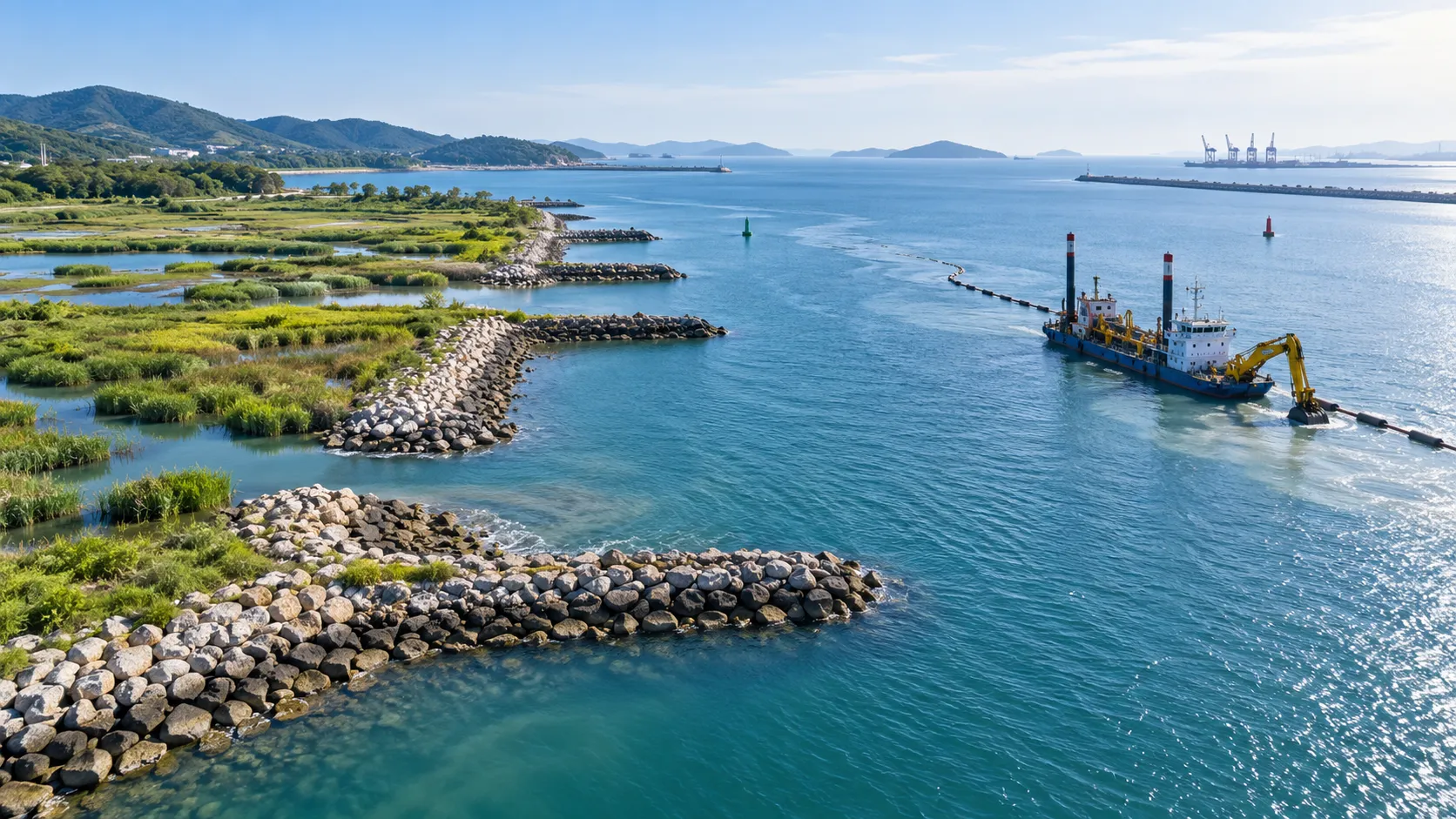
Sustainable Harbor Engineering: Balancing Erosion Control and Habitat Protection
Explore sustainable harbor engineering solutions that balance erosion control, habitat protection, and smarter dredging. Discover practical strategies for resilient harbors.

Which ISO Certifications Matter When Specifying Maritime Infrastructure?
Maritime infrastructure ISO certified suppliers: discover which certifications matter, how to assess scope, and what project evidence protects port performance.

How to Evaluate a Bulk Handling Equipment Exporter for Port and Plant Projects
Bulk handling equipment exporter evaluation guide for port and plant projects—compare engineering, references, delivery reliability, and lifecycle support.

How to Evaluate a Yard Mobility Solutions Manufacturer for High-Throughput Sites
Yard mobility solutions manufacturer evaluation guide for high-throughput terminals: assess performance, integration, service, lifecycle costs, and delivery risk.
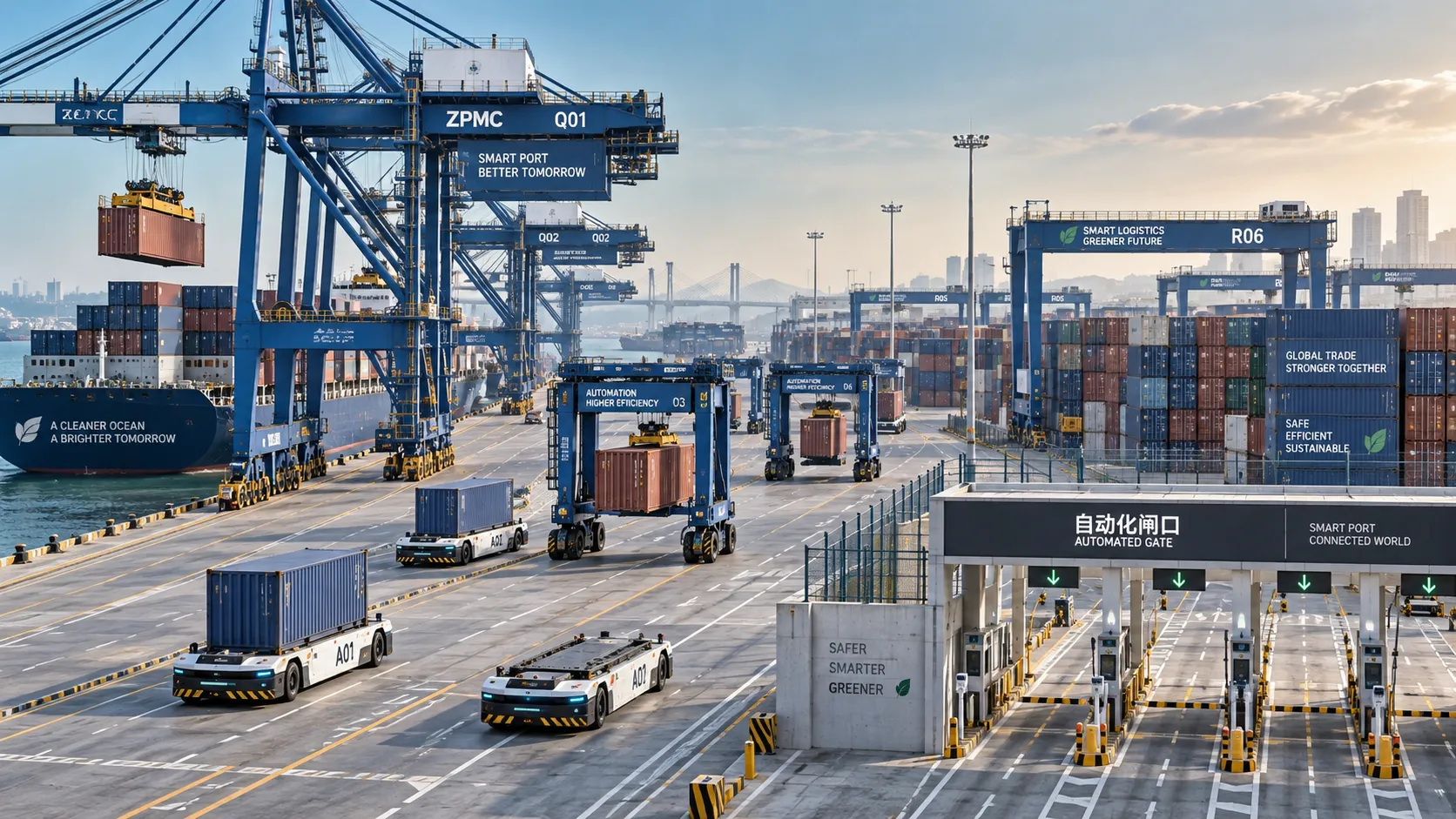
Automated Port Systems in Latin America: Investment Priorities for Container Terminals
Automated port systems Latin America: discover investment priorities for container terminals, from smart gates and remote cranes to resilient digital control layers.

Selecting Intermodal Yard Equipment for Fast, Safe Container Transfers
Container handling equipment for intermodal yards: compare reach stackers, RTGs, automation, safety planning, and lifecycle costs to build faster, safer container flow.
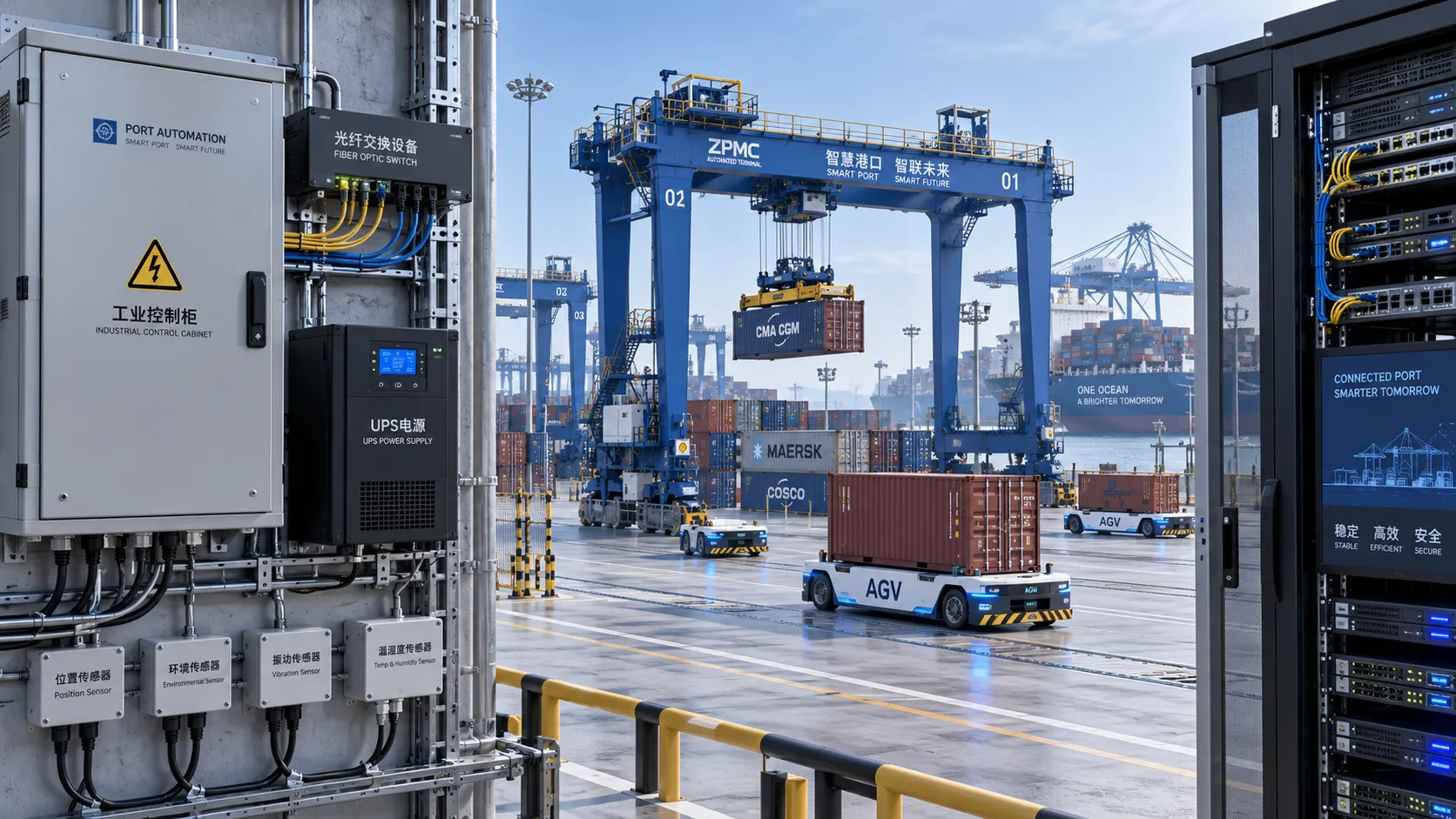
Terminal Control System Costs: Budgeting Hardware, Integration, and Lifecycle Support
Terminal control systems cost explained: budget hardware, integration, safety, cybersecurity, commissioning, and lifecycle support for resilient terminal operations.

Smart Operations in the Middle East: Where Industrial Investment Is Growing
Smart operations Middle East investment is reshaping ports, industrial corridors, and logistics networks through connected data, automation, resilience, and smarter asset performance.

How to Select Harbor Structures for Quay Walls Under Berthing and Wave Loads
Harbor structure for quay wall selection: evaluate berthing energy, wave loads, soil conditions, durability, and lifecycle risk to build safer, adaptable terminals.