Related News
- 00
0000-00
Modular Smart Terminal Technology: How Interfaces Enable Hardware Upgrades - 00
0000-00
Port Control System Integration Checklist: Compatibility, Security, and Failover - 00
0000-00
Sustainable Harbor Engineering: Balancing Erosion Control and Habitat Protection - 00
0000-00
Which ISO Certifications Matter When Specifying Maritime Infrastructure? - 00
0000-00
Selecting Intermodal Yard Equipment for Fast, Safe Container Transfers
Modular Smart Terminal Technology: How Interfaces Enable Hardware Upgrades
Modular Smart Terminal Technology: How Interfaces Enable Hardware Upgrades
Upgrading an automated port terminal should not require replacing entire control architectures or locking future investments into a single vendor. Modular smart terminal technology offers a practical framework for assessing how mechanical, electrical, and software interfaces support hardware evolution. The critical question is whether those interfaces preserve interoperability, real-time performance, and functional safety as cranes, sensors, controllers, and handling equipment change.
A terminal is not modular simply because its equipment has replaceable components. The stronger test is whether a replacement can be integrated without rewriting unrelated control logic, losing diagnostic visibility, or reopening the entire safety design. That distinction matters when a relatively small upgrade—a camera, encoder, or industrial computer—can interrupt an otherwise serviceable crane.
The real unit of modularity is the interface contract
Consider replacing a positioning sensor on an automated stacking crane. Matching the connector and supply voltage is only the beginning. The controller also needs the correct coordinate frame, measurement units, update interval, timestamp reference, uncertainty information, and fault behavior. A sensor that silently holds its last valid reading during signal loss behaves very differently from one that marks every subsequent measurement invalid.
An interface contract captures these expectations in a form that both equipment suppliers and terminal integrators can test. It should cover normal operation, degraded operation, startup, shutdown, and recovery. Without that contract, integration depends on assumptions hidden in PLC code or retained by individual engineers.
At PS-Nexus, the useful connection between heavy terminal equipment and automation intelligence lies at these boundaries: where a mechanical change becomes a control-system requirement, and where a software decision affects physical movement. Evaluating those boundaries is more revealing than comparing isolated equipment specifications.
Mechanical and electrical compatibility still set the limits
Software abstraction cannot compensate for an unsuitable installation. A replacement camera may fit its bracket yet have a different field of view, changing coverage near a spreader. A new drive may occupy the same cabinet space but require different cooling, cable arrangements, or protective-device coordination. On mobile equipment, added mass and cable routing can also affect vibration exposure and maintainability.
Environmental specifications deserve particular attention in coastal terminals. Enclosure ingress protection does not, by itself, establish resistance to salt corrosion, condensation, or every cleaning method. IEC 60529 defines IP classifications; suitability for a particular marine installation still requires examination of materials, seals, connectors, and the operating environment.
For electrical interfaces, IEC 60204-32 provides relevant requirements for the electrical equipment of hoisting machines. Its applicability and the edition required should be checked against the project and jurisdiction. A matching voltage rating alone does not establish compatibility: earthing, electromagnetic compatibility, isolation, startup current, and power-loss behavior can all influence whether a replacement works reliably.
The practical review question is straightforward: which installation conditions must remain unchanged for the replacement to work? If the answer includes undocumented shielding practices or a specific cable length known only to the commissioning team, the module boundary is not yet robust.
Shared protocols do not guarantee shared meaning
Two devices can support Ethernet and still be incompatible. Even support for the same industrial protocol leaves questions about profiles, object models, supported services, firmware versions, and optional features. “Open interface” is therefore a starting point for investigation, not an acceptance criterion.
OPC UA, standardized in the IEC 62541 series, can support structured information exchange between equipment and supervisory applications. It is useful for exposing operating states, alarms, and asset information. However, ordinary OPC UA connectivity should not be treated as proof that a device can participate in a deterministic motion-control loop or a safety-related function.
At the terminal-management boundary, the Terminal Industry Committee 4.0, or TIC4.0, develops common definitions and data models for cargo-handling operations. Such semantic alignment can reduce ambiguity between equipment and higher-level systems, but it does not replace machine-level integration or establish safety compatibility.
A container-transfer command illustrates the problem. Does “completed” mean the spreader has unlocked, the container has been detected at its destination, or the handling equipment has cleared the transfer zone? Those states are not interchangeable. An upgrade that changes their interpretation can disrupt scheduling even when every message is delivered correctly.
Keep scheduling outside the motion loop
A useful architectural boundary separates terminal work allocation, equipment execution, and local motion control. The terminal operating system requests a move; equipment control manages the operational sequence; local controllers handle time-critical movement and interlocks. Actual implementations vary, but the principle limits how far a hardware change propagates.
That separation should not hide essential state information. Supervisory software still needs explicit responses for rejected commands, unavailable equipment, interrupted moves, and recovery conditions. Otherwise, a neat software interface merely relocates uncertainty into operations.
Timing must be verified across the whole chain
A faster processor does not necessarily produce a faster or more predictable system. New firmware may buffer measurements differently, a gateway may introduce variable delay, or a camera replacement may change exposure and encoding time. For remote crane operation, the relevant path includes image capture, transmission, decoding, display, operator response, and command execution—not just network transit time.
For automatic positioning, evaluators need an end-to-end timing budget tied to the machine’s operating envelope. That budget should distinguish update rate, latency, jitter, and data age. A frequently updated value can still be stale when it reaches the controller.
Where timestamp alignment matters, IEEE 1588 Precision Time Protocol may be relevant. Supporting PTP is not enough: profile compatibility, switch behavior, timestamping capability, and recovery after clock disruption need verification. Acceptance limits should come from the application’s control and risk analysis, not a generic claim that the network is “low latency.”
Safety and cybersecurity are part of the replacement boundary
Replacing a safety-related device is not equivalent to replacing an ordinary monitoring sensor. Depending on the machinery and design approach, ISO 13849-1 or IEC 62061 may inform the functional-safety assessment. A component’s performance level or SIL-related capability does not, by itself, establish the performance of the complete safety function.
The change review should examine response time, diagnostic coverage, architecture, configuration, and failure behavior as applicable. It must also identify which calculations, software checks, and validation activities need updating. Keeping the same connector or safety-network protocol does not eliminate those obligations.
Cybersecurity creates another compatibility layer. A replacement industrial computer may introduce remote-maintenance services, different certificate handling, or unsupported dependencies. The IEC 62443 series provides a framework for industrial automation and control system security, but citing the series is not evidence that a particular installation is secure.
Check whether the device fits the terminal’s network zones and permitted communication paths. Confirm who controls administrator access, how updates are authenticated, and whether logs remain available during faults. Supplier access should not become an undocumented exception merely because commissioning is running late.
Test the upgrade where integration usually breaks
A successful demonstration under normal conditions proves too little. Before installation, use a representative test setup to challenge the proposed replacement against recorded interface requirements. Simulation and hardware-in-the-loop testing can expose sequencing problems without occupying production equipment, although neither fully reproduces field conditions.
The most revealing tests are often uncomfortable ones:
- Interrupt communications during a move and verify the defined equipment response and supervisory state.
- Restart the replacement device independently of the controller and check configuration recovery.
- Introduce stale, invalid, or out-of-sequence data and confirm that it is detected rather than accepted silently.
- Run the supported combination of old and new firmware, including any gateway required during migration.
- Restore the previous hardware and configuration to prove that rollback is executable.
Commissioning should then proceed within an agreed operating envelope, with clear restrictions and release criteria. A rollback plan needs more than a spare device: retain configuration files, licenses, parameter sets, firmware packages where permitted, and the tools needed to restore them. Backups that cannot be restored within the maintenance window offer limited protection.
Buy upgrade freedom, not just replaceable hardware
There is a legitimate trade-off between integration simplicity and supplier independence. A tightly integrated package may reduce initial engineering effort. A more open architecture may support alternative hardware but require the terminal or integrator to own interface documentation, regression testing, and version management. Neither approach removes responsibility; it allocates it differently.
Procurement should therefore request interface-control documents, supported-version matrices, diagnostic access, configuration ownership, and end-of-support arrangements alongside equipment specifications. Ask suppliers to identify what changes when a module is replaced—and what they commit to keeping stable.
The strongest evidence for modular smart terminal technology is a bounded change: a defined component can be replaced, its affected interfaces can be tested, and the remaining system can continue operating within verified limits. Before approving an upgrade, require the team to demonstrate that boundary. If nobody can describe it precisely, budget for a wider integration project rather than assuming a simple hardware swap.
Related News
Marine Engineering Solutions Pricing: What Should a Project Quote Include?
Comparing a marine engineering solutions price? Discover what quotes should include, uncover hidden costs, and assess scope, testing, warranties, and terms before you commit.
What Does Net-Zero Emissions Mean, and How Does It Differ from Carbon Neutrality?
Discover what net-zero emissions means and how it differs from carbon neutrality. Learn to assess reductions, offsets, and climate claims to make informed business decisions.
Port Control System Integration Checklist: Compatibility, Security, and Failover
What should be checked before integrating port control systems? Explore a practical checklist for compatibility, security, and failover to reduce risk and commission with confidence.
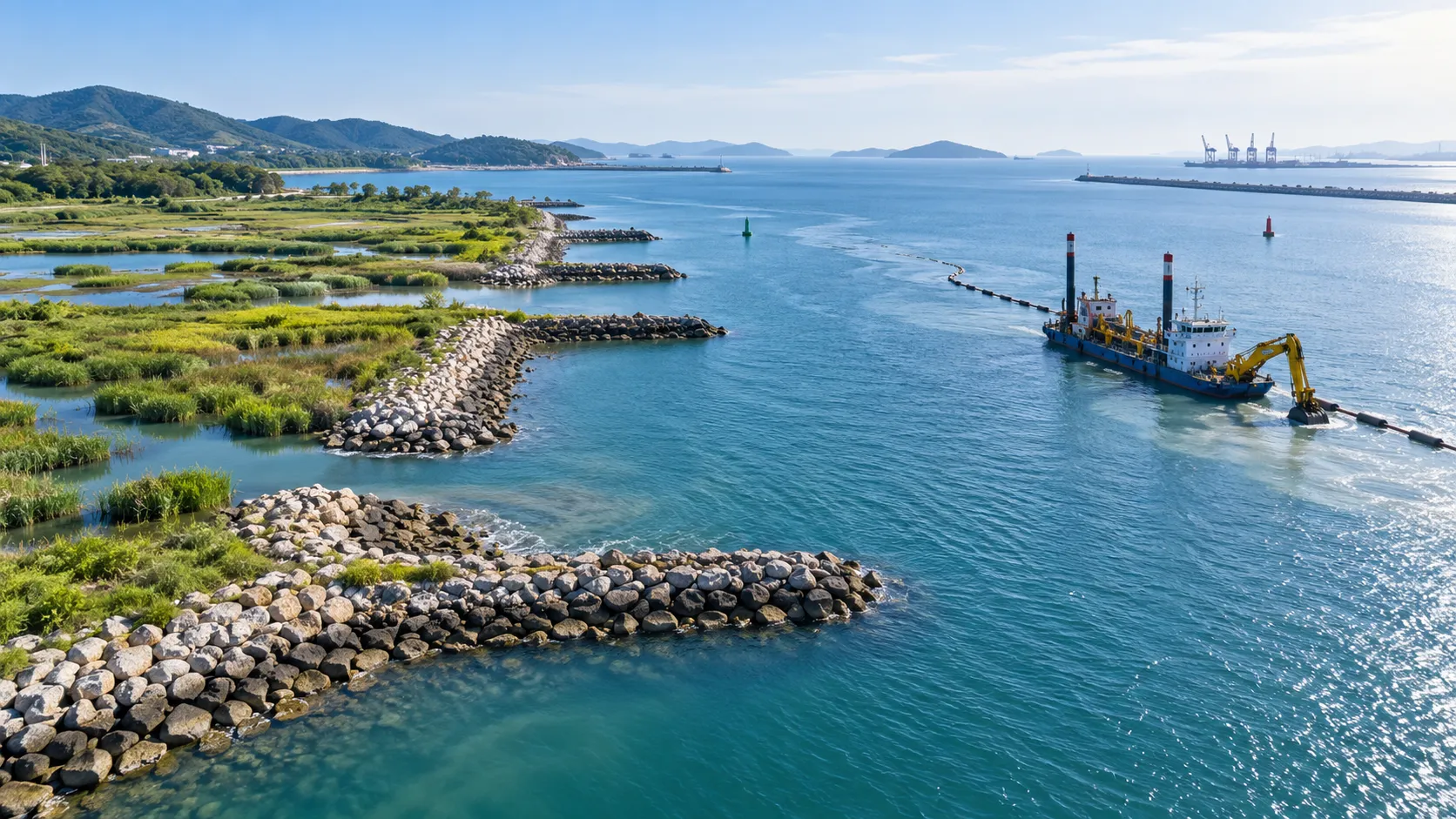
Sustainable Harbor Engineering: Balancing Erosion Control and Habitat Protection
Explore sustainable harbor engineering solutions that balance erosion control, habitat protection, and smarter dredging. Discover practical strategies for resilient harbors.
Which ISO Certifications Matter When Specifying Maritime Infrastructure?
Maritime infrastructure ISO certified suppliers: discover which certifications matter, how to assess scope, and what project evidence protects port performance.

How to Evaluate a Bulk Handling Equipment Exporter for Port and Plant Projects
Bulk handling equipment exporter evaluation guide for port and plant projects—compare engineering, references, delivery reliability, and lifecycle support.

How to Evaluate a Yard Mobility Solutions Manufacturer for High-Throughput Sites
Yard mobility solutions manufacturer evaluation guide for high-throughput terminals: assess performance, integration, service, lifecycle costs, and delivery risk.
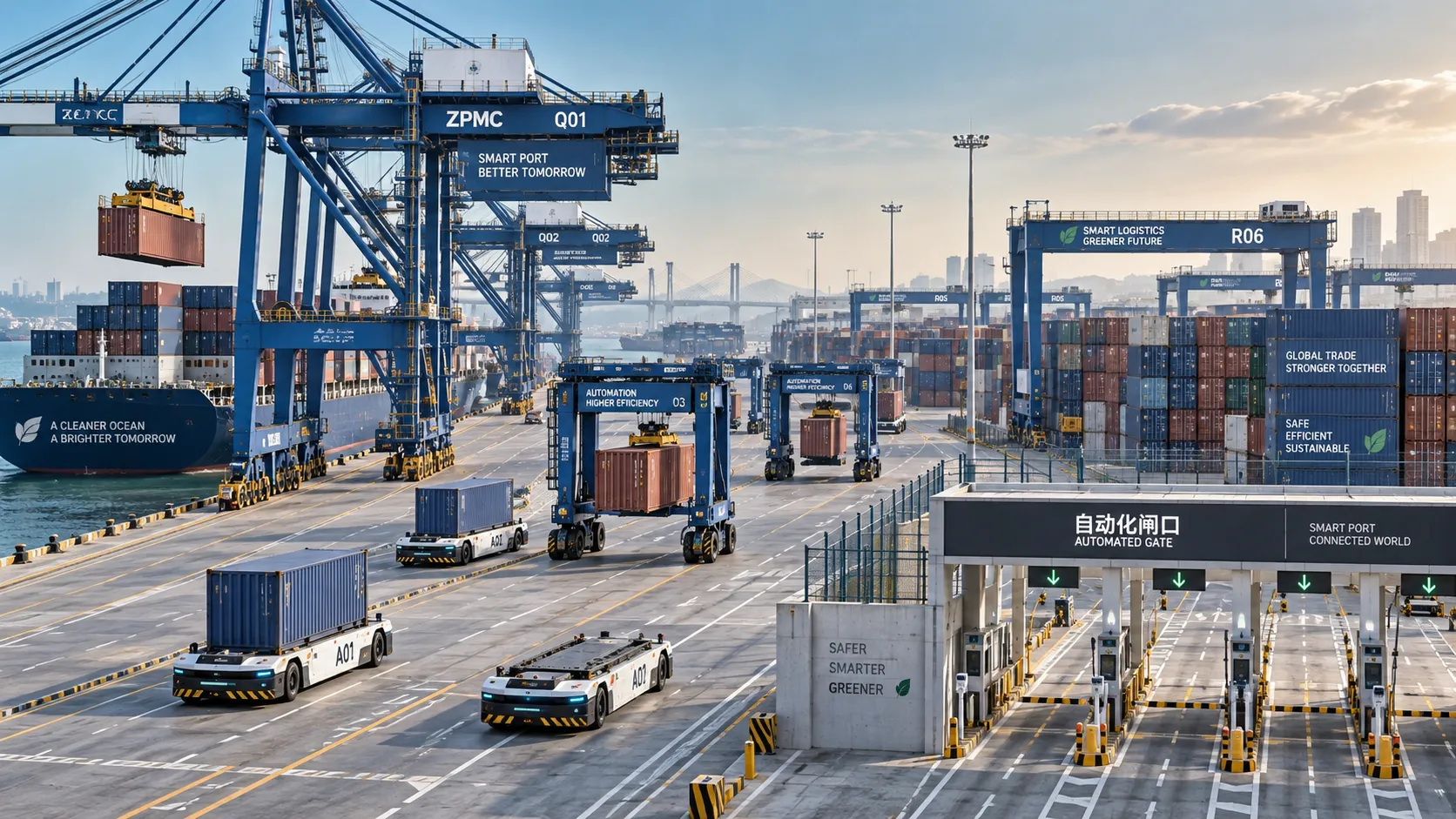
Automated Port Systems in Latin America: Investment Priorities for Container Terminals
Automated port systems Latin America: discover investment priorities for container terminals, from smart gates and remote cranes to resilient digital control layers.

Selecting Intermodal Yard Equipment for Fast, Safe Container Transfers
Container handling equipment for intermodal yards: compare reach stackers, RTGs, automation, safety planning, and lifecycle costs to build faster, safer container flow.