Related News
- 00
0000-00
How to Specify a Quay Crane for Container Terminals by Vessel Size and Throughput? - 00
0000-00
Which Bulk Handling Equipment Suits High-Moisture Cargo? - 00
0000-00
Terminal Automation Technologies That Raise Container Throughput Without Yard Disruption - 00
0000-00
Planning Offshore Dredging Operations: Key Risks, Methods, and Project Controls - 00
0000-00
Where Do Automated Guided Vehicles Deliver the Fastest Warehouse Gains in the Middle East?
Marine Dredging Engineering: How to Choose Methods for Port Deepening and Land Reclamation
Marine dredging engineering is central to successful port deepening and land reclamation, but choosing the right method is ultimately a project decision, not just a technical one. For project managers and engineering leaders, the best approach depends on sediment type, disposal strategy, environmental constraints, schedule pressure, equipment availability, and the long-term commercial purpose of the port asset.
In practice, there is no universally superior dredging method. Cutter suction dredgers, trailing suction hopper dredgers, backhoe dredgers, and grab dredgers each perform well under specific seabed, logistics, and reclamation conditions. The most effective selection process starts with project objectives and risk priorities, then works backward to method fit, production assumptions, and environmental compliance.
What project managers are really deciding in marine dredging engineering
When teams discuss method selection, they often focus too early on equipment. However, in marine dredging engineering, the real decision is how to achieve target depth or reclamation volume with acceptable cost, schedule certainty, environmental performance, and operational disruption.
For port deepening, the priority is usually navigational reliability, channel geometry, and minimal interruption to vessel traffic. For land reclamation, the priority shifts toward fill quality, pumping distance, containment strategy, settlement behavior, and the integration of dredged material into a stable development platform.
That is why the same harbor may require different dredging methods across adjacent zones. A turning basin with stiff material, a soft silt access channel, and a reclamation cell behind dikes do not create one engineering problem. They create several linked but different production problems.
Start with the end use: port deepening and land reclamation need different method logic
The first practical filter is understanding whether the project is mainly about removing material, relocating material, or creating usable land. Method choice changes significantly depending on whether dredged sediment must be disposed offshore, pumped ashore, reused beneficially, or handled as contaminated material.
In port deepening projects, removal efficiency and profile accuracy usually matter most. The project team wants predictable excavation rates, tight control around quay walls or berths, and reduced downtime from weather or vessel conflicts. Material quality matters, but disposal logistics often dominate economics.
In land reclamation, hydraulic transport becomes far more important. If the dredged material can be pumped directly into a reclamation area, a method with continuous slurry delivery may outperform one that excavates efficiently but adds transshipment complexity. The value of the project lies not only in dredging volume, but in how effectively that volume becomes engineered ground.
Project managers should therefore define the asset outcome before evaluating dredgers. Ask whether success means deeper draft access, expanded terminal footprint, improved berth operability, lower lifecycle maintenance, or a combination of all four. That answer narrows the method shortlist immediately.
How seabed conditions should drive method selection
Seabed characterization is often the single biggest determinant of method suitability. Fine silts, loose sands, dense sands, clay, weathered rock, and mixed layers behave differently during cutting, suction, loading, transport, and placement. A method that is productive in one sediment class may become inefficient or unstable in another.
Cutter suction dredgers are commonly selected where soils require mechanical loosening before pumping. They are well suited to compacted sand, clay, and certain mixed materials, especially where the dredged sediment must be sent hydraulically to a reclamation site. They can deliver high output, but performance depends on swing area, pipeline arrangement, and booster support.
Trailing suction hopper dredgers are often preferred in channels and open-water port approaches where the material is relatively loose and where marine traffic flexibility matters. They can load while sailing, transport material without fixed pipelines, and work effectively in exposed areas. Their strength is mobility, though they are less ideal for precise excavation near structures.
Backhoe dredgers are valuable where control and digging force are more important than continuous production. They are often used for stiff clays, localized deepening near berths, trenching, and operations close to quay walls. Their cycle-based work pattern may reduce total output, but accuracy and selectivity can justify the tradeoff.
Grab dredgers also offer flexibility, especially in confined areas and maintenance dredging scenarios. They can be useful where debris is expected or where barge-based transport is practical. However, production variability and material spillage risk may be concerns depending on sediment type and environmental requirements.
For project leaders, the lesson is simple: do not compare dredging methods only by nominal capacity. Compare them by achievable production in the actual ground conditions, with realistic assumptions about weather windows, obstruction risks, and material handling constraints.
Environmental compliance can eliminate the wrong method before cost comparison begins
Many projects fail in planning because environmental constraints are treated as secondary. In reality, turbidity limits, noise restrictions, habitat protections, contaminated sediment controls, and water quality permits can make a technically feasible method commercially impractical or legally nonviable.
For example, a method that creates excessive suspended solids may face tighter monitoring obligations, seasonal restrictions, or reduced working windows. A method that requires offshore disposal may trigger additional approvals compared with beneficial reuse in a reclamation zone. In urban ports, noise and navigation impacts may also affect allowable operating hours.
Marine dredging engineering for reclamation projects often gains strategic value when sediment reuse reduces disposal demand. But that advantage only holds if the material is environmentally suitable and geotechnically usable. Fine contaminated sediments may require treatment, confinement, or entirely different handling logistics.
Project managers should ask environmental teams early which thresholds are likely to shape method selection. This includes plume behavior, overflow restrictions, dewatering needs, and the feasibility of closed or controlled placement systems. These constraints can materially affect both equipment choice and production sequencing.
Productivity is not just output per hour; it is output per project condition
One of the most common procurement mistakes is selecting a dredger based on advertised capacity rather than effective project productivity. High theoretical output means little if the operation is repeatedly delayed by wave conditions, pipeline moves, barge availability, disposal cycle time, or restricted working windows.
Project managers should evaluate productivity in a full system context. That means linking excavation rate, transport mode, disposal or placement rate, downtime expectations, support vessel needs, and interface with other marine works. A well-matched dredging system with lower peak capacity often outperforms a larger unit constrained by project logistics.
For port deepening, consider how often vessel traffic will interrupt operations, whether the dredger can relocate quickly, and how accurately it can achieve final tolerances without excessive rework. For land reclamation, consider pump distance, booster requirements, containment readiness, and whether the fill placement process can absorb material continuously.
It is also important to distinguish between campaign production and finishing performance. Some methods remove bulk volume quickly but require secondary dredging for final trimming. Others are slower in bulk excavation but reduce follow-up correction. The best choice depends on contract structure, risk allocation, and program milestones.
How disposal and reclamation logistics change the economics
Disposal strategy often determines whether a dredging method is merely workable or financially attractive. Offshore disposal, confined disposal facilities, nearshore placement, and direct land reclamation each create different transport demands, permit paths, and operating costs.
Trailing suction hopper dredgers can be efficient when material must be transported over distance to a disposal ground. Their self-contained loading and sailing cycle reduces reliance on fixed pipelines. However, if the project goal is to create reclamation land immediately adjacent to the dredging area, hydraulic pumping methods may create stronger value.
Cutter suction dredgers are especially effective where direct pumping into reclamation cells is possible. They can convert dredging into a continuous fill supply chain, reducing double handling. Still, that benefit depends on pipeline routing, booster station design, and the ability of the reclamation area to receive, drain, and manage slurry efficiently.
Backhoe and grab systems may remain competitive where material is difficult, contaminated, or better managed through barges and controlled placement. In these cases, the project team should compare not only dredging rates but also transshipment losses, barge rotation needs, and the availability of approved receiving sites.
Choosing methods for port deepening: where precision, access, and continuity matter most
Port deepening projects usually involve channels, turning basins, berths, and access corridors with active navigation constraints. The right dredging method must therefore support safe coexistence with marine traffic while achieving required depth and side-slope tolerances.
For large, relatively open approach channels with loose material, trailing suction hopper dredgers are often strong candidates because they combine mobility with effective large-volume removal. They are especially useful where weather exposure is moderate and where disposal grounds are not directly adjacent to the cut area.
Near berths, quay walls, dolphins, and revetments, more precise methods such as backhoe dredgers may be preferable. They provide stronger control around structures and can manage denser material. In some port deepening programs, a hybrid solution works best: a hopper dredger removes broad channel volumes, while a backhoe or grab unit completes constrained zones.
Where compacted materials or clay layers limit suction efficiency, cutter suction dredgers may become the preferred option, particularly if there is sufficient operating room and the project can accommodate floating pipelines. Their suitability improves when dredged material has beneficial use rather than remote disposal.
Choosing methods for land reclamation: where fill quality and delivery stability decide success
Land reclamation is not simply disposal with a different label. It is ground creation, and that means the dredging method must be evaluated together with settlement expectations, drainage behavior, compaction plans, and long-term platform performance.
If reclamation requires large volumes of sand fill delivered to a contained area, hydraulic methods can offer substantial advantages. Continuous pumping can accelerate fill placement and reduce handling steps. This is one reason cutter suction dredgers are frequently associated with reclamation schemes where borrow areas and receiving cells are favorably located.
However, not all dredged material is suitable for reclamation without treatment. Fine silts may produce slow consolidation and unstable working surfaces. Mixed soils may segregate during transport and placement. Project managers should therefore align dredging method decisions with geotechnical acceptance criteria, not only with dredging convenience.
Where multiple material classes exist, staged or combined methods may be more effective. One method may recover reclamation-grade fill, while another removes unsuitable overburden or hard inclusions. The best marine dredging engineering plans often separate materials intentionally rather than treating all excavation as one homogeneous stream.
A practical decision framework for comparing dredging methods
For engineering leaders, the most reliable approach is a weighted decision framework. Start by ranking project priorities: depth accuracy, cubic meter output, reclamation suitability, environmental sensitivity, traffic compatibility, weather resilience, and total delivered cost. Then score each candidate method against real site conditions.
Use field investigation data, not assumptions. Bathymetry, geotechnical borings, contamination testing, metocean records, and shipping movement patterns should all inform the comparison. If the project is complex, scenario modeling can reveal where one method is optimal for one work zone but poor for another.
It is also wise to test the schedule logic behind each method. Ask what happens if dredging encounters harder layers than expected, if disposal approvals are delayed, or if the reclamation cell is not ready on time. The method with the best average production may not be the method with the lowest schedule risk.
Commercial structure matters as well. Under lump-sum contracts, contractors may favor methods that protect production certainty. Under remeasurement or alliance models, different tradeoffs may emerge. Owners should understand how contract incentives influence proposed dredging strategies before concluding that the lowest bid represents the best value.
Common mistakes that lead to poor method selection
Several avoidable errors recur across dredging projects. The first is choosing equipment before defining the material pathway from seabed to final destination. The second is relying on generic production tables that ignore local soil variability and marine access constraints.
Another common mistake is underestimating environmental controls. Projects may appear economical until turbidity limits, overflow bans, or contaminated sediment handling requirements are added. At that point, the original method may lose both speed and cost competitiveness.
Teams also make errors when they separate dredging planning from reclamation engineering. If the receiving area cannot manage slurry, drainage, or settlement, even an efficient dredging operation creates downstream delays. Method selection should therefore be integrated across excavation, transport, placement, and ground improvement planning.
Finally, some owners focus too heavily on unit rate and too little on outcome certainty. In strategic port expansion, a slightly higher-cost method that reduces approval risk, protects schedule, and improves land formation quality may create better lifecycle value than the apparent low-cost option.
Conclusion: choose the method that fits the asset, not just the excavation
Marine dredging engineering for port deepening and land reclamation should be approached as an asset-delivery decision. The right method is the one that aligns seabed conditions, environmental obligations, disposal or reuse strategy, operational constraints, and long-term port development goals.
For project managers and engineering leads, the best results come from rejecting one-size-fits-all thinking. Compare dredging methods through the lens of actual site conditions, end-use requirements, logistics, and risk exposure. In many cases, the strongest solution is not a single dredger type, but a coordinated method mix tailored to each work zone.
When that discipline is applied early, ports gain more than deeper water or additional land. They gain schedule confidence, stronger cost control, better regulatory alignment, and a more resilient platform for future trade growth. That is the real value of informed method selection in marine dredging engineering.
Related News
Smart Port Systems in Southeast Asia: Investment Priorities and Adoption Barriers
Smart port systems Southeast Asia: discover investment priorities, adoption barriers, and practical steps to build resilient, connected, high-performing terminals.
How to Evaluate Terminal Efficiency Solution Suppliers for High-Throughput Operations
Choose a terminal efficiency solutions supplier with confidence. Explore proven criteria for throughput, integration, lifecycle cost, safety, and reliable delivery.
How to Specify a Quay Crane for Container Terminals by Vessel Size and Throughput?
Quay crane for container terminals: learn how to match outreach, lift height, capacity, automation, and cycle performance to vessel size and throughput goals.
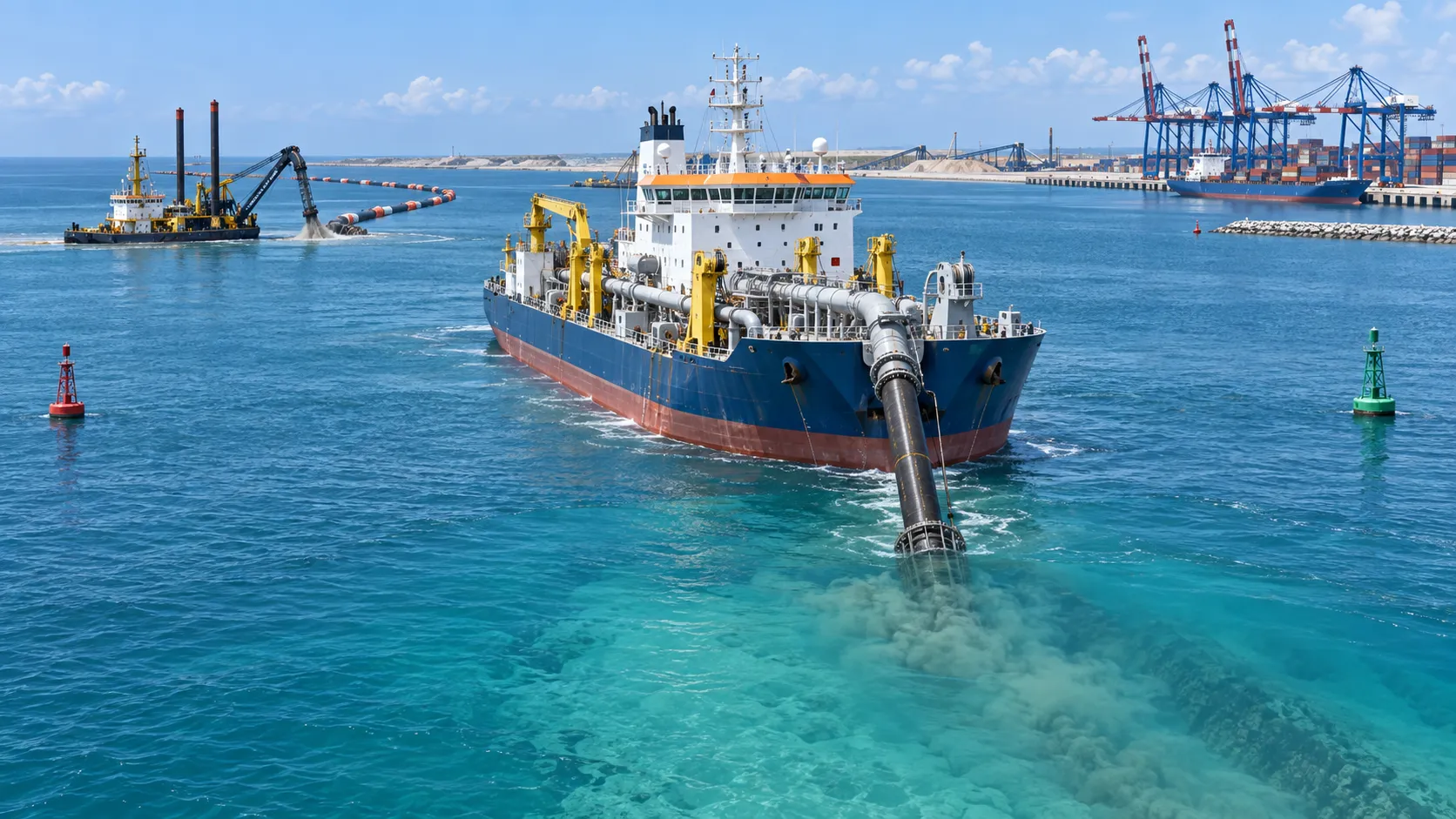
What Dredging Equipment Is Needed for Channel Deepening?
What dredging equipment is needed for channel deepening? Explore dredgers, pipelines, survey tools, and planning strategies for safer, more efficient port access.
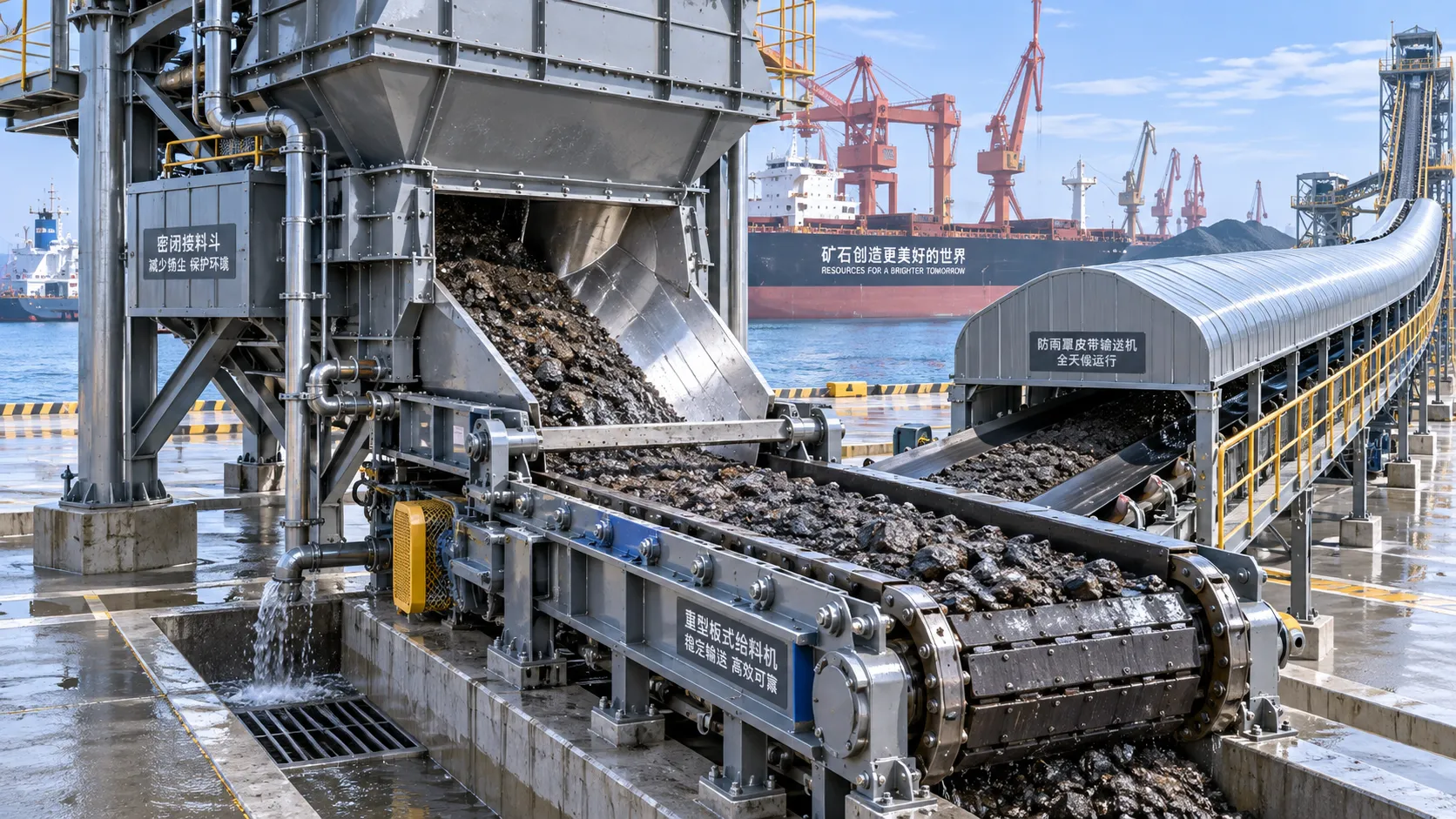
Which Bulk Handling Equipment Suits High-Moisture Cargo?
Which bulk handling equipment suits high-moisture cargo? Compare belt, apron, screw, drag, and slurry systems for reliable flow, less carryback, and higher terminal uptime.
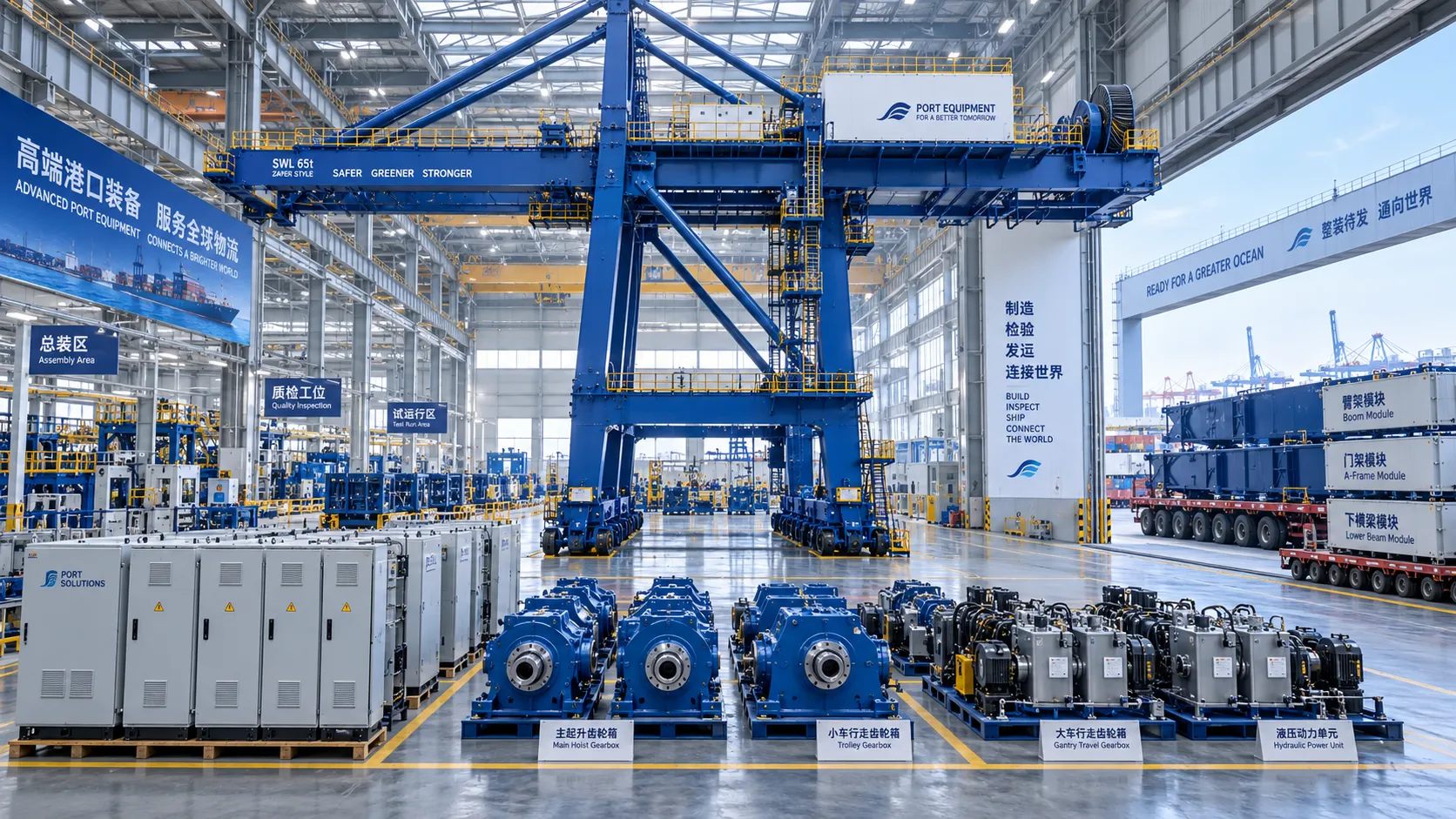
How Can Port Equipment Lead-Time Risk Be Managed?
How can port equipment lead-time risk be managed? Explore practical strategies to control critical paths, suppliers, transport, site readiness, and commissioning delays.
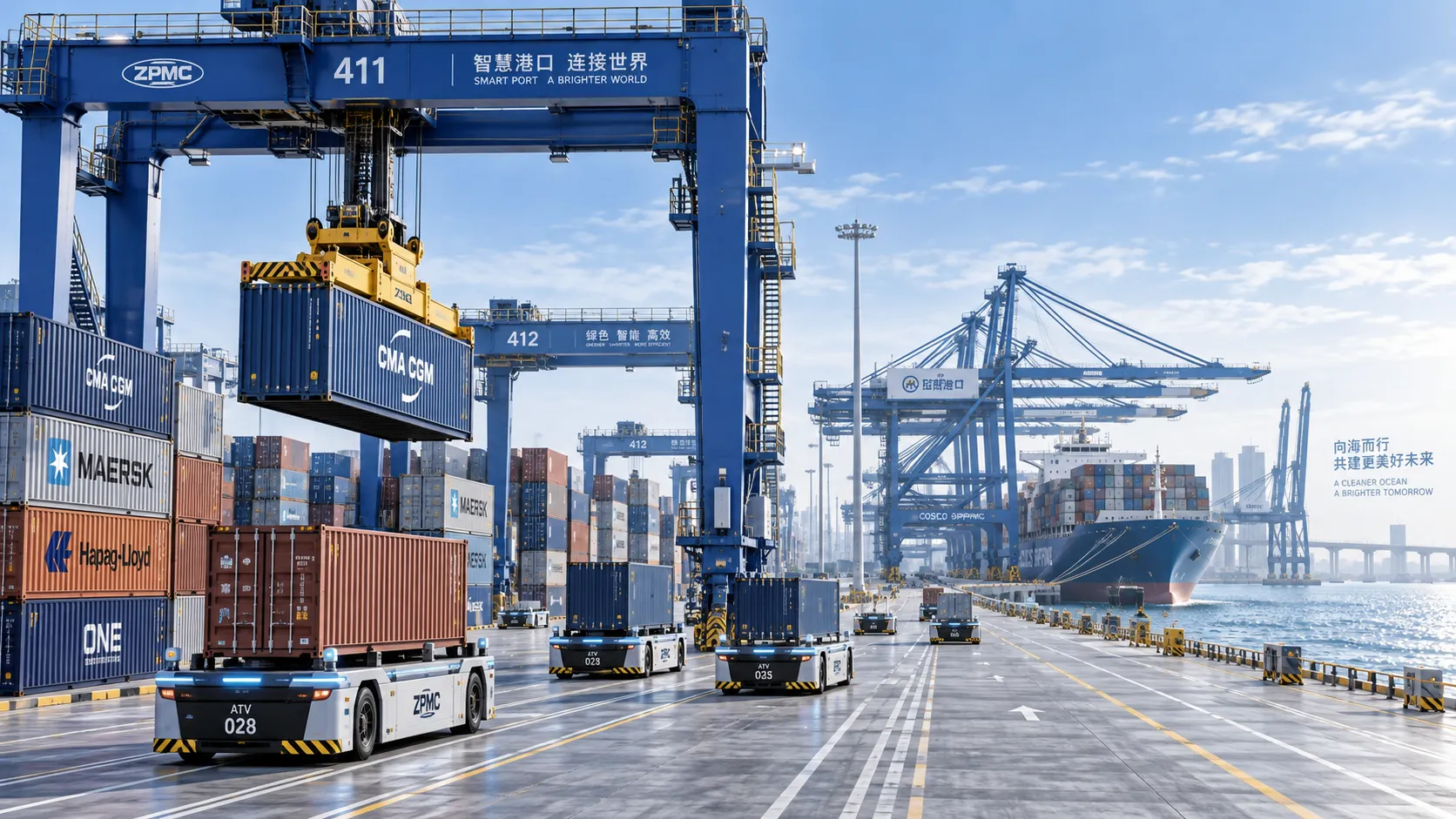
Terminal Automation Technologies That Raise Container Throughput Without Yard Disruption
Terminal automation technology that increases container throughput without disrupting yard flow. Explore smarter integration, resilient workflows, and phased deployment strategies.
Middle East Port Automation: Key Market Drivers, Projects, and Investment Risks
Port automation systems Middle East: explore market drivers, flagship projects, integration challenges, and investment risks shaping smarter, resilient terminals.
Planning Offshore Dredging Operations: Key Risks, Methods, and Project Controls
Offshore dredging operations demand smart planning. Explore key risks, proven methods, environmental controls, and project strategies for reliable delivery.