
Related News
- 00
0000-00
How to Specify a Quay Crane for Container Terminals by Vessel Size and Throughput? - 00
0000-00
Which Bulk Handling Equipment Suits High-Moisture Cargo? - 00
0000-00
Terminal Automation Technologies That Raise Container Throughput Without Yard Disruption - 00
0000-00
Planning Offshore Dredging Operations: Key Risks, Methods, and Project Controls - 00
0000-00
Where Do Automated Guided Vehicles Deliver the Fastest Warehouse Gains in the Middle East?
How to Evaluate a Quay Crane Systems Platform for Container Terminal Efficiency?
How to Evaluate a Quay Crane Systems Platform for Container Terminal Efficiency?
A quay crane systems platform is often mistaken for a crane HMI, a PLC package, or a visualization layer. That is too narrow. In a working terminal, the platform is the control-and-coordination environment that connects the crane’s operating logic, safety interlocks, operator or remote-control functions, equipment health data, and upstream terminal workflows. When people compare platforms only by screen layout or automation features, they usually miss the question that actually matters: how well does the system keep moves flowing under real berth conditions, with vessel schedule pressure, mixed container profiles, and imperfect yard synchronization.
That is why technical evaluation has to start from operating context rather than software feature lists. A platform that looks advanced in demonstration mode may still create friction once it has to manage twin-lift spreads, landside traffic delays, reefer handling constraints, or temporary degradation in sensors and network quality. Berth productivity is not produced by the crane alone. It is produced by the crane staying aligned with the terminal operating system, truck or AGV dispatch, maintenance response, and the decision logic used when things stop going as planned.
For container terminals, the most useful way to evaluate a quay crane systems platform is to treat it as an operational architecture. The question is not simply whether it can control the machine. The question is whether it can sustain predictable crane cycles, expose bottlenecks clearly, and support higher levels of automation without forcing the terminal into brittle workarounds.
What the Platform Really Includes
In practice, the platform usually spans several layers. One layer sits close to the machine: drive control, anti-sway logic, hoist and trolley coordination, spreader status, interlocks, and alarm handling. Another layer deals with operator interaction, whether in-cabin, remote, or supervisory mode. Above that, there is the integration layer that exchanges job orders, move confirmations, equipment state, and exception events with a TOS, equipment control system, maintenance system, or analytics environment.
The boundary matters because some vendors are strong in crane control but weak in data integration. Others present solid dashboards but rely heavily on third parties for motion logic or safety engineering. A technical evaluator should force that boundary into the open early. Otherwise, platform responsibility becomes blurred during commissioning and even more blurred during fault analysis after go-live.
A useful evaluation note is simple: if the supplier cannot describe where the control stack ends, where the interface contract begins, and how degraded modes are handled, the platform is not yet being described at a level suitable for terminal decision-making.
Throughput Is a Systems Outcome, Not a Screen Feature
Most buying teams say they want higher productivity, but that phrase can hide very different technical expectations. For one terminal, the issue may be cycle consistency across shifts. For another, it may be vessel turnaround under peak call density. In an automated or semi-automated environment, it often comes down to whether the quay crane platform can absorb timing variation from landside vehicles without forcing stop-start crane behavior.
So the platform should be judged on how it manages cycle continuity. Can it queue jobs intelligently? Does it make handoff states visible in a way that operations and maintenance both understand? Can it distinguish between crane-side delay, yard-side delay, and command-side delay? If those distinctions are buried or ambiguous, the terminal will struggle to improve performance because every lost minute will be argued over instead of diagnosed.
This is one of the common misunderstandings in quay crane platform selection: buyers look for “high automation capability” when the larger value may actually come from transparent event logic, stable exception handling, and reliable time-stamped operational data. A platform does not need to be marketed as fully autonomous to materially improve terminal efficiency. It does need to make the causes of inefficiency traceable.
The Evaluation Criteria That Usually Separate Mature Platforms from Superficial Ones
A mature quay crane systems platform is rarely defined by one standout module. It is defined by how cleanly the following capabilities work together.
Control stability tends to be underexamined because it is less visible in commercial presentations. Yet in heavy terminal gear, stable behavior under disturbance is often more valuable than impressive nominal performance. Evaluators should ask how the platform behaves when sensor input becomes unreliable, when a move sequence is interrupted, or when synchronization with a landside asset is delayed. Good systems degrade gracefully. Weak ones escalate into manual intervention too quickly.
Integration Is Not a Side Topic
For technical teams, integration should be treated as part of core performance. A quay crane that receives late, inconsistent, or poorly structured job messages is not operating in an efficient platform environment, even if the machine control itself is sound. The same applies when move confirmations, exception codes, or equipment states are not normalized across systems. The terminal then ends up with competing versions of reality: one in the crane system, another in the TOS, and another in maintenance records.
This becomes critical in remote operation and automated handoff scenarios. Low-latency communication, deterministic response behavior, and clear interface governance matter far more here than broad claims about digital transformation. Some terminals will also need to assess how the platform fits into existing industrial networks, segmentation rules, and cybersecurity policies. That is not just an IT concern. If security controls are bolted on after procurement, response times, access methods, and support workflows can all become harder to manage.
When comparing options, ask for the interface philosophy, not just the interface list. Supported protocols alone do not tell you whether the integration model is operationally clean.
Data Visibility Should Help You Make Decisions on a Bad Shift
Many systems promise analytics. Fewer produce data that operations teams will actually trust during disruption. For a quay crane systems platform, the quality of visibility is tied to context: event timestamps, mode changes, interlock triggers, spreader status, waiting states, operator actions, remote commands, and communication faults should all be reconstructable without a forensic exercise.
That level of visibility supports several decisions at once. Operations can see whether vessel-side sequence planning is realistic. Maintenance can identify recurring failures rather than isolated alarms. Engineering can separate software logic issues from mechanical or sensor-side problems. Management can judge whether berth losses are due to crane performance or terminal coordination failures elsewhere. Without that structure, the platform generates data volume without operational clarity.
A practical test during evaluation is to walk through a delay scenario and ask the vendor how the system would classify it, display it, and preserve it for later analysis. If the answer stays at dashboard level, the observability model may be too shallow.
Automation Readiness Has a Narrower Meaning Than Marketing Suggests
Automation readiness does not simply mean the platform can be upgraded someday. It means the control and data architecture are already disciplined enough to support remote operations, automated sequencing, advanced sensors, and higher software dependence without becoming unmanageable. That includes version control, change traceability, robust simulation or testing methods, and well-defined fallback modes.
For some terminals, full automation may not be the immediate goal. Even then, the platform should not trap the operation in an isolated design that makes future migration expensive. A sensible evaluation therefore looks for modularity and interface clarity, but it should avoid paying a premium for automation functions that have no realistic deployment path at the site. Technical fit comes before aspirational roadmaps.
Where Evaluations Often Go Wrong
One mistake is to compare platforms only under ideal throughput scenarios. Another is to assess them only through vendor demonstrations. Terminals do not run on ideal sequences. They run on exception handling, maintenance windows, vessel variability, staffing realities, and integration boundaries that become visible only under stress.
Another weak point is treating maintenance as a downstream issue. In heavy equipment environments, maintainability is part of selection, not an afterthought. If diagnostics are opaque, configuration changes are hard to govern, or vendor support depends too heavily on proprietary intervention, lifecycle efficiency will suffer even if initial commissioning looks successful.
There is also a tendency to equate more automation with more efficiency. That is not always true. A semi-automated platform with strong integration and transparent operational logic may outperform a more ambitious system that is harder to tune, support, or recover after faults.
A Better Way to Structure the Decision
The strongest evaluations usually combine three views. One is machine-centric: control performance, safety logic, diagnostics, and recovery behavior. Another is terminal-centric: interface quality, dispatch coordination, event visibility, and berth impact. The third is lifecycle-centric: cybersecurity alignment, supportability, upgrade path, and the operational burden of ownership.
That structure helps prevent a familiar problem in port projects: each discipline approves the platform from its own angle, while nobody tests whether the full operating model hangs together. A crane system that satisfies engineering but frustrates dispatch, or one that satisfies IT but weakens fault recovery, is not a good selection outcome.
In the end, a quay crane systems platform should be evaluated as the decision layer around container movement, not as a standalone software product. The right choice is the one that keeps operational intent, machine behavior, and terminal coordination aligned when traffic is heavy and conditions are imperfect. That is where container terminal efficiency is won or lost, and that is the standard the platform should be measured against.
Related News
Smart Port Systems in Southeast Asia: Investment Priorities and Adoption Barriers
Smart port systems Southeast Asia: discover investment priorities, adoption barriers, and practical steps to build resilient, connected, high-performing terminals.

How to Evaluate Terminal Efficiency Solution Suppliers for High-Throughput Operations
Choose a terminal efficiency solutions supplier with confidence. Explore proven criteria for throughput, integration, lifecycle cost, safety, and reliable delivery.
How to Specify a Quay Crane for Container Terminals by Vessel Size and Throughput?
Quay crane for container terminals: learn how to match outreach, lift height, capacity, automation, and cycle performance to vessel size and throughput goals.
What Dredging Equipment Is Needed for Channel Deepening?
What dredging equipment is needed for channel deepening? Explore dredgers, pipelines, survey tools, and planning strategies for safer, more efficient port access.
Which Bulk Handling Equipment Suits High-Moisture Cargo?
Which bulk handling equipment suits high-moisture cargo? Compare belt, apron, screw, drag, and slurry systems for reliable flow, less carryback, and higher terminal uptime.
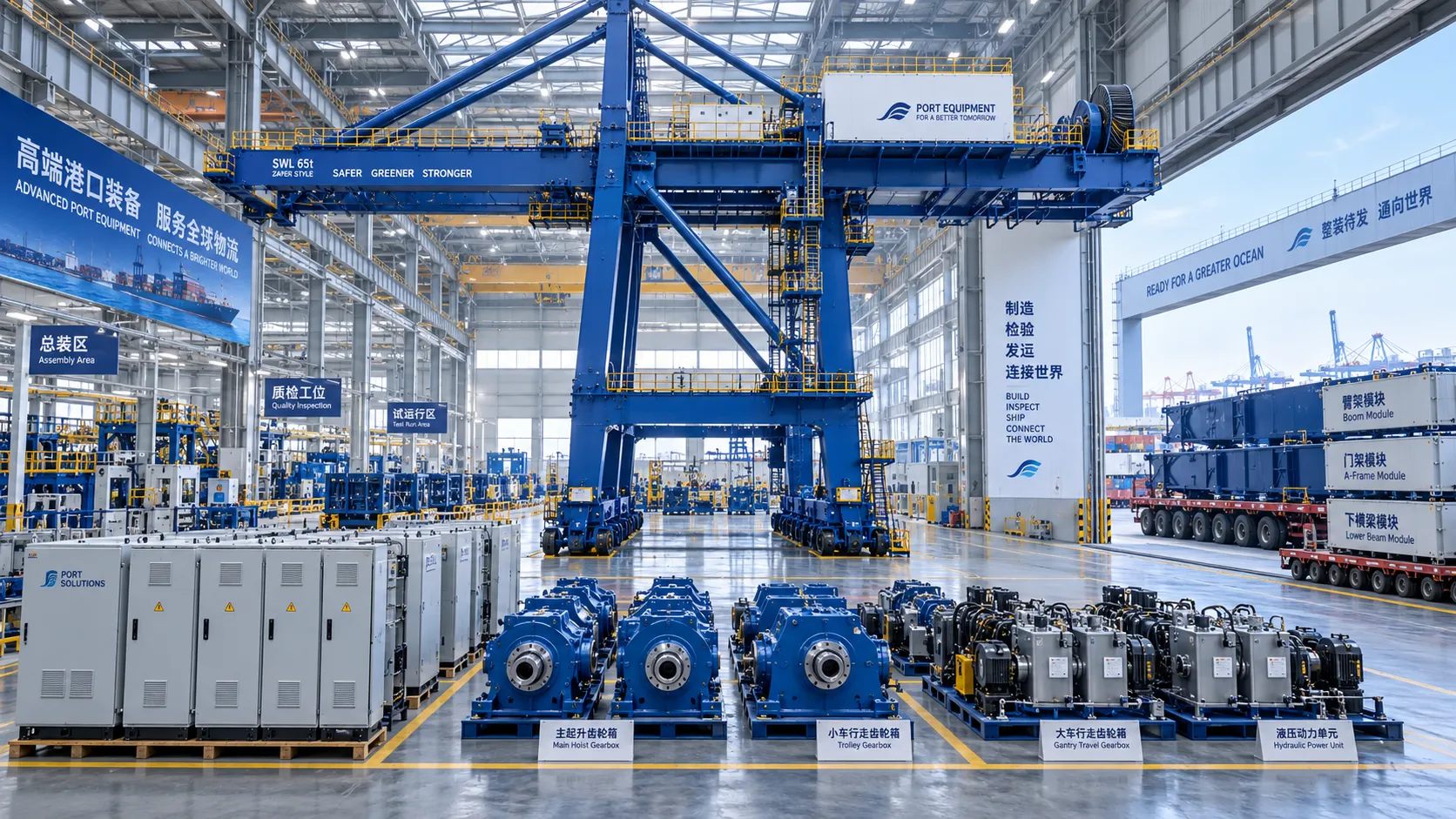
How Can Port Equipment Lead-Time Risk Be Managed?
How can port equipment lead-time risk be managed? Explore practical strategies to control critical paths, suppliers, transport, site readiness, and commissioning delays.
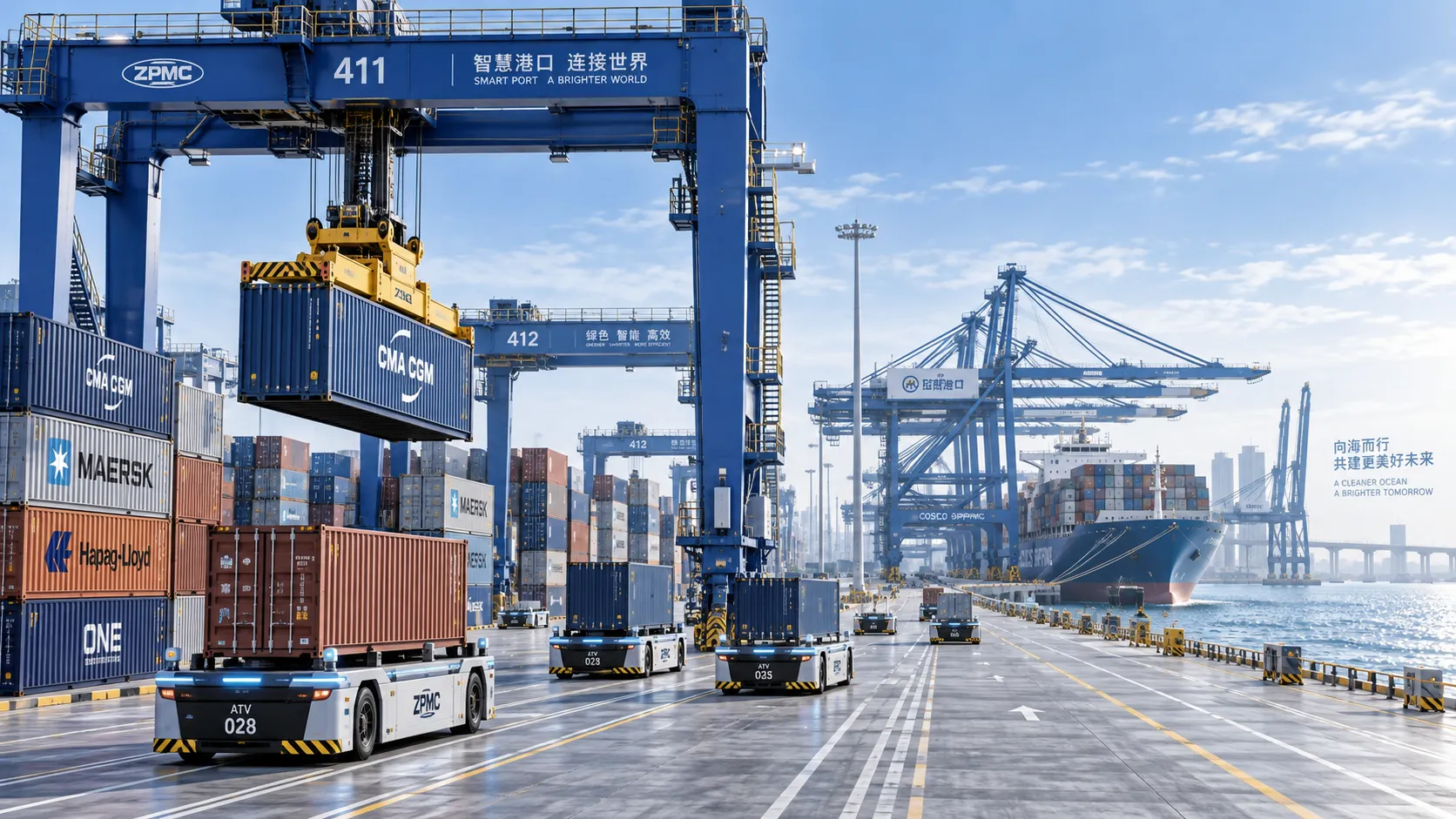
Terminal Automation Technologies That Raise Container Throughput Without Yard Disruption
Terminal automation technology that increases container throughput without disrupting yard flow. Explore smarter integration, resilient workflows, and phased deployment strategies.
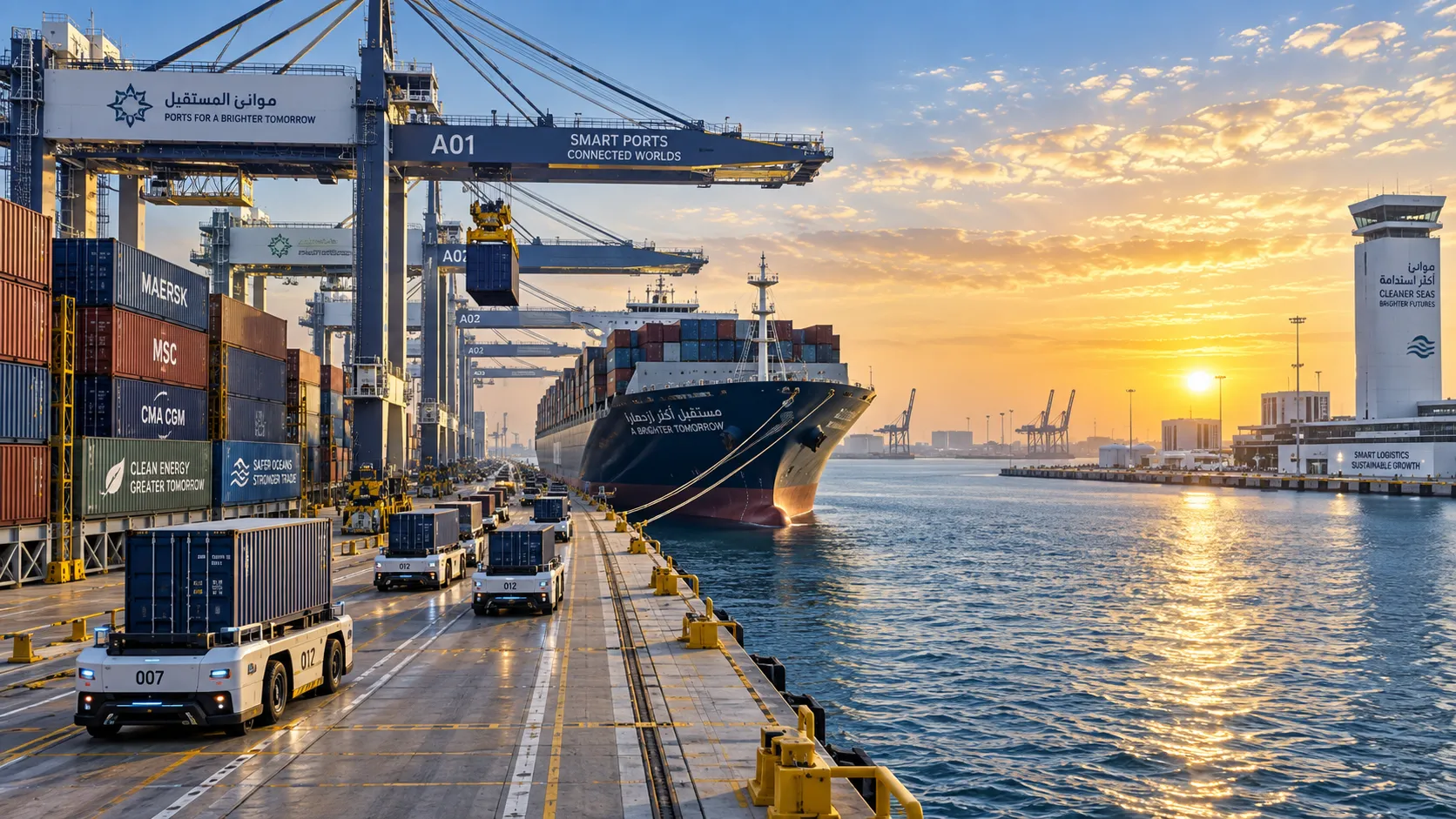
Middle East Port Automation: Key Market Drivers, Projects, and Investment Risks
Port automation systems Middle East: explore market drivers, flagship projects, integration challenges, and investment risks shaping smarter, resilient terminals.
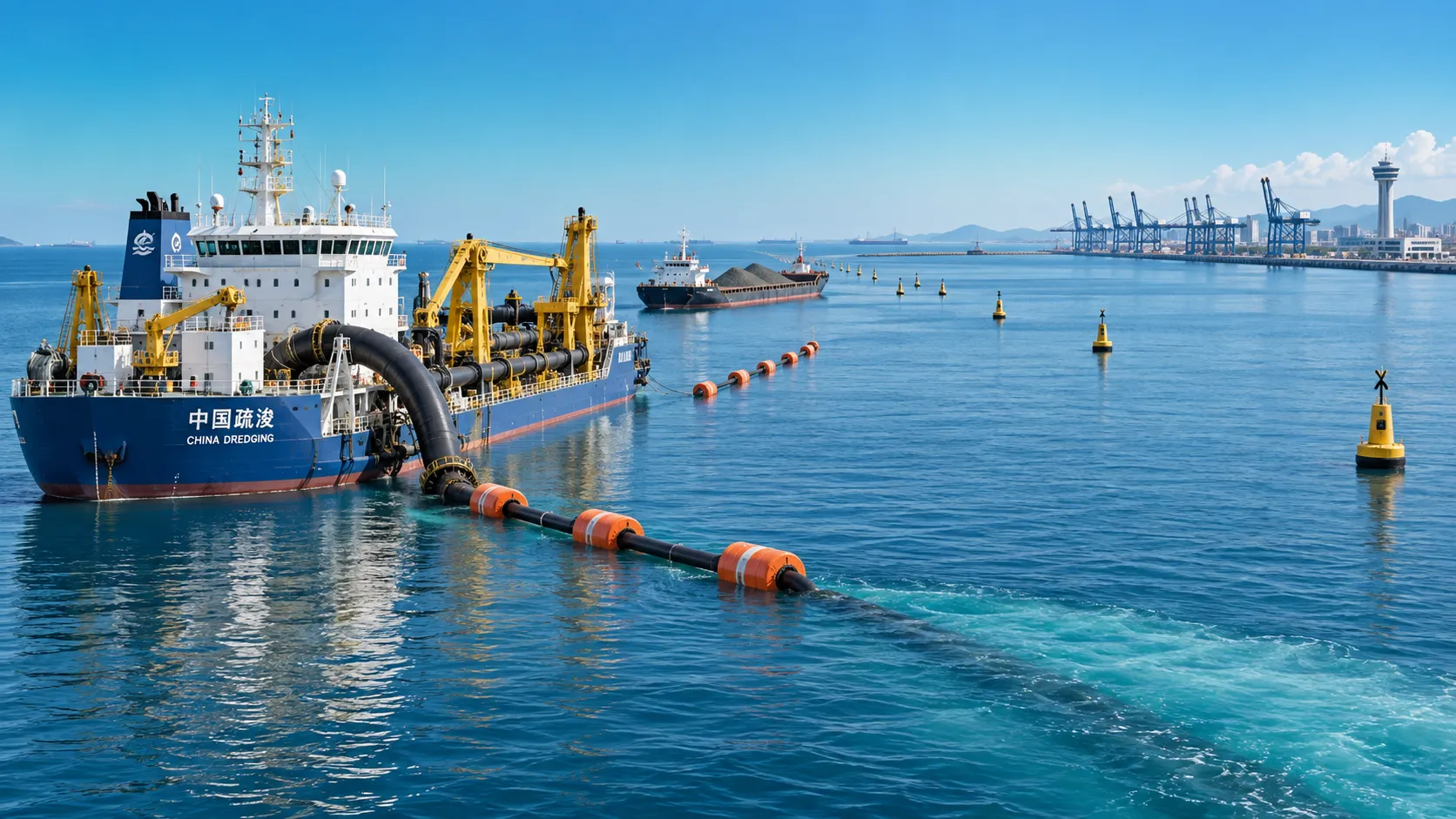
Planning Offshore Dredging Operations: Key Risks, Methods, and Project Controls
Offshore dredging operations demand smart planning. Explore key risks, proven methods, environmental controls, and project strategies for reliable delivery.