Related News
- 00
0000-00
Real-Time Container Yard Systems: How to Evaluate Tracking and TOS Integration - 00
0000-00
Marine Engineering Solutions for Dredging in Ports: Key Design Factors - 00
0000-00
What Data Does a Smart Port Control Architecture Need to Operate? - 00
0000-00
CE-Marked Quay Cranes: How to Verify Compliance Documents - 00
0000-00
Port Automation Systems in Latin America: Choosing the Right Solution
0000-00
What Data Does a Smart Port Control Architecture Need to Operate?
What data is needed for a smart port control architecture? The answer extends well beyond equipment telemetry. A control architecture needs a shared view of vessel schedules, cargo movements, equipment positions, yard capacity, environmental conditions and energy use. It also needs enough context to judge whether that information is current, trustworthy and safe to act on.
For technical evaluators, the challenge is not simply to count available data feeds. It is to determine which decisions those feeds support, how quickly they must arrive and what happens when they disagree. A crane position may be useful for a dashboard, but controlling an automated transfer requires a much more precise understanding of location, equipment state, work instructions and safety boundaries.
Start with the decision, not the data source
A smart port control architecture connects operational planning with execution. Depending on the terminal, it may involve a terminal operating system (TOS), equipment control systems, fleet management software, gate applications, energy systems and interfaces to external logistics partners. These systems do not all need the same level of detail or the same update rate.
Consider a vessel arriving later than expected. A berth planner may need the revised estimated time of arrival and berth availability. The TOS may need to reconsider quay crane assignments and yard moves. An automated guided vehicle (AGV) fleet manager may need new pickup and delivery tasks. Equipment controllers, meanwhile, still depend on local position and safety data to execute movements. The revised schedule matters across the chain, but it is not a substitute for real-time machine control.
Before assessing interfaces, map each operational decision to its required inputs, the system responsible for making it and the consequences of missing or stale data. This exercise usually exposes a more useful architecture than a list of sensors alone.
The operational data a smart port must bring together
Vessel, berth and marine access information
At the waterside, the architecture needs vessel identity, estimated and actual arrival and departure times, berth assignments, vessel dimensions and operational constraints. Cargo plans, hatch or bay information and work sequences connect the vessel call to terminal execution. Depending on local operations, pilots, tugs, tides and channel availability may also affect when a vessel can safely reach or leave a berth.
Predicted schedules should be distinguishable from confirmed events. A revised estimated arrival is a planning input; an actual all-fast event is a record of what occurred. Confusing the two can trigger premature crane allocation or leave downstream teams working from an obsolete plan.
Container, cargo and work-order data
The control architecture needs to know what is being moved, where it is and what should happen next. For container terminals, this typically includes container identification, size and type, weight where available, current and planned location, vessel assignment, transport status and relevant handling restrictions. Reefer requirements and dangerous-goods information need controlled handling because they influence placement, monitoring and safe work procedures.
Work orders translate this context into action: lift a container from a vessel position, transfer it to a vehicle, place it in a yard slot or release it at a gate. Each order needs a unique identifier, an assigned resource or responsible system, a status and a clear record of completion or exception. Without that chain, the terminal can lose track of whether a move was planned, dispatched, started, completed or aborted.
Bulk terminals need an equivalent view expressed in different terms: material type, shipment or batch identity, stockpile location, conveyor route, equipment availability and measured quantities. The principle is the same, even when the cargo is not a container.
Equipment state, position and capabilities
Quay cranes, yard cranes, straddle carriers, AGVs and other assets supply data that links plans to physical movement. Relevant inputs include operating mode, availability, position, speed or motion state, load-handling status, alarms and maintenance conditions. The architecture should also understand what an asset is permitted and capable of doing: a work instruction must be compatible with equipment type, reach, load limits and the designated operating area.
Position data needs particular scrutiny. Evaluators should ask which coordinate reference system is used, how accurately a position is known, how it is timestamped and whether it represents a measured location or an estimate. A vehicle position accurate enough for a fleet overview may be inadequate for a close-proximity maneuver. The necessary accuracy and update rate depend on the task, operating environment and safety design.
Local equipment and safety systems should retain their defined protective functions. A central optimization application may recommend or dispatch work, but it should not be treated as a replacement for machine interlocks, emergency stops or engineered safety controls.
Yard, gate and landside capacity
A yard is more than a map of occupied slots. The control architecture needs a representation of block and stack layouts, usable capacity, equipment access, segregation rules, reefer connections and temporary restrictions. Planned reservations matter alongside current occupancy: a slot that appears empty may already be committed to an incoming move.
Gate and landside data extends the picture to truck appointments, identification checks, inbound and outbound events, queue conditions and rail operations where applicable. These feeds allow planners to distinguish a genuine capacity shortage from a temporary mismatch between arrivals and available handling resources. External data quality can vary, so the system should identify its source and distinguish an appointment from an actual gate arrival.
Weather, water and environmental constraints
Wind speed and direction, visibility, precipitation, tides, water level and currents can affect berth access, crane operation and equipment scheduling. Relevant thresholds depend on equipment specifications, local procedures and the applicable safety assessment; a generic weather feed alone does not establish that a movement is safe.
For ports responsible for channel maintenance, bathymetric surveys, dredging progress, vessel draft and under-keel clearance information may inform access planning. Survey age, coverage and vertical datum are important context. A depth value without its reference and collection date is a weak basis for an operational decision.
Energy, condition and maintenance data
Electrical demand, equipment consumption, fuel use and charging status help coordinate operations with available energy capacity. An AGV fleet manager, for example, may use state of charge and charger availability when assigning work, while an energy management system considers broader demand and operating constraints.
Condition data such as temperatures, vibration measurements, fault codes and component operating hours can support maintenance planning. Its value depends on consistent asset identifiers and a connection to maintenance records. A fault code without equipment context or a clear event time is difficult to turn into a reliable work order.
From a collection of feeds to usable control data
Availability is only the first test. A useful interface must describe what each field means, when it was valid and how it relates to other records. The following checks are especially important when evaluating a proposed integration:
- Identity: Can the same crane, vehicle, container, berth or work order be recognized across systems? Define ownership and mapping rules for identifiers.
- Time: Is each event timestamped at its source, and are clocks synchronized? Distinguish event time from the time a message was received.
- Location: Are coordinate systems, units, orientation and reference points documented? Record uncertainty where it matters.
- Quality: Are missing, estimated, delayed and invalid values marked rather than presented as ordinary measurements?
- State: Do connected systems use compatible definitions for terms such as available, in progress, completed and failed?
- Ownership: Which system is authoritative for each data element, and how are conflicting updates resolved?
These questions become critical during handovers. If a TOS records a container as placed but the yard crane reports an incomplete move, an automated follow-on instruction should not silently assume both records are correct. The architecture needs exception handling, reconciliation and a way for an authorized operator or designated system to restore a trusted state.
Latency is a requirement for each decision
There is no single “real-time” requirement for an entire port. Berth planning can often use updates on a different timescale from vehicle dispatch, while motion control and safety functions may require tightly bounded performance within local control systems. Evaluators should specify acceptable data age, end-to-end delay, update frequency and behavior during communication loss for each use case.
Also examine the full path, not just network speed. A sensor reading may pass through a controller, gateway, broker and application before it influences a decision. Processing, buffering, retries and clock errors can all affect whether the resulting data is still usable. For remote crane operation or automated vehicle coordination, test performance under realistic traffic and degraded network conditions rather than relying only on nominal connectivity claims.
When data becomes stale, the expected response should be explicit: continue with restrictions, request confirmation, pause dispatch or transfer control according to the approved operating and safety procedures. The correct response varies by function; the important point is that it is designed and tested in advance.
Standards and interfaces: verify the fit
Standards can reduce integration friction, but a standard name on a specification sheet does not guarantee interoperability. Ask which edition, profiles, message types and optional fields are implemented, and request examples that cover normal operations and exceptions.
Depending on the interface, evaluators may encounter ISO 28005 for electronic port clearance, UN/EDIFACT messages for logistics information exchange, and DCSA interface standards for selected container shipping processes. At the equipment and industrial integration layer, OPC UA, MQTT and other protocols may be relevant. These serve different purposes: a messaging protocol defines how information is exchanged, while a shared data model defines what that information means.
Check how the proposed design handles version changes, message acknowledgement, duplicate delivery, ordering and recovery after an outage. Documented APIs are valuable, but successful integration also requires agreed semantics, test cases and responsibilities between the terminal, equipment suppliers and external partners.
Cybersecurity and operational resilience belong in the data design
Connecting operational technology to enterprise platforms and external partners increases the importance of access control and network boundaries. Evaluate how the architecture authenticates systems and users, protects data in transit, restricts privileges and records operational changes. Remote access should be governed and monitored, particularly where it reaches equipment control environments.
IEC 62443 provides a relevant framework for industrial automation and control system security. Its application should be assessed against the actual system scope and responsibilities; citing the standard is not evidence that an entire port deployment is secure.
Resilience deserves the same attention. Ask what data is retained locally, how systems recover after a network partition, whether commands can be replayed safely and how operators recognize an incomplete or inconsistent state. Audit trails should preserve who or what issued an instruction, when it was issued and what response followed, without unnecessarily exposing sensitive commercial or security information.
A practical evaluation sequence
For a technical review, select one end-to-end movement and trace it across the architecture. A vessel-to-yard container transfer is a useful example: follow the cargo record from the vessel plan through the TOS work order, crane execution, vehicle dispatch and confirmed yard placement. At each boundary, identify the source of truth, required fields, timing limits and failure response.
Then repeat the exercise with an exception: a vehicle becomes unavailable, a position update is delayed or the destination slot is no longer valid. Can the systems stop or revise the task without losing the container’s operational history? Can an operator see why the automated decision changed? These questions reveal more than a demonstration in which every feed remains healthy.
Finally, compare the results with the terminal’s intended scope. A monitoring platform, a decision-support system and an autonomous execution system need different assurance levels. The strongest smart port control architecture is not necessarily the one collecting the most data; it is the one that makes each necessary data element dependable, understandable and available to the right decision at the right time.
Related News
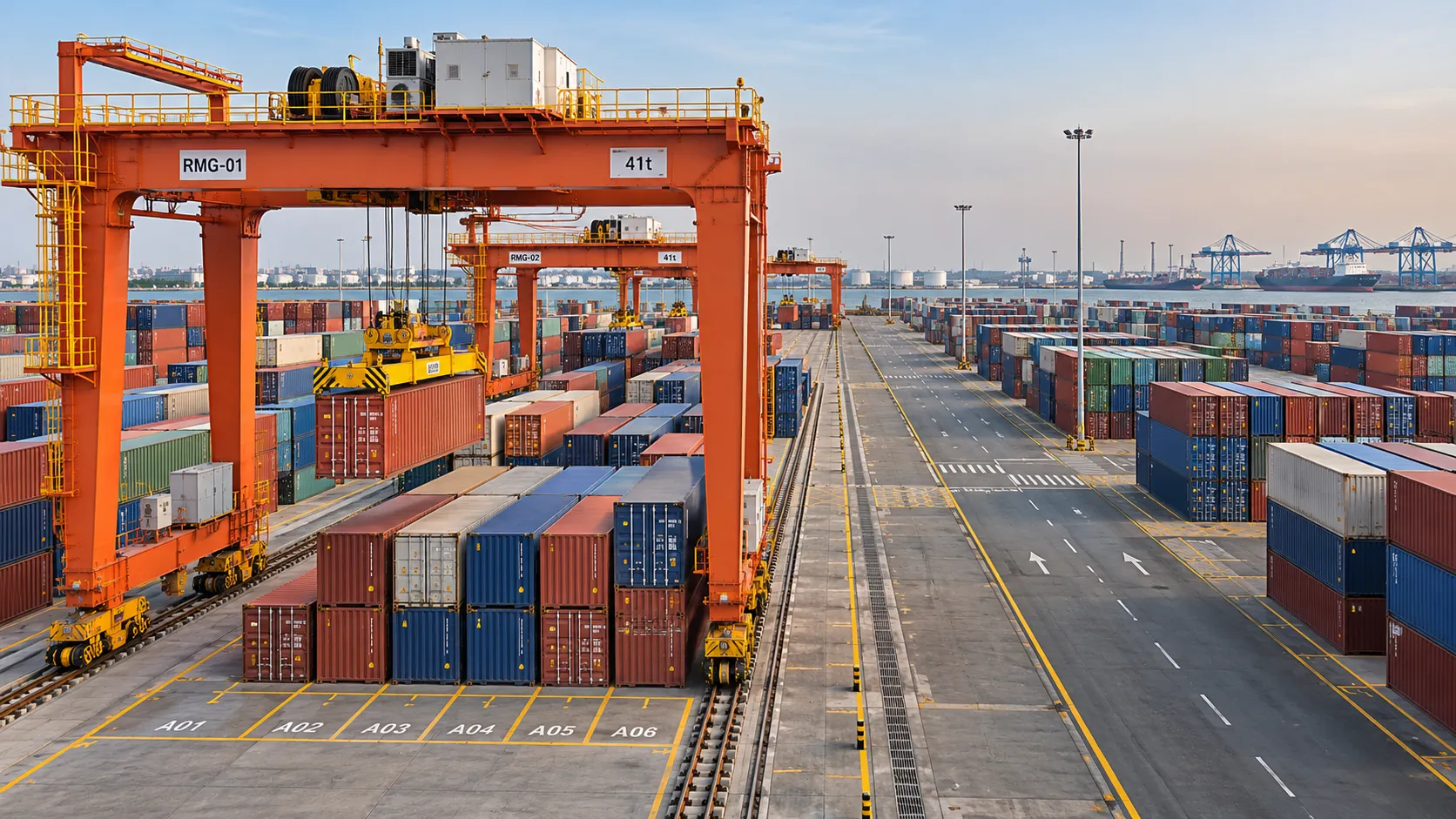
Real-Time Container Yard Systems: How to Evaluate Tracking and TOS Integration
Evaluate real time container yard systems with confidence. Discover how to assess tracking accuracy, TOS integration, latency, and operational resilience.
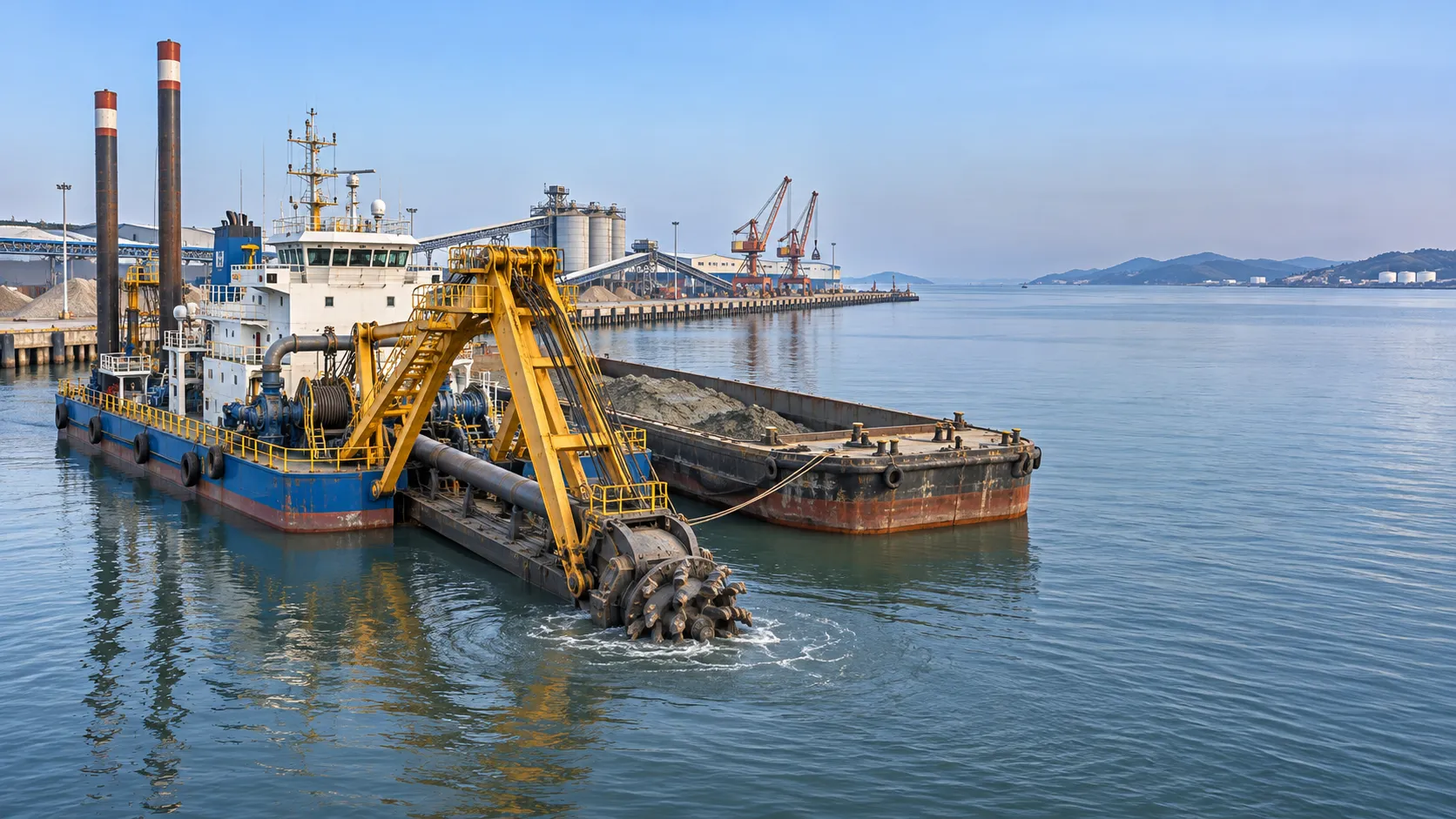
Marine Engineering Solutions for Dredging in Ports: Key Design Factors
Explore marine engineering solutions for dredging ports, from equipment selection and sediment management to safe navigation and survey verification.
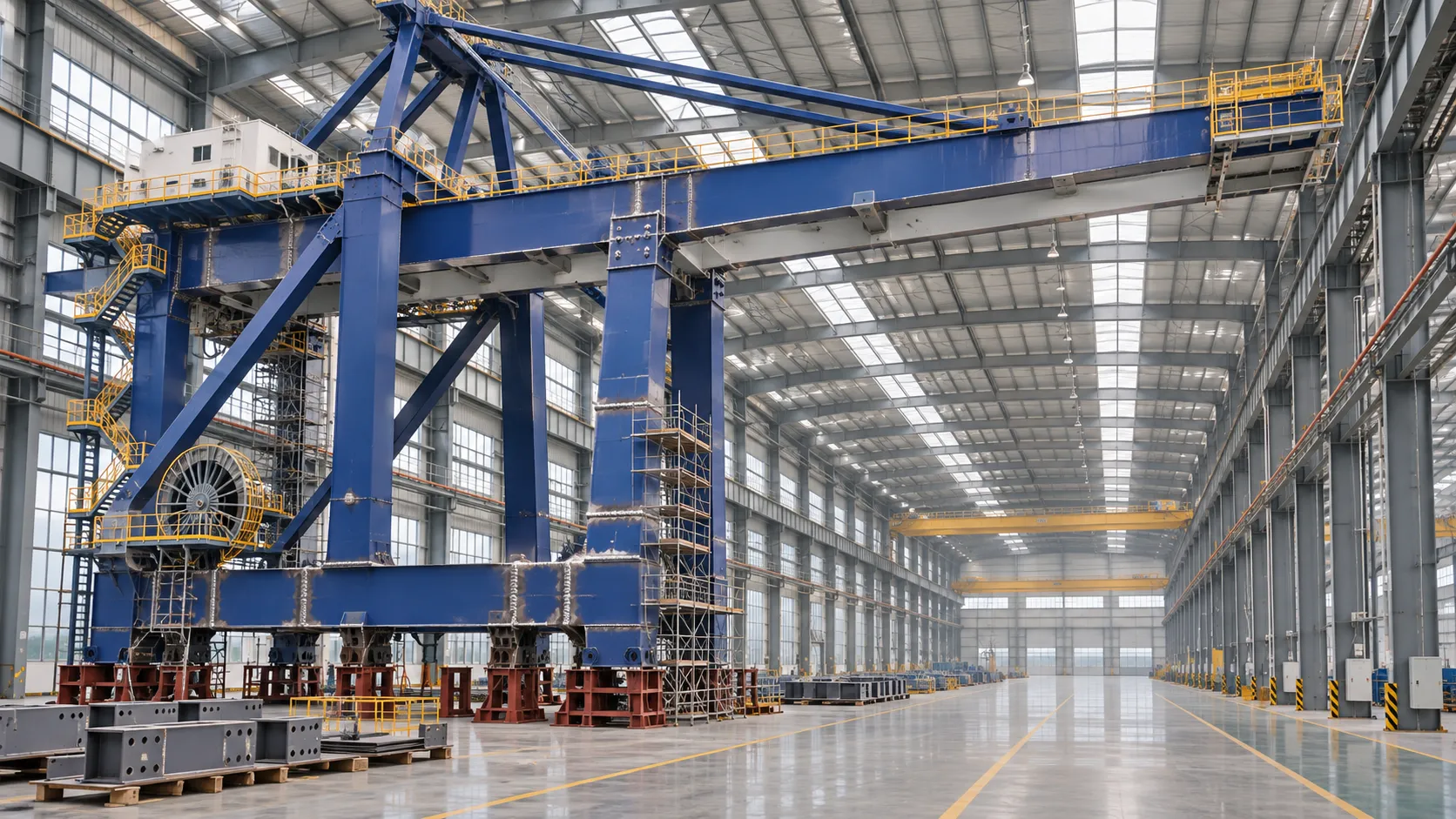
How to Evaluate a Quay Crane Factory: Capacity, Quality and Delivery
Evaluate a quay crane factory with confidence. Learn how to verify production capacity, quality controls, delivery plans, and lifecycle costs before you commit.
CE-Marked Quay Cranes: How to Verify Compliance Documents
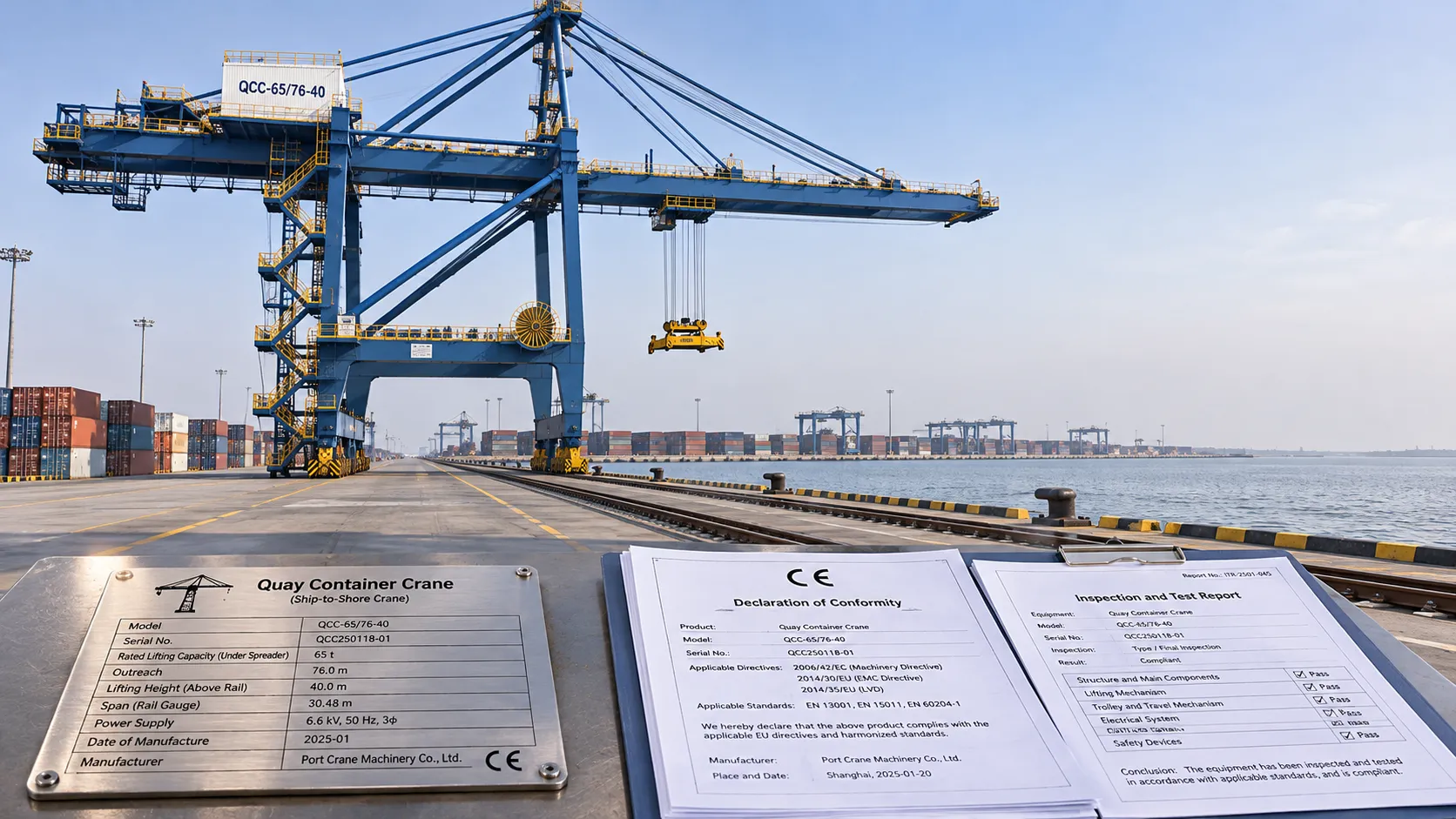
Quay crane CE certified? Learn how to verify declarations, risk assessments and test records for the complete machine before acceptance.
Port Automation Systems in Latin America: Choosing the Right Solution
Explore port automation systems Latin America terminals can use to reduce congestion, assess integration risks, and choose the right solution with confidence.
Scalable Automated Port Systems: Planning for Terminal Capacity Growth
Discover how scalable automated port systems support phased terminal growth, reduce bottlenecks and guide smarter capacity investments.
Europe's Coastal Economies: Key Industries, Jobs and Climate Risks
Explore coastal economics in Europe: discover key industries and jobs, the climate risks they face, and how coastal communities can adapt.

Bulk Cargo Handling Equipment for Ports: Choosing by Cargo and Capacity
Choose bulk cargo handling equipment for ports with confidence. Compare cargo types, realistic throughput, equipment options, and lifecycle costs.
What Affects Container Terminal Efficiency in Southeast Asia?
Discover what affects terminal efficiency in Southeast Asia, from berth planning and yard congestion to inland access, and learn how to assess performance.