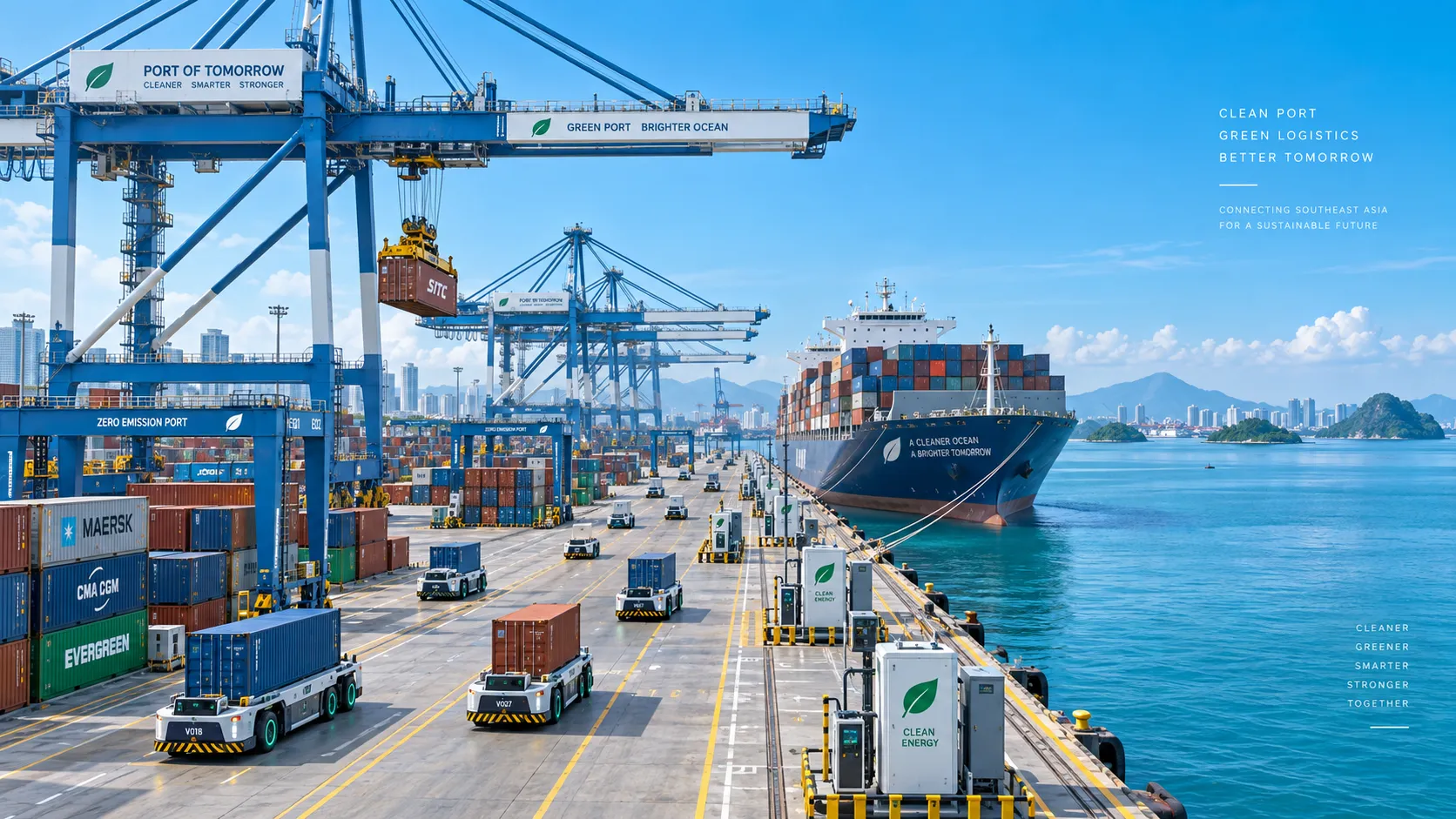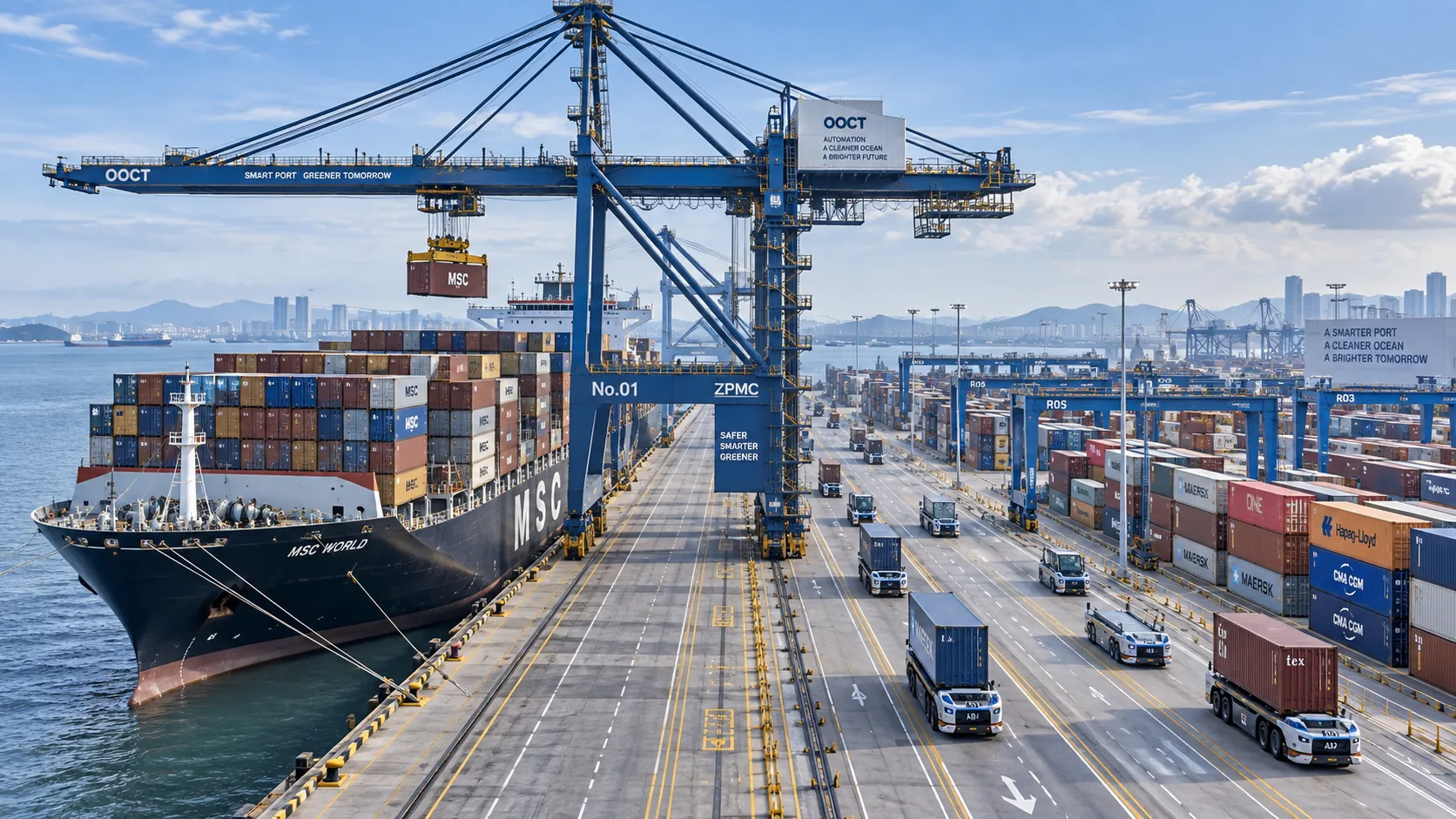
Evaluation should start with fit to terminal scope, because a capable port machinery exporter is not defined by a broad catalog alone. The first question is whether the exporter can translate berth layout, vessel profile, yard flow, cargo mix, weather exposure, utility conditions, and automation level into a coherent equipment package. A supplier that mainly quotes standard machines may look competitive at the proposal stage yet struggle once rail gauge, outreach, wheel loads, gantry travel tolerance, power quality, or corrosion class must be aligned with the civil and electrical design already locked into the project.
For large-scale terminal work, engineering depth usually reveals itself in the early technical exchange. Useful signs include marked-up general arrangement drawings, clear comments on quay interface conditions, questions about fender line and waterside clearance, discussion of maintenance access zones, and attention to future expansion rather than only the first delivery lot. If an exporter does not challenge unclear assumptions in the tender package, the risk is that unresolved conflicts will move downstream into fabrication, shipment, erection, or commissioning.
Start from system compatibility, not isolated machine performance
A quay crane, RTG, RMG, ship loader, stacker-reclaimer, hopper, conveyor, or dredging support unit will eventually operate inside a larger chain of controls, structures, and operating rules. A strong exporter should therefore discuss interface responsibility in detail. That includes power supply voltage and frequency, earthing philosophy, PLC and SCADA communication points, anti-collision logic, position reference systems, remote-control architecture, and field sensor selection. If the project includes automated container handling, the conversation should also cover latency tolerance, equipment handoff logic, fault recovery modes, and whether local fallback operation can continue safely during network instability.
Mechanical performance still matters, but nameplate figures should be read in operating context. Hoisting speed, trolley speed, wheel load, stacking height, conveyor throughput, dredge pump capacity, boom outreach, and slewing range only become meaningful when tied to duty cycle, ambient temperature, wind limits, and maintenance philosophy. A quoted speed value without clarification on loaded versus unloaded conditions, inverter control, or duty rating can create a misleading comparison.
Fabrication quality is easier to claim than to verify
Large terminal machinery lives in a severe environment: salt-laden air, heavy dynamic loading, constant vibration, abrasive bulk materials, and intermittent shock events. That makes fabrication discipline a central selection issue. The exporter should be able to explain the steel grade strategy for primary and secondary structures, weld sequencing for distortion control, corrosion protection system by exposure zone, and machining tolerances for critical rotating or traveling assemblies. Where structural members see concentrated fatigue loading, details such as weld toe finishing, access for inspection, and drainage design matter more than brochure language.
It is worth looking closely at how the exporter handles components that often fail quietly before any major structural problem appears. Cable reels, festoon systems, sheaves, spreader connections, slew bearings, hydraulic hose routing, pin-bushing interfaces, conveyor skirt sealing, and pump wear parts should not be treated as afterthoughts. A technically mature exporter tends to speak about replacement access, lubrication intervals, contamination control, and local parts availability with the same seriousness used for headline capacity figures.
Surface treatment also deserves a hard review. Port machinery often fails first through corrosion under coatings, especially at bolted joints, welded edges, enclosed cavities, and splash-exposed areas. Ask how surface preparation is controlled, how sharp edges are treated, what coating repair method is expected after site erection, and whether the design reduces water traps. If an exporter cannot explain where corrosion is most likely to start, maintenance cost may be underestimated from the beginning.
Export experience should be judged at the project level
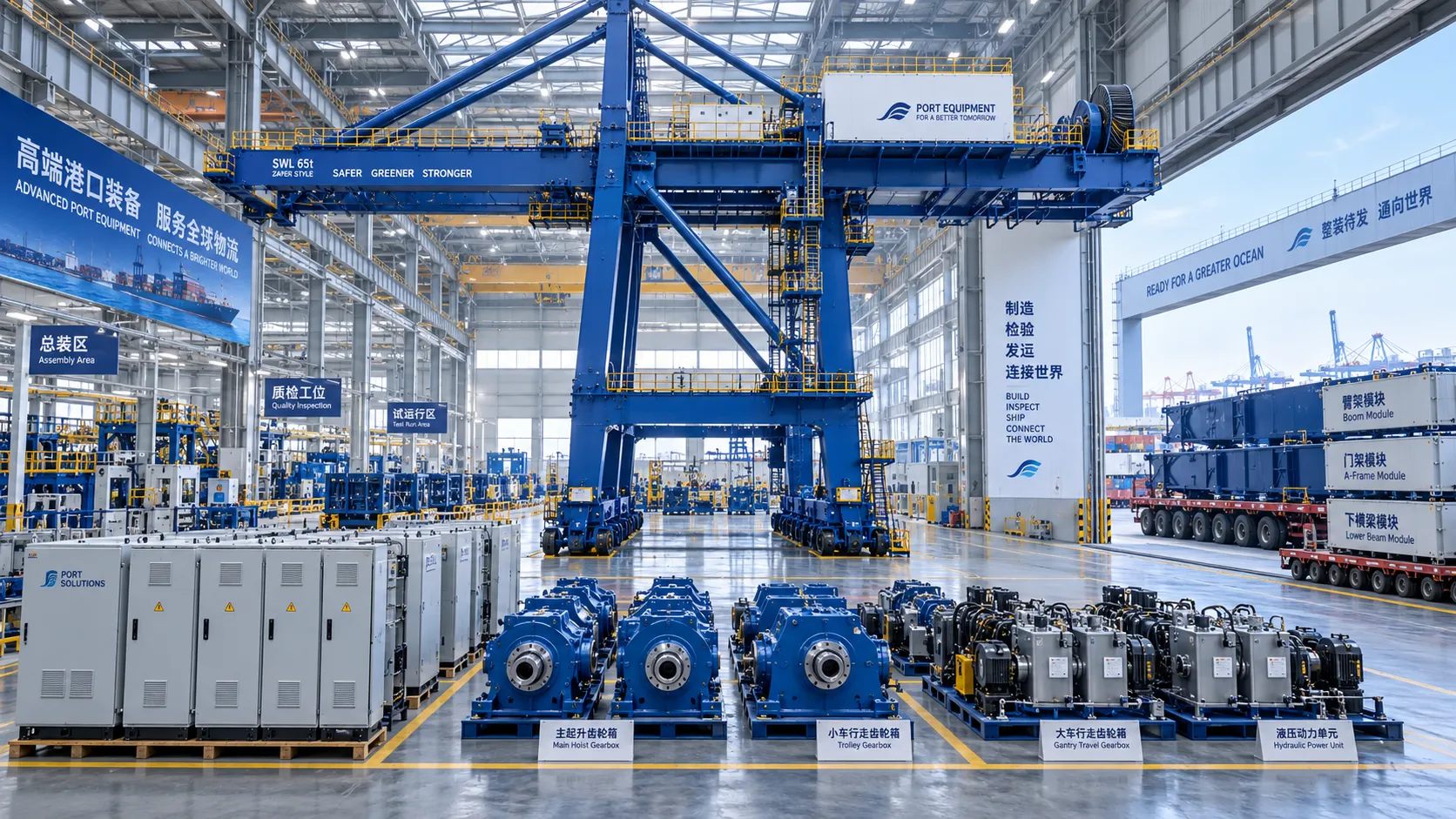
Many companies can export machinery; fewer can export complex terminal systems without losing control of schedule and technical integrity. Large projects depend on packaging plans, transport splitting logic, dimensional surveys, lifting studies, customs documentation, and sequence planning between factory release and site erection. An exporter with real project capability should be able to explain how major assemblies are divided for sea transport, what pre-assembly is done before dispatch, which items are shipped calibrated or factory-aligned, and which tolerances must be re-established on site.
Shipping constraints can reshape the machine itself. Transport width, center of gravity, tie-down points, moisture protection for electrical cabinets, and preservation of machined surfaces should appear in the technical discussion early. For oversized modules, interface flanges and splice locations need to be selected for both transport practicality and field reassembly accuracy. If this is handled late, the project may inherit avoidable weld rework, damaged coatings, or lengthy alignment procedures in the port yard.
Documentation quality is another practical indicator. Assembly drawings, wiring diagrams, hydraulic schematics, spare parts lists, software backup procedures, and commissioning logic should follow a traceable document control structure. Poor exporters often provide documents that are technically present but operationally weak: mismatched revision numbers, vague tagging, incomplete cable numbering, or insufficient troubleshooting guidance.
Automation claims need direct technical proof
Where the project includes remote operation, automated dispatch, OCR, weighing, yard positioning, or integrated energy management, the exporter should be assessed as both a machinery supplier and a controls integrator. It is not enough to hear that the equipment is “automation-ready.” The relevant questions are narrower: which control layer belongs to the exporter, what data points are exposed, how command priority is managed between local and remote stations, and how alarms are classified for operator action versus maintenance action.
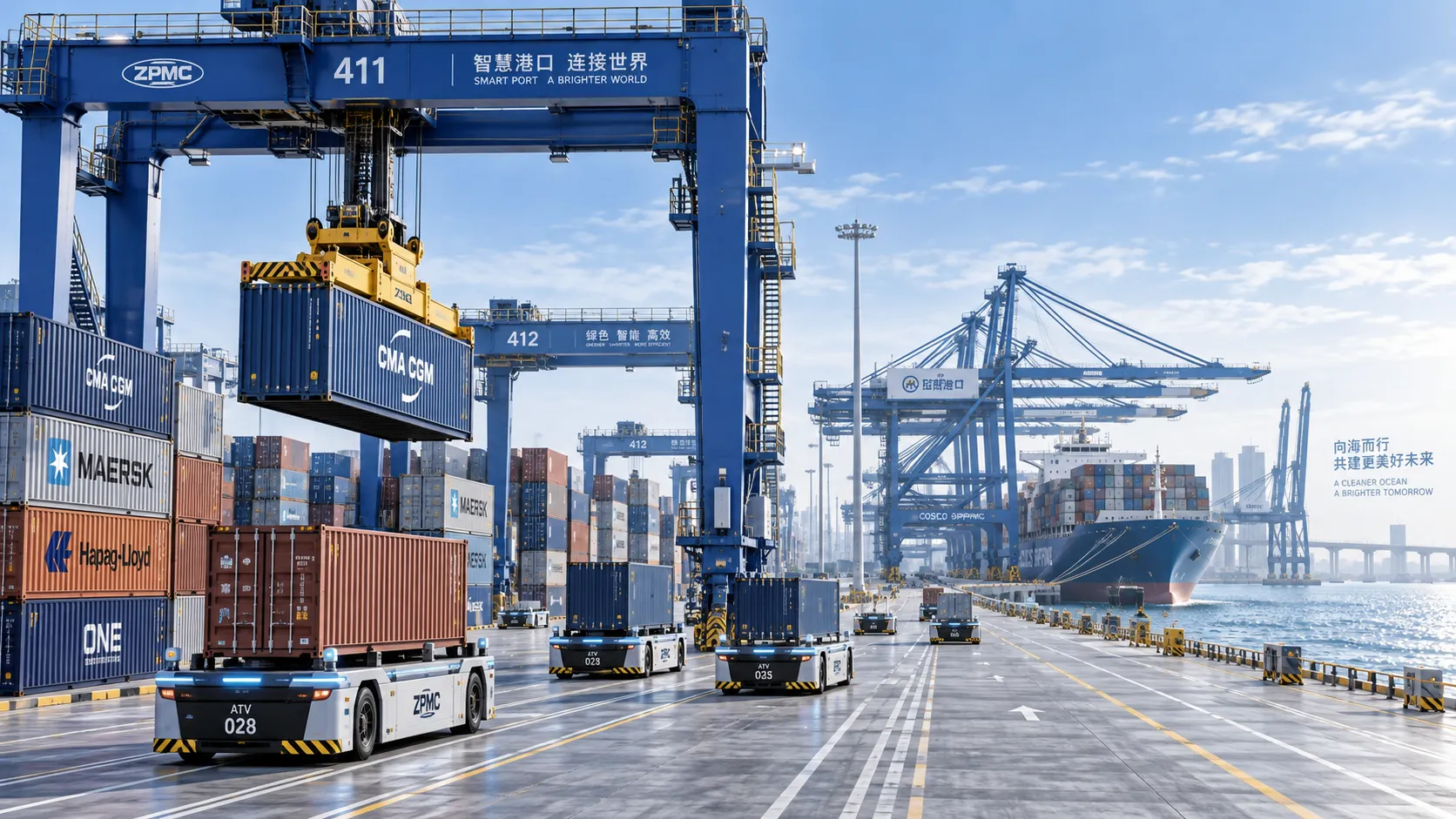
Good evaluation also separates demonstration features from production stability. A remote-controlled crane may complete a demonstration cycle smoothly yet still have unresolved issues in camera placement, sway suppression tuning, encoder drift, spreader positioning under rain or glare, or restart logic after emergency stop events. For AGV interfaces or automated yard handoff, ask how the exporter validates message timing, path conflict handling, and degraded-mode operation when one subsystem is unavailable. Integration risk tends to hide in exceptions rather than normal cycles.
Cybersecurity and software maintainability should not be treated as purely IT concerns. Access control, backup routines, change logs, version discipline, and remote diagnostic pathways affect equipment uptime directly. If PLC logic, HMI pages, or drive parameters depend on undocumented changes during commissioning, future troubleshooting becomes slow and expensive.
Commissioning support often determines whether the schedule holds
Site services separate a reliable exporter from a distant fabricator. The evaluation should cover erection supervision, electrical loop checks, no-load and load testing, calibration procedures, fault-clearing responsibility, and the handover standard required before commercial operation. A useful proposal explains which technicians are needed on site, what local tools or lifting equipment must be prepared, how long commissioning may extend under interface delays, and what conditions trigger additional cost.
Weak planning usually appears where responsibilities overlap: cable termination between contractor packages, rail alignment verification, substation energization timing, spreader interface setup, radio network readiness, or dredging pump trial coordination with civil readiness. If the exporter cannot map these dependencies clearly, delays may be blamed on the site while actually originating from incomplete preparation.
Training should be reviewed in the same practical way. General classroom slides are of limited value compared with fault-tree training, maintenance isolation procedures, parameter recovery methods, and supervised handling of common failure scenarios. The handover package should leave the terminal with enough technical control to maintain continuity after the commissioning team departs.
After-sales strength is measured in response structure, not promises
Large terminal machinery is expected to remain in service for a long period, often with mixed operating conditions and expanding automation layers. Because of that, spare parts logic should be examined in terms of wear classes, lead-time exposure, interchangeability, and obsolescence risk. Critical drives, PLC modules, sensors, hydraulic seals, wire ropes, wheel assemblies, brake linings, and dredging wear components should be classified according to failure consequence rather than grouped into a generic spare parts package.
Pay attention to whether the exporter relies on proprietary components that are difficult to source outside its own network. Proprietary design is not automatically a problem, but it becomes one if troubleshooting access, software restore tools, or replacement part identification are controlled too tightly. A practical exporter normally defines what can be serviced locally, what requires factory intervention, and which components should be stocked before operation begins.
It is also useful to understand the escalation path for technical failures. The real issue is not whether failures will occur, but how quickly a field problem can move from basic diagnosis to engineering-level resolution. An exporter with a mature service structure usually has a clearer separation between site support, parts coordination, control-system specialists, and structural engineering review.
Commercial comparison should follow risk allocation
Price is difficult to interpret until scope boundaries are precise. In large terminal projects, the lower quote can become the more expensive one if exclusions are buried in wording around power distribution, civil embeds, rail clips, software licenses, commissioning consumables, test loads, marine packing, or interface engineering. Commercial review should therefore track every exclusion against the project execution plan.
Payment milestones are equally informative. An exporter asking for aggressive early payments without proportional design release, manufacturing progress evidence, or test completion may be shifting project risk outward. A stronger structure links payment to tangible deliverables such as approved drawings, major fabrication completion, factory acceptance steps, shipment release, site erection milestones, and final performance testing.
Warranty language also deserves careful reading. The real difference often lies in treatment of wear parts, corrosion, misuse definitions, software changes by third parties, and downtime support obligations. Broad warranty headlines mean little if fault attribution is left vague.
Common selection errors
- Relying on reference lists without checking whether those jobs match the same machine class, automation depth, environmental exposure, and delivery complexity.
- Comparing lifting or throughput values across quotations that assume different duty ratings, different load cases, or different auxiliary system boundaries.
- Allowing the mechanical package to progress before control interfaces, data architecture, and remote-operation requirements are frozen.
- Underestimating erection and commissioning time for oversized modules that need alignment across rail, electrical, and software disciplines at once.
- Treating spare parts as a post-award purchase instead of part of lifecycle risk planning from the first technical negotiation.
A dependable port machinery exporter is usually the one that exposes complexity early instead of hiding it behind a polished quotation. Careful scrutiny of engineering assumptions, fabrication discipline, interface control, shipping logic, commissioning readiness, and service structure gives a far better basis for selection than headline capacity or lead-time claims alone.