
Related News
- 00
0000-00
CE Marking for Bulk Material Handling Equipment: What Documents to Check - 00
0000-00
Choosing Smart Automated Cargo Handling Systems for Warehouse Operations - 00
0000-00
Port Terminal Automation: How Cranes, Vehicles and Control Systems Work Together - 00
0000-00
How Soil Conditions Affect Cutter Suction Dredger Performance - 00
0000-00
Predictive Maintenance in Smart Ports: Reducing Crane Downtime
0000-00
Split Hopper Barge Options: Matching Payload to Disposal Cycles
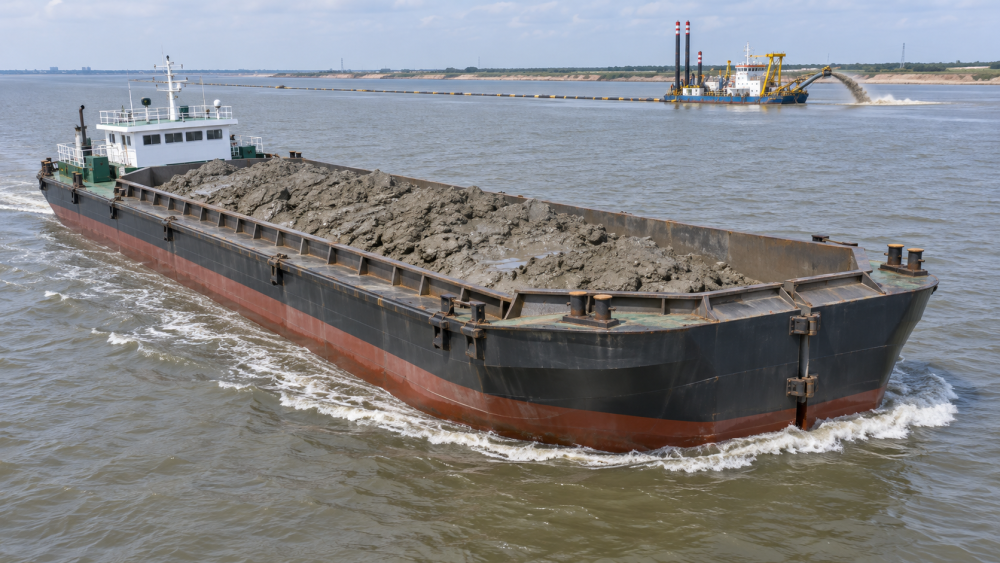
A split hopper barge can be limited by very different constraints on two otherwise similar dredging jobs. One project may need the largest load that can pass through a shallow channel; another may be constrained by a disposal site that accepts material only during a short daily window. Choosing on hopper volume alone can leave the dredger waiting, overload the transport fleet, or create a vessel that cannot use its nominal capacity.
The practical choice is the barge that moves the required material through the entire load, transit, discharge and return cycle within the project’s draft, operating and disposal limits. Payload, sailing time and discharge arrangements must be assessed together, rather than treated as separate specifications.
Start with the complete disposal cycle
A cycle begins when a barge becomes available for loading and ends when it is ready to load again. Depending on the operation, that includes positioning alongside the dredger, loading, departure, the loaded voyage, waiting for clearance, discharge, closing and checking the hopper, the return voyage and any queue at the dredger.
Record these stages separately in the project schedule. A short sailing distance does not guarantee a short cycle if the disposal area is congested or discharge is restricted by tide. Equally, a fast unloading arrangement cannot compensate for a vessel that spends most of its working day waiting for a tug or an available berth.
For preliminary comparisons, divide the usable payload per trip by the expected cycle time. Use consistent units: tonnes per trip produce tonnes per operating hour, while cubic metres per trip produce cubic metres per operating hour. This is a planning rate, not a promise of production. It assumes that the barge can repeat the cycle without additional interruptions.
Compare that rate with the dredger’s expected loading output under the same working-hour assumptions. If the dredger loads only during part of the day, while the disposal site operates on a different schedule, an average daily figure may hide a queue. A time-based dispatch plan is more useful than dividing total project volume by nominal vessel capacity.
Determine usable payload before comparing hopper sizes
Hopper capacity is commonly expressed as a volume, but the amount that can be carried is also governed by weight, draft, stability and operating restrictions. Dense sediment may bring the vessel to its permitted loading condition before the hopper is full. A lighter mixture may fill the available space while leaving unused weight capacity. Water retained with the material also affects the load and must be considered when estimating transported mass.
Ask for the capacity basis behind every quotation. Establish whether the stated volume refers to a geometric hopper volume or another defined measure, and whether the quoted payload applies at a specified draft and water density. Obtain the vessel’s approved loading information and check the actual route, including the dredging area, transit channel and disposal location. The limiting draft can occur at any one of them.
Material behaviour changes the calculation. Loose sand, cohesive clay, rock fragments and soft sediment do not necessarily settle, retain water or discharge in the same way. Loading methods can introduce excess water or unevenly distribute material. A project manager should use representative material information where available and test assumptions against the dredging method, rather than applying a single density to the entire job without review.
When comparing split hopper barge options, request a load assessment for the intended material and the most restrictive operating condition. The relevant figure is not the largest number in a brochure; it is the quantity the vessel can carry and discharge on the planned route while remaining within its approved limits.
Match barge capacity to loading and disposal windows
A larger barge can reduce the number of voyages for a given quantity, but each voyage may take longer to load and may require deeper water or more demanding manoeuvring space. If loading a large vessel monopolises the dredger during a narrow working window, or if it arrives at disposal after the site closes, nominal capacity may not translate into completed trips.
Smaller barges can offer more dispatch flexibility and may fit shallower or more confined locations, subject to their own approved limits. Their trade-off is more frequent positioning, departures and discharges for the same total quantity. Each additional movement creates another opportunity for weather delay, traffic conflict or waiting for assistance.
Consider the following operating patterns when comparing candidates:
- Long transit, reliable disposal access: Greater usable payload may reduce voyage frequency, provided loading time and route draft remain acceptable.
- Short transit, constrained loading area: Manoeuvrability and quick exchange alongside the dredger may matter more than maximum hopper volume.
- Restricted disposal window: Arrival timing and queue capacity may determine production. Several vessels reaching the site together can lose time even if their individual sailing speeds are adequate.
- Variable material: Check both the volume-limited and weight-limited loading cases; the preferred vessel for soft sediment may not be preferred for denser material.
For a fleet, estimate the interval at which loaded barges must leave the dredger, then compare it with the round-trip time. The ratio provides a starting point for the number of vessels needed in circulation. It does not account automatically for breakdowns, tidal access, crew changes or overlapping queues. Model those separately, and check whether the dredger can continue working while an empty barge is being positioned.
Evaluate the discharge operation, not just sailing performance
A split hopper barge discharges by opening its hull or hopper arrangement to release the load. The suitability of that method depends on the material, the permitted placement method and conditions at the receiving site. The vessel must also have enough water and clearance to open safely in the intended location, taking account of the approved operating instructions and site conditions.
Free-flowing material may discharge differently from cohesive material that adheres to surfaces or bridges within the hopper. Residual material can reduce the usable capacity of the next trip and add time to the cycle. Ask the supplier how the proposed hopper geometry and opening arrangement are intended to handle the material, and what inspection or cleaning access is available. Treat any predicted discharge time as an assumption until it has been substantiated for comparable conditions or demonstrated during acceptance.
Placement accuracy matters as well. A vessel suitable for releasing material into an approved open-water placement area may not be suitable for a project that requires controlled placement within a confined footprint. Site instructions, current, positioning capability and the way material disperses after release all affect the assessment. Do not assume that a split hull provides the same placement control as every alternative unloading method.
Disposal approval is a separate decision from vessel selection. Confirm the authorised material, location, placement method and operating conditions with the responsible authority and the project’s permit documents. In marine disposal contexts, the International Maritime Organization’s London Convention and London Protocol provide an international framework for controlling disposal at sea; applicable national requirements and project permissions must also be checked.
Compare propulsion, assistance and access as a system
A self-propelled vessel and a non-self-propelled barge with tug assistance should be compared on the same operational boundary. Include tug availability, connection and release time, escort or traffic requirements where applicable, and manoeuvring at both ends of the route. A lower vessel hire rate can be offset by assistance charges or idle time if the tug is shared with other activities.
For a self-propelled unit, assess loaded and ballast passage times using the expected route and conditions, not an unqualified maximum speed. For a towed or pushed unit, confirm that the proposed tug and connection arrangement are suitable for the barge, route and operating conditions. Harbour restrictions, bridge clearances, turning space and traffic management can affect either approach.
Weather exposure belongs in the same comparison. A vessel that fits the route in calm conditions may have a different practical operating window when waves, current or wind affect loading, transit or disposal. Establish who decides when operations stop and restart, and reflect likely interruptions in the schedule rather than embedding them invisibly in a single cycle-time estimate.
Put verification requirements into the enquiry
A useful procurement package describes the intended duty as clearly as it describes the vessel. Include the dredging method, expected material characteristics, estimated voyage distance, route depths, loading arrangement, disposal constraints and required daily working pattern. Identify uncertain inputs so that suppliers can state the assumptions behind their proposals.
Request enough documentation to compare bids on a common basis:
- Principal dimensions, hopper capacity basis, load and draft information, and applicable approved loading conditions.
- Details of the hull-opening and closing system, operating limits, controls, alarms and provision for loss of power or other foreseeable failures.
- Relevant vessel certification and inspection status for the intended jurisdiction and service, together with any conditions or outstanding items.
- Maintenance history or, for a new vessel, the inspection and testing plan for the hull structure, hinges, seals, hydraulic equipment and controls.
- Delivery scope, crew and tug assumptions, spare parts, operating documentation and the basis for any stated cycle-time or discharge performance.
Certification should be checked against the flag, operating area and contractual scope rather than accepted as a generic claim. The International Maritime Organization’s International Convention on Load Lines, 1966, as amended, addresses load line requirements for applicable ships; applicability and the specific documents required for a particular barge depend on its circumstances and the relevant administration. The vessel’s classification society or flag administration can clarify the documentation expected for the proposed service.
Define acceptance around observable checks. These can include examination of records, inspection of the opening mechanism, functional testing of controls and confirmation that the vessel’s approved documentation matches the offered configuration. A loaded discharge demonstration may be useful where contractually feasible, but its location, material, measurement method and acceptance criteria should be agreed in advance. A single trial under favourable conditions should not be treated as proof of performance under every project condition.
Test the decision against delay and cost exposure
Compare alternatives using cost per completed unit of material, not just cost per vessel-day. Include the dredger’s exposure to waiting, tug and crew costs, fuel or energy, disposal charges where applicable, mobilisation, maintenance and the consequence of missing a disposal window. Keep estimates and assumptions visible so that the project team can change them as site information improves.
Run at least a normal operating case and cases in which one critical assumption changes: a longer disposal queue, a reduced loading rate, a draft restriction or a vessel unavailable for maintenance. The result may favour a different combination of capacity and fleet size from the one selected under an uninterrupted cycle. If the comparison turns on a poorly supported assumption, resolve that uncertainty before committing to the fleet.
The final selection should state the limiting condition, expected usable load, planned cycle and responsibility for managing delays at each interface. That gives the project team a basis for dispatching the fleet and revising the plan when actual material, route or disposal conditions differ from the tender assumptions.
Have questions about the global trade trends discussed here, or planning your expansion and supply chain strategy? Leave a message below and let the trade experts at PS-Nexus guide you.
We respect your privacy. Your information is strictly confidential.
Related News
Shipping Rate Analytics for Ports: How to Forecast Cargo Demand
Shipping rate analytics for ports helps you forecast cargo demand, distinguish price signals from capacity shifts, and make smarter terminal investment decisions.
Automated Port Systems Cost: Installation and Operating Expenses
Explore automated port systems cost, from installation and integration to operating expenses. Compare lifecycle costs and make a confident investment decision.

Coastal Economics Standards: How to Value Coastal Ecosystems
Explore coastal economics standards and learn how to value ecosystem services, compare infrastructure options, and make defensible decisions.
CE Marking for Bulk Material Handling Equipment: What Documents to Check
Bulk material handling CE certified? Discover which declarations, risk assessments and manuals to check before accepting equipment.

Choosing Smart Automated Cargo Handling Systems for Warehouse Operations
Choose smart automated cargo handling systems with confidence. Compare technologies, capacity, safety, costs, and acceptance tests to improve warehouse flow.

Port Terminal Automation: How Cranes, Vehicles and Control Systems Work Together
Discover how terminal automation technology for ports connects cranes, vehicles and control systems to improve coordination, safety and operational flow.
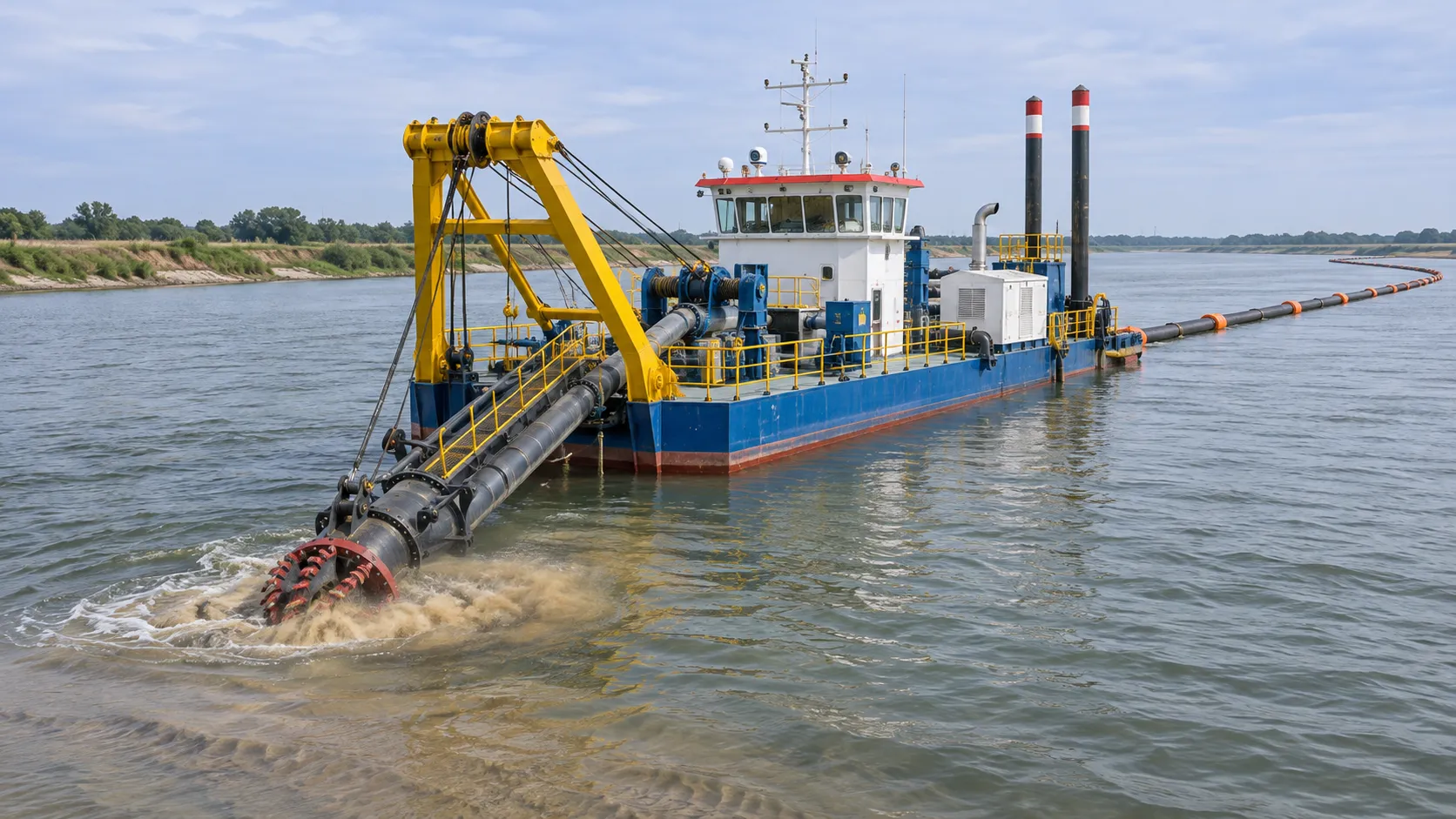
How Soil Conditions Affect Cutter Suction Dredger Performance
Explore the cutter suction dredger range and learn how soil, rock and pipeline conditions affect performance. Compare equipment with confidence.
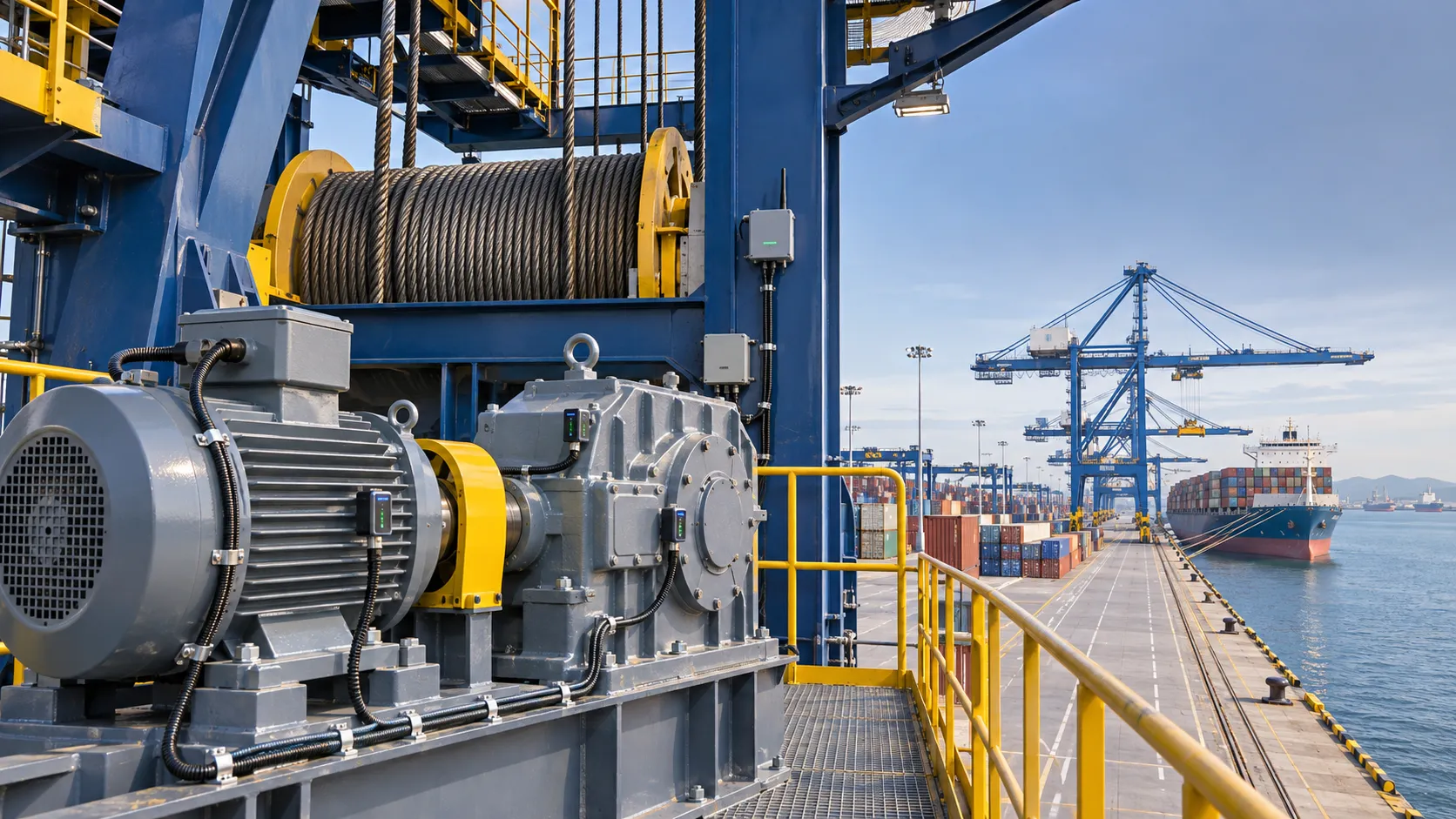
Predictive Maintenance in Smart Ports: Reducing Crane Downtime
Discover how smart port systems predictive maintenance can reduce crane downtime through condition monitoring, actionable alerts, and better terminal planning.

Choosing Marine Logistics Solutions for Container Shipping: Key Criteria
Compare marine logistics solutions for container shipping by route reliability, total cost, visibility, and disruption response. Find the right fit for your cargo.