Related News
- 00
0000-00
CE Marking for Bulk Material Handling Equipment: What Documents to Check - 00
0000-00
Choosing Smart Automated Cargo Handling Systems for Warehouse Operations - 00
0000-00
Port Terminal Automation: How Cranes, Vehicles and Control Systems Work Together - 00
0000-00
How Soil Conditions Affect Cutter Suction Dredger Performance - 00
0000-00
Predictive Maintenance in Smart Ports: Reducing Crane Downtime
0000-00
Port Terminal Automation: How Cranes, Vehicles and Control Systems Work Together
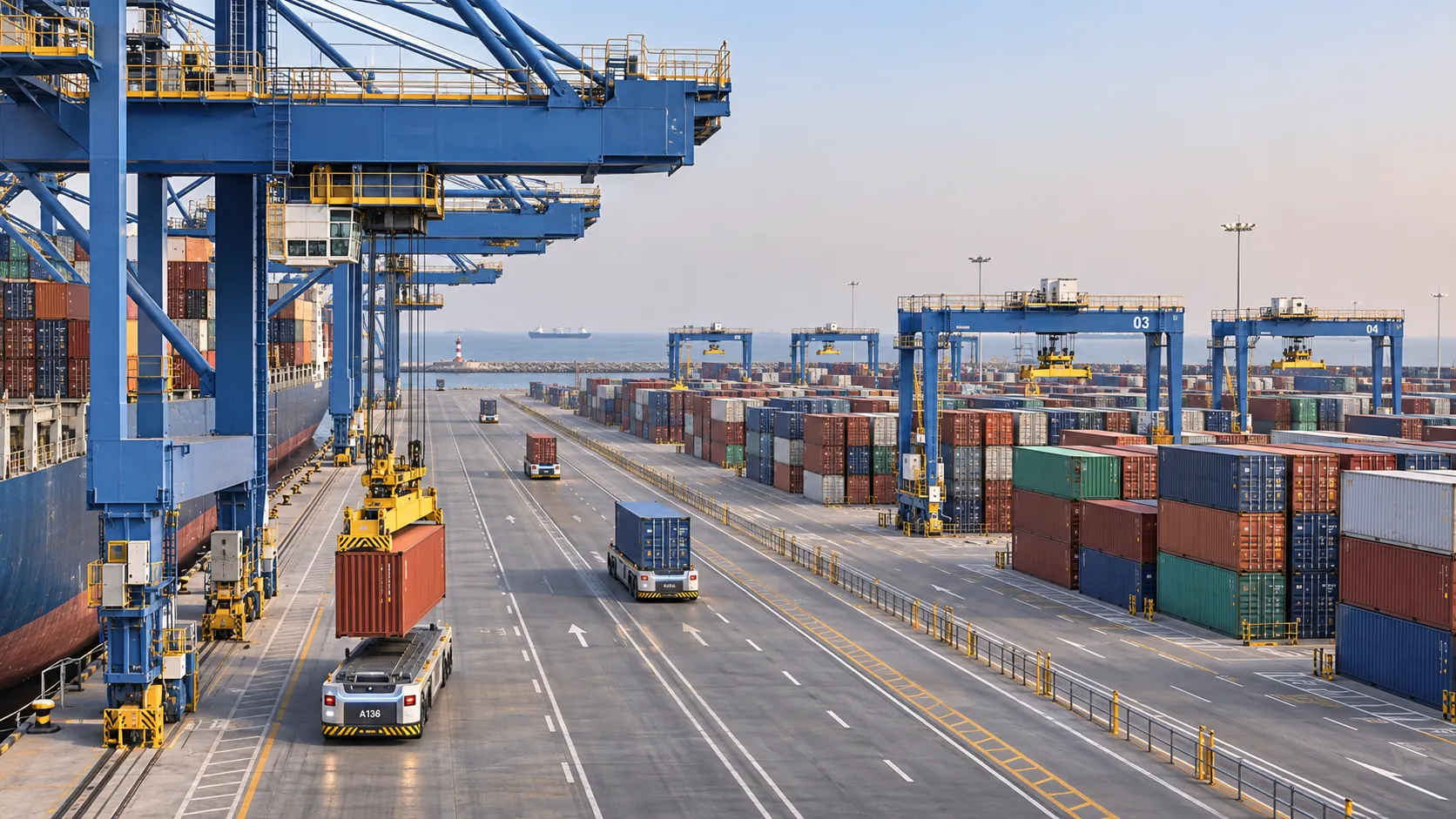
A quay crane can move containers quickly and still spend much of its shift waiting for a vehicle or a clear handover position. Terminal automation technology for ports addresses that coordination problem by linking equipment controls with the systems that plan container moves, assign vehicles and manage yard space. The result depends as much on the quality of those connections as on the speed of the machines themselves.
For technical evaluators, the central question is how reliably the terminal can turn a planned move into a verified physical transfer. A workable design must coordinate the crane, vehicle and yard equipment under normal conditions, then keep people and machinery safe when a container is late, a position is blocked or a communication link fails.
Follow one container through the system
Consider an import container moving from a vessel to a yard stack. The sequence is familiar, but automation adds decisions and confirmations at every handover.
The terminal operating system, or TOS, holds the operational plan: which containers are to be discharged, where they should go and what constraints apply. It creates or releases work instructions using information such as the vessel stowage plan, container status and intended yard location. Depending on the architecture, a separate equipment control or fleet management system translates those instructions into machine-level assignments and sequences.
A quay crane lifts the container from the vessel. Quay crane operation may combine automated functions with a remote or local operator, particularly during vessel-side handling. The landside transfer sequence can then be coordinated with an automated guided vehicle (AGV), an automated shuttle carrier or another transport vehicle. These equipment types do not all have the same lifting and transfer capabilities, so the handover design must match the machines selected.
For an AGV that receives a container from the crane, the fleet system sends a vehicle to an assigned transfer point. The crane and vehicle need a shared understanding of position, readiness and permission to proceed. Once the container is safely placed and the transfer is confirmed, the vehicle travels to the yard. An automated stacking crane or other yard machine receives it and places it in the planned stack position. The operating system is then updated with the completed move and the container’s recorded location.
That sequence contains several distinct decisions: where the container should go, which vehicle should carry it, when each machine may enter the transfer area and whether the physical move succeeded. A schedule can be correct while the physical transfer fails; equally, a machine can complete a motion while the container record remains out of date. Both conditions require a controlled response.
Which system controls what?
Automation architectures vary by terminal and supplier, but separating operational planning, equipment coordination and machine control helps evaluators identify responsibilities. The boundaries should be explicit in the interface design.
A fleet system may optimize which vehicle should collect a container, but it should not be assumed to replace the protective controls on the vehicle, crane or transfer area. Similarly, the TOS may specify a destination without controlling every movement required to reach it. The precise division must be documented for each installation, including which system owns the authoritative state of a job at each stage.
This matters when a plan changes. If a yard slot becomes unavailable after a vehicle has departed, the systems need an agreed way to cancel or amend the assignment. They also need to know whether the vehicle has accepted the change and where the container actually is. A new destination displayed in one system is insufficient if another system is still acting on the old instruction.
Handover points determine whether the plan works
The quay-to-vehicle and vehicle-to-yard interfaces are often more demanding than a simple dispatch message suggests. Each transfer requires physical alignment, equipment readiness and a shared sequence of actions. The design must also account for what happens if those conditions are not met within the expected window.
At the quay, a vehicle arriving too early may occupy a scarce transfer position; arriving too late may leave the crane waiting. The scheduling system therefore needs visibility into both crane progress and vehicle availability. A container may be buried in a vessel bay, delayed by a preceding move or held for an operational reason. Dispatch based only on the original sequence can send vehicles to the wrong place at the wrong time.
At the yard, the destination stack and transfer lane must be available when the vehicle arrives. Yard cranes may serve several lanes and balance deliveries with retrievals. If the receiving crane is busy or a lane is blocked, vehicles can queue back toward the quay. That delay can spread across the terminal even when the quay cranes themselves remain mechanically available.
Evaluators should ask how each handover is confirmed. Relevant events include vehicle arrival, position acceptance, permission to transfer, load placement or pickup, and completion acknowledgement. The exact signals depend on the equipment, but the sequence should make clear which side acts next and how duplicate, missing or contradictory messages are handled.
Exceptions need a defined owner
A robust design assigns responsibility for situations that fall outside the nominal sequence. Examples include a vehicle stopping in a transfer lane, a crane being unable to place a container, a container identity mismatch or a destination becoming unavailable.
For each exception, the operating procedure should identify who receives the alarm, which equipment is held, what information is presented to the operator and how the move can be resumed or cancelled. Manual intervention may be necessary, but the system must reconcile the resulting physical state with the container and job records. Otherwise, the terminal can resume movement with an incorrect view of where a container or vehicle is located.
Communications support coordination; they do not guarantee it
Automated equipment exchanges job instructions, position information, status updates, alarms and acknowledgements over terminal networks. Some traffic supports planning; other traffic supports time-sensitive equipment operation or defined safety functions. These uses have different performance and assurance requirements and should be assessed separately.
Coverage maps alone are not enough to establish whether a wireless design will work. Containers, cranes and moving equipment can obstruct radio paths, while vehicles move between coverage areas. The evaluation should consider the relevant operating zones, expected traffic, interference conditions and behavior during connection loss or handover between access points.
Network requirements should be expressed in terms of the function being supported. A delayed planning update may reduce efficiency; an interrupted control or protective function may require a defined safe response. The equipment supplier and terminal integrator should specify acceptable performance, monitoring and fallback behavior for each interface, rather than relying on a single network-wide latency claim.
Cybersecurity also has a direct operational role. The design should define how devices and users are authenticated, how operational networks are segmented, how remote access is controlled and how software changes are managed. Recovery procedures matter as well: restoring a server is only part of recovery if equipment positions, active jobs and container records must also be reconciled before operations restart.
Assess throughput as a coordinated flow
Equipment specifications can establish the capabilities of individual machines, but they do not establish terminal throughput on their own. The effective rate of a container flow depends on the availability and timing of quay cranes, transfer positions, vehicles, yard cranes and usable stack space. A constraint in one part of the chain can leave capacity idle elsewhere.
For example, adding vehicles may reduce quay-side waiting when transport is the limiting resource. If the yard crane or transfer lanes are already saturated, additional vehicles may instead increase queues. Likewise, a faster yard machine may deliver little benefit if it receives work irregularly or must frequently wait for a clear lane.
When comparing designs, evaluators should ask for performance assumptions and results that describe the whole operating scenario:
- Workload: vessel call pattern, container mix, discharge and loading sequence, and the balance between import and export moves.
- Layout: travel distances, transfer-point arrangement, lane capacity and the interaction between vehicle routes and yard blocks.
- Operating conditions: equipment availability, shift arrangements, maintenance windows and restrictions that affect crane or vehicle operation.
- Performance measures: completed moves over time, waiting and queue times, equipment utilization and the effect of disruptions on recovery.
Simulation can help compare layouts, fleet sizes and dispatch rules before equipment is installed. Its value depends on the assumptions behind it: a model that omits blocked lanes, equipment downtime or uneven crane demand may overstate the benefit of automation. Sensitivity tests can show whether a design remains workable when demand or availability differs from the base case.
Use interface and failure tests to assess integration
An integration review should move beyond a list of supported protocols. The technical team needs an interface specification covering message contents, identifiers, state changes, acknowledgements, timeouts and error handling. It should also identify ownership of master data, including equipment identifiers, location references and container records.
Acceptance testing can then follow complete operational scenarios across system boundaries. A useful test starts with a job in the operating system and ends with a verified physical move and matching records. It should also exercise changes and failures: cancel an assigned job, interrupt a vehicle connection, make a yard location unavailable or restart a control component while work is in progress.
The test outcome should show more than whether an alarm appears. It should establish that equipment enters its specified state, operators receive enough information to act, and the systems agree on the disposition of the container before work resumes. For safety-related behavior, the applicable requirements and validation approach should be defined for the equipment, installation and jurisdiction involved.
A phased deployment can limit disruption, particularly where new automated equipment must coexist with an operating terminal. The transition plan should specify boundaries between automated and conventional operations, temporary traffic arrangements, operator responsibilities and the conditions for moving to the next phase. Those arrangements need the same attention to interfaces as the final design: temporary handovers can still interrupt the flow of containers.
The strongest technical evaluation therefore follows the container through ordinary work and through failure. If the terminal can identify who controls each step, verify each transfer and recover a consistent operational state after an interruption, its cranes, vehicles and software have a credible basis for working as one system.
Have questions about the global trade trends discussed here, or planning your expansion and supply chain strategy? Leave a message below and let the trade experts at PS-Nexus guide you.
We respect your privacy. Your information is strictly confidential.
Related News
Shipping Rate Analytics for Ports: How to Forecast Cargo Demand
Shipping rate analytics for ports helps you forecast cargo demand, distinguish price signals from capacity shifts, and make smarter terminal investment decisions.
Automated Port Systems Cost: Installation and Operating Expenses
Explore automated port systems cost, from installation and integration to operating expenses. Compare lifecycle costs and make a confident investment decision.

Coastal Economics Standards: How to Value Coastal Ecosystems
Explore coastal economics standards and learn how to value ecosystem services, compare infrastructure options, and make defensible decisions.
CE Marking for Bulk Material Handling Equipment: What Documents to Check
Bulk material handling CE certified? Discover which declarations, risk assessments and manuals to check before accepting equipment.
Choosing Smart Automated Cargo Handling Systems for Warehouse Operations
Choose smart automated cargo handling systems with confidence. Compare technologies, capacity, safety, costs, and acceptance tests to improve warehouse flow.
How Soil Conditions Affect Cutter Suction Dredger Performance
Explore the cutter suction dredger range and learn how soil, rock and pipeline conditions affect performance. Compare equipment with confidence.
Predictive Maintenance in Smart Ports: Reducing Crane Downtime
Discover how smart port systems predictive maintenance can reduce crane downtime through condition monitoring, actionable alerts, and better terminal planning.
Choosing Marine Logistics Solutions for Container Shipping: Key Criteria
Compare marine logistics solutions for container shipping by route reliability, total cost, visibility, and disruption response. Find the right fit for your cargo.
Automated Port Equipment: Choosing Cranes and Vehicles for Container Terminals
Choose automated gear for ports with confidence. Compare cranes, vehicles and control systems to improve container flow, manage costs and reduce bottlenecks.