Related News
- 00
0000-00
How to Specify a Quay Crane for Container Terminals by Vessel Size and Throughput? - 00
0000-00
Which Bulk Handling Equipment Suits High-Moisture Cargo? - 00
0000-00
Terminal Automation Technologies That Raise Container Throughput Without Yard Disruption - 00
0000-00
Planning Offshore Dredging Operations: Key Risks, Methods, and Project Controls - 00
0000-00
Where Do Automated Guided Vehicles Deliver the Fastest Warehouse Gains in the Middle East?
Dynamic Path-Planning Algorithms Explained: Which Methods Fit Real-Time Routing?
Dynamic Path-Planning Algorithms Explained: Which Methods Fit Real-Time Routing?
For ports, AGV fleets, and automated terminals, dynamic path-planning algorithms are not abstract theory. They directly affect travel time, congestion, safety margins, and equipment productivity.
In fast-moving logistics environments, static routing breaks down quickly. A lane closes, a crane changes sequence, or a yard block becomes crowded. Routes must adapt immediately.
That is why dynamic path-planning algorithms matter. They help planners and system architects decide how vehicles should move when the map, task queue, or operating constraints keep changing.
For PS-Nexus, this topic sits at the intersection of terminal automation, control logic, and operational intelligence. Routing quality shapes both asset utilization and overall port throughput.
This guide explains the main dynamic path-planning algorithms, where each method fits, and how to judge them in real-time routing scenarios across maritime logistics operations.
Why Real-Time Routing Is Harder Than It Looks
Real-time routing sounds simple until the operating context is examined. Ports are not open grids. They are constrained systems with tight rules, mixed traffic, and shifting priorities.
An AGV route may depend on battery level, quay crane timing, one-way lanes, pedestrian exclusion zones, and temporary equipment positions. The shortest path is often not the best path.
More importantly, routing decisions happen repeatedly. A good algorithm must update quickly without destabilizing the fleet. That balance separates lab performance from field performance.
In practice, real-time routing usually requires handling:
- moving obstacles and blocked lanes
- task reprioritization from TOS or fleet control systems
- multi-vehicle conflict avoidance
- strict timing windows near cranes and yard blocks
- energy, safety, and wear-related operating constraints
This also means dynamic path-planning algorithms should be judged as operational tools, not only as mathematical solutions.
The Core Families of Dynamic Path-Planning Algorithms
Most dynamic path-planning algorithms fall into several practical families. Each family handles change differently, and each has clear tradeoffs in speed, optimality, and implementation complexity.
1. Graph Search Methods
A* is still the best-known baseline. It works well on mapped networks and produces efficient routes when the environment is mostly stable.
For dynamic conditions, variants such as D* and D* Lite are more relevant. They reuse previous search results and update paths when costs or obstacles change.
These dynamic path-planning algorithms are strong when route networks are structured, like terminal lanes, transfer corridors, and predefined operational zones.
2. Sampling-Based Methods
Methods such as RRT and RRT* are more common in robotics and high-dimensional motion planning. They explore feasible motion spaces instead of only searching fixed graph links.
They are useful when vehicle kinematics matter strongly, especially for large machines with turning radius constraints or nontrivial motion envelopes.
However, these dynamic path-planning algorithms can be harder to tune for deterministic industrial workflows that demand repeatable behavior.
3. Reactive and Local Planning Methods
Local planners react to near-field conditions. Examples include dynamic window approaches, velocity obstacles, and potential-field style methods.
These methods are fast and practical for immediate obstacle avoidance. They are often used together with a higher-level planner rather than alone.
In crowded terminals, local methods help absorb short-term disruptions without triggering full replanning across the entire fleet.
4. Optimization and Heuristic Scheduling Hybrids
Some routing systems combine path planning with dispatch logic. They use heuristics, mixed-integer models, or metaheuristics to coordinate route choice and task assignment together.
This is common in automated terminals because routing quality depends on crane sequence, yard workload, and fleet balance, not only on travel distance.
These dynamic path-planning algorithms can improve system-wide efficiency, but they require stronger data integration and tighter control architecture.
Which Methods Fit Real-Time Maritime Logistics Best?
There is no single best answer. The right choice depends on map structure, fleet size, operating volatility, and how much decision latency the control stack can tolerate.
Still, some patterns are clear. In structured port environments, graph-based dynamic path-planning algorithms usually offer the most practical balance.
A* remains useful for baseline route generation. D* Lite becomes more attractive when lane costs change frequently and route updates must be computed fast.
Reactive local planners should usually be layered underneath them. That setup supports both macro-level efficiency and micro-level safety.
A practical fit by scenario often looks like this:
From a standards and evaluation perspective, the strongest solutions are often hybrid, not pure. They combine predictable routing logic with selective real-time adaptation.
Key Evaluation Criteria Before Choosing an Algorithm
When comparing dynamic path-planning algorithms, technical elegance matters less than measurable operational fit. Decision-makers should test methods against realistic terminal conditions.
Latency and Replanning Speed
How fast can the algorithm update after a new obstacle, route restriction, or dispatch change? Real-time routing fails when response time exceeds operational tempo.
Scalability
A method that works for ten vehicles may collapse at one hundred. Multi-agent behavior is often the real bottleneck in dynamic path-planning algorithms.
Route Quality Under Constraints
Shortest distance is only one metric. Real systems also care about queue stability, energy use, equipment wear, and conflict rates at shared nodes.
Data and Integration Burden
Some dynamic path-planning algorithms need precise sensor feeds, high-frequency map updates, and close links to TOS, PLC, and fleet management layers.
Explainability
In industrial environments, routing logic must often be auditable. Operators and engineers need to know why a route changed and whether the change is acceptable.
A practical review checklist should include:
- replanning time under peak traffic
- deadlock frequency in dense zones
- task completion variance after disturbances
- map maintenance requirements
- compatibility with safety control policies
Common Risks When Dynamic Path-Planning Algorithms Are Misapplied
A frequent mistake is choosing an algorithm based on benchmark reputation alone. Performance in robotics papers does not always transfer cleanly into terminal operations.
Another issue is over-optimizing for shortest paths. That can increase intersection conflicts, generate unstable route switching, and reduce overall yard fluidity.
More subtle problems appear when local avoidance and central scheduling are poorly coordinated. Vehicles may behave safely in isolation while harming fleet throughput.
Warning signs usually include:
- frequent route oscillation after small disturbances
- high CPU demand for modest traffic growth
- good single-vehicle results but weak fleet outcomes
- heavy dependence on manual overrides
In actual business settings, the best routing strategy is usually the one that remains stable under imperfect data, not the one that wins on idealized maps.
How to Make a Sound Selection Decision
A sound evaluation process starts with the operating model, not with the algorithm list. First define route density, disturbance frequency, and control response targets.
Next, test dynamic path-planning algorithms on historical traffic patterns and simulated disruptions. Include crane delays, blocked lanes, priority jobs, and communication lag.
Then compare both route-level and system-level metrics. A method that saves seconds on one trip may still reduce berth-side productivity elsewhere.
For many ports and automated yards, a sensible decision path is:
- use graph-based routing as the operational baseline
- add local reactive control for immediate obstacle handling
- introduce hybrid optimization only where fleet coordination justifies the complexity
- validate against live operational variance before full deployment
For information researchers, this approach provides a clearer lens. It separates algorithm branding from operational suitability and makes comparison more defensible.
For PS-Nexus, the bigger signal is straightforward. As terminal automation deepens, dynamic path-planning algorithms will increasingly be judged by integration quality, resilience, and fleet-level intelligence.
That shift matters across maritime logistics. Routing is no longer just a control function. It is becoming a strategic performance layer inside smart ports and connected supply chains.
The practical next step is to assess routing methods against actual terminal constraints, update frequency, and coordination needs. That is where the right algorithm choice becomes visible.
Related News
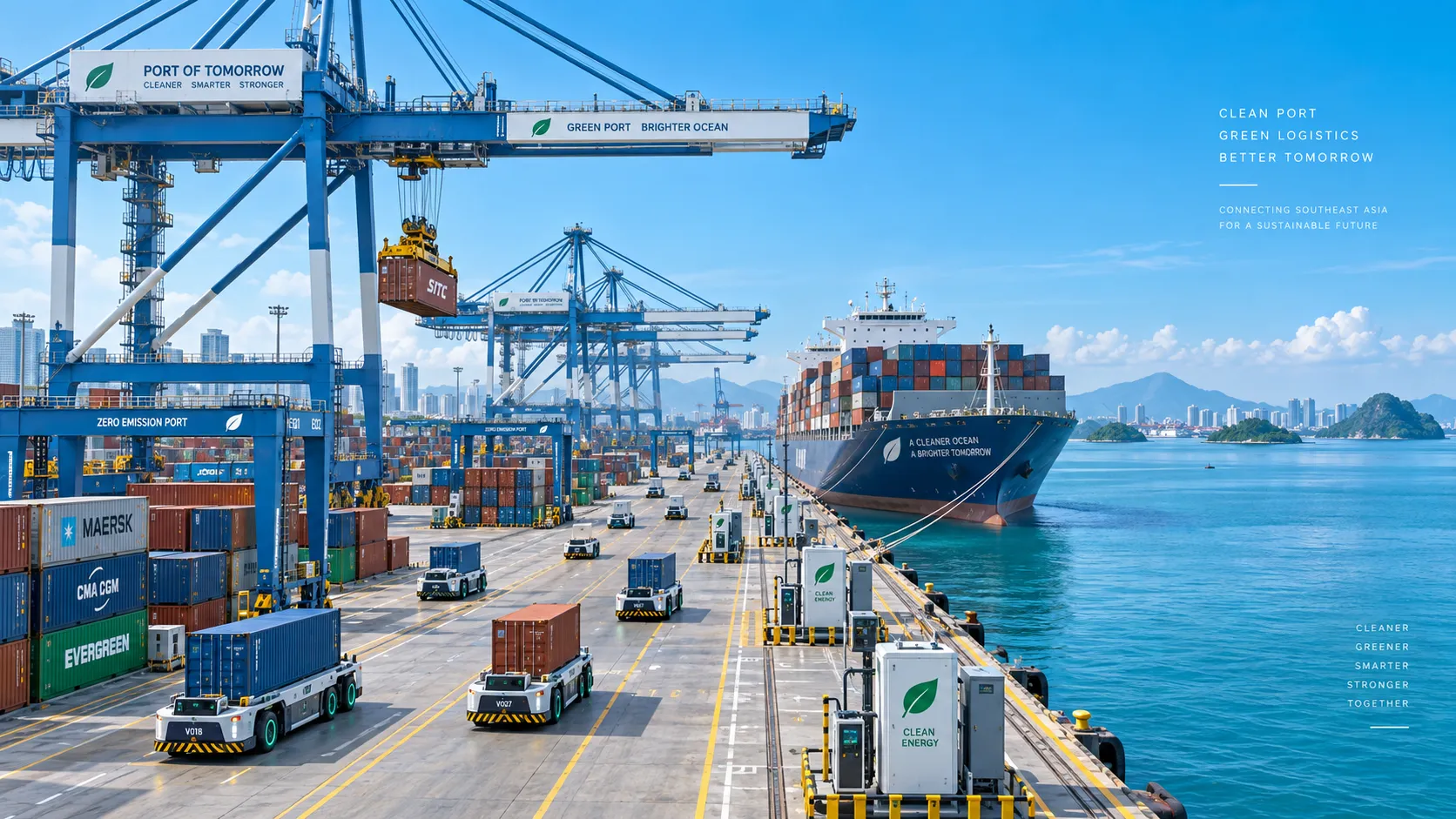
Smart Port Systems in Southeast Asia: Investment Priorities and Adoption Barriers
Smart port systems Southeast Asia: discover investment priorities, adoption barriers, and practical steps to build resilient, connected, high-performing terminals.
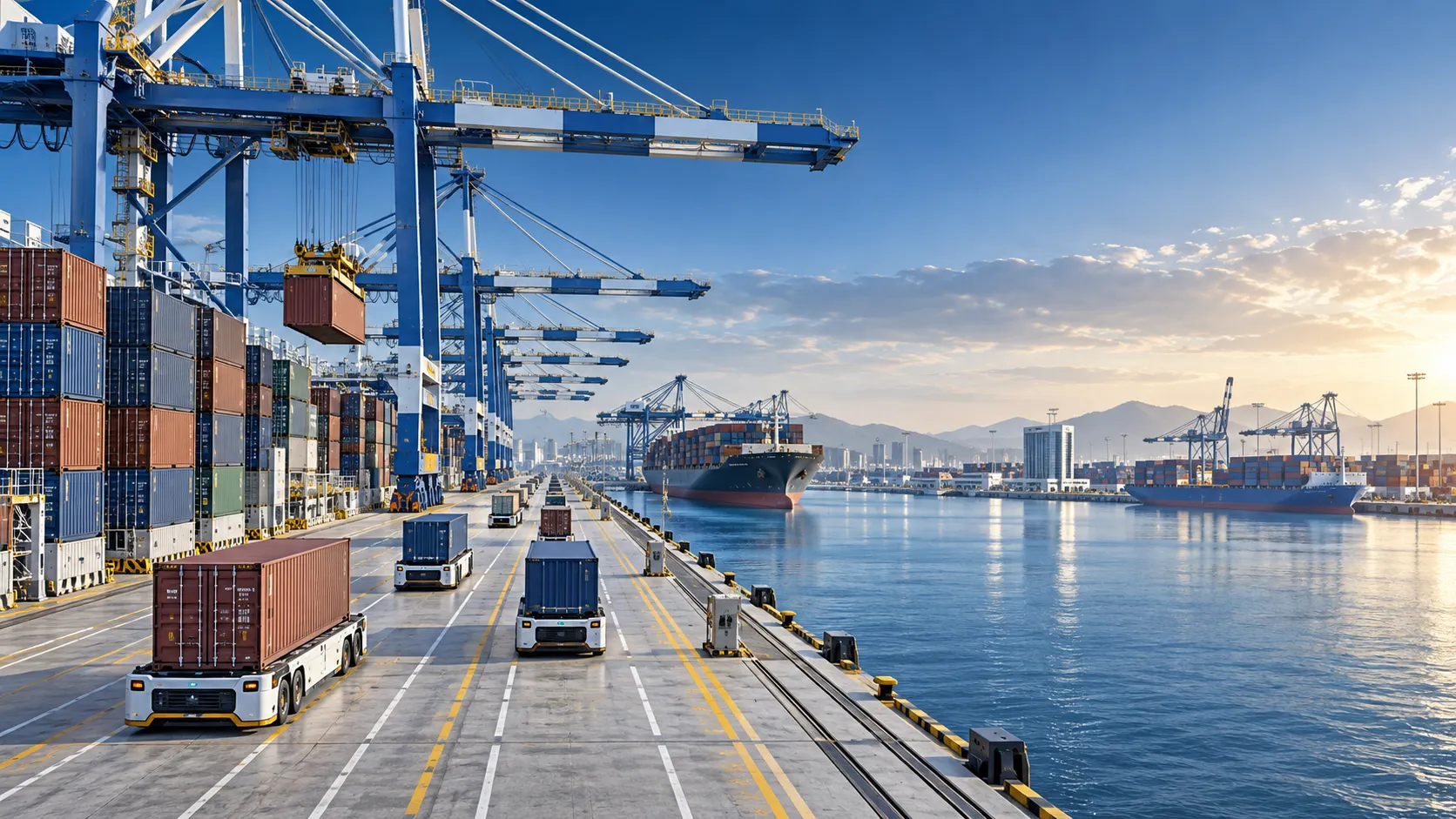
How to Evaluate Terminal Efficiency Solution Suppliers for High-Throughput Operations
Choose a terminal efficiency solutions supplier with confidence. Explore proven criteria for throughput, integration, lifecycle cost, safety, and reliable delivery.
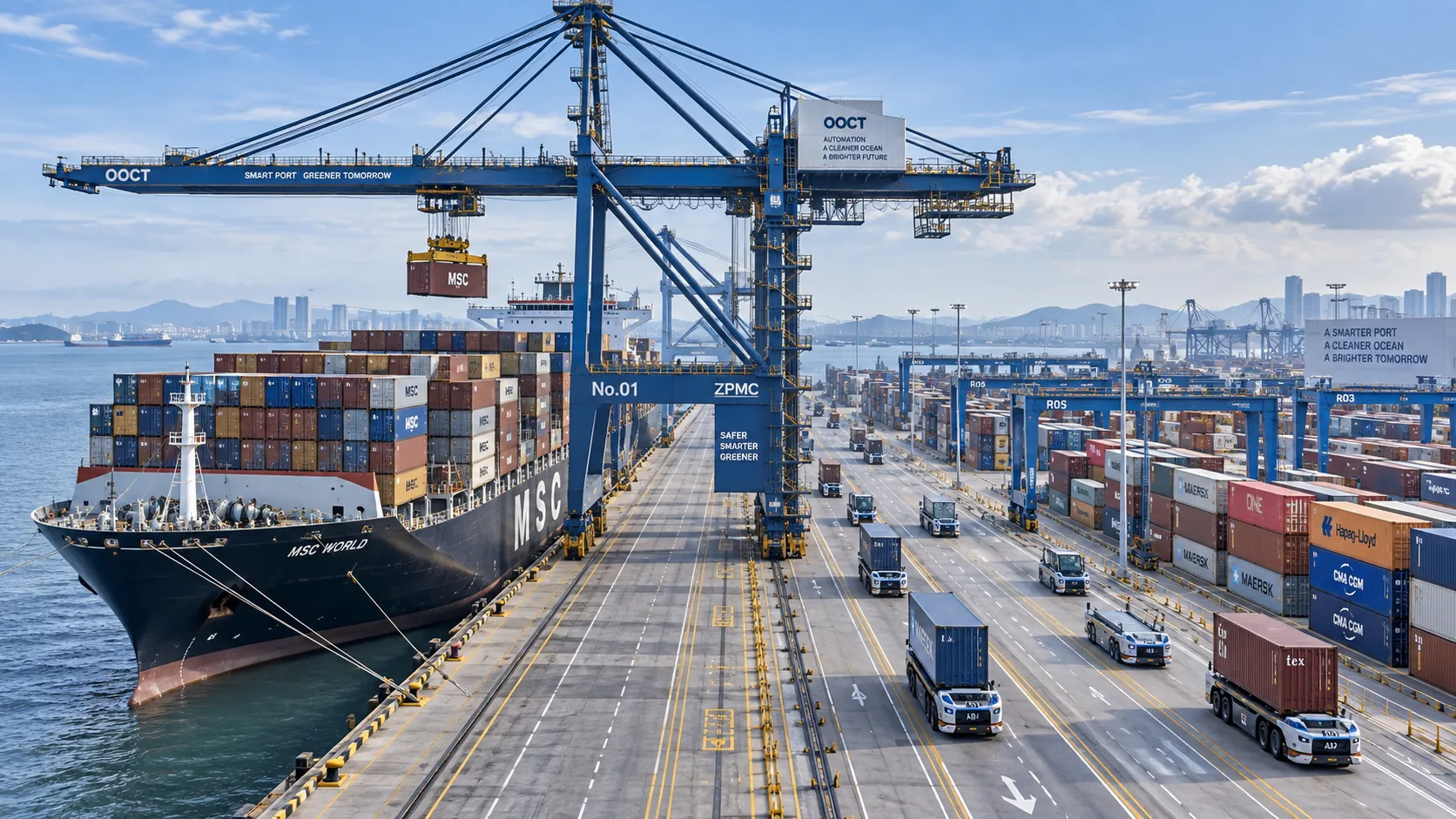
How to Specify a Quay Crane for Container Terminals by Vessel Size and Throughput?
Quay crane for container terminals: learn how to match outreach, lift height, capacity, automation, and cycle performance to vessel size and throughput goals.
What Dredging Equipment Is Needed for Channel Deepening?
What dredging equipment is needed for channel deepening? Explore dredgers, pipelines, survey tools, and planning strategies for safer, more efficient port access.
Which Bulk Handling Equipment Suits High-Moisture Cargo?
Which bulk handling equipment suits high-moisture cargo? Compare belt, apron, screw, drag, and slurry systems for reliable flow, less carryback, and higher terminal uptime.
How Can Port Equipment Lead-Time Risk Be Managed?
How can port equipment lead-time risk be managed? Explore practical strategies to control critical paths, suppliers, transport, site readiness, and commissioning delays.
Terminal Automation Technologies That Raise Container Throughput Without Yard Disruption
Terminal automation technology that increases container throughput without disrupting yard flow. Explore smarter integration, resilient workflows, and phased deployment strategies.
Middle East Port Automation: Key Market Drivers, Projects, and Investment Risks
Port automation systems Middle East: explore market drivers, flagship projects, integration challenges, and investment risks shaping smarter, resilient terminals.
Planning Offshore Dredging Operations: Key Risks, Methods, and Project Controls
Offshore dredging operations demand smart planning. Explore key risks, proven methods, environmental controls, and project strategies for reliable delivery.