Related News
- 00
0000-00
How to Specify a Quay Crane for Container Terminals by Vessel Size and Throughput? - 00
0000-00
Which Bulk Handling Equipment Suits High-Moisture Cargo? - 00
0000-00
Terminal Automation Technologies That Raise Container Throughput Without Yard Disruption - 00
0000-00
Planning Offshore Dredging Operations: Key Risks, Methods, and Project Controls - 00
0000-00
Where Do Automated Guided Vehicles Deliver the Fastest Warehouse Gains in the Middle East?
Dust Control Bulk Handling Machinery: Common Failure Points and How to Fix Them
Dust control bulk handling machinery: where failures usually begin
In busy ports, dust control bulk handling machinery protects throughput, compliance, and working conditions at the same time.
When one sealing point, spray nozzle, or sensor drifts out of spec, the result is rarely small.
Material loss rises, transfer points foul faster, and stoppages start to spread across conveyors, unloaders, hoppers, and stacker systems.
That is why fault diagnosis in dust control bulk handling machinery needs to be practical, not theoretical.
Within the wider PS-Nexus view of maritime logistics, dust issues are not isolated maintenance events.
They affect terminal efficiency, environmental reporting, remote monitoring quality, and the economics of high-volume raw material flow.
The more automated the terminal becomes, the more important stable dust control bulk handling machinery performance becomes.
Why does dust suddenly increase even when the machine is still running?
A visible dust cloud does not always mean a major mechanical breakdown.
More often, it signals several small degradations happening together under load.
The most common trigger is loss of containment at transfer points.
Worn skirts, hardened rubber seals, loose access covers, and misaligned chutes let air enter and fine material escape.
Another frequent cause is unstable material trajectory.
If belt speed, feed rate, or drop height changes, the suppression system may still operate, but no longer at the right impact zone.
This is common after liner replacement, pulley lagging wear, or throughput upgrades.
Blocked or partially atomizing nozzles also create misleading symptoms.
Operators may hear the pump and assume the system is healthy, while droplet size has already moved outside the effective range.
In practical troubleshooting, inspect airflow paths before replacing expensive components.
- Check chute pressure balance and door sealing.
- Confirm nozzle pattern, not only water presence.
- Measure belt tracking and burden position.
- Review whether throughput changed after recent servicing.
With dust control bulk handling machinery, a running machine can still be a failing machine.
Which failure points deserve first attention during field inspection?
Some points fail more often because they live between vibration, abrasion, moisture, and pressure change.
A short inspection route should start where containment and suppression meet material flow.
This sequence works well because it separates control problems from containment problems early.
It also reduces unnecessary part swaps, which often inflate downtime without fixing root cause.
When is it a nozzle problem, and when is the real issue airflow?
This is one of the most common misjudgments in dust control bulk handling machinery.
Spray systems and extraction systems fail in different ways, but the visible symptom can look nearly identical.
If dust appears as a wide hanging cloud around a transfer enclosure, poor capture airflow is usually involved.
If dust rises sharply at impact and then settles quickly, mist coverage or droplet size is often the weaker link.
A useful field method is to compare system behavior during dry, humid, low-load, and peak-load conditions.
Airflow faults usually worsen with loading intensity and enclosure leakage.
Nozzle faults often show a stable pattern regardless of enclosure condition.
Need to be careful here: overwatering is not a real fix.
Excess moisture can create chute buildup, carryback, belt slip, and extra cleanup load downstream.
PS-Nexus regularly tracks how digital monitoring is changing this judgment process across port equipment.
Trend data from pressure transmitters, valve cycles, and fan load makes dust control bulk handling machinery faults easier to isolate before shutdowns expand.
What repair approach actually works under terminal time pressure?
Under berth pressure, the best repair is usually staged, not perfect.
First restore control, then recover full design condition during the next planned window.
That means separating actions into immediate, short-cycle, and permanent levels.
- Immediate: isolate leaking sections, replace failed nozzles, clear blockages, retension skirts, and verify interlocks.
- Short-cycle: recalibrate pressure regulators, reset collector pulse logic, realign hoods, and inspect wear liners.
- Permanent: redesign poor transfer geometry, resize ducts, improve access for cleaning, and add better condition feedback.
This matters because many dust control bulk handling machinery failures are repeat failures caused by layout weakness.
If the chute pulls false air continuously, replacing seals every month will not change the pattern.
The more reliable fix is often geometric.
Look at drop angle, impact zone stability, and whether capture hoods are positioned for actual flow, not drawing assumptions.
Which mistakes keep dust control bulk handling machinery in a repeat-failure cycle?
Several maintenance habits create recurring faults even when parts are changed on time.
One mistake is treating all bulk materials the same.
Coal, clinker, sulfur, grain, and ore fines respond differently to moisture, air velocity, and impact energy.
Another mistake is checking components without checking system balance.
A clean filter does not help if duct leakage has already collapsed hood velocity.
There is also the data gap.
Without baseline pressure, nozzle flow, and maintenance interval records, teams end up diagnosing by memory.
That is risky in high-throughput terminals where operating conditions change by shift, cargo type, and vessel schedule.
- Do not increase water volume before confirming target coverage.
- Do not replace filters before reading pressure trend and cleaning performance.
- Do not ignore chute geometry after repeated skirt wear.
- Do not close jobs without recording cargo condition and throughput.
These are simple controls, but they sharply improve repair quality over time.
How should the next inspection plan be built after a failure is fixed?
A repair is only complete when the next failure becomes easier to predict.
For dust control bulk handling machinery, that usually means moving from reactive checks to condition-based routines.
A practical plan should link component condition with loading pattern and terminal operating context.
That approach fits the broader PS-Nexus perspective, where heavy machinery reliability, digital visibility, and trade flow efficiency are closely connected.
Start with a short list of values that matter every week.
- Dust collector differential pressure trend.
- Nozzle flow consistency and blockage rate.
- Skirt wear rate by transfer point.
- Capture airflow readings at known load cases.
- Material moisture and particle variation by cargo batch.
Then review which failures are random and which are linked to a repeat operating condition.
That distinction usually reveals whether the next investment should go into spare parts, redesign, or better instrumentation.
If dust events still cluster around one conveyor or one unloader, the issue is probably structural, not incidental.
The most useful next step is to map failure points, compare them with load data, and build a threshold-based inspection standard.
That gives dust control bulk handling machinery a clearer maintenance cycle, lower emissions risk, and fewer surprise stoppages across the terminal.
Related News
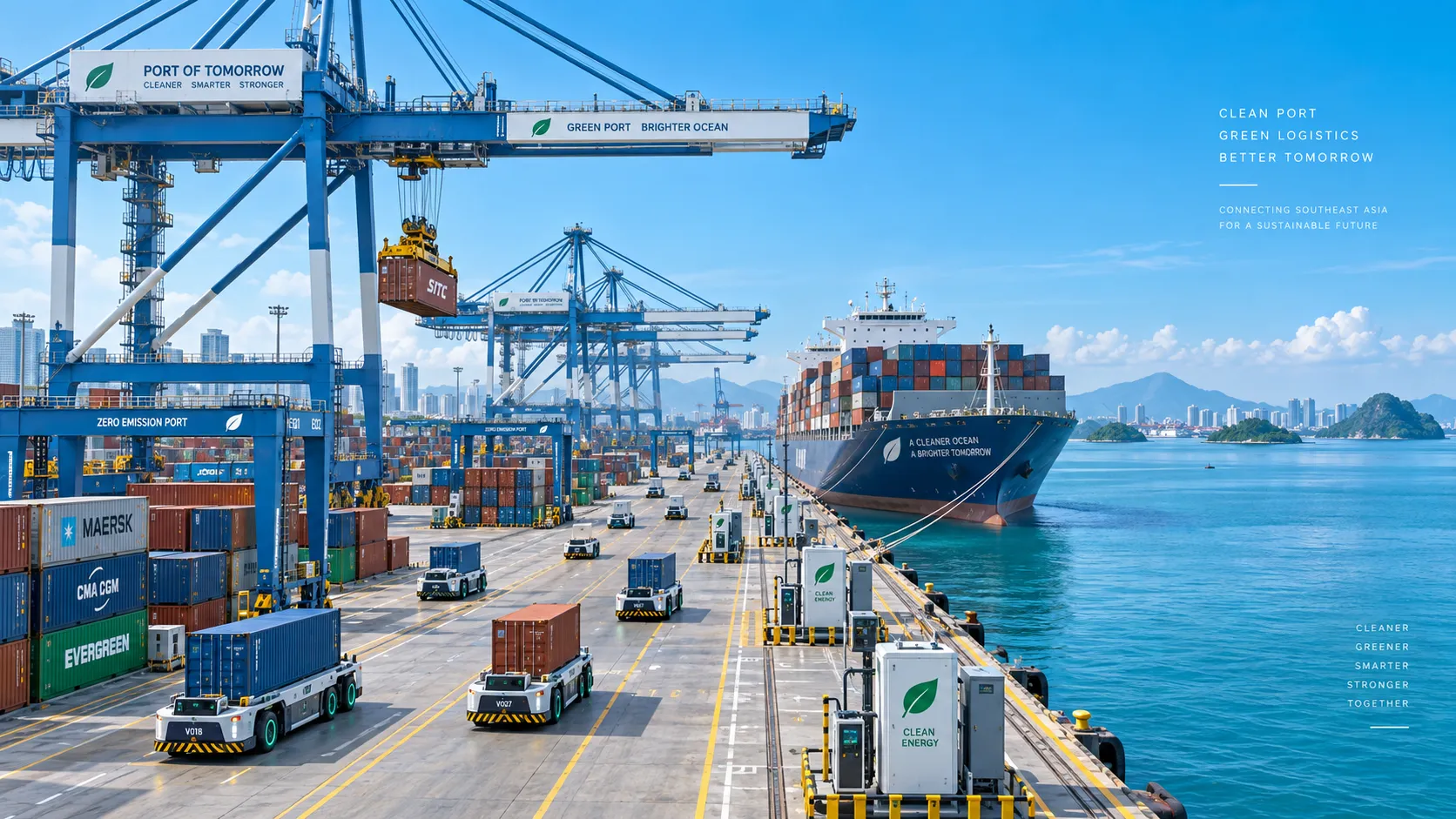
Smart Port Systems in Southeast Asia: Investment Priorities and Adoption Barriers
Smart port systems Southeast Asia: discover investment priorities, adoption barriers, and practical steps to build resilient, connected, high-performing terminals.

How to Evaluate Terminal Efficiency Solution Suppliers for High-Throughput Operations
Choose a terminal efficiency solutions supplier with confidence. Explore proven criteria for throughput, integration, lifecycle cost, safety, and reliable delivery.
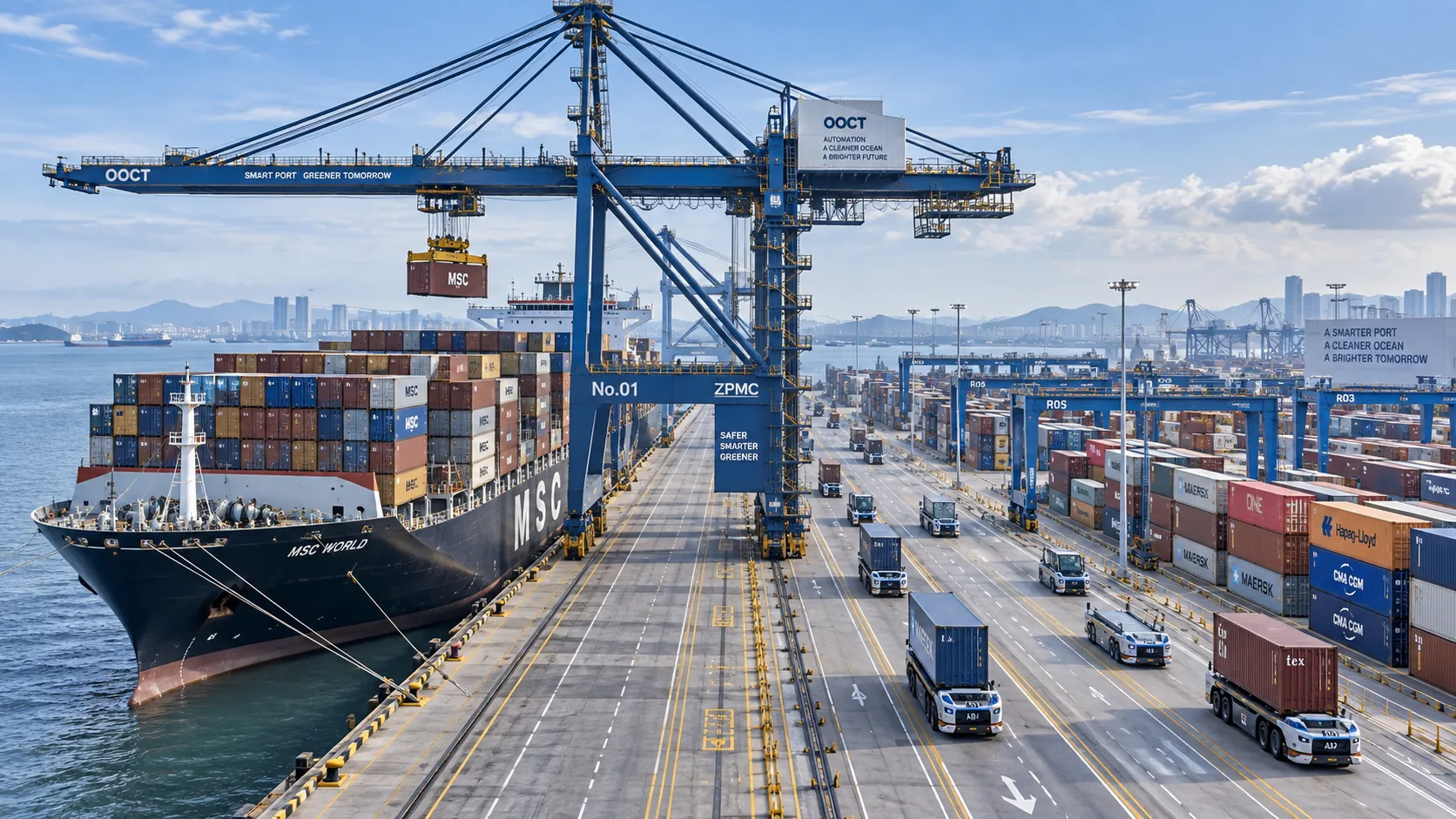
How to Specify a Quay Crane for Container Terminals by Vessel Size and Throughput?
Quay crane for container terminals: learn how to match outreach, lift height, capacity, automation, and cycle performance to vessel size and throughput goals.

What Dredging Equipment Is Needed for Channel Deepening?
What dredging equipment is needed for channel deepening? Explore dredgers, pipelines, survey tools, and planning strategies for safer, more efficient port access.
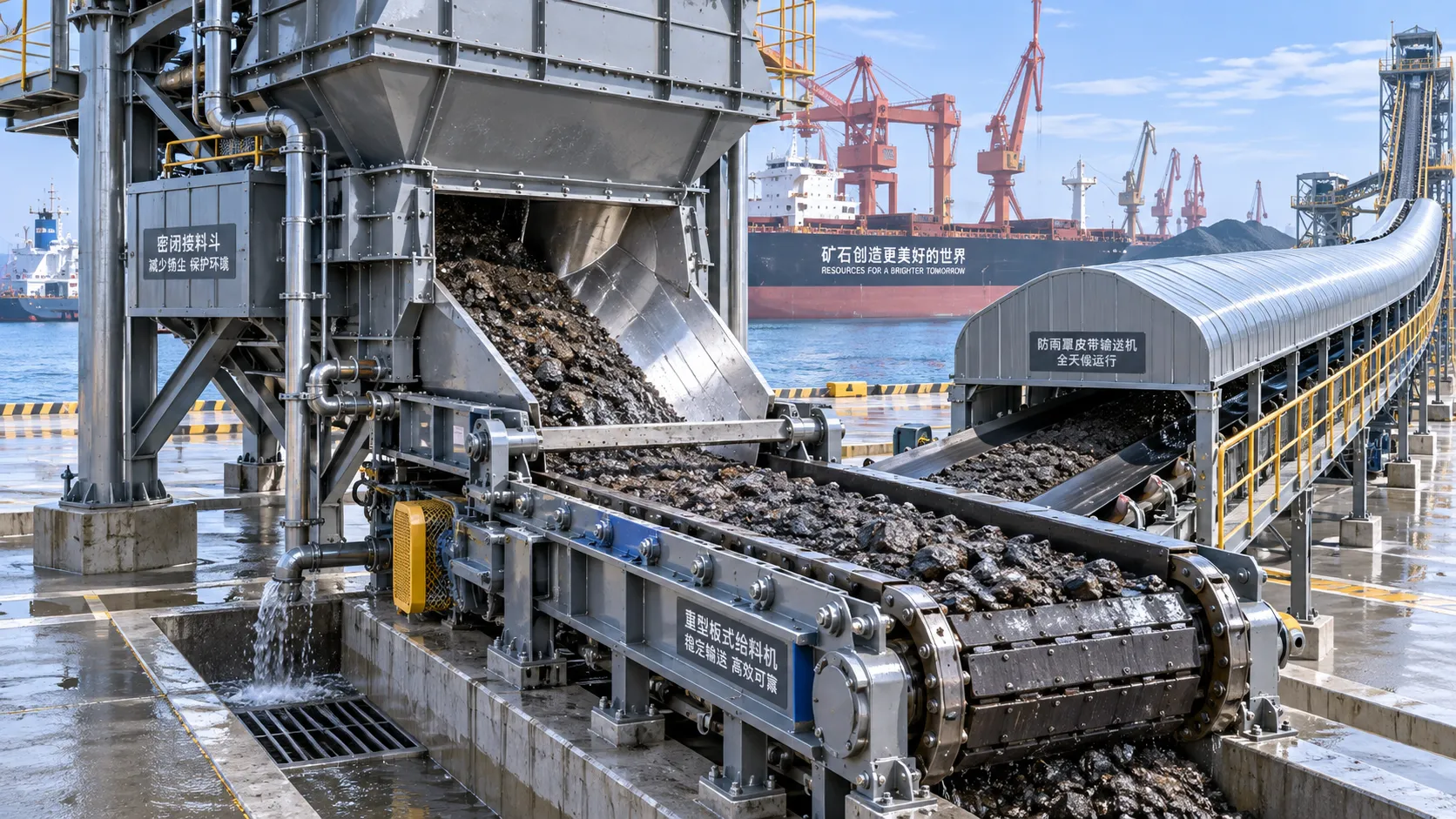
Which Bulk Handling Equipment Suits High-Moisture Cargo?
Which bulk handling equipment suits high-moisture cargo? Compare belt, apron, screw, drag, and slurry systems for reliable flow, less carryback, and higher terminal uptime.
How Can Port Equipment Lead-Time Risk Be Managed?
How can port equipment lead-time risk be managed? Explore practical strategies to control critical paths, suppliers, transport, site readiness, and commissioning delays.
Terminal Automation Technologies That Raise Container Throughput Without Yard Disruption
Terminal automation technology that increases container throughput without disrupting yard flow. Explore smarter integration, resilient workflows, and phased deployment strategies.

Middle East Port Automation: Key Market Drivers, Projects, and Investment Risks
Port automation systems Middle East: explore market drivers, flagship projects, integration challenges, and investment risks shaping smarter, resilient terminals.
Planning Offshore Dredging Operations: Key Risks, Methods, and Project Controls
Offshore dredging operations demand smart planning. Explore key risks, proven methods, environmental controls, and project strategies for reliable delivery.