Related News
- 00
0000-00
Marine Engineering Solutions for Dredging in Ports: Key Design Factors - 00
0000-00
What Data Does a Smart Port Control Architecture Need to Operate? - 00
0000-00
CE-Marked Quay Cranes: How to Verify Compliance Documents - 00
0000-00
Port Automation Systems in Latin America: Choosing the Right Solution - 00
0000-00
Scalable Automated Port Systems: Planning for Terminal Capacity Growth
0000-00
Port Automation Systems for Marine Terminals: Assessing TOS Compatibility
Port Automation Systems for Marine Terminals: Assessing TOS Compatibility
Can your terminal operating system (TOS) coordinate automated equipment without creating new operational bottlenecks? Assessing port automation systems for marine terminals requires more than checking interface availability. The harder questions concern data models, command ownership, latency, exception handling, and recovery across the TOS and equipment control layers.
A successful interface demonstration proves that systems can exchange messages. It does not prove that a quay crane, automated guided vehicle (AGV), and yard crane will maintain a consistent view of a container when a transfer is interrupted. Compatibility should therefore be evaluated as an operational capability, not a connectivity feature.
Start with decision ownership, not the API catalogue
The TOS generally manages vessel plans, container inventory, work priorities, and transport orders. Equipment control systems (ECS), fleet managers, and machine controllers translate those intentions into executable movements. The exact division varies by supplier and terminal architecture; product names alone do not establish responsibility.
Before reviewing protocols, map who owns each decision. Who selects the vehicle? Who reserves a transfer position? Who can change a destination after dispatch? Who confirms that a container has physically changed custody? Conflicting answers reveal integration risk earlier than a successful API call.
Consider a blocked yard transfer point. The TOS may want to redirect the container, while the fleet manager has already committed an AGV to the original route. Unless cancellation, acceptance, and reassignment rules are explicit, both systems can behave correctly in isolation while producing an unworkable sequence together.
Document these boundaries in a responsibility matrix covering normal operation, degraded operation, manual intervention, and restart. Machine-level interlocks and safety functions must remain within the appropriate safety-related control architecture; a business-system acknowledgement is not permission to move equipment.
Check whether both systems mean the same thing
An available interface can still conceal incompatible operational assumptions. One system may interpret “completed” as equipment arrival, another as successful container placement, and another as inventory confirmation. Those differences affect downstream dispatching and reconciliation.
Request message schemas alongside state-transition diagrams and worked transaction sequences. The assessment should establish:
- How container, equipment, job, and location identifiers are mapped and kept unique.
- Whether yard coordinates, lane orientation, transfer positions, and container attributes have consistent definitions.
- How accepted, executing, suspended, failed, cancelled, and completed states are distinguished.
- How duplicate messages, delayed events, and out-of-order updates are handled.
- Which system is authoritative for each record, and how disagreements are resolved.
Idempotency deserves particular attention. Retrying a transport order after a timeout should not create a second physical job. Ask suppliers to demonstrate how correlation identifiers, duplicate detection, and status queries prevent that outcome. A generic statement that the messaging platform provides reliable delivery is insufficient.
Version compatibility also needs evidence. Obtain the supported TOS, ECS, middleware, and interface versions, including dependencies and upgrade constraints. A connector that works today may require redevelopment when either supplier changes its schema or authentication method.
Evaluate timing against the actual operation
There is no universal latency threshold that establishes TOS compatibility. Planning updates, transport dispatch, remote crane control, and protective functions operate on different timescales. Treating them as one network-performance requirement obscures where delay matters.
Measure the full transaction path: event generation, message transport, application processing, dispatch acceptance, and equipment response. Low network latency does not compensate for a TOS queue that processes work too slowly during concentrated vessel activity. Average response time can also conceal intermittent delays that disrupt transfer sequencing.
Set acceptance limits from the terminal’s intended operating envelope: simultaneous crane work, vehicle population, yard occupancy, and expected exception traffic. Specify percentile response times and queue-growth limits rather than relying solely on averages. Test whether message backlogs clear after a disruption without overwhelming downstream systems.
Recovery behavior is often the decisive test
A disconnected interface is visible. An interface that reconnects with the wrong operational state can be harder to detect. Recovery testing should establish what happens to every active job when communication fails, a service restarts, or an operator intervenes locally.
Take an interrupted container transfer: the crane has placed the box, but the completion event never reaches the TOS. Reissuing the original command could be inappropriate; simply marking the job complete could also be wrong. The recovery process needs a controlled way to establish physical reality using equipment status, position information, and operator verification where necessary.
Ask for demonstrations of connection loss before job acceptance, during travel, during handover, and after physical completion but before acknowledgement. Include service failover and restoration from backup. Verify which jobs remain suspended, which can resume automatically, and which require authorized review.
Manual control introduces another boundary. A locally repositioned crane or manually relocated container must not leave automation operating from stale assumptions. The return-to-automatic procedure should identify required checks, inventory updates, and release authority. Recovery time should include reconciliation work, not merely server restart time.
Compare integration routes by lifecycle burden
A native supplier connector may reduce initial mapping effort, but its supported workflows and release dependencies still need scrutiny. Middleware can isolate legacy TOS interfaces from newer equipment, although it adds another component to monitor, secure, and maintain. A custom adapter can address unusual requirements, but only if ownership of code, documentation, testing, and long-term support is clear.
None of these routes is inherently superior. For a brownfield terminal, preserving existing workflows may justify an adaptation layer. For a broader automation program, retaining incompatible legacy assumptions may create more complexity than a planned TOS upgrade. Compare both against the same operating scenarios and future equipment scope.
Commercial evaluation should include interface licensing, test environments, mapping maintenance, upgrade regression testing, and joint incident support. Establish who leads diagnosis when each supplier claims its own component is functioning correctly. Without shared traces and named escalation ownership, operational faults can become prolonged contractual disputes.
Cybersecurity belongs in this comparison. Review network segmentation, service identities, access privileges, certificate renewal, remote support, and audit logging. Test credential expiry and access revocation so that security failures produce controlled degradation rather than silent loss of work instructions.
Build an acceptance program that can reject a weak integration
A useful test program progresses from interface validation to operational proof. Simulators help expose sequencing and load problems before live equipment is available, but their assumptions must be documented. A simulator that always acknowledges immediately will hide the behavior most likely to cause trouble at the terminal.
- Validate contracts: check required fields, invalid inputs, state transitions, duplicates, and version mismatches.
- Exercise complete workflows: trace discharge, loading, yard relocation, cancellation, and changed destinations across all relevant systems.
- Inject failures under load: interrupt communications, restart services, delay events, and remove equipment from availability.
- Confirm site behavior: verify physical handovers, operator permissions, alarms, and recovery procedures with actual equipment.
- Run sustained operation: inspect inventory consistency, unresolved exceptions, queue behavior, and operator workload over an agreed representative period.
Every critical test should have an expected outcome, measurable acceptance condition, responsible owner, and retained evidence. Use synchronized timestamps and shared job identifiers to reconstruct events across suppliers. Record manual corrections as test findings; otherwise, operators may quietly compensate for defects while the integration appears successful.
Use phased deployment to expose dependencies safely
A limited rollout can reduce exposure, but only if its boundaries are operationally coherent. Restricting automation to one yard block may still affect shared vehicle pools, quay scheduling, and transfer lanes. Evaluate those dependencies before defining the pilot area.
Shadow operation can compare proposed decisions with live workflows without issuing equipment commands. A subsequent controlled deployment can test a bounded equipment group or operating window. Expansion should depend on demonstrated state consistency, manageable exceptions, and successful recovery—not simply elapsed time.
Rollback also requires an operational plan. Returning software to an earlier version does not automatically restore inventory or resolve jobs already in motion. Define how active work is stopped, physical positions are verified, and control is transferred before deployment begins.
The Global Port-Sync Hub (PS-Nexus) connects its coverage of terminal machinery, automated container handling, and control-system developments around this same equipment-to-operations relationship. For selection decisions, that perspective helps keep attention on whether scheduling logic can be executed reliably by the terminal’s physical assets, rather than on software features alone.
Before approving port automation systems for marine terminals, require a signed responsibility matrix, versioned interface specification, witnessed failure-recovery results, and a phased acceptance plan. If suppliers cannot explain what happens to an in-progress container move after a lost acknowledgement, TOS compatibility has not yet been demonstrated.
Related News
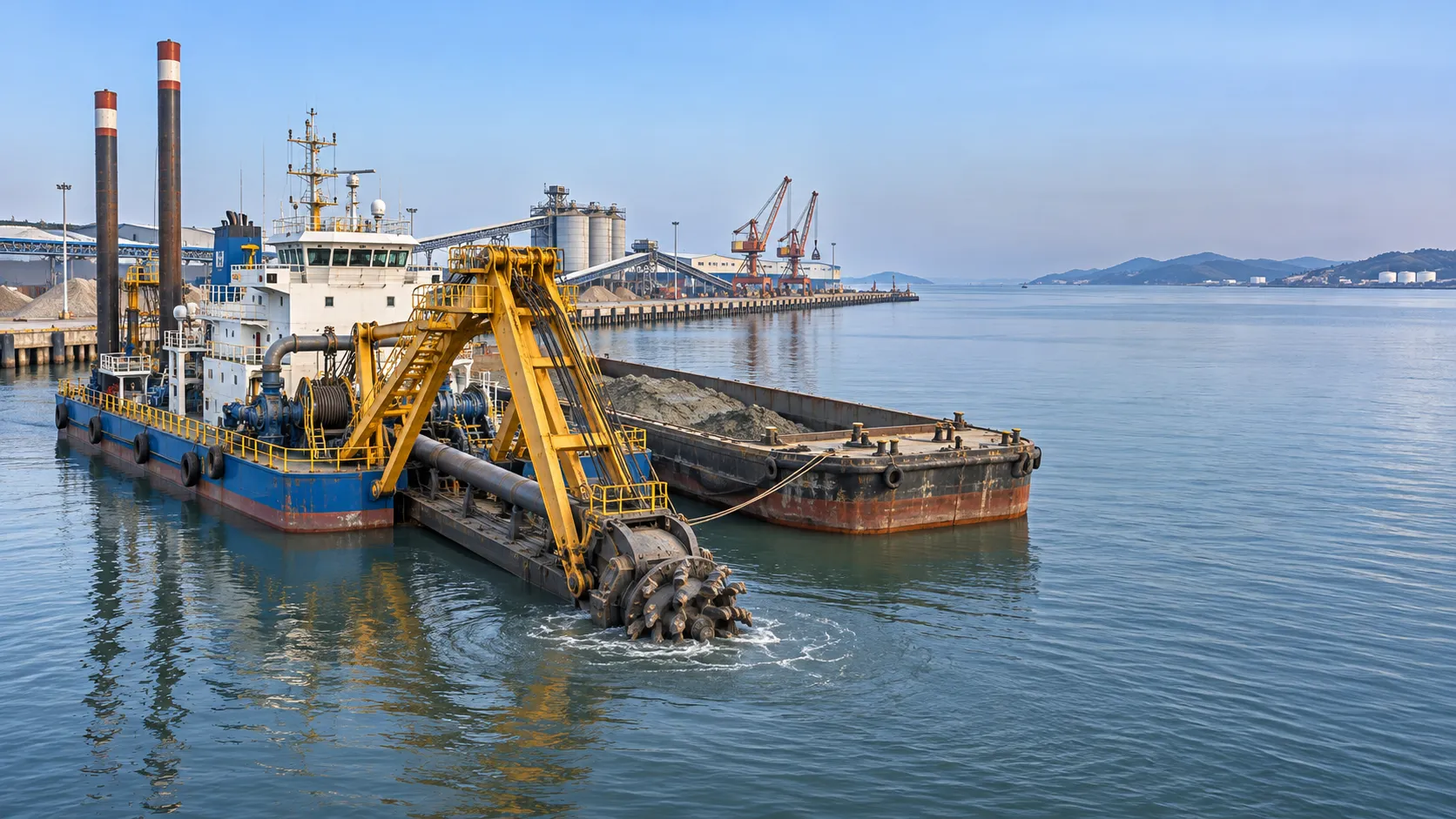
Marine Engineering Solutions for Dredging in Ports: Key Design Factors
Explore marine engineering solutions for dredging ports, from equipment selection and sediment management to safe navigation and survey verification.
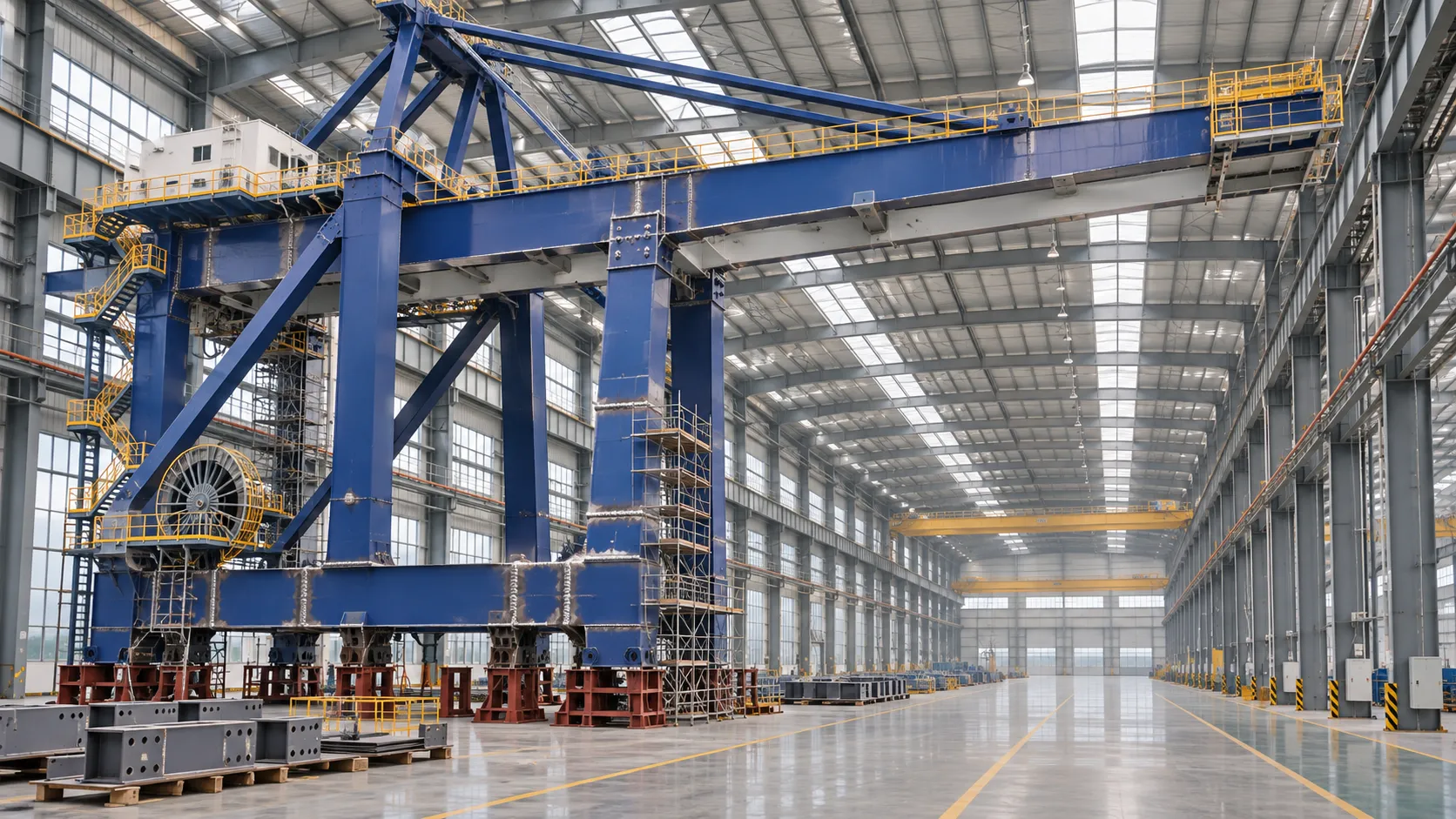
How to Evaluate a Quay Crane Factory: Capacity, Quality and Delivery
Evaluate a quay crane factory with confidence. Learn how to verify production capacity, quality controls, delivery plans, and lifecycle costs before you commit.
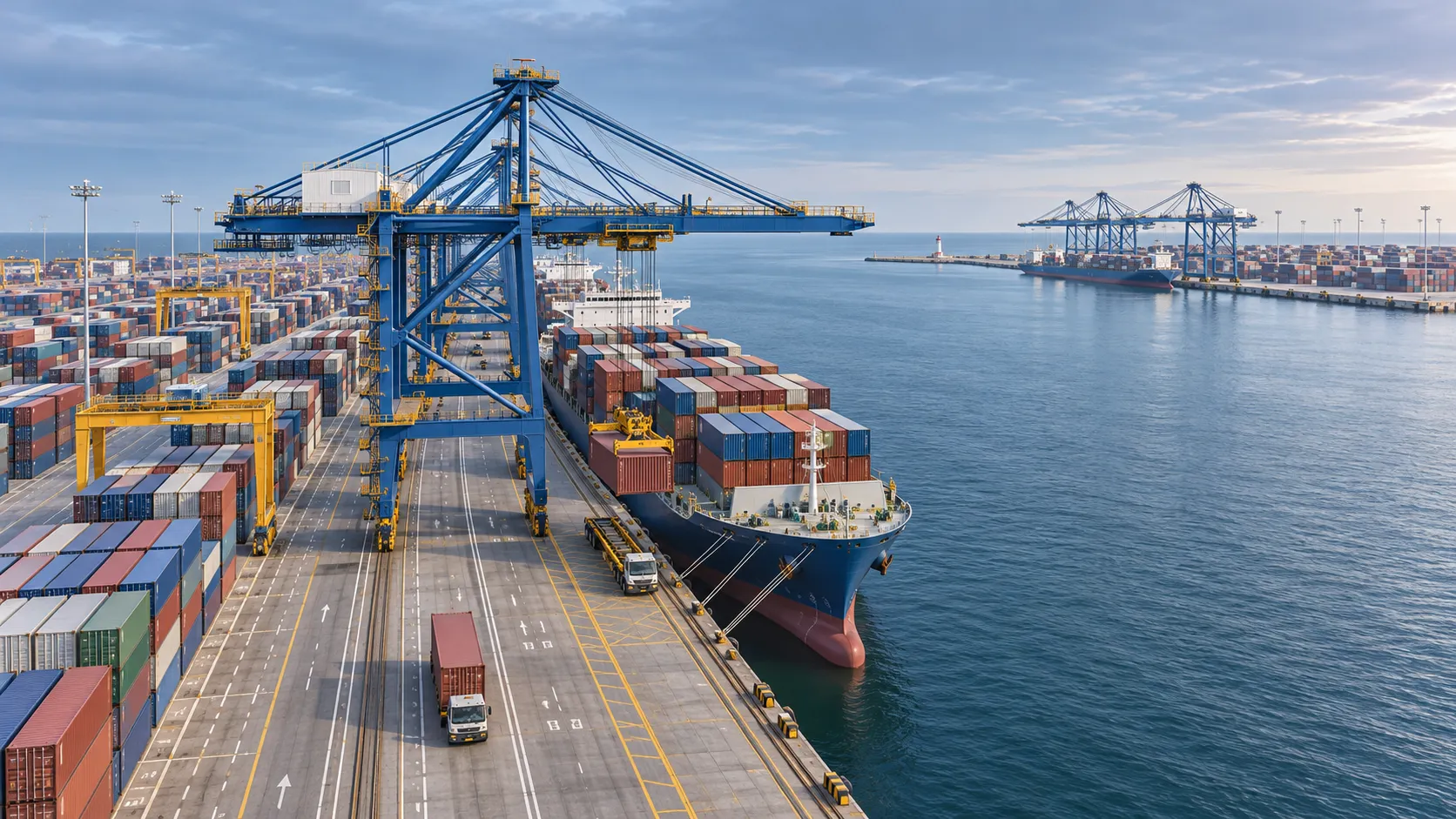
What Data Does a Smart Port Control Architecture Need to Operate?
What data is needed for a smart port control architecture? Discover the essential operational feeds, integration requirements and safety checks.
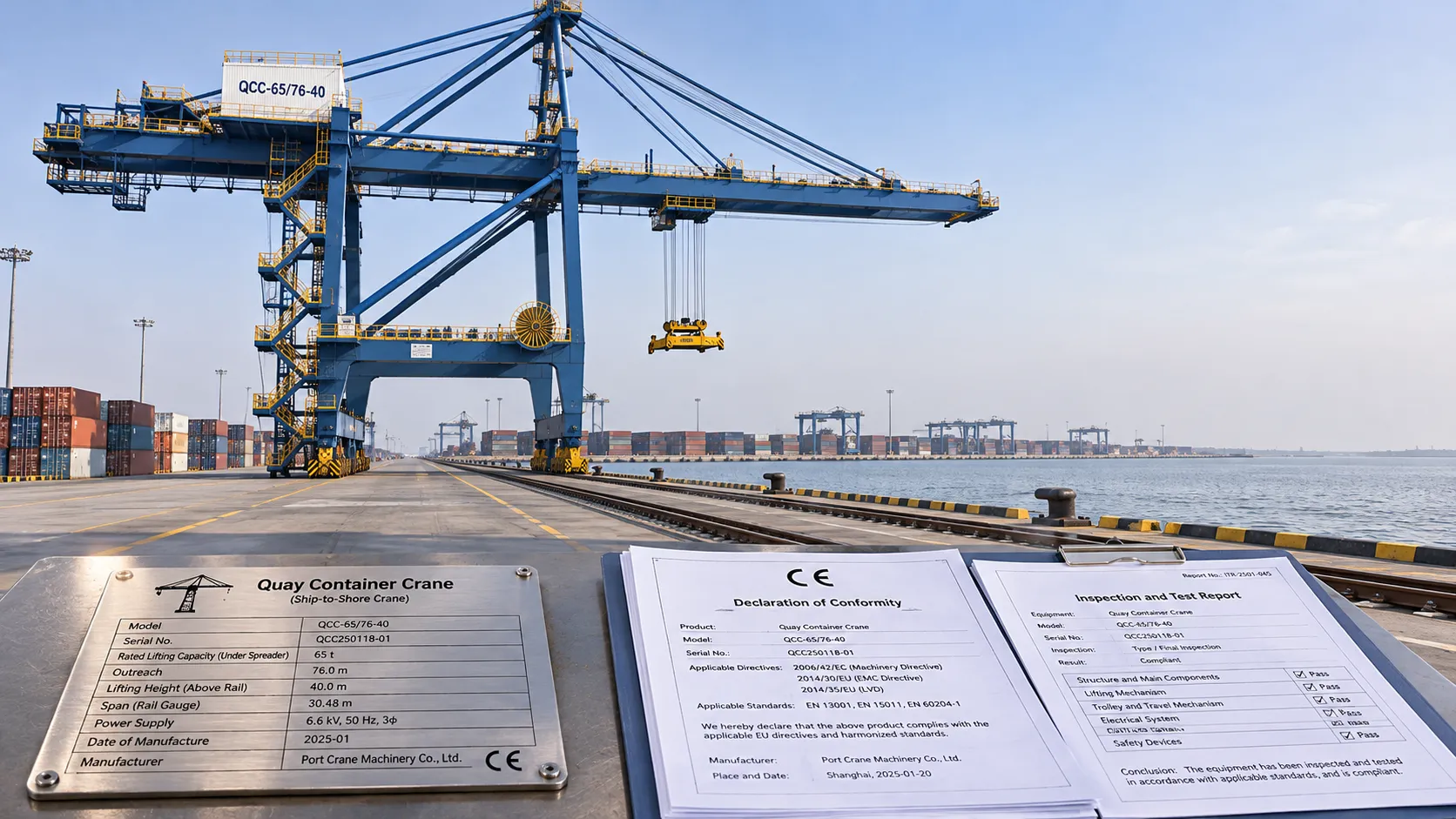
CE-Marked Quay Cranes: How to Verify Compliance Documents
Quay crane CE certified? Learn how to verify declarations, risk assessments and test records for the complete machine before acceptance.
Port Automation Systems in Latin America: Choosing the Right Solution
Explore port automation systems Latin America terminals can use to reduce congestion, assess integration risks, and choose the right solution with confidence.

Scalable Automated Port Systems: Planning for Terminal Capacity Growth
Discover how scalable automated port systems support phased terminal growth, reduce bottlenecks and guide smarter capacity investments.

Europe's Coastal Economies: Key Industries, Jobs and Climate Risks
Explore coastal economics in Europe: discover key industries and jobs, the climate risks they face, and how coastal communities can adapt.

Bulk Cargo Handling Equipment for Ports: Choosing by Cargo and Capacity
Choose bulk cargo handling equipment for ports with confidence. Compare cargo types, realistic throughput, equipment options, and lifecycle costs.
What Affects Container Terminal Efficiency in Southeast Asia?
Discover what affects terminal efficiency in Southeast Asia, from berth planning and yard congestion to inland access, and learn how to assess performance.