How Container Terminal Automation Improves Yard Flow and Reduces Rehandles
Container terminal automation for yard management is reshaping how project leaders improve throughput, control congestion, and reduce costly rehandles across increasingly complex terminal operations.
By combining automated stacking cranes, AGVs, real-time equipment data, and intelligent scheduling, terminals can move containers with greater precision and more predictable cycle times.
For engineering project leaders, the central question is not whether automation is valuable, but where it creates measurable operational gains without introducing avoidable implementation risk.
The strongest automation programs begin with yard-flow constraints, equipment interfaces, and operating rules rather than purchasing technology before defining the terminal problem.
Why Yard Flow Is the Primary Automation Challenge
A container yard is a constrained production system where quay operations, gate traffic, rail loading, storage density, and equipment availability compete for the same physical space.
When container movements are poorly coordinated, terminals experience blocked travel lanes, crane waiting time, excessive reshuffles, and delayed vessel departures that directly affect customer confidence.
Yard flow determines whether containers reach the correct stack, transfer point, truck lane, or rail position at the moment downstream operations require them.
Project managers should view flow as a network problem rather than an equipment problem, because local productivity can still create terminal-wide congestion.
A fast quay crane does not improve performance when the yard cannot receive import boxes, stage export containers, or release transshipment cargo on schedule.
Similarly, adding more yard equipment may worsen performance if dispatching logic sends machines toward the same blocks, intersections, or handover zones.
Container terminal automation for yard management addresses this problem by connecting execution data, storage decisions, transport assignments, and exception handling through one operating model.
The objective is not merely to remove drivers from vehicles or operators from cranes, but to make every container move more deliberate.
How Rehandles Consume Capacity and Raise Operating Costs
A rehandle occurs when a container must be moved primarily to access another container, correct an earlier storage decision, or resolve a mismatch in planning.
Some rehandles are unavoidable because terminals must balance vessel sequences, weight restrictions, dangerous-goods segregation, dwell patterns, and changing transport arrival times.
However, excessive rehandles indicate that the terminal is using equipment capacity to repair unstable plans instead of progressing planned cargo flows.
Each unplanned lift consumes crane time, energy, maintenance life, and labor supervision while also increasing the chance of delay or operational conflict.
Rehandles become particularly damaging during vessel peaks, when yard stacks are dense and available equipment must support time-critical loading or discharge work.
For project leaders, rehandle reduction is a practical business case metric because it connects automation investment to visible improvements in moves, energy, and schedule reliability.
It is also a useful diagnostic measure because high rehandle rates often expose weak storage strategies, inaccurate data, insufficient buffer capacity, or poor sequencing discipline.
Automation cannot eliminate every reshuffle, but it can reduce unnecessary moves by applying consistent rules across thousands of changing container decisions.
Automated Storage Decisions Create More Orderly Yard Blocks
Traditional yard planning often depends on dispatcher experience, local knowledge, and manual adjustments made under changing vessel, truck, and equipment conditions.
Those decisions can be effective, yet they become difficult to scale when container volumes grow, dwell times vary, and several operational interfaces require simultaneous coordination.
Automated planning systems evaluate container attributes before assigning storage positions, including service string, departure window, destination, weight, reefer requirements, and customs status.
The system can place containers closer to their expected next move while preserving access paths for cargo that must leave earlier.
Export containers can be grouped according to vessel loading sequence, reducing late-stage reshuffling when the vessel plan becomes more stable.
Import containers can be positioned according to anticipated truck collection patterns, reducing travel distance and preventing high-demand releases from blocking each other.
Transshipment cargo can be assigned to locations that balance connection urgency with available stack capacity, rather than being stored wherever a slot is temporarily open.
This approach improves predictability because stack decisions follow visible rules that can be reviewed, adjusted, and tested before a high-volume operating period.
Project teams should require configurable storage rules, since every terminal has different cargo mixes, block layouts, vessel profiles, and commercial service commitments.
Automated Equipment Reduces Variability in Container Movement
Automated stacking cranes provide consistent lifting, positioning, and travel performance within defined yard blocks, particularly where repetitive container movements dominate the workflow.
Compared with manually coordinated operations, automated cranes can execute planned sequences with less variation in travel routes, handover timing, and stack placement accuracy.
That consistency matters because yard flow deteriorates quickly when equipment arrives early, late, or at the wrong interface without a coordinated recovery plan.
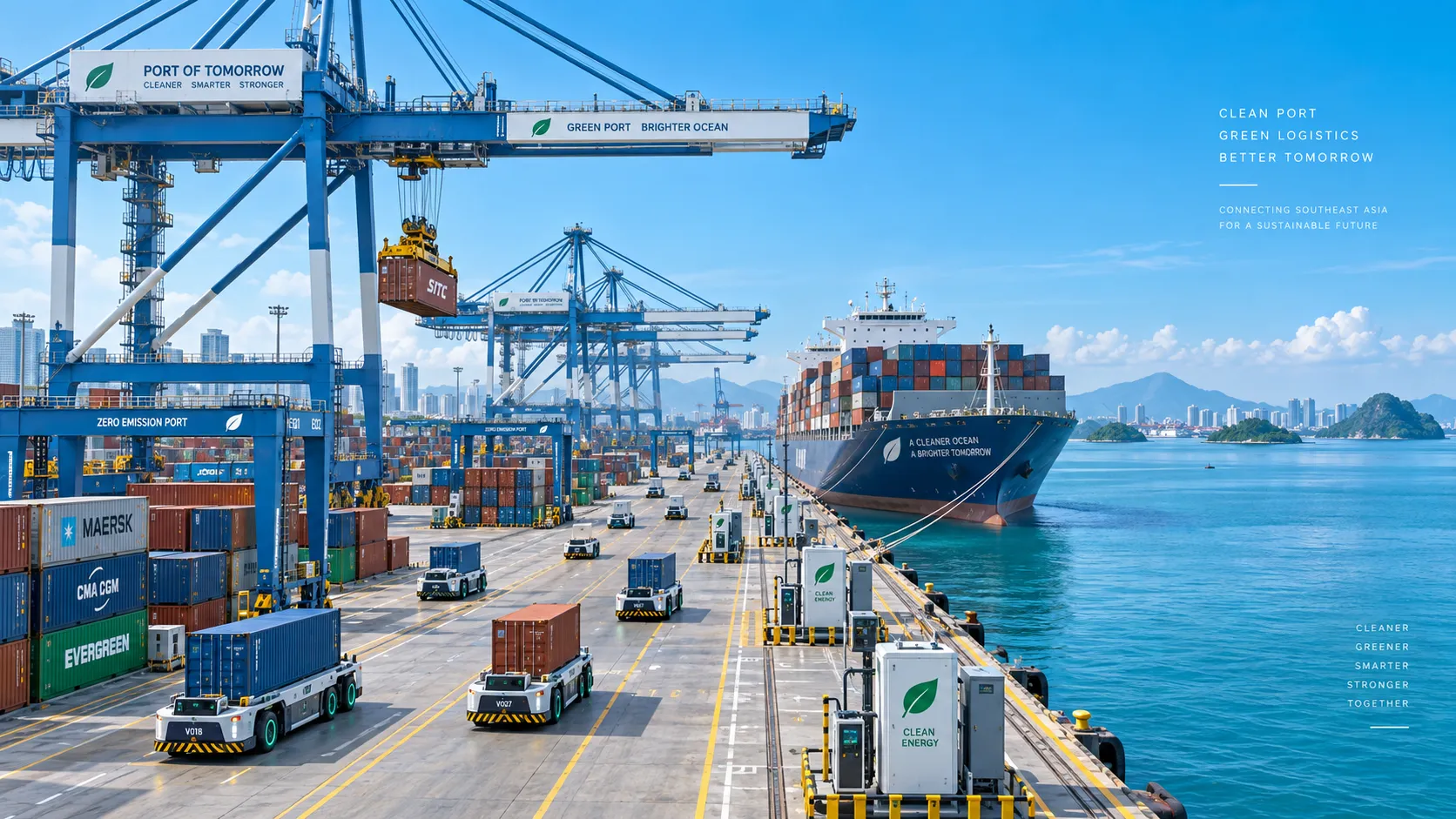
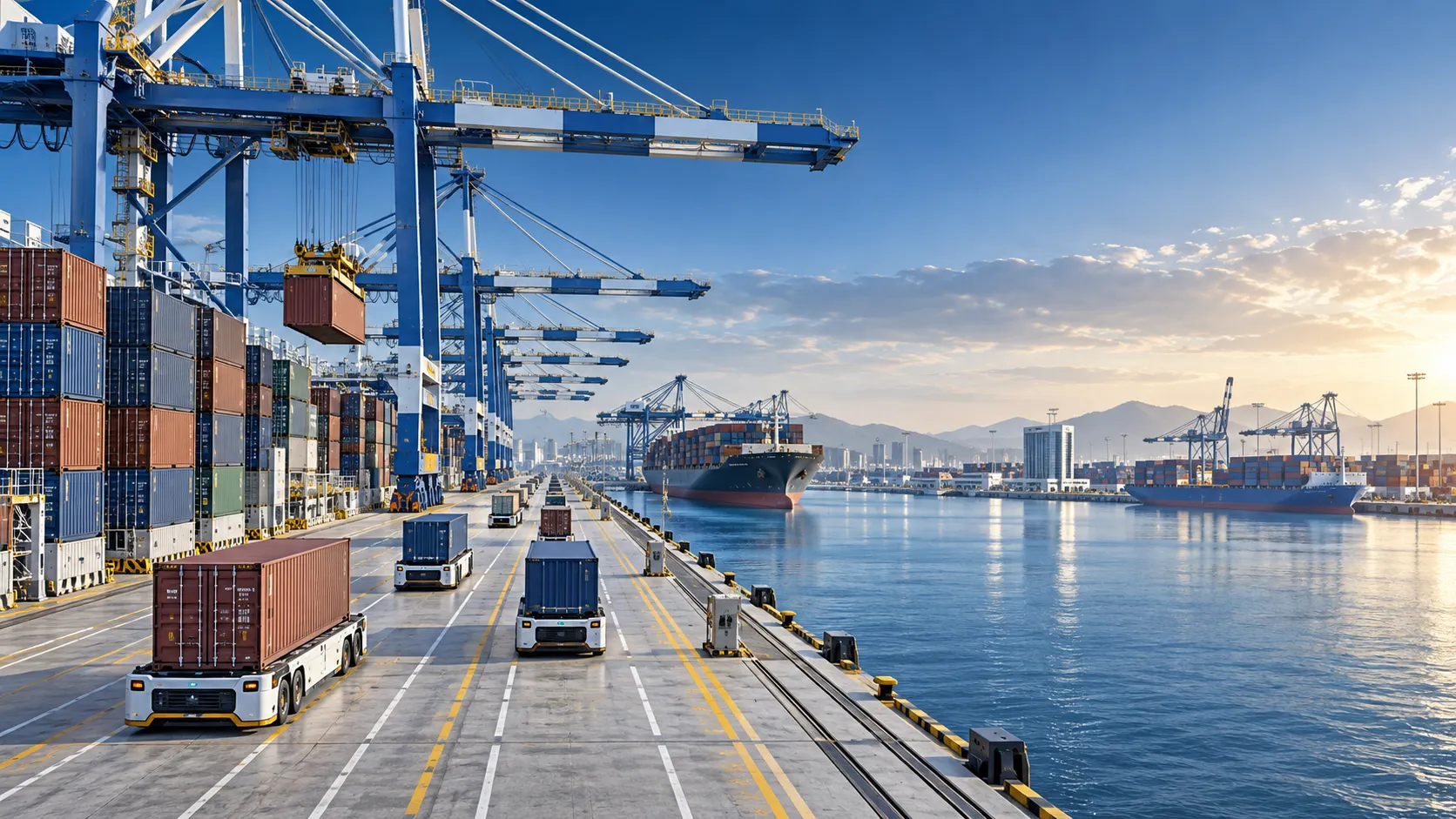
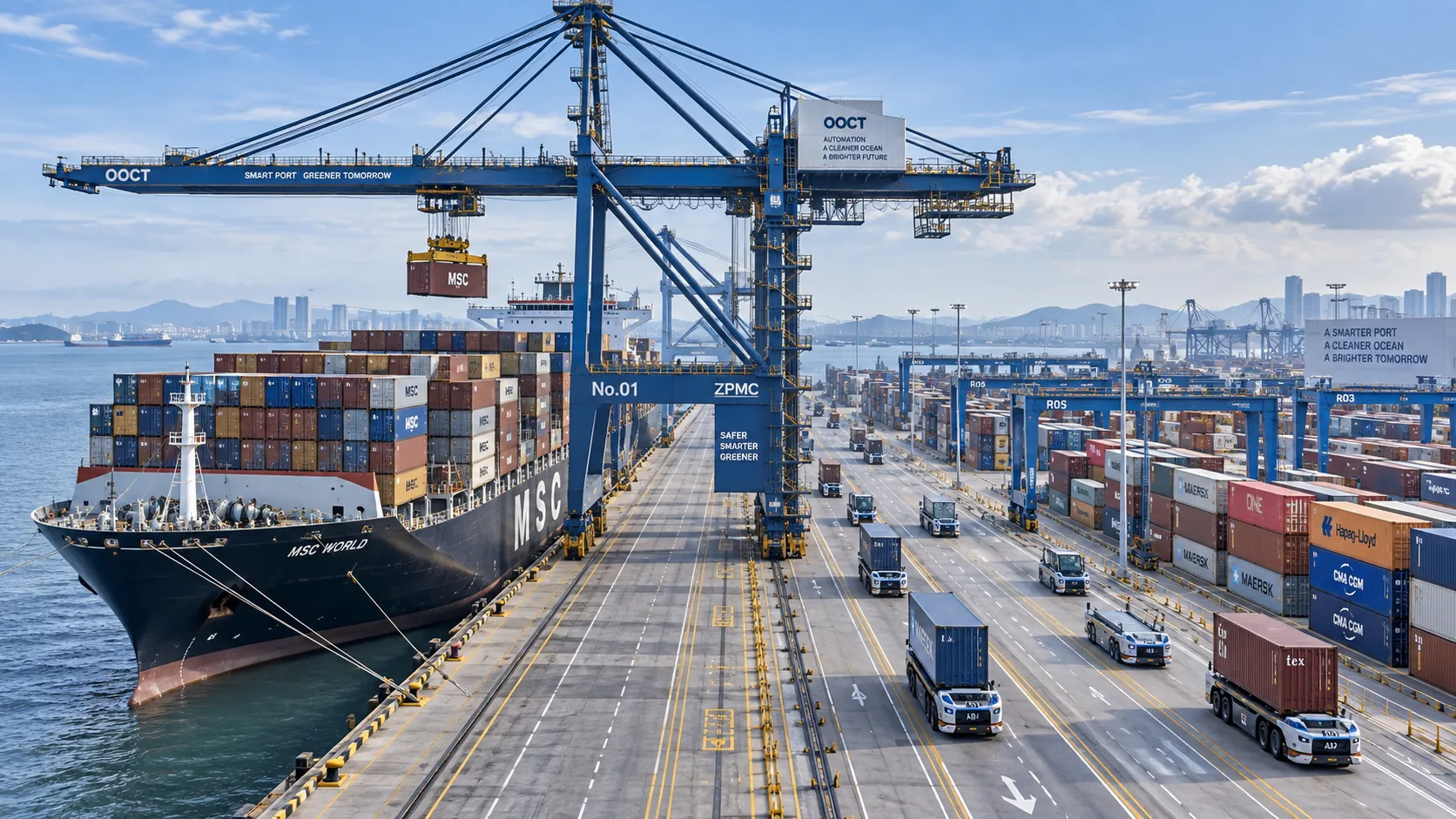
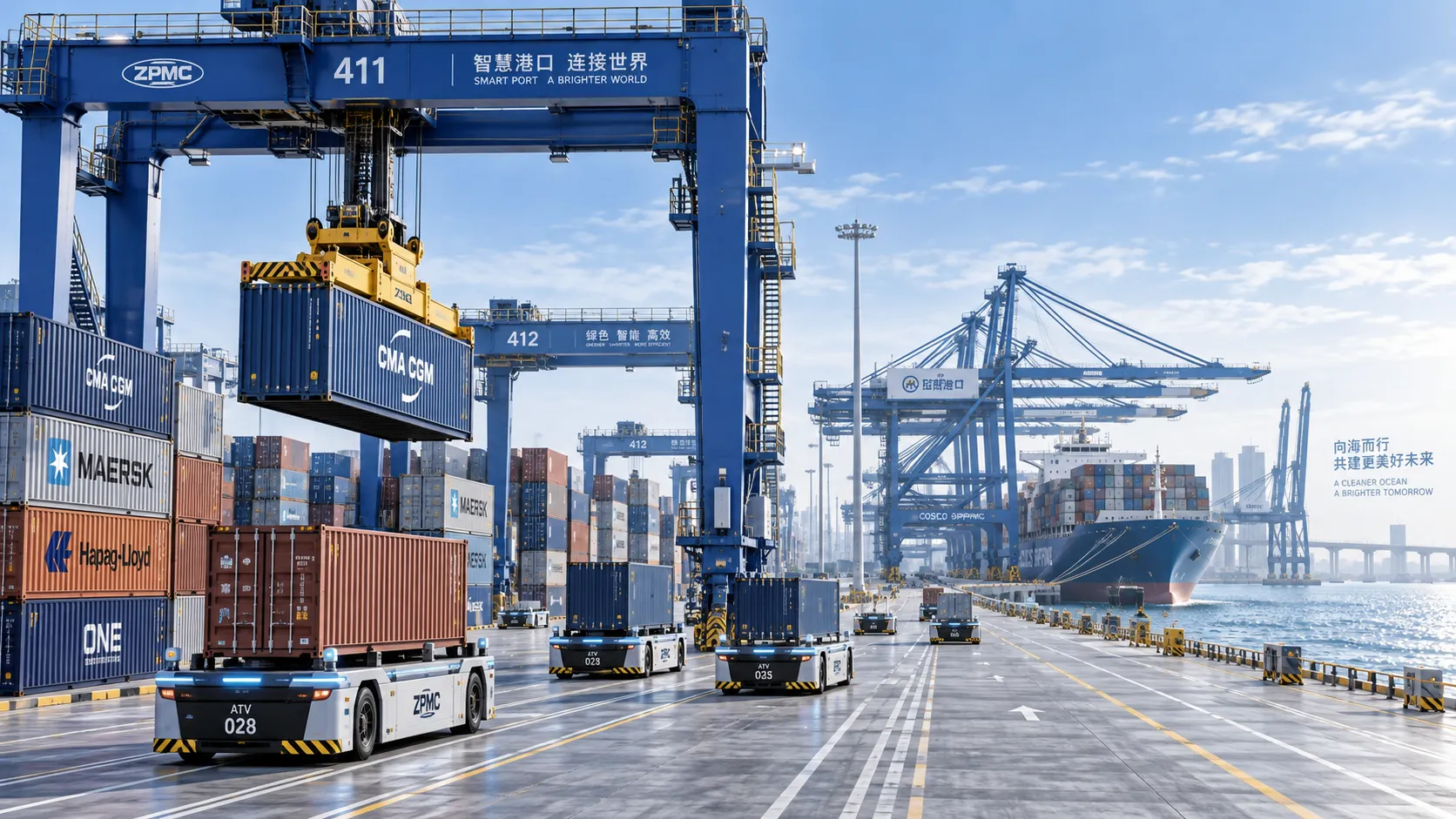
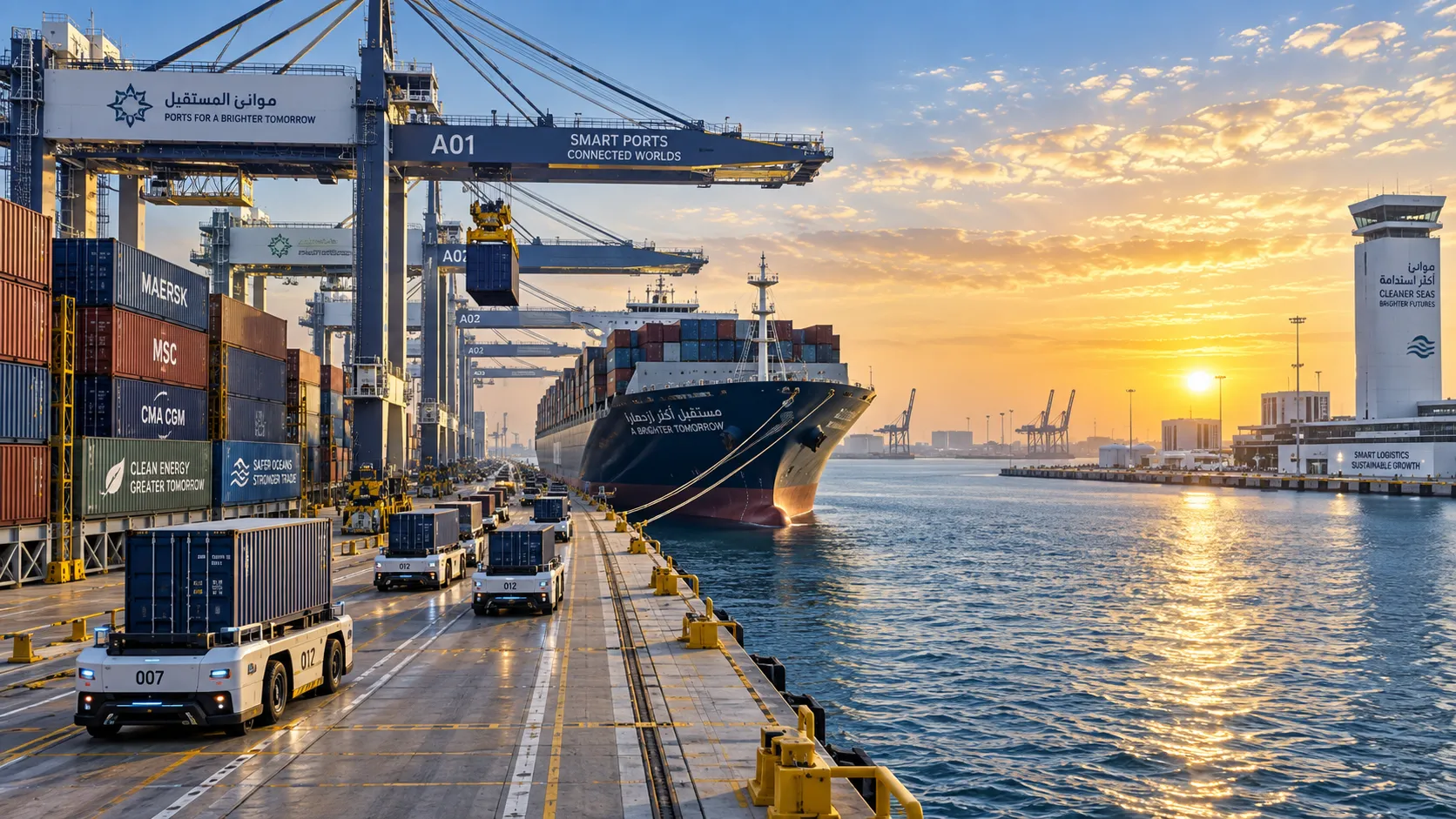
Automated guided vehicles and autonomous terminal tractors can support more reliable horizontal transport between quay cranes, transfer points, and storage blocks.
The main benefit is not vehicle autonomy alone, but the ability to schedule transport assignments against actual crane availability, route conditions, and workload priorities.
When transport systems receive real-time instructions, they can avoid unnecessary empty travel and reduce queues at handover points.
Automated equipment also creates more complete operating data, allowing teams to compare planned cycle times with actual movement patterns across shifts and operating conditions.
That visibility enables managers to identify whether performance constraints come from machinery, software logic, block layout, network latency, or operational procedures.
Intelligent Scheduling Connects Quay, Yard, Gate, and Rail Operations
Yard automation delivers the greatest benefit when scheduling considers the full terminal chain rather than optimizing separate departments in isolation.
Quay crane productivity affects transport demand, while transport availability affects yard crane workload, and yard release timing affects gate and rail performance.
An integrated terminal operating system continuously translates these dependencies into equipment tasks, storage priorities, and exception alerts for supervisors and planners.
For example, a delayed vessel bay may require export stacks to be resequenced while preserving equipment capacity for a separate vessel approaching its departure window.
Without coordinated scheduling, these adjustments often become radio-based interventions that solve an immediate issue while creating hidden work elsewhere in the yard.
Scheduling algorithms can assess task urgency, travel distance, equipment capability, battery level, congestion, maintenance restrictions, and planned handover times before assigning work.
They can also reserve capacity for predictable peaks, such as truck appointment surges, rail cutoffs, reefer inspections, customs holds, or late export delivery windows.
Project leaders should assess whether a proposed platform supports dynamic rescheduling, because fixed plans lose value quickly in live terminal environments.
The required outcome is controlled adaptability: operational teams need automated recommendations while retaining authority to manage safety events and commercial exceptions.
Data Quality Determines Whether Automation Delivers Results
Automation decisions are only as reliable as the operational data supporting them, making data governance a core engineering and management responsibility.
Incorrect container locations, late status updates, incomplete vessel plans, or unreliable equipment telemetry can cause automated systems to create new conflicts instead of preventing them.
Terminals need dependable interfaces between terminal operating systems, equipment control systems, gate platforms, maintenance tools, vessel-planning applications, and customer data services.
Container identification must be accurate at every handover point, including quay transfer zones, yard blocks, truck lanes, rail interfaces, and inspection areas.
Real-time position data matters most when equipment operates autonomously, because the control system must understand where vehicles, cranes, containers, and people are located.
Project teams should define data ownership before commissioning, specifying who validates master data, resolves exceptions, approves interface changes, and monitors message failures.
Performance dashboards should distinguish between operational delay and data-quality failure, since the corrective action for each issue is fundamentally different.
A disciplined data model also improves expansion readiness, allowing future equipment additions or software upgrades without rebuilding basic integration logic.
How Project Leaders Should Build the Investment Case
A credible automation business case should begin with current operating constraints, not a generic claim that automated terminals are inherently more efficient.
Baseline analysis should measure rehandles, gross and net moves, equipment travel distance, stack occupancy, truck turnaround time, berth productivity, and energy consumption.
It should also measure variability, because average productivity can hide severe peak-period failures that affect vessel schedules and customer service commitments.
Automation value is often strongest where a terminal faces labor constraints, land limitations, high-density stacking needs, safety exposure, or unstable throughput demand.
Projects should calculate benefits from reduced rehandles, improved equipment utilization, lower energy use, fewer delays, increased stack capacity, and more reliable berth windows.
Capital expenditure must include civil works, power distribution, communication networks, control rooms, cybersecurity, software integration, simulation, and commissioning support.
Operating expenditure should include software licenses, spare parts, system support, maintenance skills, remote operations staffing, and periodic control-system upgrades.
Decision makers should test several demand scenarios, including lower-than-expected volumes, peak congestion, mixed manual and automated operations, and equipment downtime.
This scenario approach prevents a business case from relying on idealized productivity assumptions that cannot survive real vessel schedules and yard conditions.
Phased Delivery Reduces Implementation Risk
Full terminal automation is rarely a single technology deployment; it is a coordinated transformation involving infrastructure, software, equipment, processes, and workforce capability.
A phased program allows project leaders to prove yard logic and operational readiness before extending automation across every block or transport route.
Many terminals begin by automating a defined yard area, remote-controlling selected cranes, or introducing decision-support tools before deploying fully autonomous transport systems.
Simulation should be used before construction and commissioning to test block capacity, vehicle routes, handover points, equipment fleet size, and operational recovery scenarios.
Digital-twin models are particularly useful when comparing alternative layouts, because small changes in transfer-point location or block orientation can alter yard flow significantly.
Commissioning plans should include degraded-mode operations, enabling the terminal to continue working safely when a network, sensor, vehicle, crane, or software component fails.
Project teams must also define transition rules for manual intervention, including who takes control, what system status is required, and how container records remain accurate.
Training should cover supervisors, maintenance technicians, planners, control-room operators, and safety teams rather than focusing solely on equipment operators.
The most successful programs treat operational adoption as a deliverable with milestones, acceptance criteria, and accountable owners equal to technical installation tasks.
Where Container Terminal Automation for Yard Management Fits Best
Container terminal automation for yard management is particularly suitable for terminals with recurring congestion, expensive land, high container density, and predictable process volumes.
It is also valuable for greenfield terminals where automation requirements can shape block geometry, power systems, communications infrastructure, maintenance areas, and safety zoning.
Brownfield terminals can benefit as well, but their projects require closer attention to legacy equipment, live operations, restricted construction windows, and interface compatibility.
Not every terminal needs the same automation level, and hybrid operating models can produce strong results when they target the most constrained processes.
A terminal with variable call patterns may prioritize intelligent planning and remote operations, while a high-volume transshipment hub may justify fully automated stacking blocks.
The correct design depends on cargo mix, service commitments, labor conditions, available land, capital capacity, technology maturity, and the terminal's long-term network role.
Leaders should avoid treating automation as a branding exercise because poorly matched systems can lock a terminal into inflexible workflows and high support costs.
The practical question is whether the proposed architecture improves the terminal's ability to absorb volume, recover from disruption, and operate safely at planned density.
Key Questions Before Selecting Technology Partners
Technology selection should evaluate proven operating performance, not only equipment specifications or demonstration results from controlled testing environments.
Project managers should ask how vendors handle peak workload, sensor failure, communication loss, adverse weather, mixed traffic, manual intervention, and software-version changes.
They should also verify integration responsibility, since fragmented accountability between equipment suppliers and software providers can delay commissioning and complicate fault resolution.
Open interfaces and documented data standards are important because terminals need flexibility to add equipment, replace components, or integrate future planning systems.
Cybersecurity must be assessed as an operational requirement, including network segmentation, access management, patching responsibilities, incident response, and remote-support controls.
Lifecycle support matters because terminal equipment remains in service for many years, while control software, communications protocols, and analytics capabilities evolve much faster.
Reference visits should focus on comparable operating conditions, including yard density, weather, vessel mix, labor model, and throughput profile rather than headline capacity claims.
A strong partner provides transparent performance assumptions and accepts measurable acceptance tests tied to the terminal's actual operational objectives.
Conclusion: Automation Works When It Solves a Flow Problem
Container terminal automation improves yard flow when it converts fragmented decisions into coordinated, real-time control of storage, transport, lifting, and exception management.
Its clearest operational benefit is reducing unnecessary rehandles, which releases equipment capacity for productive moves and improves confidence in vessel, gate, and rail schedules.
For project leaders, success depends on defining baseline constraints, selecting an appropriate automation level, protecting data quality, and planning operational transition rigorously.
The most resilient terminals will use automation to make better decisions under pressure, not simply to replace individual tasks with more advanced machinery.
When technology, infrastructure, and operating rules are aligned, yard automation becomes a strategic capacity tool for stronger maritime logistics performance and scalable port growth.