Related News
- 00
0000-00
Marine Engineering Solutions for Dredging in Ports: Key Design Factors - 00
0000-00
What Data Does a Smart Port Control Architecture Need to Operate? - 00
0000-00
CE-Marked Quay Cranes: How to Verify Compliance Documents - 00
0000-00
Port Automation Systems in Latin America: Choosing the Right Solution - 00
0000-00
Scalable Automated Port Systems: Planning for Terminal Capacity Growth
0000-00
Container Yard Systems in Europe: Evaluating TOS Integration and Automation
A yard automation platform can schedule moves efficiently yet still disrupt a terminal when its view of container positions, equipment availability, or job status differs from the terminal operating system (TOS). During overlapping vessel, gate, and rail peaks, those discrepancies can produce duplicate instructions, unnecessary rehandles, and queues at transfer points. For anyone comparing container yard systems Europe offers, the first selection criterion should therefore be demonstrable integration under operating exceptions, not the breadth of the automation catalogue.
Start by establishing which system owns each operational decision, then test how instructions and status updates survive delays, failures, and manual intervention. A suitable solution must fit the terminal’s equipment mix, preserve safe fallback operations, and support a deployment sequence that does not require the entire yard to change at once. Automation scope and lifecycle cost become meaningful comparisons only after these conditions are satisfied.
Define the operational boundary before comparing suppliers
“Container yard system” may describe a TOS yard-planning module, an equipment control system, a fleet manager, or an optimization layer connecting several applications. Two proposals can therefore appear comparable while covering different responsibilities. Establish the required boundary in the tender rather than allowing product terminology to define it.
For a terminal retaining its existing TOS, the main question is often whether a separate execution layer can coordinate cranes and horizontal transport without creating a competing operational database. A terminal replacing its TOS faces a broader migration problem: inventory, work queues, interfaces, and operating procedures must remain consistent throughout the transition.
Document the current workflow from job creation to confirmed completion. Include gate exceptions, rail loading constraints, reefer handling, damaged containers, and unavailable equipment. These flows expose requirements that a demonstration focused on routine stacking may miss.
- Planning ownership: Who selects the destination slot and authorizes subsequent changes?
- Dispatch ownership: Who assigns equipment, sequences jobs, and resolves conflicting priorities?
- Execution ownership: Which controller manages the physical move and reports its outcome?
- Inventory ownership: Which record governs container location after an interrupted or manually completed move?
Each decision should have an authoritative owner. Other systems may hold synchronized copies, but disagreement must trigger a defined reconciliation process rather than silent overwriting.
TOS compatibility must be proven at the transaction level
An available API is not evidence of a reliable operational interface. Suppliers should provide message definitions, supported software versions, interface limits, and examples covering the complete job lifecycle. Distinguish between an instruction being received, accepted, started, physically completed, and committed to inventory. Treating these as one acknowledgement conceals where recovery can fail.
Consider a crane that completes a placement while the connection to the TOS is interrupted. When communications return, the system must recognize the completed move without dispatching it again. This requires persistent job identifiers, duplicate-safe processing, and a clear rule for reconciling physical observations with recorded state.
Performance requirements should distinguish business coordination from machine control. A yard-planning update does not have the same timing needs as vehicle control or a safety function. Ask suppliers to identify where each function runs and which network services it depends on. Safety-critical behavior must not depend on an ordinary TOS connection remaining available.
Match automation to the yard’s physical constraints
Automation value depends on where the terminal actually loses capacity. If cranes wait for transport, better dispatching may help. If transfer lanes are congested or container stacks are poorly allocated, adding automated vehicles may simply increase waiting queues. Establish the baseline using equipment waiting time, travel distance, rehandles, transfer-point occupancy, and completed moves by operating condition.
Mixed equipment needs more than a common dashboard
Brownfield yards may combine manually driven tractors, reach stackers, rubber-tyred gantry cranes, and automated equipment. A useful coordination layer must represent differences in access permissions, turning constraints, lifting capability, and task eligibility. It must also handle unavailable operators and maintenance restrictions, not just machine availability.
Ask whether third-party equipment receives executable instructions or merely appears on a monitoring screen. Display integration is not dispatch integration. For mixed manual and automated traffic, require a defined traffic concept covering crossings, restricted zones, pedestrian access, and recovery access for maintenance teams.
Optimization must respect operating commitments
A shorter vehicle route is not necessarily the best terminal decision if it delays a rail departure or starves a quay crane. Examine how the scheduler balances competing priorities and whether dispatchers can understand its choices. Overrides should be permission-controlled and logged, with their consequences reflected in subsequent planning.
Simulation can help compare strategies, but its assumptions need scrutiny. Use representative demand patterns, equipment downtime, blocked lanes, and container distributions. A model based only on average arrival rates may conceal the congestion that determines real operating capacity.
European operating requirements belong in the architecture review
European terminals differ in national requirements, labor arrangements, infrastructure age, and connections to inland transport networks. A system suited to a largely automated maritime yard may not suit a constrained terminal with frequent rail interfaces and mixed traffic. Evaluate the actual site and jurisdiction rather than treating Europe as one operating environment.
Where driver identification, camera footage, access records, or operator logs contain personal data, assess applicable data-protection obligations. Clarify data location, retention, access rights, and supplier access. Hosting data within Europe alone does not establish compliance; processing arrangements and operational controls still matter.
Cybersecurity assessment should cover the boundary between enterprise IT and operational technology. Require network segmentation, controlled remote maintenance, individual accounts, role-based permissions, and auditable configuration changes. Patch procedures must account for equipment availability and the need to validate changes before deployment.
Remote support deserves particular attention. Determine who authorizes access, how sessions are recorded, and whether access can be revoked without supplier intervention. Check that essential local operations can continue during loss of external connectivity. For automated machinery, changes to control responsibilities, operating modes, or traffic arrangements may also require a revised site-specific safety assessment.
Use acceptance tests that expose recovery behavior
A scripted demonstration shows that a workflow can succeed; acceptance testing should establish what happens when it does not. Agree the test conditions, expected outcomes, evidence, and pass criteria before contract award. Include the TOS supplier, equipment suppliers, terminal operations, IT, and safety representatives where their responsibilities intersect.
- Replay representative workloads. Include vessel peaks, gate surges, rail cut-offs, and restricted equipment availability. Preserve event timing where possible rather than testing only an equivalent daily move count.
- Interrupt communications deliberately. Test delayed acknowledgements, duplicate events, connection loss, and recovery. Verify that outstanding work reconciles without undocumented database changes.
- Change conditions during a move. Block a route, withdraw equipment, alter a destination, or cancel a job. Observe whether reassignment respects the physical state of the container.
- Restart individual components. Confirm what persists, what becomes unavailable, and what operators must verify before resuming dispatch.
- Exercise manual fallback and return. Record manually completed moves and test their reconciliation before automatic scheduling resumes.
Measure throughput alongside operational stability. Useful indicators include instruction-to-acceptance delay, stale-state duration, reconciliation backlog, intervention frequency, and recovery time. Define measurement boundaries precisely: a supplier’s internal processing time may exclude the network and downstream systems that determine the operator’s experience.
Pass criteria should reflect the terminal’s requirements rather than an unsupported universal benchmark. Separate normal operation, degraded operation, and recovery. A platform that maintains dispatch temporarily but cannot restore trustworthy inventory has not demonstrated operational resilience.
Plan deployment around reversible operating changes
A phased rollout reduces exposure only when the pilot has a clear boundary. A designated block, equipment group, or workflow may provide that boundary, but shared transfer lanes and shared dispatch resources can still spread disruption beyond it. Identify these dependencies before choosing the pilot area.
Begin with interface validation and shadow operation where practical: the proposed system receives operational data and produces recommendations without controlling equipment. Compare its decisions with actual constraints, then progress to controlled execution once discrepancies are understood. Shadow operation can validate data and planning logic, but it cannot prove physical execution or safety performance.
Rollback must be an executable procedure, not a contractual phrase. Specify the conditions that trigger it, the authority to stop deployment, the inventory checks required, and how work returns to the previous arrangement. Avoid unrestricted dual dispatch, where two systems can issue conflicting instructions to the same resources.
Compare lifecycle cost only after technical gates are passed
Licence prices rarely reveal the full difference between proposals. Request costs for interface development, equipment adapters, network changes, test environments, training, commissioning support, and future upgrades. Establish which party pays when a TOS update requires changes to an adapter or triggers joint regression testing.
Use the same workload and availability assumptions for each commercial evaluation. Include recurring support, infrastructure renewal, cybersecurity maintenance, and the staffing required to resolve exceptions. Claimed labor savings should account for supervision, remote operation, maintenance, and recovery work rather than assuming that automated moves eliminate all associated tasks.
Contract boundaries are equally important. One supplier may deliver the scheduling software while another controls vehicles and a third maintains the TOS interface. Require a responsibility matrix and a joint fault-resolution process so incidents do not remain unresolved while vendors dispute ownership.
Shortlist only proposals that demonstrate coherent state management, safe degraded operation, and recoverable integration. Then compare optimization capability, expansion options, and cost. Before final selection, secure access to operational data, documented export formats, interface documentation, and migration support terms. These provisions determine whether the terminal can replace a component later without rebuilding its entire yard architecture.
Related News
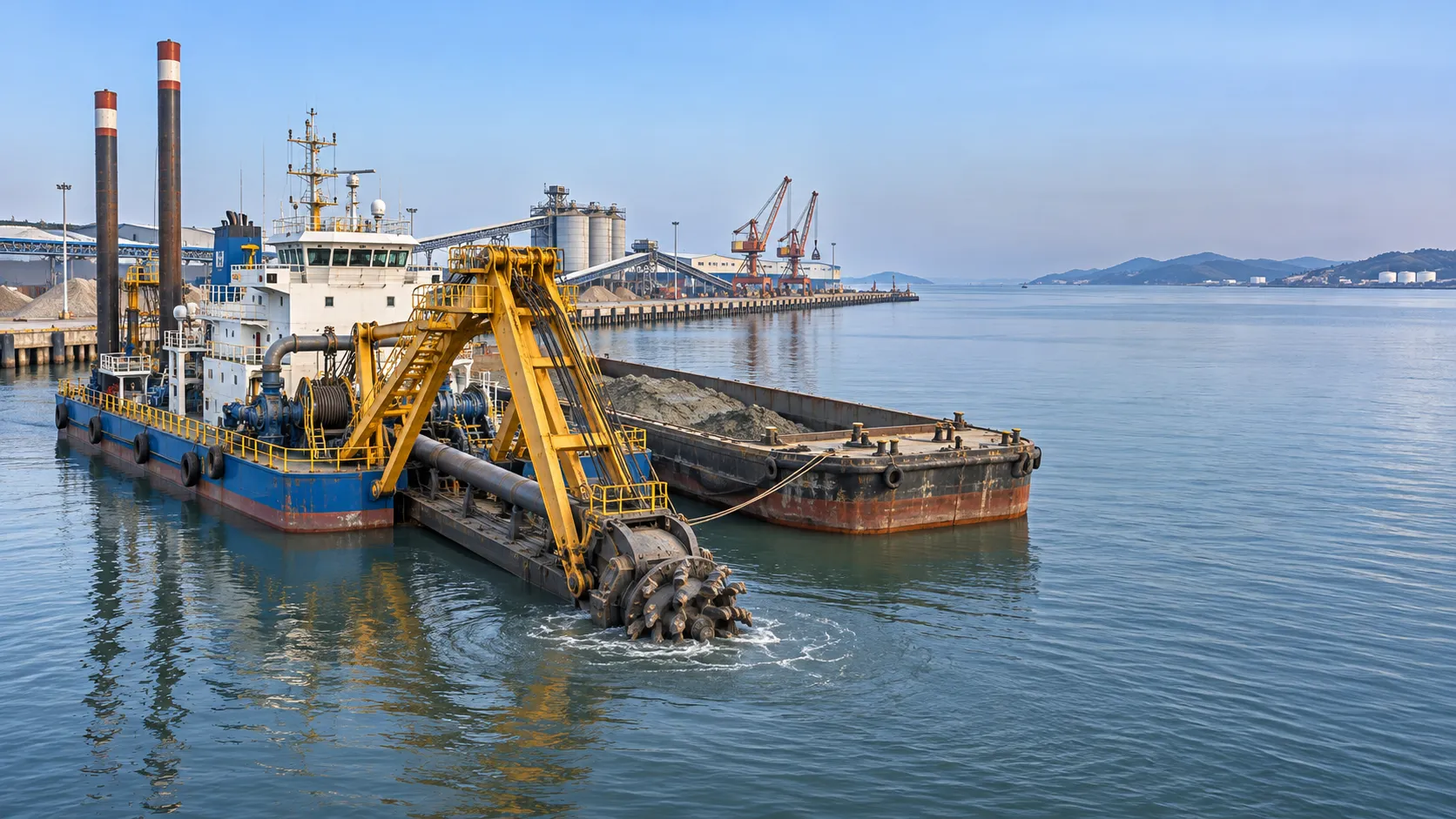
Marine Engineering Solutions for Dredging in Ports: Key Design Factors
Explore marine engineering solutions for dredging ports, from equipment selection and sediment management to safe navigation and survey verification.
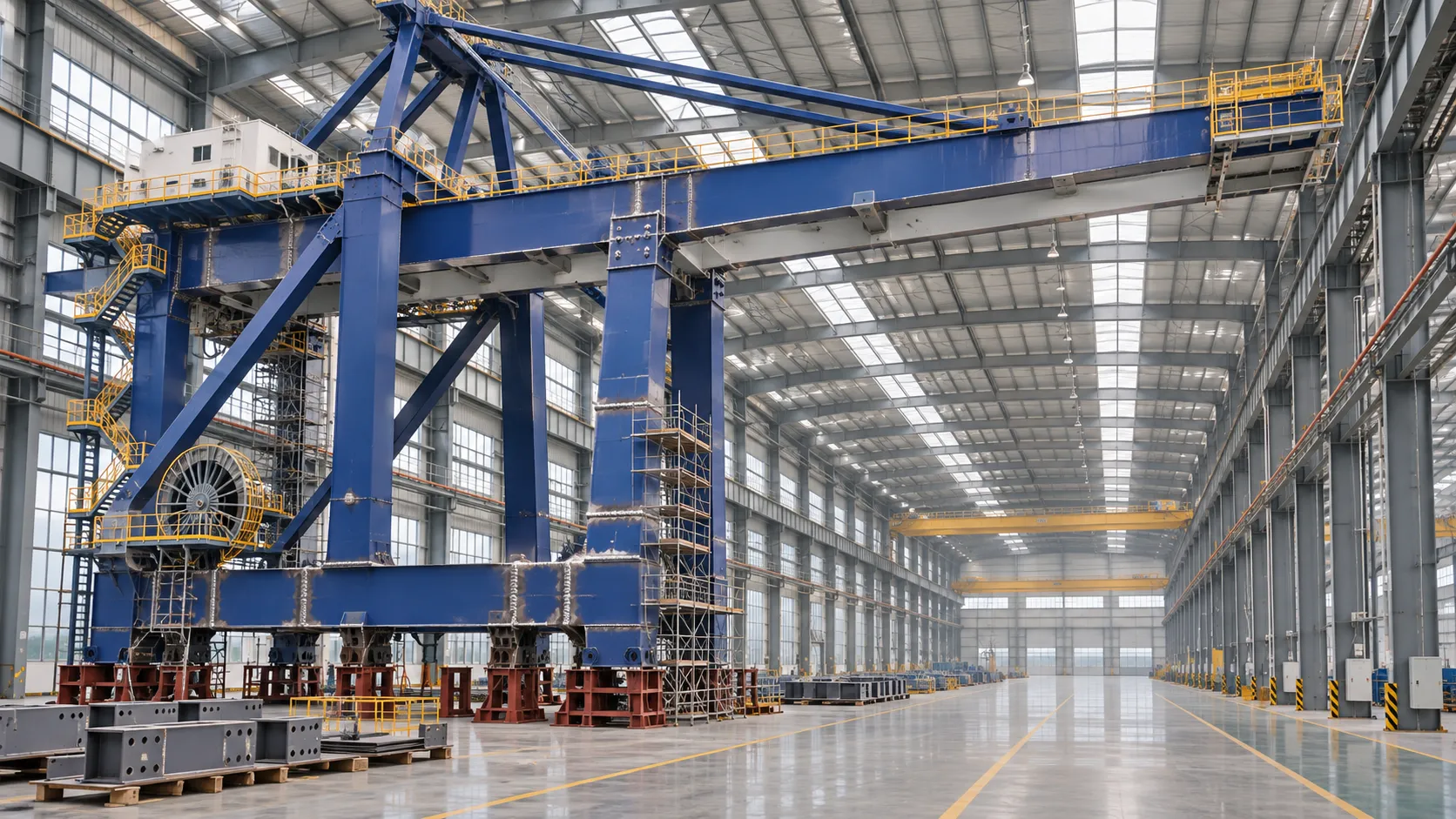
How to Evaluate a Quay Crane Factory: Capacity, Quality and Delivery
Evaluate a quay crane factory with confidence. Learn how to verify production capacity, quality controls, delivery plans, and lifecycle costs before you commit.

What Data Does a Smart Port Control Architecture Need to Operate?
What data is needed for a smart port control architecture? Discover the essential operational feeds, integration requirements and safety checks.
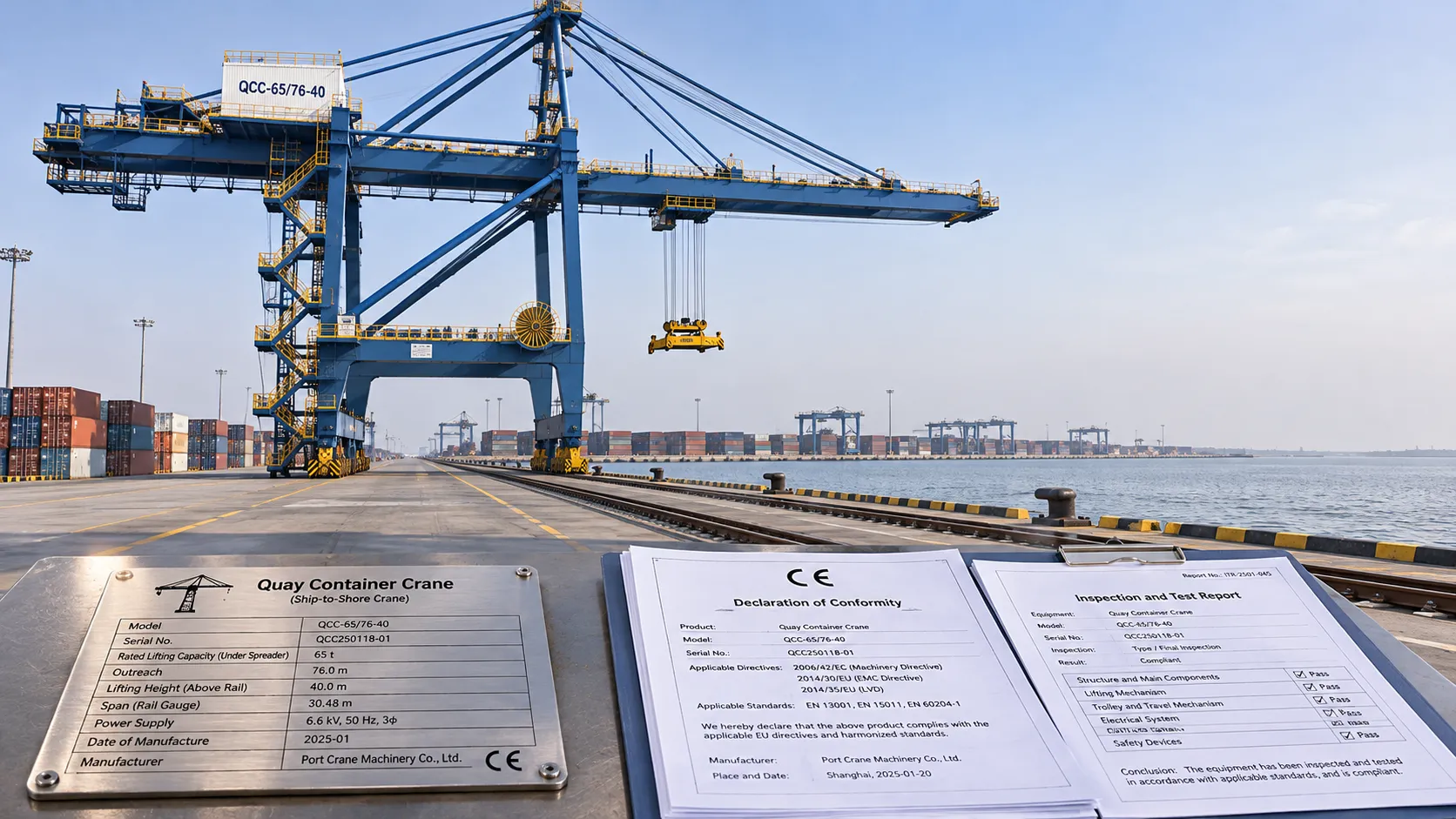
CE-Marked Quay Cranes: How to Verify Compliance Documents
Quay crane CE certified? Learn how to verify declarations, risk assessments and test records for the complete machine before acceptance.
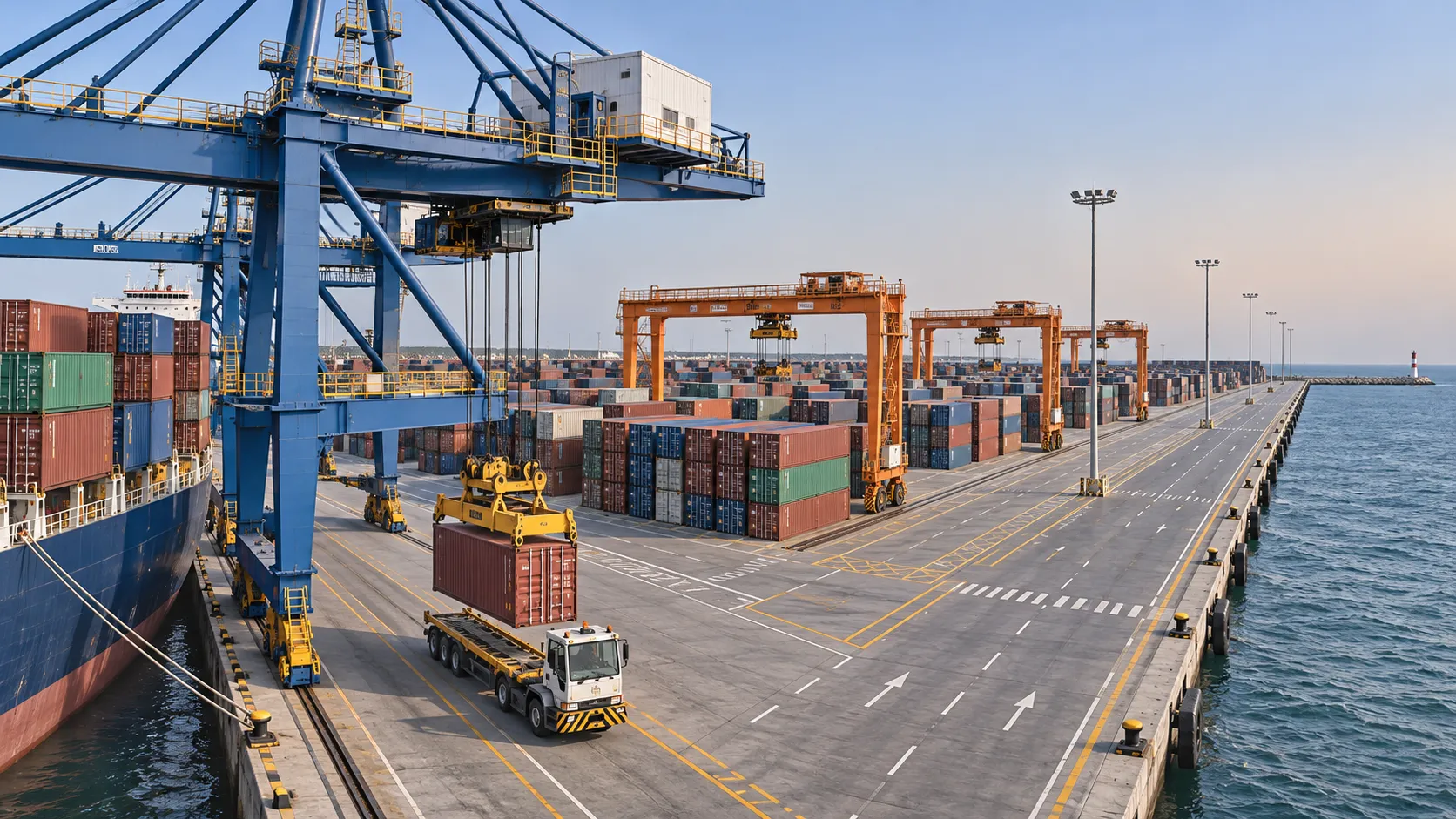
Port Automation Systems in Latin America: Choosing the Right Solution
Explore port automation systems Latin America terminals can use to reduce congestion, assess integration risks, and choose the right solution with confidence.

Scalable Automated Port Systems: Planning for Terminal Capacity Growth
Discover how scalable automated port systems support phased terminal growth, reduce bottlenecks and guide smarter capacity investments.
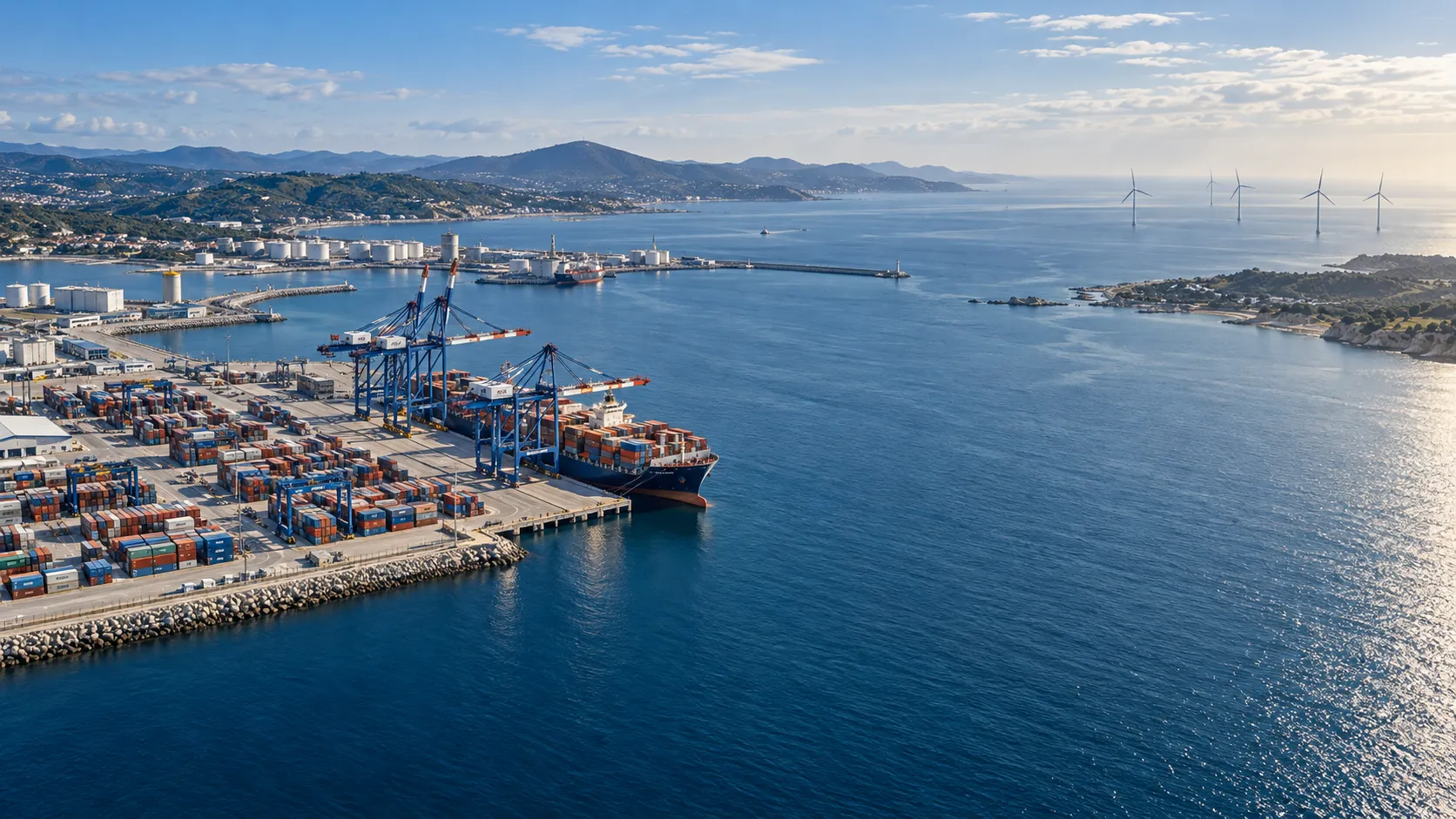
Europe's Coastal Economies: Key Industries, Jobs and Climate Risks
Explore coastal economics in Europe: discover key industries and jobs, the climate risks they face, and how coastal communities can adapt.

Bulk Cargo Handling Equipment for Ports: Choosing by Cargo and Capacity
Choose bulk cargo handling equipment for ports with confidence. Compare cargo types, realistic throughput, equipment options, and lifecycle costs.

What Affects Container Terminal Efficiency in Southeast Asia?
Discover what affects terminal efficiency in Southeast Asia, from berth planning and yard congestion to inland access, and learn how to assess performance.